Maracuyá passion fruit is the same thing, mostly. Maracuyá is just the Spanish name for passion fruit, and more specifically for the yellow, intensely tart variety (Passiflora edulis f. flavicarpa) that grows all over Colombia and ends up in juice, spooned over yogurt, folded into Colombian desserts like merengón, and cooked into sauces for fish and pork. If the only "passion fruit" you know is a flavor in a seltzer or a cocktail mixer, you have not really met it. The real fruit, cracked open and eaten from the shell, is sweet, floral, and so sour it can make your jaw clench. That sourness is the whole point.
The real thing tastes nothing like the flavor in your drink
The "passion fruit" flavor you've had in a hard seltzer, a yogurt, or a syrup is sweet, rounded, and perfumey. It's pleasant and it's fake, in the sense that it sands off the one quality that makes the actual fruit worth knowing.
Crack open a ripe maracuyá and you get a leathery yellow shell and, inside, a cup of glistening orange-gold pulp wrapped around crunchy black seeds. The first hit is sweet and tropical, almost like a guava or a mango said hello. Then the sourness arrives, and it does not knock politely. The first time you eat the real thing from the tree, the tartness hits you like a round kick to the face. It's bright, mouth-puckering, almost aggressive, the kind of sour that makes your cheeks tighten and your eyes go wide.
That's not a defect. It's the reason maracuyá is so useful, and it's also why the yellow fruit specifically is the one Colombians reach for. The bright-yellow variety is more acidic than the small purple passion fruit (the one Colombians call gulupa), which is why maracuyá tastes louder and works harder in a kitchen.
I met it as a kid, in Barranquilla
I was born and raised in the United States to Colombian parents, and as a kid my folks would send me down to spend summers with family in Colombia. That's where I first ran into the real version, and like a lot of things about the food my family ate, I didn't understand it until I was standing in the middle of it.
My first real maracuyá was a juice, in Barranquilla, walking through El Centro, the dense downtown where the vendors set up and the streets are scattered with everything. It was the kind of Caribbean-coast hot that sits on you, muggy and relentless, the air thick enough to chew. Somebody handed me a cup of cold maracuyá juice, and when that hit my lips I finally got it. The tartness and the sweetness and the cold all made sense against that heat. It wasn't just a drink. It was the exact thing my body wanted in that moment, and nothing manufactured has ever come close to it since.
Where maracuyá passion fruit comes from
The plant is a climbing vine native to South America, specifically the stretch from southern Brazil through Paraguay into northern Argentina, according to Britannica. From there it spread across the tropics over the last couple of centuries, and today it's grown everywhere from Hawaii to South Africa to India.
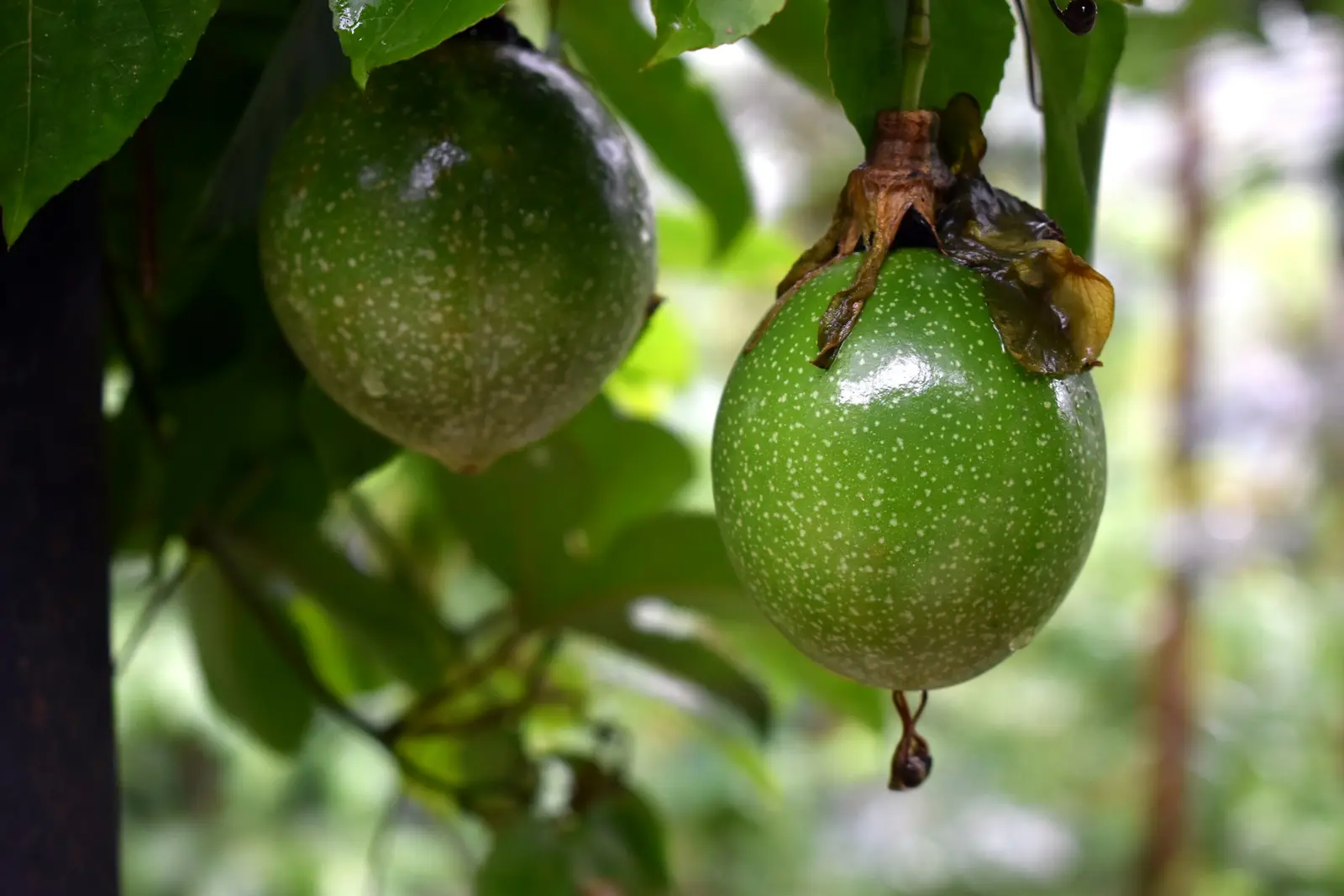
The name comes from that flower. Spanish missionaries who reached South America saw the elaborate bloom, with its crown of filaments and its prominent central parts, as a symbol of the Passion of Christ, and the name stuck in English as "passion fruit." In Spanish it kept its Indigenous-rooted name, maracuyá, and that's the word you'll hear across most of Latin America.
Is maracuyá good for you?
It is, genuinely, and not in a hand-wavy way. Per 100 grams, raw passion fruit carries about 30 milligrams of vitamin C, roughly a third of what an adult needs in a day, along with vitamin A and a real load of fiber, about 10 grams, according to USDA FoodData Central. That's a lot of fiber for a fruit, and most of it rides on the seeds.
Which brings up the thing people get wrong: the seeds are edible. You eat the pulp and the seeds together, crunch and all. That crunch is part of the texture, and it's where a good chunk of the fiber lives. You only strain them out when you're making a smooth juice or a dessert that needs to be silky.
How to pick and open one
Picking a good maracuyá is the opposite of what your instincts tell you. A smooth, glossy, taut shell means the fruit is under-ripe, and it will be even more brutally sour than usual. The ones you actually want look a little sad: heavy for their size, with skin that has started to wrinkle and dimple. That wrinkling is the sign the fruit has matured and the pulp inside has turned sweeter and more aromatic. If all you can find are smooth ones, buy them anyway and leave them on the counter for a few days until the skin puckers.
Opening one takes about ten seconds. Cut it in half around the middle, then scoop the pulp and seeds straight out with a spoon. That's how most people eat it, standing over the counter. To make juice, scoop the pulp into a blender with cold water and a little sugar and pulse it briefly, only enough to loosen the pulp off the seeds. Don't run the blender hard, because pulverizing the seeds turns the whole thing bitter. Then strain it for something smooth, or leave the seeds in for crunch.
How Colombians actually cook with it
This is where maracuyá earns its place, because it is one of the most versatile things in a Colombian kitchen. The everyday form is juice, jugo de maracuyá, the pulp blended with water and enough sugar to tame the acid, sometimes strained, sometimes not. It's in every juice spot and on most lunch tables, and on a hot day it is unbeatable.
From there it goes everywhere. People spoon the raw pulp over yogurt for a fast breakfast or dessert, fold it into fruit salads, and bake it into cheesecakes and tarts where its sourness cuts the sweetness and keeps the whole thing from being cloying. The classic is mousse de maracuyá, a cold, airy passion fruit mousse that shows up at half the birthdays and Sunday lunches in the country, usually finished with a spoonful of the raw seedy pulp on top so the tartness lands fresh on the tongue. It works its way into cocktails too, where a sharp maracuyá sour does the same job a whiskey sour leans on lime for.
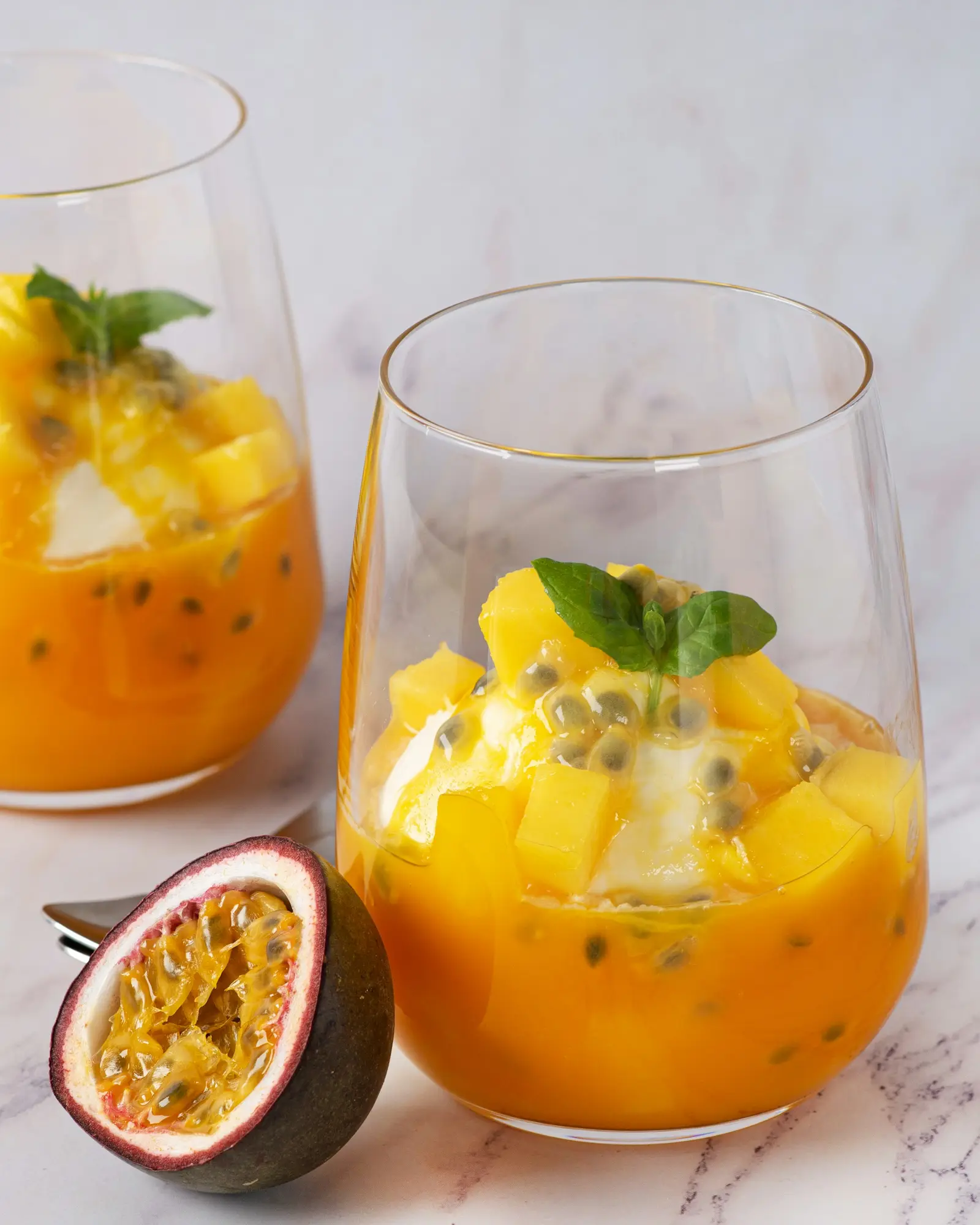
The part that surprises people is the savory side. Maracuyá makes a fantastic sauce for fish and seafood, where its acid does the same job a squeeze of lime would, brightening everything and cutting through the richness. It also goes on pork. The easiest way to explain it to an American is that maracuyá does for pork down here what applesauce does up there: a tart fruit set against fatty meat, the sourness slicing through the fat. Picture it next to something like Colombia's roast pig and the logic is obvious.
Why does it slide into so many dishes, sweet and savory? Because it shows up carrying both intense sweetness and intense acid in the same spoonful, so it has something to push against no matter where you put it. It plays beautifully off sugar, off salt, and off fat, which is really a lesson in what acid does in a dish more than anything special about this one fruit. Colombia's sweet tooth runs deep, the same impulse behind the guava paste they call bocadillo, and maracuyá is the sharp, sour counterweight to all of it.
It isn't only a Colombian thing
Passion fruit belongs to the whole tropical world, not just Colombia. It's grown and used widely across tropical Asia, in Vietnam, Thailand, and India, where it turns up in juices, desserts, and sauces, and it's a fixture in Australia and Hawaii too. So no, you weren't wrong if you've met it somewhere else. But the tart yellow maracuyá is stitched into Colombian daily life in a way that feels different, less of a special-occasion fruit and more of a given, like salt or limes. Other Colombian foods run the opposite way, tied so tightly to one department that most of the country never meets them, which is the story of the toasted queen ants eaten in Santander.
If you ever get your hands on a real one, do this before you cook with anything: cut it in half, take a spoon, and eat it straight from the shell, seeds and all. The sourness will tell you everything you need to know about why a whole country builds juice, sauce, and dessert around it. The flavor in your soda never stood a chance.
FAQ
Is maracuyá the same as passion fruit?
Yes. Maracuyá is the Spanish word for passion fruit, and it usually refers to the large, bright-yellow, very tart variety (Passiflora edulis f. flavicarpa) common in Colombia and much of Latin America. The small purple passion fruit is a closely related variety; in Colombia that one is called gulupa and it's milder and less acidic.
What does maracuyá taste like?
Intensely tart, with a sweet, floral, tropical base underneath. The pulp is sweet at first, then hits a wave of sourness strong enough to make your cheeks pucker. The crunchy black seeds are edible and add texture. It tastes far brighter and sharper than the rounded "passion fruit" flavor used in drinks and candy.
How do you eat maracuyá?
Cut it in half and scoop the pulp and seeds out with a spoon, eating them together. You can also blend the pulp with water and sugar into juice (strained or not), spoon it over yogurt, fold it into fruit salads, or cook it into sauces for fish and pork and into desserts like mousse and cheesecake.
Is maracuyá good for you?
Yes. Raw passion fruit has about 30 mg of vitamin C per 100 grams (roughly a third of the daily target), plus vitamin A and a high amount of fiber, around 10 grams per 100 grams, most of it from the edible seeds, according to USDA data. It's nutrient-dense for its size and low in calories.