
Growing up in New York, I wanted the Pop-Tarts. The cereal that doubled as dessert, the toaster pastries with frosting, the pancakes drowned in syrup. My friends ate breakfast like it was a prize for waking up, and I wanted in.
A typical Colombian breakfast, the one my family actually put on the table, looks nothing like that. It's an arepa, eggs scrambled soft with tomato and onion (huevos pericos), a slab of fresh white cheese, a cup of hot chocolate or coffee, and very often soup or fried plantain. Savory, warm, filling, built to carry you into a day of work rather than a sugar crash by ten in the morning.
But here's the honest answer to what a typical Colombian breakfast actually is: it depends entirely on where in Colombia you are. There isn't one. There are many, and they barely agree with each other.
The breakfast I grew up wanting
I was born in the United States to Colombian parents and grew up in New York City, which means I spent my childhood living in two food worlds at once. At my friends' houses, breakfast came out of a box and tasted like candy. At mine, it came out of a pan and tasted like lunch.
The thing that confused my American friends most was the cereal. In my house, cereal was a night food. A little bowl of cornflakes with milk was something you had as a snack before bed, a small sweet treat, not the thing that started your day. Sweetness had its place, but it came later, in the desserts after a meal, never at breakfast. The idea that you'd wake up and pour sugar-frosted anything into a bowl and call it a meal struck my parents as borderline irresponsible. Breakfast was supposed to hold you. It was supposed to have eggs in it.
As a kid I resented this a little. I wanted the brightly colored boxes with the cartoon mascots. I wanted the breakfast my city told me breakfast was supposed to be, the same way I spent years not realizing how much the food around me in New York was worth paying attention to.
Then I grew up, and the whole thing flipped. Now I can't eat that way. A frosted pastry at eight in the morning feels like a punishment. Give me an arepa with cheese and a soft egg, give me something with weight to it, and I'm a person who can think straight until lunch. The kid who wanted the Pop-Tarts turned into an adult who wouldn't take one if you handed it to him. Funny how that works.
So what counts as "typical"?
If you forced me to name the Colombian breakfast foods that show up across most of the country, the common threads look something like this:
- The arepa. A flat round cake of ground corn, grilled or griddled, in a dozen regional shapes. It's the closest thing Colombia has to a national bread.
- Huevos pericos. Eggs scrambled with chopped tomato and scallion or onion until soft. Simple, savory, everywhere.
- Hogao. A cooked sauce of tomato, onion, and garlic that Colombians spoon over almost anything. Eggs, arepas, yuca, plantain. It's the flavor base of half the country's cooking.
- Fresh cheese. A mild, salty white cheese, often grilled or melted, often crumbled on top.
- Hot chocolate or coffee. And yes, frequently with a piece of cheese dropped right into the hot chocolate so it goes soft and stringy at the bottom of the cup.
- Bread or calentado. Either fresh rolls, or last night's rice and beans reheated into a new meal.
That last one deserves a pause, because calentado might be the most honest Colombian breakfast there is. It's the rice and beans from dinner, warmed up in a pan the next morning, sometimes with an egg on top and an arepa on the side. Nothing wasted, nothing fancy, and somehow better the second day. It's the same quiet genius I learned from stretching cheap ingredients into real meals: the food a household actually runs on, not the food it photographs.
So that's the "typical" answer. The trouble is that the second you leave the generalizations behind and start traveling, the whole picture splinters. Because a breakfast in Cartagena and a breakfast in Bogotá are not variations on a theme. They're two different ideas of what morning food is for. That splintering goes much further in the United States, where there is no single national breakfast because there was never a single national kitchen.
The Caribbean coast: heavy, fried, and proud
My parents grew up on the coast, in Barranquilla, and my grandmother was from Cartagena. So the breakfast I knew first was a coastal one, and a coastal breakfast does not whisper.
It fries. Green plantains flattened and fried into patacones, then topped with that salty white cheese. Yuca two ways: fried until the edges crackle, or boiled soft and then crowned with onions that have been cooked down and tossed with vinegar and oil until they're somewhere between caramelized and pickled. That boiled yuca with the sharp, oily, sweet-and-sour onions on top is one of the great quiet dishes of the Colombian coast, and almost nobody outside the region talks about it. It's the kind of thing you'd never order off a menu because it never makes the menu. You just grow up with it on the table. And to drink against that wet coastal heat, often a cold glass of maracuyá, the tart yellow passion fruit blended into juice.
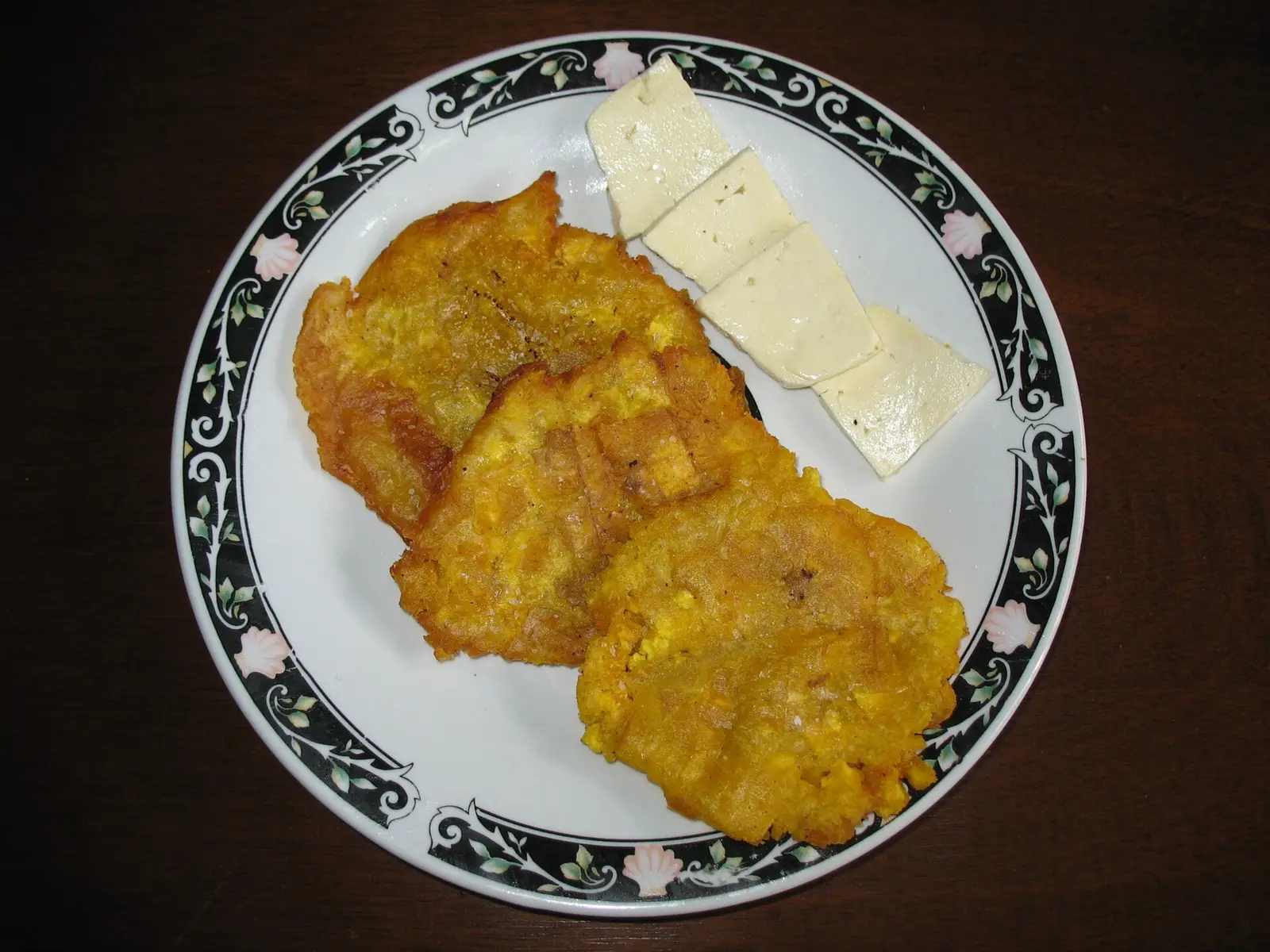
Then there's the arepa de huevo, which is a coastal invention and a small miracle: an arepa fried, split, an egg cracked inside, then fried again so the whole thing puffs up around the egg. Carimañolas, those torpedoes of mashed yuca stuffed with meat or cheese and deep-fried. Suero costeño, a tangy, loose cream you drizzle over things, somewhere between sour cream and crème fraîche. Salty queso costeño on everything.
Some of it is street food as much as home food. On the coast the arepa de huevo gets sold from carts and stands in the early hours, fried to order, handed over hot in a napkin, and eaten standing up before the sun gets serious. That's the coastal morning in one object: hot, fried, handheld, and eaten early while the air is still kind, before the Caribbean heat makes a heavy plate feel like work.
A coastal breakfast is a working person's breakfast. It's hot, it's filling, and it's unapologetic about it. You eat in the cool of the early morning before the Caribbean heat makes eating feel like effort, and you eat enough to mean it. When I sit down to a coastal spread now, I'm eating my grandmother's geography, whether I planned to or not.
Bogotá and the cold Andes: soup for breakfast
Then you fly up into the mountains, and the entire logic of breakfast changes, because the weather changes.
I'm a soup guy. I've become more of one the older I've gotten, but even so, I never in my life expected to eat soup for breakfast until one of my first mornings in Bogotá. The city sits up in the cold Andes, and on a gray chilly morning someone put a bowl of caldo de costilla in front of me, a clear beef rib broth with a piece of rib in it, a few potatoes, some cilantro. I thought it was strange. Then I ate it, and I understood completely.
That broth is one of the most soothing things you can put in your body when you wake up. Warm, savory, gentle on an empty stomach, and when you pair it with the genuine cold of a Bogotá morning, it stops being strange and starts being obvious. Cold air, hot broth. It's a perfect marriage. I've started a lot of days that way since, and I'd take it over any pastry on earth.
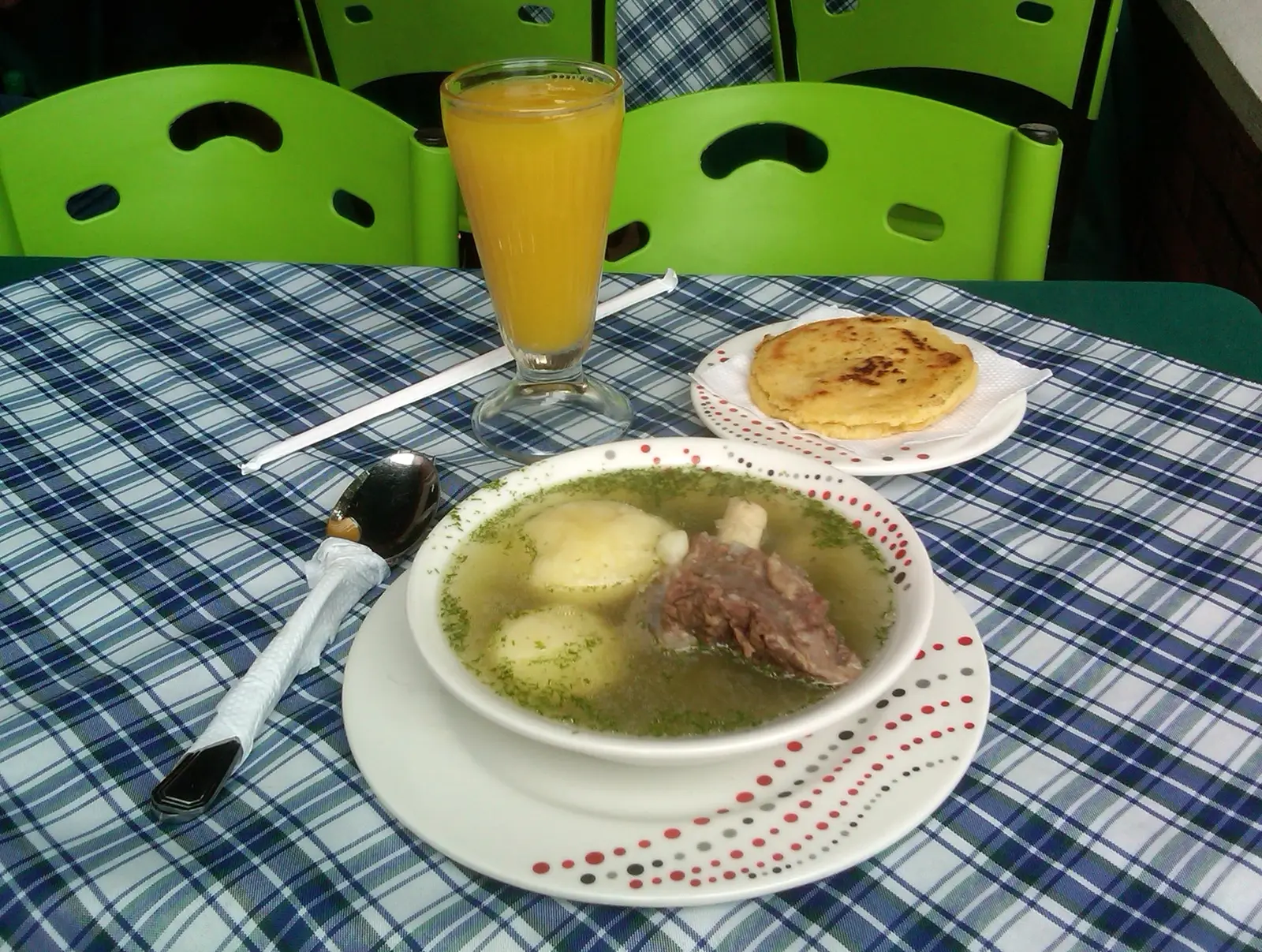
Bogotá's other famous breakfast soup is changua, a broth of milk and water with an egg poached right in it, scallions, cilantro, and stale bread softened in the bowl. People up in the highlands swear by it. I tried, I really did. I got about two spoonfuls in and quietly set the spoon down. The milk-and-egg thing is just not for me, and I'd rather be honest about that than pretend I loved it. Not every regional dish is going to win every palate, and that's part of the point of this whole piece.
Beyond the soups, the cold country leans into bread and cheese: almojábanas, soft cheese rolls, and that chocolate-with-cheese-melting-in-it ritual that feels designed for a place where your hands are cold. The weekend brings the tamal santafereño, a fist of rice, chicken, pork, peas, and carrot packed inside a banana leaf and steamed for hours, untied at the table on a Sunday morning while the steam rises off it. It's less a quick breakfast than an event, the kind of thing a family takes its time with on a cold day off.
The mountains taught me that Colombia's regions can be stranger and more specific than any outsider expects, the same lesson I got from a coffee town that somehow drinks instant.
Paisa country and the southwest
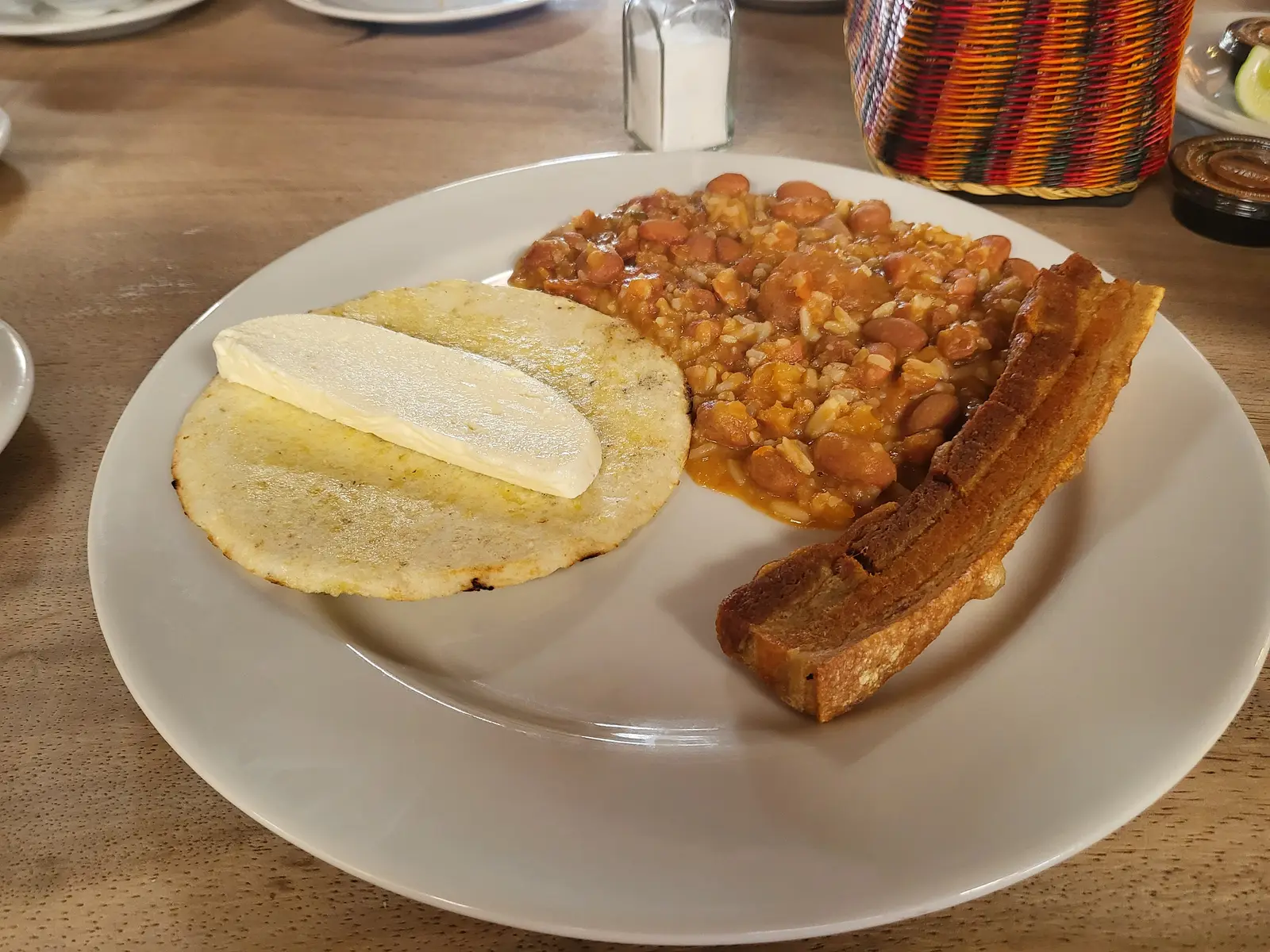
Head to the mountains of Antioquia and you're in paisa country, and the paisa take their arepa seriously. The paisa arepa is thin, plain, pale, and unsalted, almost a blank canvas, and it shows up under eggs, under cheese, under everything. Paisa breakfast also leans hard on calentado, often the famous frijoles paisa reheated with rice, an egg, a bit of chorizo, and chocolate to drink.
It's basically the morning cousin of the region's big midday plate: where a paisa lunch piles beans, rice, meat, plantain, and egg onto one platter, the paisa breakfast is the lean dawn version, the same flavors stripped down to what gets you to the fields or the office. Hearty without being a feast, and almost always with that thin arepa somewhere on the plate doing quiet work.
I have proof of how seriously they take the arepa. A few years back I took my wife, who is paisa, and a group of her paisa friends to Santa Marta on the coast for a big birthday trip. The night before we left, I found them standing in the supermarket having a genuine debate about whether they should buy arepas and pack them into the suitcases, because, and I quote the worry, there might not be arepas on the coast. On the coast. In Colombia. A region with its own deep and ancient arepa tradition. I laughed until it hurt. To a paisa, the arepa back home is the only real arepa, and everywhere else is a gamble. That, right there, is the whole thesis of this article packed into one suitcase.
Swing southwest toward Cali and the Valle del Cauca and the bread changes again. This is the land of pandebono and pan de yuca, those chewy, cheesy breads built on cassava starch and fresh cheese, that come out of the oven hot and disappear in minutes, usually alongside a coffee or a hot chocolate. The yuca starch is what gives them that stretchy pull, since there is no wheat in them doing the work. Lighter than a coastal breakfast, sweeter in spirit than a Bogotá one, its own thing entirely. Every region I name is one more nail in the coffin of the idea that this country eats one breakfast.
The finca: a breakfast built for work
The last Colombian breakfast I learned was the one that changed how I think about all of them, and I learned it on a farm.
For a few years I lived on a finca in the Colombian countryside, and my neighbors were farmers in the truest sense. These were rough, hardworking men who were up and moving at four in the morning, and they ate the way men who do hard physical labor before dawn need to eat. Their breakfasts weren't breakfasts by any definition I'd grown up with. They were full plates of beans, rice, a fried piece of meat or chorizo, eggs, and morcilla, the Colombian blood sausage. Lunch food. Dinner food. Eaten at sunrise because the body was about to spend the next eight hours working and needed the fuel up front.
At first it stunned me. Who eats a plate of beans and blood sausage at six in the morning? And then I lived there long enough that I became one of them. When your day is physical and it starts in the dark, a sweet little pastry is an insult. You want the calentado, the eggs, the meat, the weight of it sitting in your stomach like ballast.
There's also a rhythm to it that the city never taught me. Out there, breakfast happens in the dark and the quiet, before the heat and before the noise, and it's communal in a low-key way: somebody's already got the fire or the stove going, the coffee is already on, and you eat because the work is coming, not because the clock says it's mealtime. The morcilla, rich and dark and a little metallic, made more sense to me out there than it ever had on a plate in a city. Everything did. The food finally matched the life around it.
The farm also gave me the best version of every ingredient. The eggs out there had yolks the deep orange of a sunset, the kind you simply don't get from a carton, and the milk came straight from a neighbor's cow that morning, still warm, unlike anything sold in a store. A farm breakfast isn't a recipe. It's a relationship with the few hundred meters around your house, and it tastes like it.
What I reach for now
I think about that supermarket in Medellín a lot, my wife's friends weighing whether to smuggle arepas across their own country. They weren't being silly. They were being exactly right about the thing most people get wrong: that "Colombian food" is a convenient fiction, a flag thrown over a dozen kitchens that don't cook alike, don't agree on the morning, and never have.
The kid who wanted Pop-Tarts is gone for good. These days, if it's cold, I want the broth. If I'm near the coast, I want the fried yuca with those vinegary onions my grandmother's region taught me. If I've got work to do, I want the farmer's plate. None of it came out of a box, and not one of those mornings is the typical one. That was always the answer. There isn't a typical Colombian breakfast. There's just the right one for where you're standing.
FAQ
What is a typical Colombian breakfast?
There's no single one, but the most common Colombian breakfast foods are an arepa, eggs scrambled with tomato and onion (huevos pericos), fresh white cheese, and hot chocolate or coffee, often with soup, fried plantain, or reheated rice and beans (calentado) depending on the region. Coastal, mountain, and farm breakfasts all look quite different.
Do Colombians eat soup for breakfast?
Yes, especially in the cold Andean regions around Bogotá. Caldo de costilla, a clear beef-rib broth with potato and cilantro, is a beloved morning dish, and changua, a milk-and-egg broth, is another highland breakfast soup. The cold mountain climate makes a hot bowl of broth a natural way to start the day.
What do Colombians drink with breakfast?
Coffee and hot chocolate are the two staples. A common ritual, especially in the highlands, is to drop a piece of fresh white cheese into the hot chocolate so it softens and goes stringy at the bottom of the cup. In the Valle del Cauca, cheesy breads like pandebono and pan de yuca usually come alongside.
What is calentado?
Calentado is leftover rice and beans (and sometimes meat) reheated the next morning into a fresh breakfast, often served with an egg and an arepa. It's a thrifty, deeply traditional dish, especially in paisa country, and many Colombians consider it the most honest everyday breakfast there is.
Is breakfast the same across Colombia?
No, and that's the whole point. The Caribbean coast fries plantain and yuca and eats heavy, the Andes around Bogotá serve hot soups and cheese breads, paisa country revolves around the arepa and calentado, and farm breakfasts can be full plates of beans, meat, and morcilla eaten before sunrise. The region decides the meal.


