Acid in food is what brightens a dish, cuts through richness, balances sweetness, denatures protein in marinades and ceviches, and slows the browning of cut fruit. The four acids that matter most in a home kitchen are citric (lemons, limes, oranges), acetic (all the vinegars), lactic (yogurt, sour cream, sourdough, fermented vegetables), and malic (apples, stone fruit, rhubarb). When a restaurant dish makes you stop and notice how good it tastes, almost always there was acid added somewhere in the process. Most home cooks underuse acid, and learning to use it properly is the fastest jump in kitchen skill there is, and one of the simplest ways to start cooking without leaning on a recipe.
I didn't grow up loving acid. Most kids don't. Acid and bitter were the two flavors my palate flat-out rejected as a child. My mom used to put a generous squeeze of lemon juice in her tuna fish sandwiches, and I'd taste the lemon and decide the whole sandwich was ruined. I'd take it apart, rinse the tuna, ask for plain mayo. She'd patiently make me another one. It took years before that switch flipped. Somewhere in my twenties, when I started cooking professionally and eating across enough kitchens, I realized the dishes I loved most all had one thing in common. A splash of vinegar. A finishing zest. A spoon of yogurt. Acid, every time.
What "acid" actually means in food
In chemistry, an acid is anything that donates hydrogen ions in solution. In food, that translates to a sour taste, a low pH, and a measurable chemistry that does specific things to ingredients. The pH scale runs 0 to 14. Water sits at 7 (neutral), lemon juice at about 2, vinegar at 2.4 to 3.4, yogurt around 4.5. The lower the number, the more acidic.
The four acids that matter most in home cooking, in order of how often you'll reach for them:
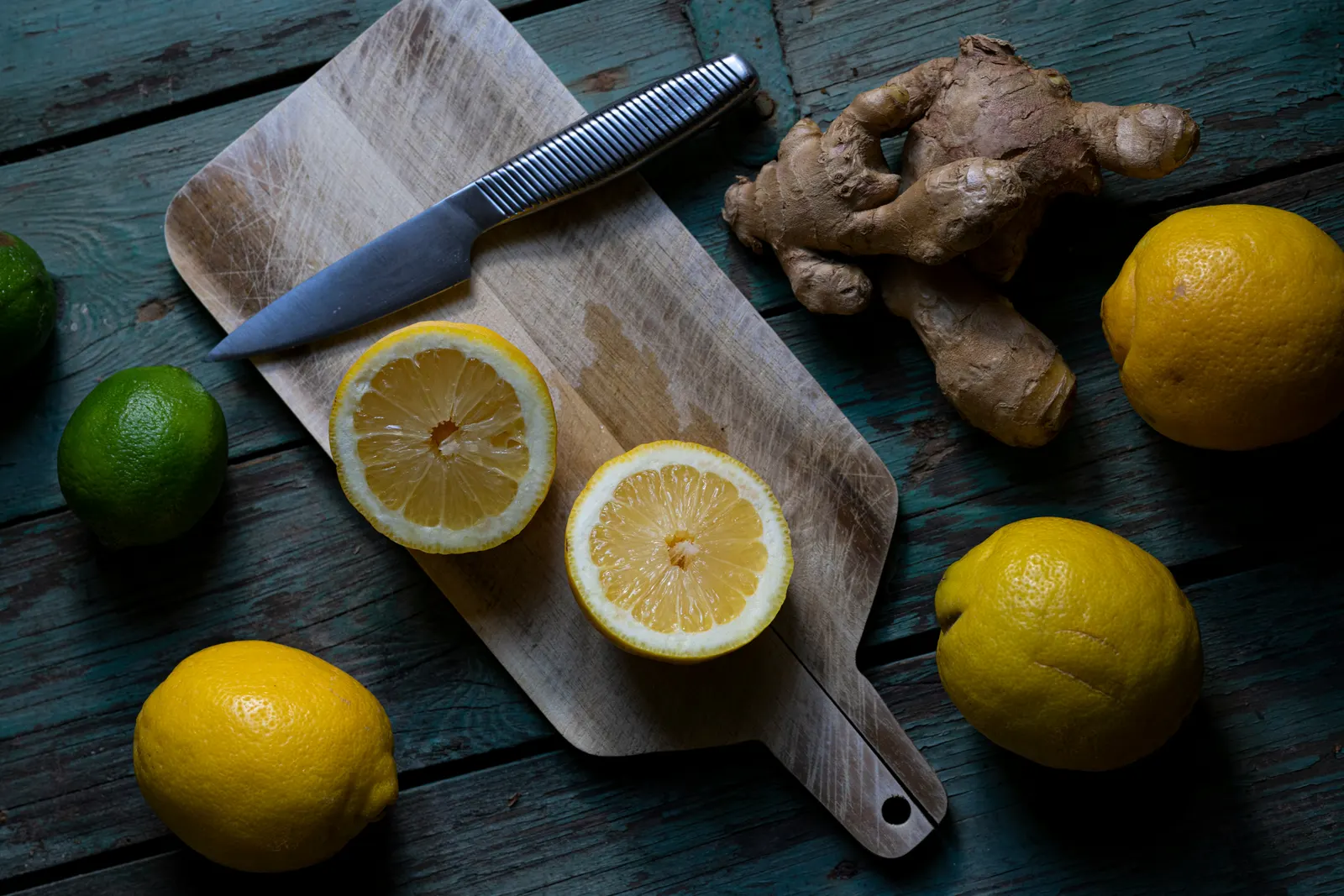
Citric acid (Wikipedia). The acid in lemons, limes, oranges, and grapefruit. The brightest, sharpest, fastest-acting acid you have. It hits the palate immediately and fades quickly, which makes it ideal as a finishing acid, squeezed over a dish right before it leaves the pass.
Acetic acid (Wikipedia). The acid in vinegar. Every vinegar (white, red wine, sherry, balsamic, rice, apple cider) is some form of acetic acid plus the flavor compounds left over from whatever fermented to make it. Vinegar's acid is more aggressive than citrus, which is why you use less of it. It also holds up to heat better, which makes it the acid of choice for deglazing and braising.
Lactic acid (Wikipedia). Produced by bacteria during fermentation. Sourdough bread, yogurt, sour cream, crème fraîche, kefir, sauerkraut, kimchi, pickles. All of them get their tang from lactic acid. It's the gentlest of the four, with a roundness and creaminess the others don't have.
Malic acid (Wikipedia). The acid in apples (the name comes from the Latin for apple), stone fruit, rhubarb, and most underripe fruit. Less common as a standalone seasoning but worth knowing about, because a chutney made with green apple cuts through fatty pork in a way lemon can't quite replicate.
You'll also encounter tartaric acid (grapes, wine), ascorbic acid (vitamin C, often used as a stabilizer), and the various amino acids that contribute to umami, but those four are the workhorses.
What acid actually does to a dish
Acid does five things in food, and most home cooks only think of the first one.
1. It brightens flavor. A dish without acid tastes flat. You can taste richness, sweetness, salt, and fat, but the whole thing sits in the mouth and goes nowhere. Acid adds a top note that lifts everything else. Add a few drops of lemon juice to a finished soup that tastes "fine," and you'll feel the soup wake up. The actual mechanism is partly chemical and partly perceptual: acid activates the trigeminal nerve alongside the taste buds, creating a sharpness that contrasts with the rest of the flavor profile and makes each component read more clearly.
2. It cuts richness. Fat coats the tongue and dulls subsequent flavors. Acid cuts through the fat and resets the palate between bites. That's why a fatty meat dish almost always pairs with an acidic side: pork with sauerkraut, beef with red wine, fried chicken with a pickle. The vinegar in barbecue sauce isn't an accident. It's what makes you able to keep eating brisket.
3. It balances sweetness. A dessert that's pure sugar tastes one-dimensional. A dessert with acid (lemon in a meringue, vinegar in a chess pie, sour cherries in a clafoutis) has dimension. The same applies to savory dishes that get sweet from caramelization or reduction. A tomato sauce that's been reduced too long without acid tastes flabby, and a splash of vinegar at the end pulls it back into balance.
4. It denatures protein. This is the chemistry that matters in ceviche, escabeche, and marinades. When acid hits a raw protein, the hydrogen ions disrupt the bonds holding the protein's three-dimensional shape together, and the protein "cooks" without heat. That's why ceviche fish turns opaque after a few minutes in lime juice. The same effect happens, more slowly, in any acidic marinade, though the only protein that actually benefits from a long acid soak is dense, lean meat like chicken breast or skirt steak. Most other proteins get rubbery if you leave them in acid too long. Salt is the other half of the seasoning equation, and the right way to salt a steak is the other lever most home cooks underuse.
5. It slows enzymatic browning. Cut an apple, leave it on the counter, and it goes brown within minutes. Squeeze lemon over it, and it stays white. Vitamin C and citric acid both inhibit the polyphenol oxidase enzyme that drives that browning. The same principle applies to avocados, bananas, artichoke hearts, and any other oxidation-prone produce. A spritz of acid is the cheapest food preservation technique that exists.
The kid palate versus the adult palate
Most kids don't like acid. The dislike is biological. Children are born with a heightened sensitivity to bitter and sour tastes, an evolutionary protection against eating something poisonous or unripe. Lemon makes a child's face pucker. Vinegar smells like cleaning product. Sour cream tastes spoiled. The palate has to grow into acid the same way it has to grow into bitter coffee or strong cheese.
My version of the slow conversion went through the tuna fish sandwich. My mom would mix tuna with mayo, salt, pepper, and a generous squeeze of lemon juice. The lemon was non-negotiable in her recipe. She'd been making it that way for decades. As a kid I'd taste the lemon and reject the sandwich. As a teenager I'd tolerate it. As an adult I started making the sandwich the same way she did and realized the lemon was the whole point. Without it, tuna and mayo is heavy and dull. With it, the sandwich has lift.
Somewhere around my twenties, when I started cooking professionally, the switch flipped completely. It wasn't dramatic. No single moment of conversion. It was the slow accumulation of being around chefs who reached for the acid bottle the way other cooks reached for salt. Sherry vinegar in a bean stew. Lemon zest on pasta. A spoon of yogurt on a roasted vegetable. Apple cider vinegar in a slaw. Every kitchen I walked into, the acid was getting used heavier than I'd ever seen it used at home.
The moment of actual conversion was finishing a bowl of leftover bean soup. The soup had been good when I made it. Two days later it tasted dull. I splashed in sherry vinegar, just a teaspoon, and tasted it again. Same soup. Different soup. The vinegar didn't make it taste sour. It made it taste like a finished dish instead of a half-finished one. The same logic carries through to almost everything in how to make soup from anything: a primer on what to add at the end to make a pot of vegetables taste like dinner.
After that, I started reaching for acid the way I reached for salt. Every dish got a tasting pass at the end, and most of them got a splash of something: vinegar, lemon, lime, yogurt. The kid palate that rejected the tuna sandwich had become the adult palate that wouldn't serve a dish without acid.
Why most home cooking is under-acidified
In a professional kitchen, acid is one of three things a line cook checks before sending a plate: salt, fat, acid. The three legs of seasoning. If a plate goes out without all three balanced, the chef sends it back to the station.
In home kitchens, the cycle usually stops after the first two. Cooks learn to season with salt (more or less competently), they learn to add fat (butter, oil, cream), and they stop there. Acid never enters the loop. The result is dishes that are technically fine: properly seasoned, properly cooked, but missing the top note that makes you stop mid-bite.
A few reasons this happens. First, most home cookbooks under-write acid. Look at a typical weeknight recipe, and acid usually appears either as "a squeeze of lemon to finish" buried in the last sentence, or not at all. Salt and fat get bold headlines. Acid gets a footnote. Second, most home cooks don't keep a working vinegar in the fridge. They have a bottle of red wine vinegar that's three years old, and they reach for it once a year for a vinaigrette. A working sherry vinegar or rice vinegar that gets used twice a week is rare in home kitchens.
Third, and this is the most important reason, most home cooks don't taste at the end. They taste while cooking, season at that point, and serve. A finished dish needs a final tasting after everything is on the plate, and that final tasting is when acid earns its keep. Reading a recipe with the question "where's the acid?" in mind is one of the fastest upgrades to a home cook's skill, which is also the point of how to read a recipe like a professional: the cues recipe writers don't make explicit.
When you eat at a restaurant and a dish stops you, when you catch yourself thinking "damn, this tastes good" without being able to say why, acid is almost always the reason. A finishing squeeze of lemon. A drizzle of high-acid olive oil. A spoon of crème fraîche. A pickle on the plate. Restaurants nail acid because they have to. A line cook who can't taste for acid doesn't last six months on the line.
It is also why most of the food traditions that get celebrated for their flavor have acid baked into them. The cooking covered in is the Mediterranean diet the way we were meant to eat is acid-forward by default: lemon at the end of almost everything, sherry or red wine vinegar in the beans, yogurt as a dollop, tomato in the sofrito, capers and olives in brine. That is not an accident of regional taste, it is a structural choice that puts acid at the heart of the meal. The same logic shows up across the Pacific: the cuisine I write about in growing up on Filipino food without being Filipino is one of the most aggressively acid-forward home cooking traditions I have ever encountered, built on vinegar, calamansi, tamarind, and fermented shrimp paste at almost every meal.
Where acid hits in a dish: start, middle, end
Acid can be added at three points in cooking, and each point produces a different effect.
At the start. Marinades, brines, and deglazing all use acid early in the process. The acid penetrates the ingredient, denatures protein, and changes texture before any heat is applied. This is the acid that doesn't show up as a sharp note in the finished dish. The acetic acid in a wine-and-vinegar braise mostly cooks off, leaving behind only the wine's deeper flavor compounds. Deglazing a pan with wine or vinegar after searing protein is one of the most underused techniques in home cooking, which is the whole subject of how to make a pan sauce.
In the middle. Building acid into the sauce as it cooks (tomato in a soffritto, wine in a stew, lemon juice in a beurre blanc) gives the acid time to integrate with the fat and salt around it. The finished dish has acid as a baseline note rather than a top note, embedded in everything rather than perched on top. This is how most Italian and French classics are built.
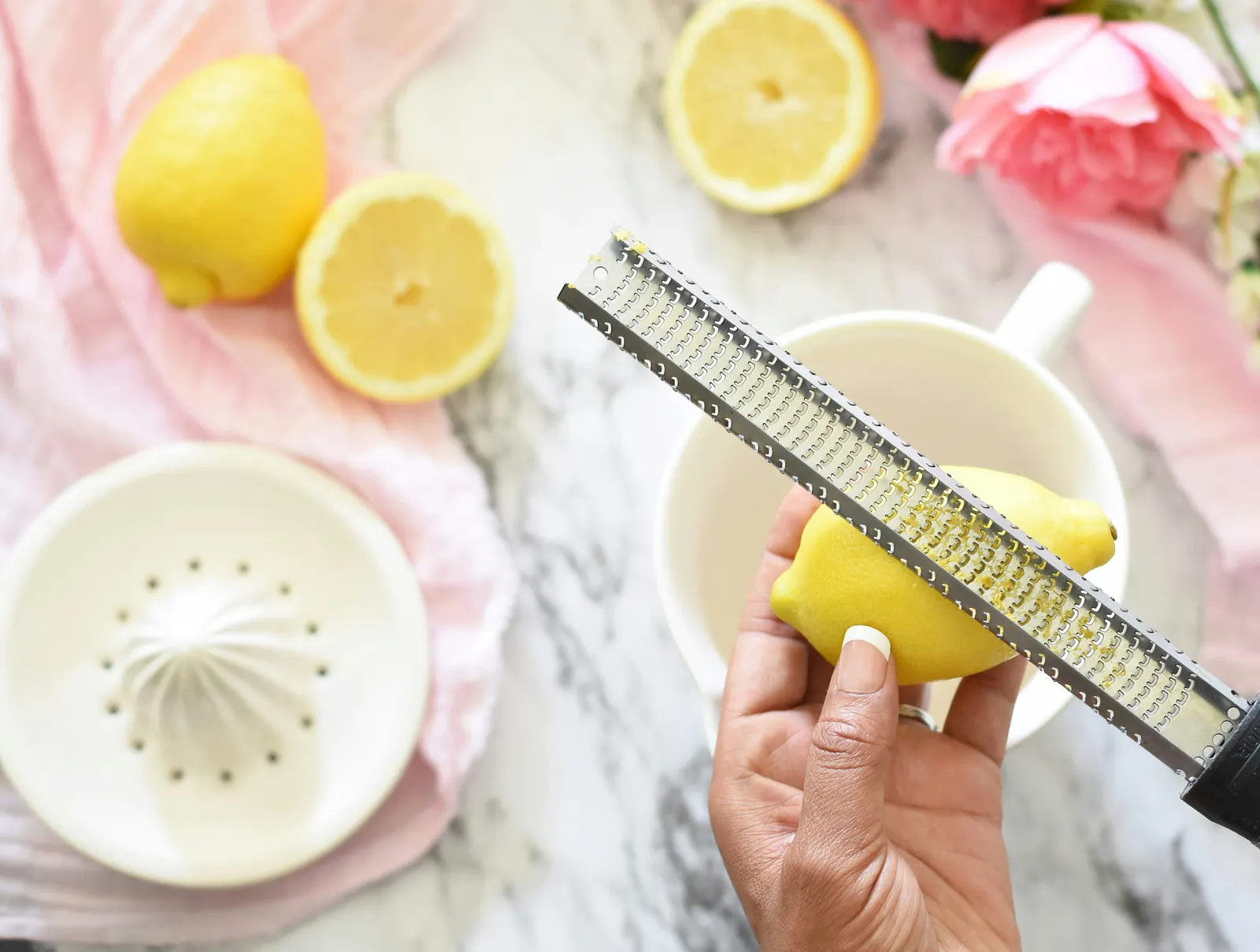
At the end. Finishing acid is the lever most home cooks miss. A few drops of lemon over a finished risotto, a splash of vinegar over a finished bean dish, a squeeze of lime over tacos right before they leave the kitchen. The acid sits on top of the dish, fresh and sharp, and you taste it as a distinct flavor on each bite. Almost every chef-tested recipe ends with some version of "finish with a squeeze of lemon" or "drizzle with sherry vinegar." That instruction looks small on the page. It is the difference between a finished dish and an unfinished one. Even pasta, the most acid-resistant carbohydrate in the kitchen, benefits from a final hit of citrus: a fine grating of lemon zest over a properly al dente plate of pasta is one of the cleanest finishes in cooking.
The rule for home cooks: if you only learn one of the three, learn the finishing acid. It's the easiest to add, the easiest to taste, and the fastest fix for a dish that feels close but flat.
Building an acid pantry
If you want to start using more acid, four things go into the kitchen and stay there.
Lemons. Always have lemons. A bag of six lemons in the fridge will last a week and a half and get used on everything. Buy organic if you're going to zest, because the zest is on the peel and you don't want wax. The lemon does double duty: juice in the dish, zest as a garnish.
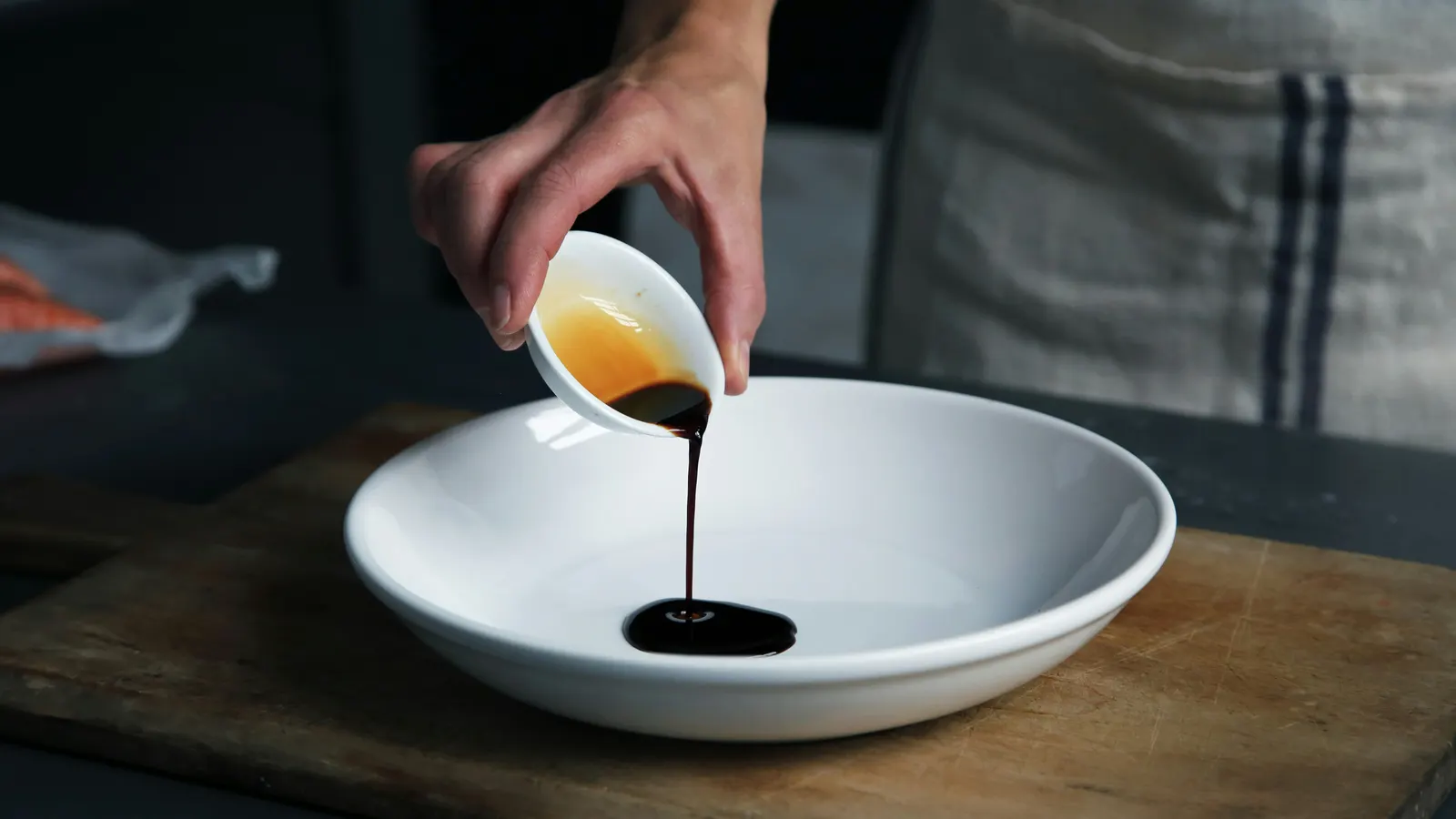
A workhorse vinegar. Pick one and use it. Sherry vinegar is the most versatile because it has acid plus complex flavor. It works on bean stews, salad dressings, pan sauces, and pickle brines. Rice vinegar is gentler and works for Asian dressings and slaws. Apple cider vinegar is fine but limited. Balsamic is for finishing only, not for cooking. Don't try to stock all of them. One used heavily beats five gathering dust.
A jar of yogurt or sour cream. Lactic acid in a spoonable form. A dollop of plain Greek yogurt on a roasted vegetable, a chili, a soup, or a curry adds instant acid plus creaminess. Sourdough is the same biology in bread form. The tang in real no-knead sourdough is lactic acid produced by bacteria during fermentation, the same way yogurt and kimchi get their sourness.
A bottle of good fish sauce or soy sauce. Not strictly acids, but both add the sharp, sour-adjacent dimension that acid does, with extra umami. A few drops of fish sauce in a vinaigrette or a soup adds a kind of round acidity that lemon and vinegar can't quite replicate.
That's it. With those four ingredients in the kitchen, acid becomes available at every point in cooking (start, middle, end), and the dishes that come off your stove will start to read as finished instead of close. It is also the cheapest way to make plain food taste good, which is why acid does so much of the work in cheap, everyday cooking.
FAQ
What is acid in food?
Acid in food is any ingredient that lowers the pH of a dish and contributes a sour or sharp taste. The four most common culinary acids are citric (citrus fruit), acetic (vinegar), lactic (fermented dairy, sourdough, pickles), and malic (apples, stone fruit). Acid brightens flavor, cuts richness, balances sweetness, denatures protein in raw applications, and slows the enzymatic browning of cut fruit.
What are the four main culinary acids?
The four acids most home cooks need to know are citric acid (lemons, limes, oranges), acetic acid (vinegar of any kind), lactic acid (yogurt, sour cream, sourdough, sauerkraut, kimchi), and malic acid (apples, stone fruit, rhubarb). Each one has a slightly different flavor profile and a different ideal use case in the kitchen.
Why do chefs add lemon at the end of cooking?
Because acid added at the end stays bright and sits as a top note on the finished dish, whereas acid added earlier cooks down and integrates as a baseline. A finishing squeeze of lemon adds the sharpness that makes a dish read as alive instead of flat. Most professional kitchens treat finishing acid as non-negotiable on almost every plate that leaves the pass.
How do you know if a dish needs more acid?
Taste the dish at the end of cooking. If it tastes well-seasoned but somehow flat, if the flavors sit on your tongue and don't lift, it needs acid. Add a few drops of lemon juice or a small splash of vinegar, taste again, and you'll feel the dish wake up. The shift is fast and unmistakable once you've trained for it.
Is acid in food the same as sour taste?
Almost, but not exactly. Sourness is the taste perception your tongue registers when an acid hits the taste buds. The acid is the cause; the sourness is the effect. Some acids, like the citric in lemons, read as sharply sour. Others, like the lactic in yogurt, read as creamy and tangy rather than aggressively sour. The chemistry is the same; the sensation is shaped by the other compounds in the food.