A note before you read
I am not a doctor. I am not a registered dietitian, a nutritionist, or any kind of licensed medical professional. I am an ex-chef and a home cook in my forties, and this is editorial writing about food, not medical advice. Before making significant changes to how you eat, especially if you have a chronic condition, take medication, are pregnant, or are responsible for the health of a child, talk to a qualified healthcare professional. The full version of that disclaimer lives here. I also believe, deeply, that every body is different, and that there is no single way of eating that works for every person. Take everything below as one person's careful observation, not a prescription.
Direct answer
The Mediterranean diet looks, on paper, a lot like what humans seem to do best on across decades of careful research. It is centered on real food: olive oil, vegetables, fruits, whole grains, beans and lentils, nuts, fish, modest dairy, and small portions of red meat. It is shared, unhurried, and built around plants rather than around protein. Most major medical institutions, including Mayo Clinic, Harvard T.H. Chan School of Public Health, and the American Heart Association, rank it among the strongest evidence-based eating patterns. Whether it is the way we were meant to eat depends on what you mean by meant. I think for most people, most of the time, it is a more honest match for what bodies actually do well on than the food most Americans are sold every day.
Take the quiz
How Mediterranean is your diet right now?
Thirteen yes-or-no questions. Score 0 to 13. Adapted from the validated MEDAS instrument used in the PREDIMED study, with the alcohol question removed.
Source: Schröder et al., MEDAS validation, J Nutr 2011. Educational tool only, not a medical diagnosis.
This score is an educational tool based on a published research instrument. It is not a medical diagnosis or a prescription. See our Medical Disclaimer, and talk to your doctor about your individual dietary needs.
What the Mediterranean diet actually is
The phrase covers a lot of ground. There is no single "Mediterranean diet" the way there is a single Atkins diet or keto diet. There is a family of related eating patterns historically practiced across the countries that border the Mediterranean Sea: Greece, southern Italy, southern France, Spain, parts of Portugal, Morocco, Tunisia, Lebanon, Syria, and on. Each region has its own variations. What they share, and what nutrition researchers refer to when they say "Mediterranean diet," is a set of common habits.
The clearest visual is the Oldways Mediterranean Diet Pyramid, the version most major nutrition organizations have converged on. Working from the base up:
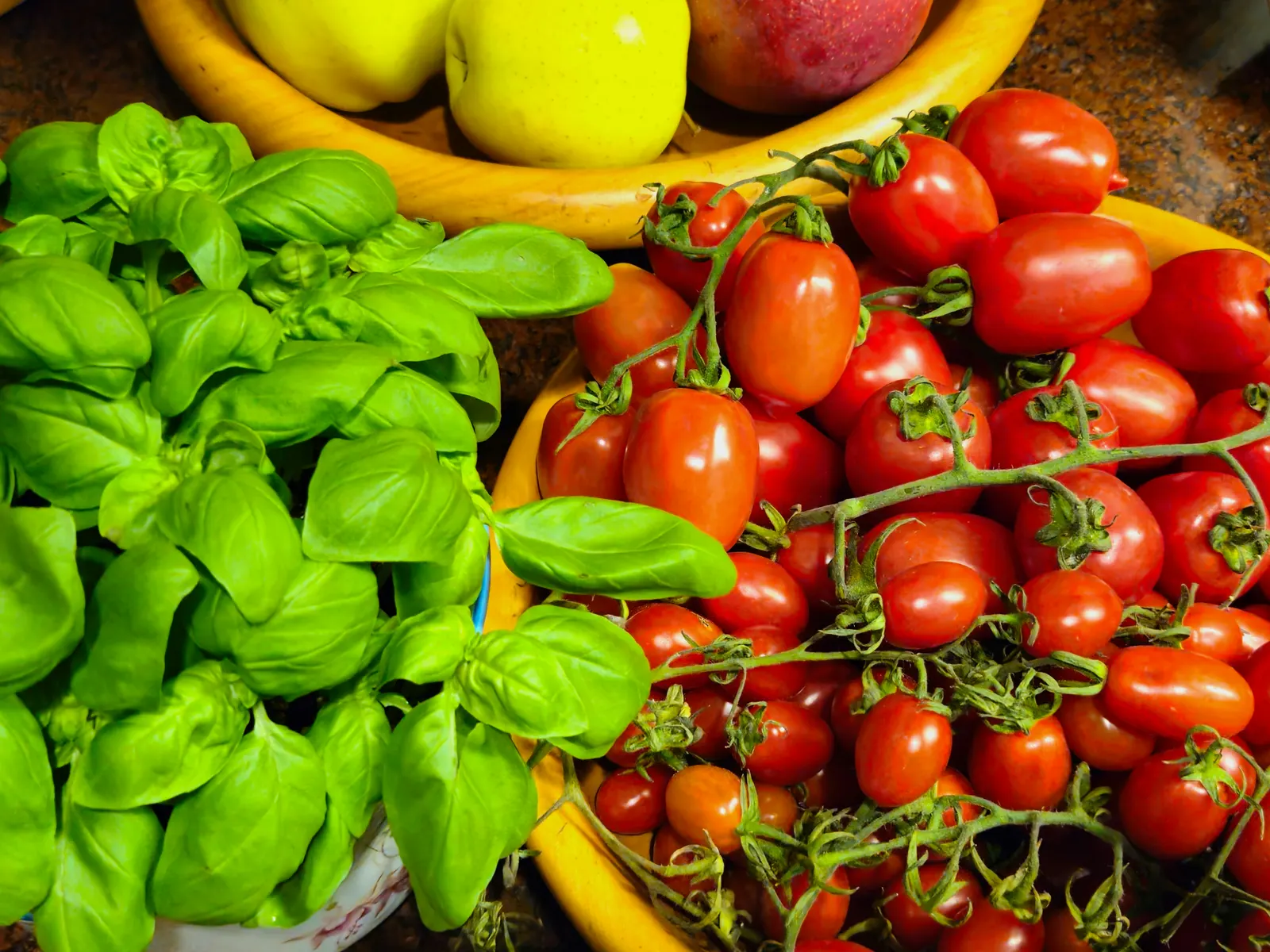
- Foundation: vegetables, fruits, whole grains, legumes, nuts, seeds, herbs, spices, and extra virgin olive oil. Eaten every day, in significant quantities, at most meals.
- Next layer: fish and seafood. Eaten often, ideally a couple of times a week.
- Above that: dairy (especially yogurt and cheese), poultry, and eggs. Moderate amounts, several times a week.
- Top of the pyramid: red meat and sweets. Small portions, infrequent.
That structure has stayed remarkably stable across the major institutional endorsements: Mayo Clinic describes essentially the same pyramid, as does the Harvard Healthy Eating Pyramid and the American Heart Association's Mediterranean dietary pattern guidance.
UNESCO originally inscribed the Mediterranean diet as Intangible Cultural Heritage of Humanity in 2010, with the inscription extended in 2013 to add Cyprus, Croatia, and Portugal alongside the original Spain, Italy, Greece, and Morocco. The recognition cites not just the food but the social rituals around it: shared meals, unhurried eating, an emphasis on local and seasonal ingredients, and the role of food in family and community life. That cultural framing matters. The Mediterranean diet is not really a diet in the modern sense. It is a way of life that happens to organize itself around plants, olive oil, and the table.
What 30+ years of research actually says
This is the part where I link to studies and let them speak for themselves. I am not interpreting the science independently; I am pointing at where the institutional consensus sits.
The single most cited body of work is the PREDIMED trial, a large randomized controlled trial of nearly 7,500 adults in Spain at high cardiovascular risk, originally published in the New England Journal of Medicine. Participants were randomized to a Mediterranean diet supplemented with either extra virgin olive oil or mixed nuts, versus a control low-fat diet. The Mediterranean groups experienced a roughly 30% reduction in major cardiovascular events compared to control. The trial was retracted and republished in 2018 after methodological concerns; the corrected analysis preserved the headline finding.
Beyond PREDIMED, the NIH's StatPearls medical reference on the Mediterranean diet summarizes the evidence as showing associations with lower rates of heart disease, certain cancers, type 2 diabetes, and cognitive decline. The pattern has been the top-ranked or near-top-ranked eating pattern on U.S. News & World Report's annual diet rankings for many consecutive years, based on review by a panel of physicians and dietitians.
A few specifics worth knowing:
- Heart disease. This is the strongest evidence base. Multiple large studies, meta-analyses, and the PREDIMED trial all point in the same direction: associated reductions in heart disease and stroke risk.
- Type 2 diabetes. Several studies show the Mediterranean pattern is associated with lower rates of new-onset type 2 diabetes and better blood sugar control in people who already have it.
- Cognitive decline. Evidence here is somewhat newer and more mixed, but the overall trend in recent research suggests an association with slower cognitive decline and reduced risk of Alzheimer's disease.
- Longevity. Long-running studies have associated higher Mediterranean diet adherence with longer life expectancy in many populations.
The honest scientific caveat: most of this is observational research, which can show association but cannot prove causation. PREDIMED is the strongest exception. The body of evidence taken as a whole is consistent enough that major institutions treat the Mediterranean pattern as one of the most evidence-supported eating patterns available to recommend. That is not the same as "proven optimal for every individual," which no eating pattern can claim.
How I used to eat, and how travel changed it
For the first half of my adult life, I ate what most Americans eat. Heavy on carbohydrates, heavy on protein, light on fresh vegetables. As a chef in New York City restaurants, that pattern actually got worse. Kitchens feed you what they have, and what they have is often protein-forward family meal: pasta with meat sauce, fried chicken thighs, sandwiches on white bread. I went days at a time without eating a vegetable that wasn't in a sauce or a garnish. The kitchen made me a better cook and a worse eater.
The shift came from traveling. The first time I spent any real time in a non-American food culture, what struck me was how simple the food was. People weren't eating the elaborate, multi-component, deep-flavored dishes I was building twelve hours a day on the line. They were eating bread with olive oil and tomato for breakfast. Beans cooked in a pot, dressed with a finishing glug of olive oil. A piece of fish, grilled, with lemon and parsley. A wedge of cheese and a handful of nuts as a snack. The food I was used to thinking of as "interesting" was an American restaurant invention. The food I was eating outside of restaurants was simpler than anything I had ever cooked professionally, and it was, somehow, more satisfying.
What I noticed wasn't that the food was healthier in the abstract. It was that I felt different after eating it. Lighter, but not in a hungry way. More awake. Less burdened. The portions were sometimes smaller than I would have served myself, but I didn't miss the volume. That was a meaningful surprise.
It was also when I started understanding what acid in food actually does. Mediterranean cooking is full of lemon, vinegar, yogurt, tomato. Every plate gets a finishing acid. The food in front of me always tasted brighter than the food I cooked at home, and acid was a big piece of it. So was the slow-cooked vegetable base called a soffritto, which is the foundation of so much Italian and Spanish cooking and which I had never given enough time to in my own kitchen.
Over the next few years my home cooking drifted toward that pattern. Not all at once, and not by following a "diet." Just by cooking more like the food I had been falling in love with: more olive oil, more vegetables, more legumes, less meat at the center of the plate, more bread and yogurt and fruit, more meals built around what was in season.
The weight question I cannot fully answer
I want to be transparent about something. I have been overweight, sometimes obese, for most of my adult life. The weight came on during my years cooking professionally and has stayed on through every chapter of my life since. I am in my forties now. By every standard table of risk factors, somebody with my body mass index and my history would be expected to have type 2 diabetes, or high cholesterol, or high blood pressure, or some combination of all three.
I do not have those conditions right now. I am not claiming a cause for that. I do not know whether it is genetics, luck, the way I eat, the fact that I cook from raw ingredients most days, my activity level, something else, or some combination. I am a sample size of one. There are plenty of overweight people who do have those conditions and plenty of thin people who do too. Anything I say about my own bloodwork is observation, not science, and certainly not advice for anyone else.
What I can say is that I find the Mediterranean way of eating worth writing about because it is what I have ended up eating, roughly, by following my taste rather than by following any rules. I love vegetables. I miss them when I do not eat them. I love olive oil. I do not crave huge portions of meat the way some people I know do. I cannot picture eating a diet where every meal is anchored by a slab of red protein. I am not knocking the people who do; we are all wired differently. I am saying that for the kind of person I am, the Mediterranean pattern feels less like a restriction and more like a permission slip.
That is also, I think, the whole point of writing about it instead of trying to sell it. Different bodies, different lives, different cultures, different tastes. The data is suggestive, not coercive.
What Mediterranean people actually eat day to day
A few patterns recur across the countries where this way of eating originated. Not from my personal experience in those places, but from the cultural and research literature documenting them.
Breakfast is small. Bread with olive oil and tomato is common in Spain. Yogurt with fruit, nuts, and honey is common in Greece. A piece of fruit and an espresso is common in much of Italy. Cereal-with-milk, the American default, is not a Mediterranean breakfast. Neither is bacon and eggs.
The main meal is usually at midday. Lunch, not dinner, is often the largest meal of the day in traditional Mediterranean households. The midday meal is built around vegetables, legumes, grains, and a moderate portion of fish, chicken, or, less often, red meat. Bread is usually present. Olive oil is at the table. Family eats together when possible, which connects to the broader cultural practice of sobremesa, the slow conversation after the meal, one of the elements UNESCO specifically cited in recognizing the diet.
Dinner is lighter. A bowl of soup, a tomato-and-bread salad, grilled vegetables and a small portion of cheese. Not a four-course performance.
Snacks are real food. A handful of olives. Nuts. Fruit. Yogurt. The American snack aisle (pretzels, crackers, granola bars, chips, energy bars) is largely absent from the traditional pattern.
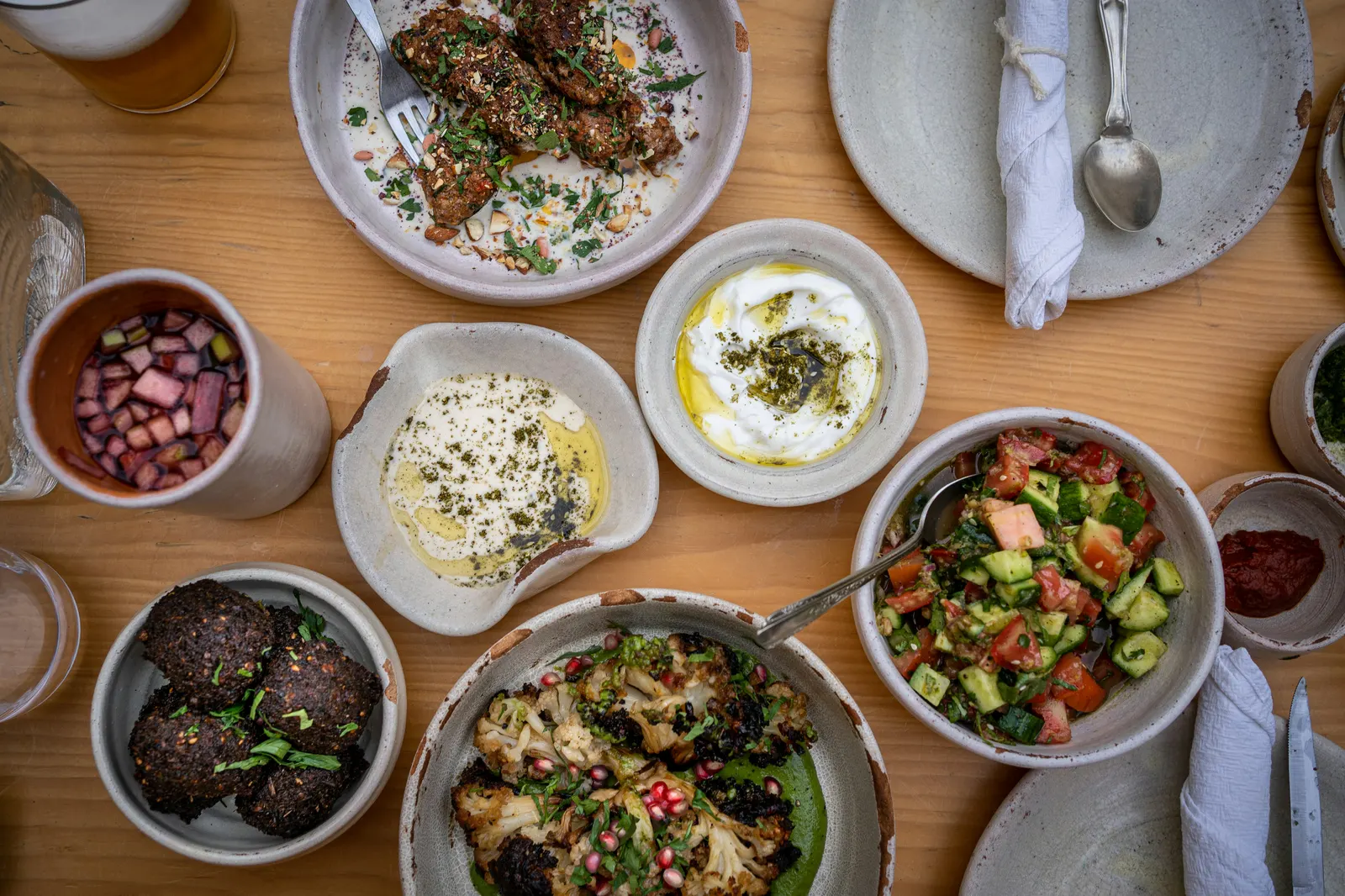
Eating is often social. Whether it is Spanish tapas at a counter, an Italian Sunday lunch, or a Lebanese spread of mezze, the cultural assumption is that food is shared. The act of eating is not a transaction; it is a conversation with food on the table.
That cultural framing is part of what makes the pattern sustainable for the people who grew up inside it. Eating Mediterranean is not something they do as a project. It is just dinner.
How it differs from how most Americans eat
The contrast is sharp. The "Standard American Diet," sometimes abbreviated SAD by nutrition researchers, leans heavily on ultra-processed foods, added sugar, refined grains, and large portions of red meat and dairy. In numbers:
- The average American gets more than half their calories from ultra-processed foods, according to a 2019 BMJ analysis. In traditional Mediterranean diets, that number is closer to a tenth.
- The average American eats roughly 1.5 servings of vegetables per day, according to CDC data, and only about one in ten adults meets federal fruit and vegetable recommendations.
- Added sugar accounts for around 13% of average daily calories in U.S. adults, mostly from sugar-sweetened beverages and packaged sweets. In traditional Mediterranean eating, added sugar is a rounding error.
- Red and processed meat consumption is several times higher in the US than in the traditional Mediterranean pattern.
These differences are real and they are big. None of them mean a given American is unhealthy, and none of them mean a given Mediterranean person is healthy. They mean the patterns are different in ways that show up in long-running population-level research.
How to actually start, without making it a religion
Most people who try to switch eating patterns fail because they try to switch everything at once. The Mediterranean pattern is forgiving, gradual, and built around adding good things rather than eliminating bad ones. Here is what works for most people:
Make olive oil your main cooking fat. This is the single biggest swap. Replace butter, vegetable oil, margarine, and most other cooking fats with extra virgin olive oil. Use it for everything, not just salads. Keep two bottles in the kitchen: one for everyday cooking, a finer one for finishing.
Build one vegetable-forward meal per day. A grain bowl, a soup, a salad, roasted vegetables with bread and olive oil. The point is to get a meal where vegetables are the volume, not the side. Once a day, then twice. (The same logic that drives making soup from anything in your fridge is a clean fit here, since most Mediterranean home cooking is built on similar improvisation.)
Eat legumes twice a week, then three times. Chickpeas, lentils, white beans, black beans, fava beans. They are cheap, filling, fast, and they hold the pattern together. A pot of beans dressed with olive oil and lemon is a meal.
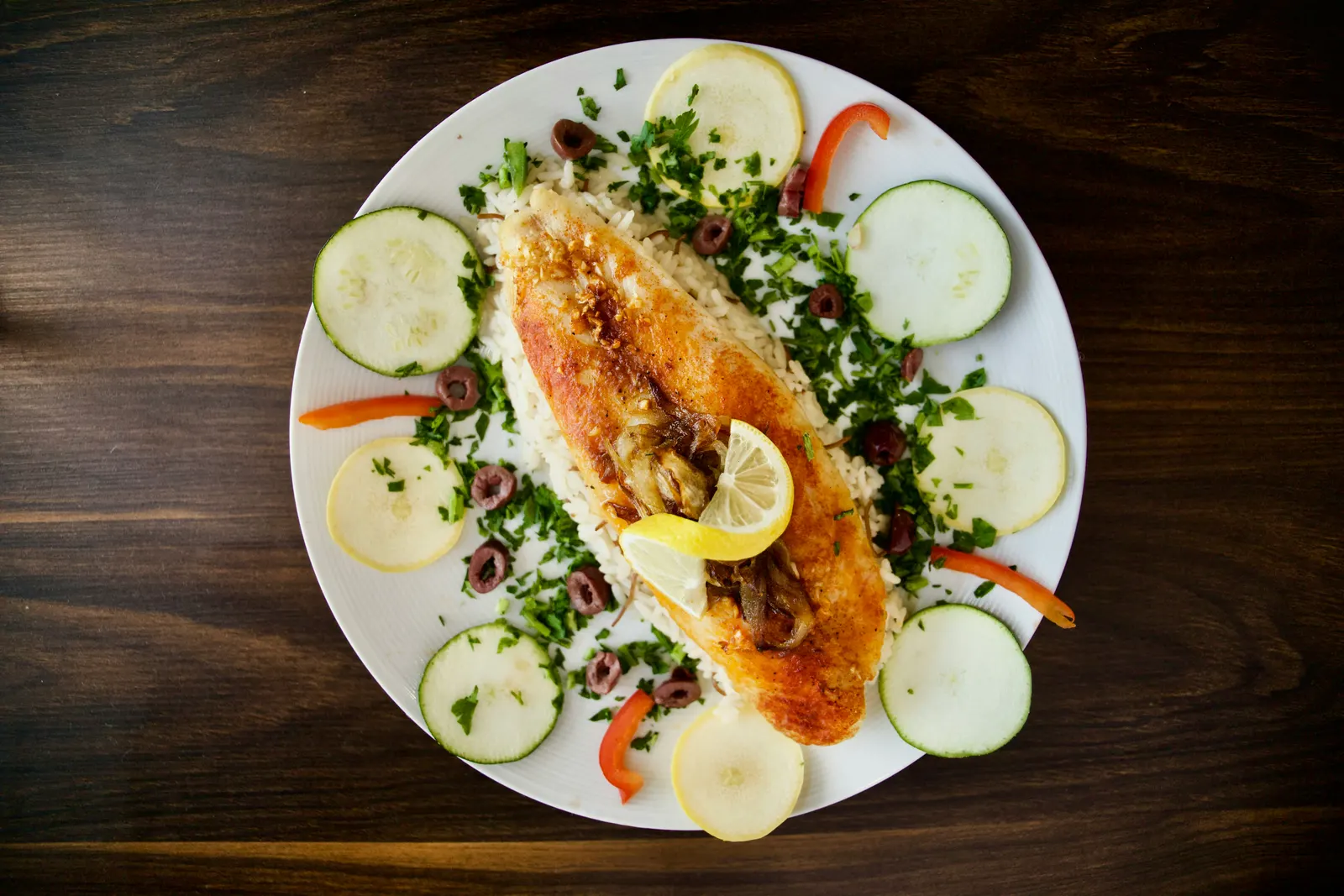
Eat fish at least twice a week. It does not need to be expensive. Canned sardines on toast with olive oil and tomato is a 5-minute Mediterranean meal that costs less than fast food. Tinned anchovies, smoked mackerel, and tuna in olive oil are all pantry-stable.
Stop the daily sweet drink. No swap is required. Water, sparkling water, herbal tea, coffee. The biggest single contributor of added sugar in the American diet is liquid calories, and removing them is the highest-leverage move.
Cut red meat to once or twice a week, at most. Replace with poultry, fish, and legumes. Smaller portions when you do eat it.
Keep nuts and fruit in the house at all times. Snacks default to whatever is in front of you. A bowl of fruit on the counter and a jar of almonds in the cabinet quietly displace the bag of chips.
Cook with people, when you can. The cultural piece matters. The meal you share is usually slower, smaller, and more satisfying than the meal you eat alone over a phone.
The myths worth clearing up
A few things people get wrong about the Mediterranean diet:
It is not just olive oil. Olive oil is the foundation, but the pattern collapses if you treat olive oil as the magic ingredient and ignore the vegetables, legumes, and fish around it. There is no "drink a shot of olive oil and call it Mediterranean."
It is not low-carb. Whole grains and bread are part of the foundation. Beans and lentils are starchy. Fruit is daily. The Mediterranean pattern is moderate-to-high carbohydrate, with the carbs almost entirely coming from minimally processed sources. The misperception that it is low-carb usually comes from people conflating it with keto or paleo, which it is not.
It is not vegetarian, but it could be. The traditional pattern includes fish, chicken, dairy, and modest red meat. It works as a vegetarian or vegan pattern with minor adjustments, because the structure is already plant-forward.
It is not expensive. Beans, lentils, whole grains, canned tomatoes, sardines, olive oil, seasonal vegetables. These are some of the cheapest foods in any grocery store. The Mediterranean diet only gets expensive when people buy "Mediterranean-branded" boxed foods, premium $40 olive oils they cannot taste the difference of, or processed substitutes for whole ingredients.
It is not Italian food. American Italian-American restaurants serve heaps of pasta and meat and cheese, which is a Mediterranean-adjacent cuisine but a quite different eating pattern. A traditional southern Italian home cook eats less pasta, less meat, less cheese, and more vegetables than the average Olive Garden plate.
It is not a weight-loss plan. Some people lose weight on it, especially if they were previously eating ultra-processed food. The pattern is designed as a sustainable way of eating with associations to long-term health outcomes. If your goal is short-term weight loss, calorie math still matters. The Mediterranean pattern just tends to make calorie-appropriate eating easier because the food is filling, varied, and satisfying.
Why I am writing about it as a lover of food
I want to close on this. I am not writing this article as someone evangelizing a diet. I am writing it as someone who genuinely loves food: all kinds, from everywhere, of every cuisine and tradition. I have never met a food I would not at least try. I have eaten well in New York City line kitchens, in cheap diners, in fancy rooms, in tiny family-run places in cities I had no business being in. I do not snub anything. I am not the kind of person who refuses food on principle.
What the Mediterranean way of eating gave me, when I stumbled into it through travel and through changing my home cooking, was not a system. It was a permission slip. It was a way of eating that said: vegetables are not the side dish, they are dinner. Olive oil is not the enemy of fat, it is the heart of the meal. Beans are not poverty food, they are luxury food in slow motion. Fish is not a sacrifice, it is a treat. Bread is allowed. Sweets are real, just not constant. Sit down. Eat slowly. Share the table. The meal is the point.
That is not a doctor's prescription. It is, I think, just how a lot of humans have always eaten when they had the chance. Whether it is the way we were meant to eat, I cannot say with the certainty of someone who has not been hired to know. I can say it is what I have ended up eating after twenty years of being around food, and I cannot imagine going back.
FAQ
What is the Mediterranean diet?
The Mediterranean diet is a way of eating modeled on the traditional food patterns of countries along the Mediterranean Sea: Greece, Italy, southern France, Spain, Lebanon, Morocco, and others. It centers on extra virgin olive oil, vegetables, fruits, legumes, whole grains, nuts, and fish, with modest amounts of dairy and poultry, and small or rare portions of red meat and sweets. UNESCO originally inscribed it as Intangible Cultural Heritage of Humanity in 2010, with the inscription expanded in 2013 to include additional countries.
Is the Mediterranean diet actually healthy?
Decades of published research, including the large PREDIMED trial published in the New England Journal of Medicine, have associated the Mediterranean diet with lower rates of heart disease, stroke, type 2 diabetes, and some forms of cognitive decline. It is also one of the few eating patterns ranked highly across major medical institutions including Mayo Clinic, Harvard, and the American Heart Association. None of that means it is right for every individual; talk to your doctor about your specific situation.
What do Mediterranean people actually eat day to day?
A typical day is closer to: a small breakfast (bread with olive oil and tomato, or yogurt with fruit and nuts), a larger midday meal built around vegetables, legumes, and grains with some fish or chicken, and a lighter dinner. Olive oil is used at every meal. Red meat appears occasionally, not daily. Meals are usually shared and unhurried.
Is the Mediterranean diet a fad?
No. It is the opposite of a fad. The eating pattern is centuries old, recognized by UNESCO as cultural heritage, and supported by some of the longest-running nutrition research in the world. Trendy diets come and go on five-year cycles. The Mediterranean pattern has been studied since the 1950s and keeps holding up.
Is the Mediterranean diet expensive?
Built around traditional ingredients, no. Dried beans, lentils, whole grains, canned tomatoes, sardines, and seasonal vegetables are among the cheapest foods in any grocery store. Where it gets expensive is when people buy "Mediterranean-branded" processed products or premium olive oils unnecessarily. The traditional pattern is cheaper than the average American grocery bill.
Can I follow the Mediterranean diet as a vegetarian?
Yes. The pattern is already mostly plant-based. Vegetarians drop the fish and any meat and lean harder on legumes, eggs, dairy, and nuts for protein. Vegans drop dairy and eggs and lean on legumes, nuts, seeds, and whole grains. The structure of vegetables-plus-legumes-plus-whole-grains-plus-olive-oil works either way.
How is the Mediterranean diet different from Italian or Greek food at American restaurants?
American Italian and Greek restaurants tend to be heavier on red meat, cheese, refined carbs, and large portions than traditional Mediterranean eating. A lasagna or a gyro plate is a Mediterranean-adjacent meal, not a Mediterranean-pattern meal. The real Mediterranean diet at home is lighter, more vegetable-forward, and less protein-centric than the restaurant versions most Americans encounter.
Will the Mediterranean diet help me lose weight?
Some people lose weight on it, particularly if they were previously eating an ultra-processed diet. The pattern is not designed as a weight-loss plan, though. It is designed as a sustainable way of eating that the published research associates with better long-term health outcomes. If weight loss is the goal, the calorie math still matters; the Mediterranean pattern just tends to make calorie-appropriate eating easier because the food is filling and satisfying.
What is the difference between the Mediterranean diet and the DASH diet?
They overlap heavily. DASH (Dietary Approaches to Stop Hypertension) was developed by NIH research and emphasizes reducing sodium and increasing potassium-rich foods to lower blood pressure. The Mediterranean diet emphasizes the same core foods (vegetables, fruits, whole grains, fish, olive oil) but is rooted in cultural eating patterns rather than designed as a clinical intervention. Both are recommended by mainstream medical institutions.