A tapas bar is one of the most-imitated and most-misunderstood Spanish dining institutions. The American version — a "tapas restaurant" with table service, multiple courses, and small plates served in sequence — is a particular adaptation that bears only partial resemblance to its source.
This is a guide to what a tapas bar actually is in Spain, how it operates, and why understanding the operational logic matters for anyone trying to eat well in Spain.
What a tapas bar is
A tapas bar is, structurally, a bar — a place primarily for drinks — that also serves small plates of food alongside the drinks. The food is the supporting element. The drinks are the spine.
In a typical Spanish tapas bar, the structure is:
- A standing bar counter at the front, where most of the action happens. Drinks are served here. Small plates are placed here. Most regulars eat standing up.
- Tables in a back room or along the sides. Tables are slower-paced and typically priced slightly higher than the bar.
- A glass-fronted display case at the bar, showing the day's hot tapas — croquetas, patatas bravas, gambas al ajillo, whatever the kitchen has prepared. Diners point at what they want.
- Cured products hanging from the ceiling — jamón, sometimes chorizo and lomo. Often also visible in the case: boquerones (vinegar-cured anchovies), olives, marinated peppers.
- A glass of small beer (caña), wine, or vermouth at the bar. The drink anchors the visit.
The order of priority is reversed from a restaurant: the drink is what you came for; the food is what you have alongside. This shapes everything about how the place operates.
How to order
The typical interaction:
- Walk in. Don't wait to be seated — find a spot at the bar.
- Order a drink. "Una caña, por favor" (a small beer) or "Un vino tinto" (a glass of red wine). Vermouth (un vermut) is increasingly popular and very Spanish.
- Look at the display case. Point or order what you want. Common starting picks: boquerones, aceitunas (olives), chorizo, jamón, queso manchego, gambas al ajillo, patatas bravas, croquetas.
- The bartender places the small plate in front of you. You eat standing up.
- If you want more, order more. The bartender keeps mental tally.
- When you're done, you ask for the bill ("La cuenta, por favor"). The bartender calculates from memory or written tally and tells you the total.
This is dramatically faster and more flexible than a sit-down restaurant. A diner can be in and out in 15 minutes with a drink and two tapas, or stay for an hour and order seven things. The pacing is set by the diner, not by the establishment. (For something more substantial than tapas at the same kind of bar, the Spanish bocadillo — a small-baguette sandwich filled with one or two well-chosen ingredients — is the working-person's lunch served at most of the same counters.)

Regional traditions
Spain has multiple tapas traditions, and they work differently:
Madrid (and much of central Spain). Each drink ordered comes with a complimentary small tapa — sometimes just olives or potato chips, sometimes a small plate of jamón or a small portion of the kitchen's daily special. Diners can also order paid tapas. The free-tapa-with-drink culture is strong in Madrid and disappearing in some tourist areas. The classic Madrid pattern: order a caña, get olives and a small plate of patatas bravas free, then order a ración (a fuller plate to share) for the table.
Andalusia (Sevilla, Granada, Cádiz). Granada is famous for the most generous free-tapa tradition in Spain — you can essentially eat dinner from the free tapas across two or three drinks at different bars. Sevilla has slightly less generous freebies but still strong tapas culture. Cádiz has a sea-leaning tapas tradition with lots of tortillitas de camarones (small shrimp fritters).
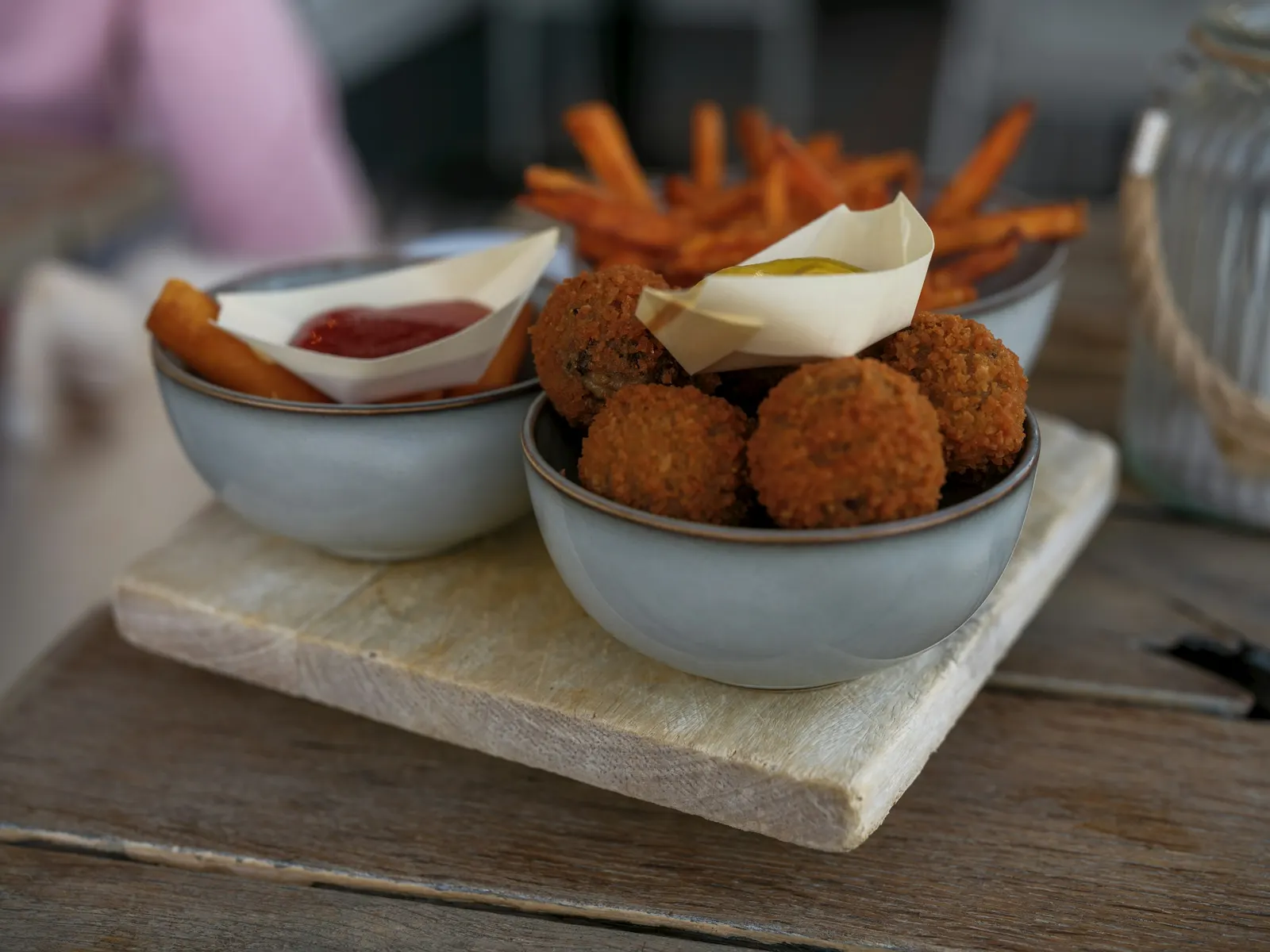
Barcelona and Catalonia. Less of a free-tapa tradition. Tapas bars in Barcelona generally charge for everything. The food can be excellent — bombas (potato-and-meat croquettes) are a Catalan specialty — but the economic structure is closer to a small plate restaurant than a Madrid tapas bar.
Basque Country (San Sebastián, Bilbao). The Basque tradition is pintxos — small bites typically arranged on bread, held together with a toothpick (pincho means "stick"). Pintxos bars display dozens of varieties on the bar counter; diners take what they want and pay based on the toothpick count at the end. San Sebastián's old town is famous for its pintxos bars, and the standard practice is to crawl between four or five bars in an evening, having one drink and two pintxos at each.
Valencia and the Mediterranean coast. Tapas culture mixed with the broader Mediterranean small-plate tradition. Common tapas: ensaladilla rusa (Russian salad), gambas a la plancha, pulpo a la gallega.
The variation is significant enough that "tapas" is not a single coherent thing — it's a regional cluster of related but distinct traditions.
Tapeo as a way of eating
The Spanish concept of tapeo (tapas-ing as a verb) is the idea of moving between bars over an evening, eating and drinking lightly at each, ending the night having had a varied "meal" assembled across multiple bars. This is the heart of what a tapas evening is.
A typical tapeo evening:
- 8:00 p.m.: First bar. A caña and two tapas. 30 minutes.
- 8:45 p.m.: Second bar. Another drink, two more tapas — different style. 30 minutes.
- 9:30 p.m.: Third bar. Drink, more tapas, longer stay. 45 minutes.
- 10:30 p.m.: Fourth bar (optional) or sit-down dinner.
The variety is the point. Each bar has its specialties. The Andalusian tapas bar with great anchovies; the Galician bar with great octopus; the Madrid bar with great croquettes. Tapeo lets a diner sample each bar's strength rather than committing to one bar's full menu.
This is dramatically different from the American "tapas restaurant" experience, where the format is small-plates-at-one-table-served-in-sequence. The American version is closer to a multi-course tasting menu than to actual tapeo — different intent, different rhythm, different room.
The format is also a clean example of why the Mediterranean diet is easier to live with than most diets that get prescribed in books. Vegetable-forward small plates, olive oil at every counter, olives and tomatoes and anchovies and bread, all eaten standing up between drinks and conversations. Nothing about that feels like restraint. It feels like dinner.
Practical advice for travelers
A few things to know:
Eat at the bar, not the table. The bar is where the action is, where the food is freshest, and where the locals eat. The table is for tourists and parties. Tables also typically cost 15-25% more than the same dishes at the bar — a real surcharge for sitting. Small rules like this, learned bar by bar, are the essence of how dining etiquette varies around the world.
Don't expect free tapas everywhere. Granada and Madrid still have strong free-tapa traditions; most other Spanish cities have moved toward a paid model, especially in tourist areas.
Eat late. Real tapeo starts after 8 p.m. and runs until 11 or later. Most bars are nearly empty at 6:30 and full at 9:30 — the inverse of the American convention, where the best time to arrive at a restaurant is before the rush.
Don't sit and order multiple courses. A tapas bar is not a restaurant — it's a stop on the way to dinner, or instead of dinner. If you want a sit-down meal with multiple courses in sequence, go to a taberna or restaurante.
The bartender is the host. Make eye contact, be friendly, ask for recommendations. The bartender at a good tapas bar knows the food and can steer you toward the kitchen's best work. Most are happy to help if you don't pretend to know more than you do. (The host-as-bartender pattern is the same architectural feature that makes the bar the most romantic room in any city's dining scene.)
FAQ
What's the minimum I should order at a tapas bar?
At minimum, one drink and one small tapa. The drink is the price of admission; the food extends the visit. A diner who orders only a drink with no food is occasionally tolerated but is not really doing tapas.
Are tapas bars open for lunch?
Some yes, some no. Many Spanish tapas bars open at noon for lunch service (12-4 p.m.), close from 4 to 8, and reopen for the evening. Lunch tapas are served but the social peak is in the evening.
What's the difference between a tapa, a media-ración, and a ración?
Size, mostly. A tapa is a small portion (one or two bites). A media-ración is a half-portion (small plate, enough for one person to share with another). A ración is a full portion (a substantial plate, enough for two to four people to share). Many bars offer all three sizes of the same dish.