Apéro is one of the most recognizable French daily rituals and one of the most often misunderstood by non-French observers. It is not happy hour. It is not pre-dinner cocktails in the American sense. It is its own institution — a structured early-evening pause that has been part of French daily life for at least two centuries.
This is a guide to what apéro actually is, when it happens, and what to expect at a French apéro table.
Literally before the meal
The word apéritif comes from the Latin aperire — to open. The drink and the ritual are meant to "open" the appetite before dinner. Apéro is the colloquial shortening, used universally in spoken French.
Apéro happens between roughly 6 and 8 p.m. (sometimes a bit earlier in summer, a bit later in cities), and ends when dinner begins. In a French dinner that starts at 8 or 8:30, apéro might run from 7 to 8. In a relaxed weekend dinner that starts at 9, apéro might begin at 7:30 and stretch to dinner.
The defining feature is transition. Apéro is the ritualized space between the working day and the dinner — drinks and conversation while the cooking happens (sometimes a French dish that has been braising for hours), while the family arrives, while the day's mood shifts. The food at apéro is light by design, because dinner is coming.
The drinks
A traditional apéro centers on a small set of recognizable drinks:
Pastis. The licorice-anise-flavored spirit from southern France, mixed with cold water (5 parts water to 1 part pastis, traditionally). Ricard and Pernod are the dominant brands. Pastis is the apéritif of the south — Provence, Marseille, the Côte d'Azur — and remains broadly drunk across France.
Kir. White wine (typically Aligoté from Burgundy) with a small splash of crème de cassis (blackcurrant liqueur). Light, slightly sweet, easy. Kir royal substitutes Champagne or sparkling wine for the white wine, making it more festive.
Vermouth. Lillet (white, especially Lillet Blanc, served on ice with a slice of orange or cucumber), Noilly Prat (a drier, more savory vermouth), or Italian sweet vermouths like Cinzano or Punt e Mes. Vermouth is having a quiet revival in France as a serious apéritif drink.
Champagne and crémant. A glass of Champagne or a French sparkling wine (crémant from Alsace, Loire, or Limoux) is a classic apéro choice. Not necessarily expensive — a glass of crémant at a typical café costs a few euros.
Beer. Increasingly common in apéro contexts, especially among younger drinkers. Belgian and craft French beers in particular.
Cocktails. A growing presence at modern apéros, but historically less central than in American cocktail-hour culture. The Spritz (especially Aperol Spritz) has crossed from Italy and is widely served.
Natural wines. A specific contemporary trend — the natural-wine movement in France has shifted what younger urban drinkers serve at apéro toward unfiltered, low-intervention wines.
The drinks are light by design — lower-alcohol, often diluted with water or sparkling, served in small portions. The point is to open the appetite, not to drink a lot.

The food
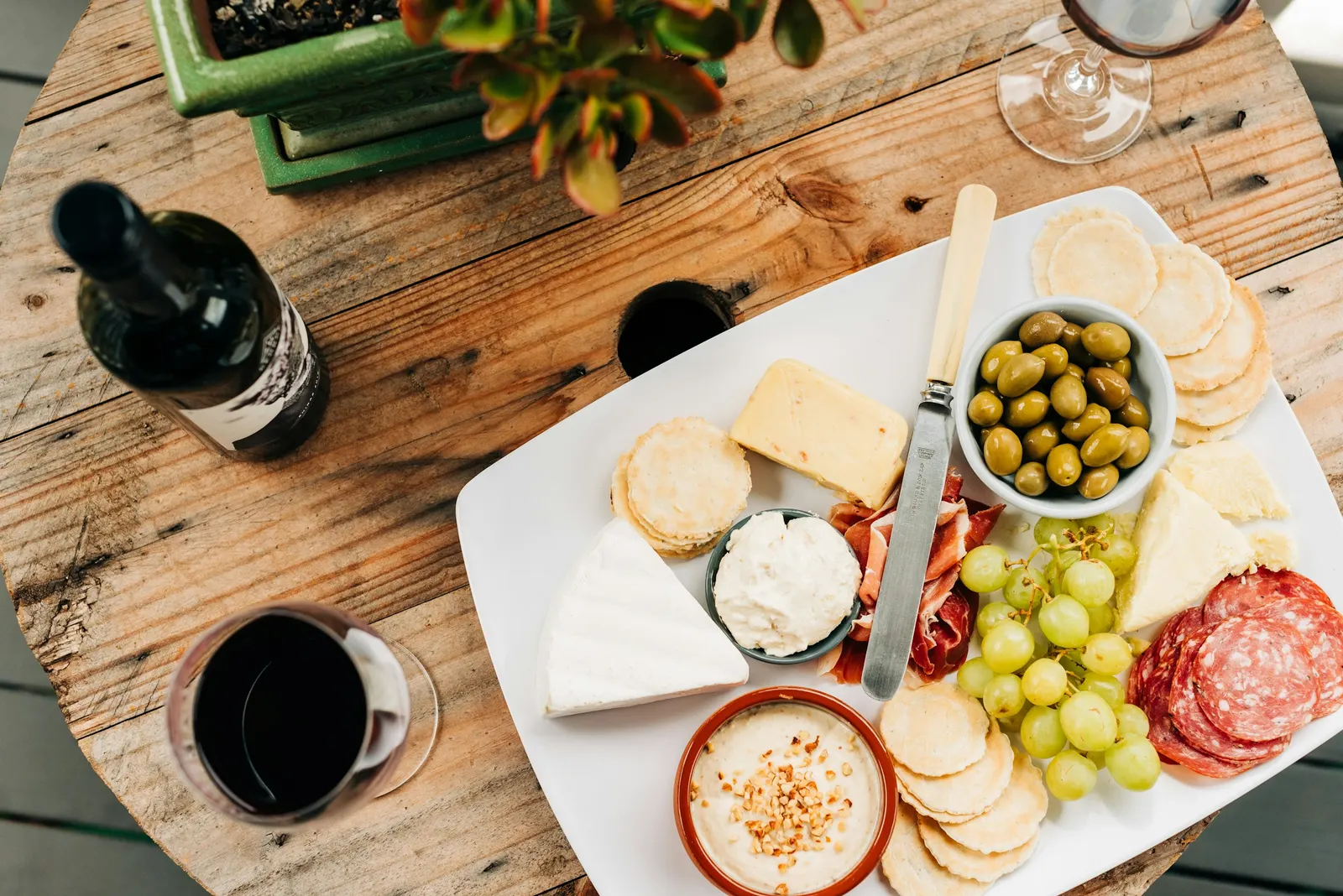
Apéro food is small, salty, and designed to be picked at while drinking. The classic spread:
Olives. Always. Green and black, sometimes marinated with herbs or citrus. The single most universal apéro food.
Charcuterie. Saucisson sec (French dry sausage, sliced thin), occasionally jambon, sometimes pâté or rillettes with bread. A small board, not a meal-sized portion.
Cheese. Cubed Comté, Gruyère, or hard cheese. Sometimes a few slices of soft cheese with bread. Smaller portions than a cheese course.
Radishes with butter. Crisp radishes dipped in soft butter and a pinch of flaky salt. A French classic that is dramatically better than it sounds.
Gougères. Small cheese-flavored choux pastries. A traditional French apéro snack, especially in Burgundy.
Tapenade and other spreads. Olive tapenade, anchoïade, hummus, with bread or crudités.
Crackers, breadsticks, chips. The quick option for less formal apéros — crackers with cheese, breadsticks, or even potato chips with the right drink.
The portions are deliberately small. A typical apéro spread for four people might be a small bowl of olives, six slices of saucisson, a few cubes of cheese, and a small dish of nuts. Enough to take the edge off appetite, not enough to spoil dinner.
At a café versus at home
Apéro happens in two distinct settings, with slightly different conventions:
At a café. A diner orders a drink (or two) and possibly a small plate of olives or charcuterie. Sits at a table outside if weather allows. Watches the street, talks, observes. Many cafés have a designated terrasse (outdoor seating) that fills at apéro hour. The bill arrives when you signal — there's no rush. Cafés in Paris especially are designed for this kind of slow occupation; for the broader French-dining-room categories, the apéro hour is when the café side of a café-bistro is doing its real work.
At home (apéro à la maison). Drinks and snacks before dinner, often with friends invited "pour l'apéro" — meaning they're staying for drinks but not necessarily for the meal. This is its own social occasion: friends arrive at 7, leave at 8 or 8:30. The host serves a small spread; conversation runs through it; everyone leaves before dinner. Apéro dînatoire is a related concept where the apéro food is more substantial and replaces dinner — friends arrive at 7, eat substantial small plates, leave by 10. The line between an apéro dînatoire and a casual dinner party can be thin.
The home apéro is, in some ways, the more central institution. It's the structured way French people host friends without committing to a full dinner.
Why apéro persists
The schedule of French daily life has shifted considerably over the last 30 years — the long midday meal has shortened in many sectors, the workday has become more compressed, the strict 8 p.m. dinner has loosened. But apéro has held its shape better than most other parts of the routine.
The likely reason: apéro is the most flexible part of the day. It doesn't require the schedule that lunch did. It can happen at home, at a café, with one drink or many, with friends or family or alone. It's the institution that survives even when the rest of the daily structure changes.
For travelers in France, apéro is the easiest French ritual to participate in. Sit at a café terrasse between 6 and 8. Order a kir or a glass of wine. Order a small dish of olives. Watch the street. Stay an hour. You've done apéro. (The same room-and-ritual logic — a slow drink in a place built for slow drinks — is why bars persist as social architecture even as drinking habits change everywhere else.)
FAQ
Is apéro the same as happy hour?
No. American happy hour is a commercial promotion — discounted drinks for a specific hour, typically tied to bars trying to attract early-evening business. Apéro is a daily ritual that exists across French life regardless of pricing. There's no special discount; it's just what happens between 6 and 8.
How long does an apéro last?
Typically 30 minutes to 90 minutes. A short weekday apéro might be one drink and a few olives. A long weekend apéro at home with friends can run two hours. Beyond two hours, you're approaching apéro dînatoire — apéro that becomes the meal.
Do French people drink hard alcohol at apéro?
Rarely. Pastis is the closest to hard alcohol, but it's typically diluted heavily with water. Cocktails are increasingly served but remain less central than wine, vermouth, and pastis. Whiskey, gin neat, and similar spirits are typically post-meal digestif drinks, not apéro.