Rustic European cooking doesn't need fixing. It doesn't need foams, gels, sous vide circulators, or chefs at hundred-dollar tasting menus trying to "elevate" it. The dishes that came out of European peasant kitchens over the last six hundred years already work. They've been pressure-tested by millions of meals across centuries of survival cooking. The best move a modern kitchen can make with rustic European food is to leave it alone and cook it well. I learned this the hard way working a wood-burning oven station in a West Village restaurant in the early 2000s, where the most fabulous food I ever made was also some of the simplest food I ever made.
The wood-burning oven in the West Village
The restaurant was in the West Village. I won't name it. The early 2000s. The kitchen had a wood-burning oven at one end of the line that we manned in shifts, and it changed how I understood cooking. The line itself ran on a working version of the classical French brigade structure, the system Escoffier had formalized a hundred years before us.
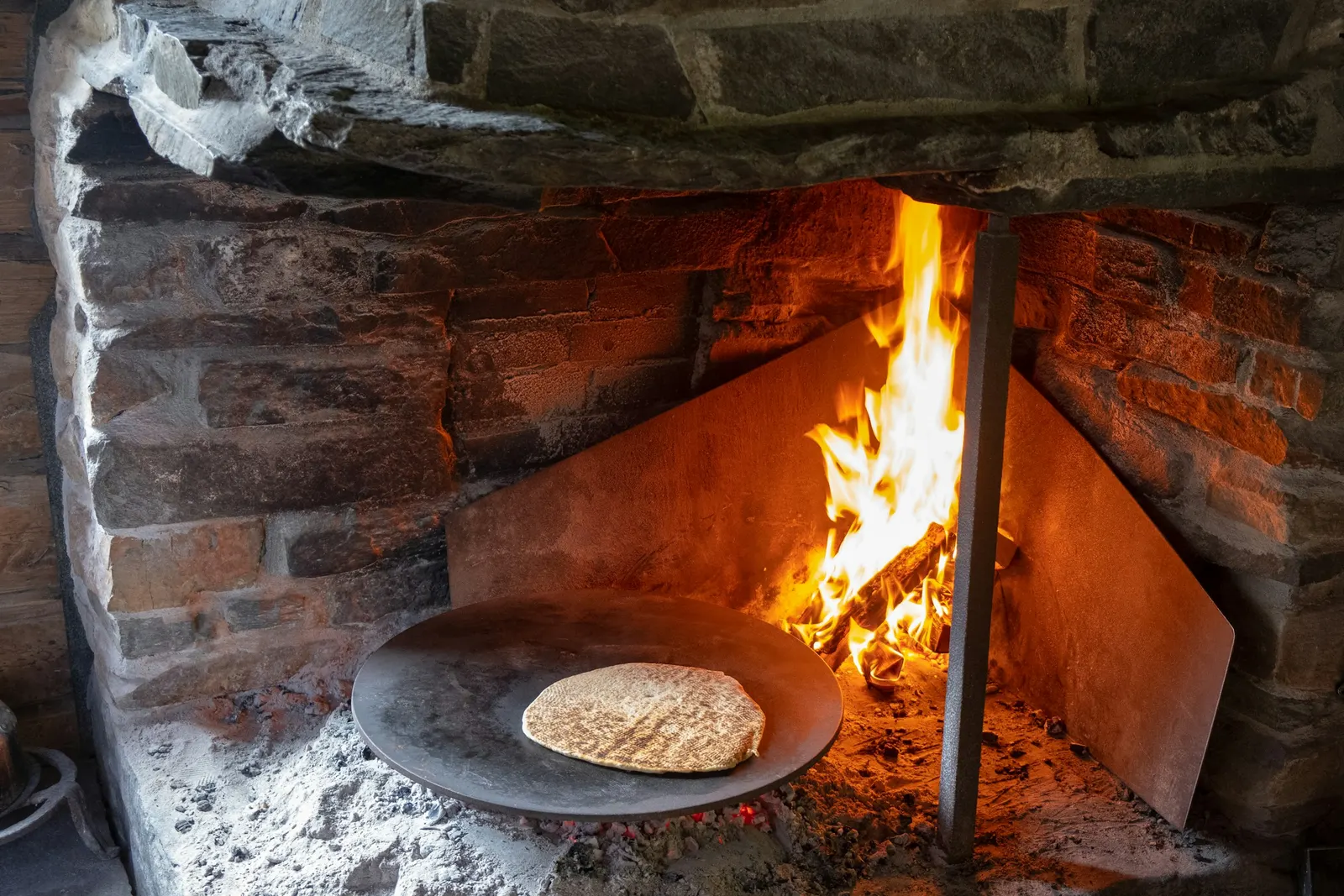
The oven worked in two stages. The top was a high-temperature wood-fired chamber where we baked, roasted, and finished dishes. The bottom was a grill plate. Below both was a metal tray that caught the coals as the wood broke down. When we needed grill heat, we'd pull the burning embers out from below, rake them into the grill section, and cook steaks, vegetables, fish, and bread directly over the coals.
This is not a complicated technique. It's the oldest cooking technique humans have. What surprised me, working it, was how much was happening that no other kitchen I'd worked in could replicate. The wood gave the food a specific kind of smokiness that a gas grill cannot produce. The coal heat was uneven in a way that taught you to cook by feel rather than by timer. The bread that came out of the upper chamber had a crust that gas ovens couldn't make and a crumb that hydration alone couldn't account for. The smoke and the heat and the wood all collaborated.
What the technical description doesn't capture is what it was like to actually run the station.
The heat was beyond anything any other kitchen had prepared me for. Wood-fired ovens run between roughly 700 and 900°F at the dome, and the air around the open door isn't much cooler. The first months on the station, I'd flinch every time I reached in. By the end, I didn't. You stop feeling the burn long before you stop being burned by it. The hair on both my forearms simply stopped existing. It took years after I left that kitchen for arm hair to grow back.
Summer nights were the hardest version of it. Manhattan in July, ninety degrees outside, no air conditioning in a working kitchen, and an open oven running at temperatures that would liquefy aluminum. You took it as long as your body would tolerate, drank water, kept going.
I'd ride the subway home at night smelling like a campfire. Not metaphorically. People around me would shift seats away because the smell was that specific and that strong. The smoke gets into your clothes, your hair, your skin, your sweat. You stop being someone who works around fire and start being someone fire has been working on.
But there was something genuinely magical about it. The crackle of the wood and the settling of coals were the soundtrack of the shift. You learned to read the fire by ear. The trick was anticipating the rush. You couldn't load new wood reactively; the chamber needed fifteen or twenty minutes for fresh wood to char and stabilize the heat. So you'd watch the fire ten minutes before the second seating, listen to it, decide whether to reload, throw in the right number of pieces, then come back to judge whether you'd added too much or too little. That kind of attention, repeated for hours, every night, was closer to a religious practice than to a job.
I worked that station for the better part of a year, and the food I produced from it was, by a meaningful margin, the best food I ever cooked. To this day, I think wood-fired cooking is the most honest form of cooking the trade has.
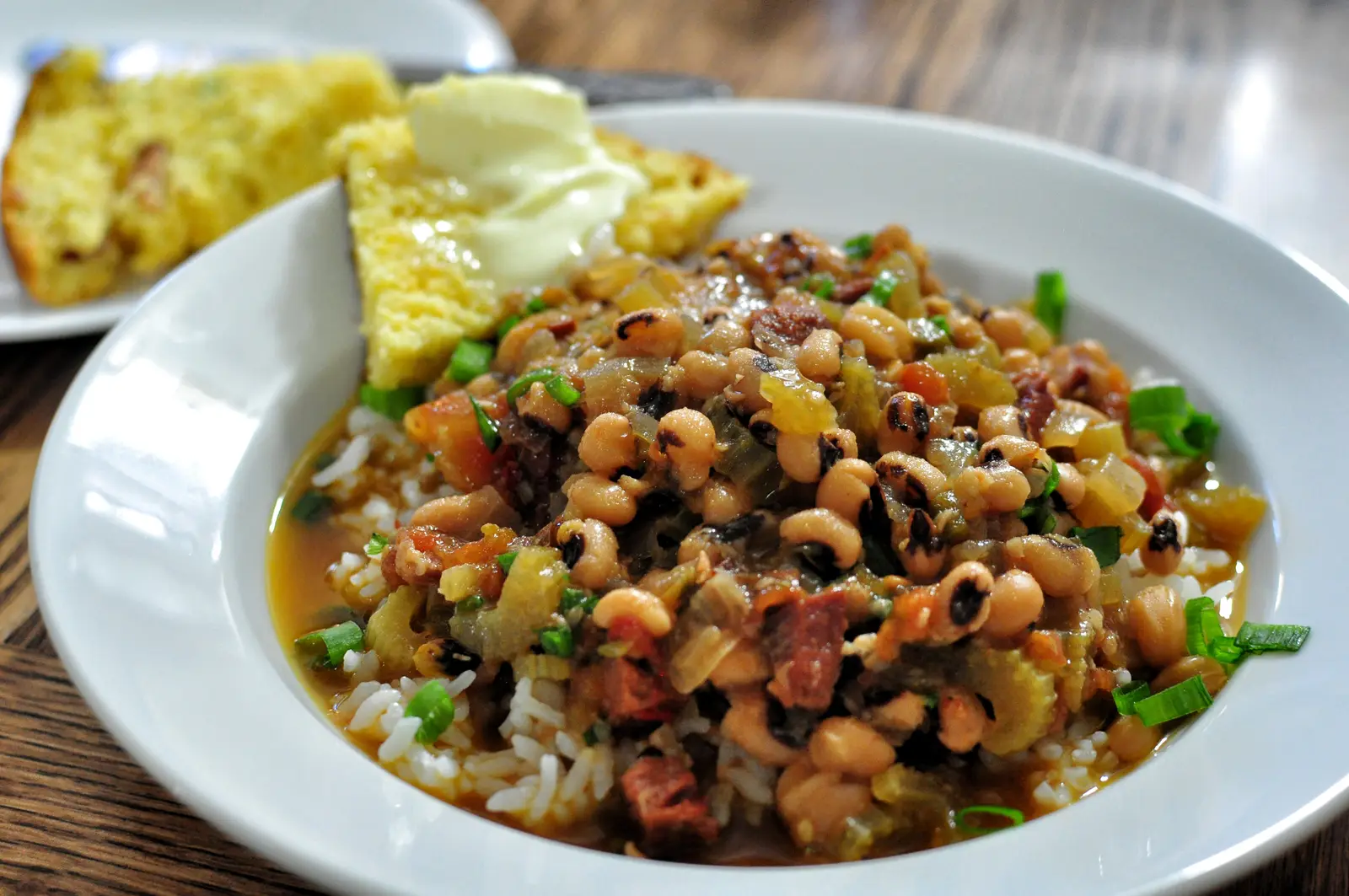
It wasn't the prettiest food. It was, on most nights, almost embarrassingly simple. A whole roasted fish with lemon and oregano. A bowl of beans with garlic sausage and a piece of bread. A bistecca cooked over coals and finished with rosemary, sea salt, and a slick of olive oil. These dishes don't photograph well. They don't have height. They don't have garnish architecture. They have flavor, time, and craft. That turned out to be enough.

Cassoulet, the dish I was embarrassed to name
If you cook in restaurants long enough, every diner, every friend, and every relative eventually asks you the same question: what's your favorite dish?
For years I was embarrassed to answer it honestly. The expectation, when someone asks a chef that question, is some kind of glamorous answer. A rare cut prepared a clever way. A dish from a famous kitchen. Something that signals you have refined taste.
My actual answer was cassoulet.
Cassoulet is a slow-cooked French bean stew from the Languedoc region in southwestern France, traditionally made with white beans (haricots tarbais are the classic choice), duck or goose confit, garlic sausage, and pork. The dish takes a full day to make properly. The beans get soaked overnight. The meats are slow-rendered and confited separately. The whole thing is layered into a deep earthenware pot called a cassole, baked, broken on top, baked again, broken on top, baked again. Traditional Languedoc cassoulet is broken five to seven times during the bake so the crust reforms repeatedly, deepening with each cycle.
What you get at the end is a heavy clay pot full of beans that have absorbed three days of fat, meat, and aromatics, with a deep-browned crust on top. It is not a beautiful dish. It looks, on the plate, like a brown lump of beans with some meat sticking out of it.
It is also one of the most complete dishes ever invented in any cuisine, anywhere. Every bite is layered. The beans carry the flavor of every other component. The crust on top has the texture and density of meat. The fat from the confit gilds the spoon. A single bowl of properly-made cassoulet contains more cooking craft than most twelve-course tasting menus.
I was embarrassed to name it as my favorite because it doesn't sound impressive. It sounds like peasant food because it is peasant food. It was invented in the Middle Ages by people who needed to make survival food taste good with whatever was on hand, and over six hundred years of repetition, it became one of the most refined dishes in French cooking. Without any technique invented after 1500.
The dish doesn't need improving. It is already improved.

A short tour of rustic European dishes worth defending
Cassoulet is one of hundreds. A partial inventory of the rustic European dishes that prove the same point:
France
- Cassoulet (Languedoc): described above. The dish that converted me.
- Daube provençale: beef braised in red wine, garlic, orange peel, and herbes de Provence for a full day. Provençal peasant food, the kind that makes any modern braise feel under-engineered.
- Pot-au-feu: the French national dish, beef and root vegetables simmered for hours. A cooking grandmother's centerpiece. The broth alone is medicine.
- Choucroute garnie (Alsace): sauerkraut slow-cooked with multiple cuts of pork and sausage. A cold-weather full-meal-in-a-pot dish that no fine-dining version has ever improved on.
Italy
- Ribollita (Tuscany): "reboiled" bread-and-bean soup, originally made from yesterday's bread plus whatever vegetables and beans were on hand. Peasant frugality producing one of the best soups in the world.
- Osso buco (Lombardy): veal shanks braised with white wine, vegetables, and gremolata. The marrow alone justifies the dish.
- Bollito misto (Piedmont): an assortment of boiled meats served with bagnèt verd, mostarda, and salse. Looks bewilderingly simple. Eats like a feast.
- Polenta with whatever's stewed on top: the original substrate. Cornmeal porridge slow-cooked, served with braised meat, mushrooms, or cheese. (For more on the broader Italian rustic dining-room tradition, see what a trattoria actually means.)
Germany and Austria
- Sauerbraten: beef marinated for days in vinegar, wine, and spices, then braised. The marinade is the dish.
- Schweinshaxe (Bavaria): roasted pork knuckle. Crackling on top, melt-soft meat underneath. A single dish that defines an entire regional cuisine.
- Eintopf: "one-pot" stew with whatever's seasonal plus meat and root vegetables. The German answer to the universal peasant question of how to feed a family from one pot.
- Käsespätzle: small egg noodles tossed with caramelized onions and aged cheese. Five ingredients. Two hours. Better than most pasta dishes you can order in New York.
Greece
- Stifado: beef or rabbit slow-cooked with pearl onions, red wine vinegar, and warm spices (cinnamon, cloves, allspice). The Greek answer to the long-braise tradition.
- Fasolada: white-bean soup with tomato, olive oil, and herbs. Considered the unofficial Greek national dish. Lentilic simplicity.
- Giouvetsi: lamb baked with orzo and tomato in an earthenware pot. The pot matters.
- Avgolemono: egg-and-lemon soup with chicken and rice. Three ingredients beyond the base, transformed by emulsion.
Scandinavia
- Kalops (Sweden): beef stew with allspice and bay leaf, served with beets and pickled cucumber. Cold-country pragmatism turned into a complete dish.
- Smørrebrød (Denmark): open-faced rye bread with cured fish, pickled vegetables, soft cheese, or roast meat. The whole genre is built around preservation methods that predate refrigeration.
- Gravlax: salmon cured in sugar, salt, and dill for two days. No heat, no cooking. Pure transformation through time.
- Rye breads: dense, dark, sour, fermented over multiple days. Cold-climate baking that produces a bread that lasts a week and tastes more interesting on day three than on day one.
Other regions worth naming briefly
- Hungarian goulash, paprika-deep
- Polish bigos, the hunters' stew of sauerkraut, sausage, and game
- Russian borscht, the beet-and-cabbage soup that anchors a whole cuisine
- Czech svíčková, sirloin in a root-vegetable cream sauce
- Spanish cocido madrileño (a relative of cassoulet in spirit, also a slow-cooked chickpea-and-meats stew, served in three courses)
This list is partial. The complete inventory of rustic European cooking would run to thousands of dishes. Each region within each country has its own.
What modernization usually does wrong
The mistake I watched plenty of ambitious chefs make in the 2000s and 2010s was to take a rustic European dish, isolate one or two components of it, and "improve" them. Deconstruct the cassoulet. Foam the gravy. Sous vide the duck confit. Plate each component separately on a black slate, dotted with microgreens.
The result was almost always worse. The dish lost its weight, its time, its grain. A cassoulet plated as five neat components is a worse cassoulet than the brown lump in the clay pot. The lump is doing things the components can't do alone. The bean broth is enriched by every other element. The crust is doing work no plated arrangement can replicate. The dish is greater than its parts because the parts have been in conversation with each other for a full day.
You can't sous vide your way to that. You can't deconstruct it. You can't elevate it. It's already there.
The same is true of most rustic European dishes. They were perfected by people who had no choice but to make survival food taste of joy. They optimized for centuries. The optimization happened in homes and in tavernas and in farmhouse kitchens with people who, if they didn't get this right, didn't eat well that winter.
That kind of pressure produces better dishes than any tasting menu lab does. (The whole argument against the tasting-menu version of restaurant cooking has its own piece in the case against the tasting menu, and the connection is direct: rustic food is what the tasting-menu format mostly fails to improve on.)
The case for preservation
Here is what I worry about, watching the food world from where I sit now.
These dishes survive because someone, somewhere, is still making them. Cassoulet survives because there are still home cooks in Castelnaudary and Toulouse who learned it from their mothers. Ribollita survives because Tuscan grandmothers are still simmering bread in soup. Sauerbraten survives because German home kitchens still marinate beef for days. Smørrebrød survives because Danish lunch counters still build open-faced rye sandwiches with cured fish.
What happens when the home cooks who carry these dishes don't pass them on? They don't disappear instantly. They start to drift. The restaurant versions get further from the home version. The home version slowly disappears from family kitchens as the generation that knew it ages out. The restaurant chains pick up a simplified version and call it the dish. Twenty years later, the actual dish is gone, replaced by a name without the substance.
This has happened to plenty of dishes already. It will happen to plenty more. The way you prevent it is by cooking the actual dish, eating the actual dish, and demanding that restaurants either cook the actual dish or don't put it on the menu under that name. (The same instinct that protects food cultures from being flattened by commercial pressure also lives in the way working alongside Mexican cooks in NYC kitchens taught me what real hospitality means. Real cooking lives in real homes, and it dies when the homes stop cooking it.)
Cassoulet is six hundred years old. Ribollita is at least four hundred. Sauerbraten goes back to medieval German monasteries. These are pieces of the human food record. They are not to be casually modernized into "concept reinterpretations." They are to be cooked, eaten, taught, and preserved.
What I carried out of that kitchen
I left the wood-burning oven kitchen sometime in the mid 2000s. I went on to other restaurants, eventually to corporate dining, eventually to tech and Crewli and now Sobremesa Press. (The path of leaving cooking is its own piece, in the honest case for and against becoming a chef.) But the lesson from that station stayed with me longer than almost anything else from the trade.
The lesson: most modern cooking is harder than it needs to be, and most rustic European cooking is exactly as hard as it needs to be. The dishes already know what they're doing. The job of a cook is to learn what they want and give it to them. Not to improve on them. Not to reframe them. Not to elevate them. Just to make them well. That same instinct, scaled down to a home kitchen, is what it looks like to learn to cook without leaning on a recipe.
Sometimes the simplest dish is the most refined. Sometimes the most refined dish is the simplest one.
The cassoulet doesn't need fixing. None of it does. It just needs to keep being cooked.
FAQ
What is rustic European cuisine?
Rustic European cuisine refers to the traditional, peasant-origin cooking of European regions: slow-braised meats, hearty bean and grain dishes, fermented and preserved foods, wood-fired breads, and one-pot stews. It is the cooking that fed European farming, fishing, and working-class communities for centuries before industrialization. Examples include French cassoulet and pot-au-feu, Italian ribollita and bollito misto, German sauerbraten and schweinshaxe, Greek stifado and fasolada, and the Scandinavian preserved-food and rye-bread traditions.
What does "rustic" mean in cooking?
"Rustic" in cooking refers to food that is plainly presented, generously portioned, traditionally prepared, and rooted in regional peasant or farmhouse traditions. It typically uses humble ingredients (beans, root vegetables, tougher cuts of meat, day-old bread, preserved foods) and relies on long cooking times, careful seasoning, and time-tested technique rather than visual presentation or rare ingredients.
What is cassoulet?
Cassoulet is a slow-cooked French bean stew from the Languedoc region in southwestern France. The traditional recipe uses white beans (haricots tarbais), duck or goose confit, garlic sausage, and pork, baked together in a deep earthenware pot called a cassole. The dish takes a full day to make properly and is traditionally broken on top and re-baked five to seven times during cooking to deepen the crust. Its three classic regional versions come from Castelnaudary, Toulouse, and Carcassonne.
Why is rustic European food better at restaurants with wood-burning ovens?
Wood-burning ovens add three things gas equipment cannot: real smoke (which alters protein and fat chemistry in distinctive ways), uneven thermal radiation (which produces textural variation in crust and char), and the ability to cook over wood coals (which produces grilling heat with smoke character built in). Rustic European dishes were largely developed in kitchens with wood-fired ovens or hearths, so the cooking method matches the recipe's origin in a way modern equipment cannot fully replicate.
Which rustic European dishes should I try first?
For first-time eaters of rustic European cooking, the easiest entry points are: French cassoulet or pot-au-feu, Italian ribollita or osso buco, German schweinshaxe or käsespätzle, Greek fasolada or stifado, and Scandinavian rye-bread-and-smoked-fish smørrebrød. None of these require unusual ingredients in the United States, and all of them reward a slow-cooked, full-attention preparation rather than a rushed weeknight version.