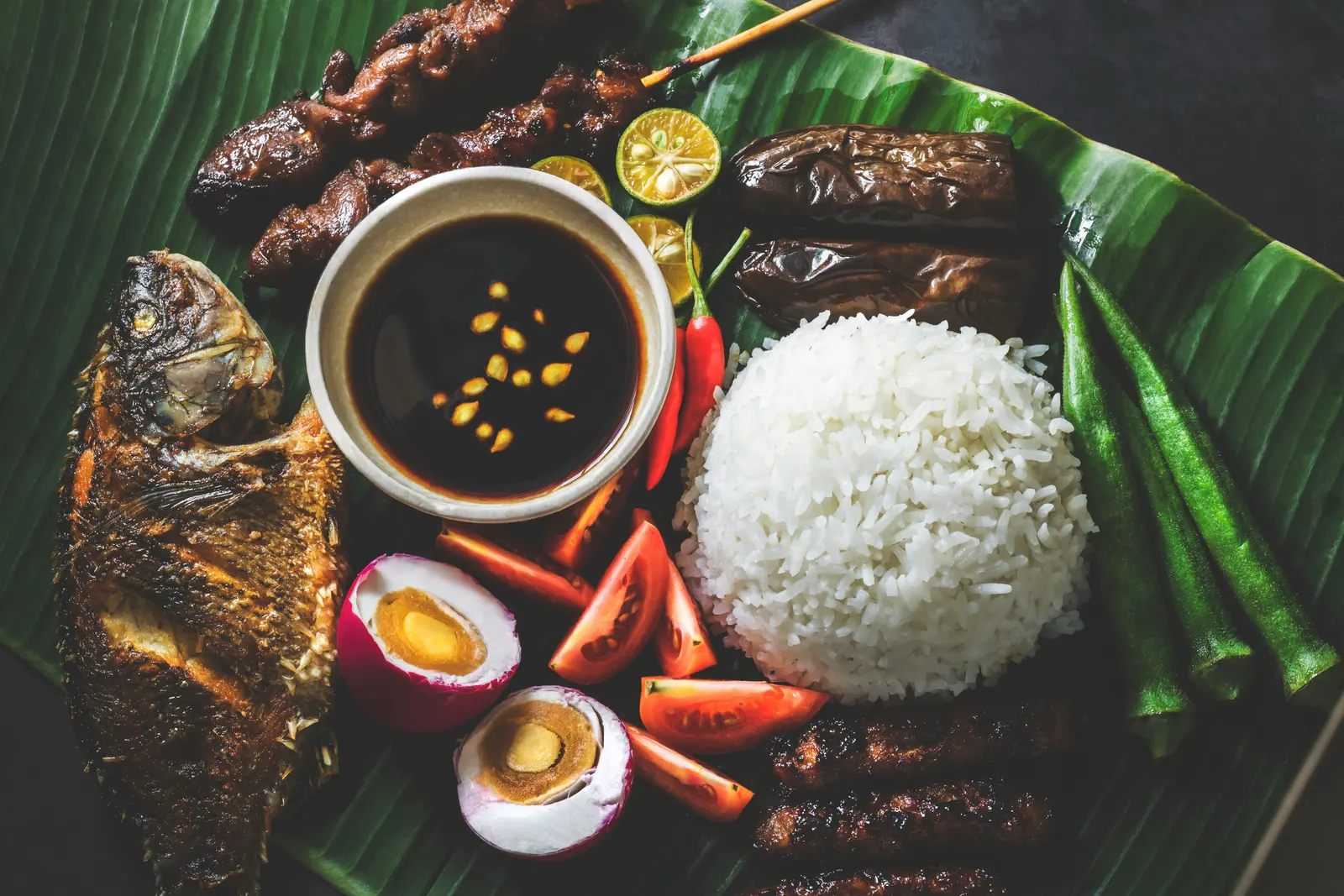
Filipino food is the cuisine of the Philippines: shaped by indigenous Malay traditions, three centuries of Spanish colonial rule, Chinese trade, American occupation, and a wide vocabulary of pork, chicken, seafood, vegetables, vinegars, and rice. It is one of the most under-represented major cuisines on the global stage. Filipino home cooking, as it is actually eaten inside Filipino households, is rich, sour, garlicky, slow-cooked, and built on shared dishes at long tables. I learned this not from a cookbook and not by being Filipino, but by spending years of my childhood at my best friend's family's table in Queens.
Queens, in the late eighties
I grew up in Queens. My parents are Colombian, and our house was a Colombian house: my mother cooking the food she had grown up with, my father playing salsa, the smell of sofrito coming out of the kitchen on a Sunday. My best friend, the oldest friend I have, is Filipino. We met in the sixth grade. By the end of that school year I was at his family's apartment regularly, and his family essentially absorbed me into their kitchen. His mother fed me the way she fed her own kids, generously and without ceremony.
I am not Filipino. But I grew up with Filipino food the way someone grows up with the music their best friend's older brother played in the next room. By osmosis. By proximity. By being trusted at someone else's table for long enough that the table started to feel like mine too.
The rice was always ready
The first thing you notice in a Filipino kitchen is the rice cooker. It is always on. Not often. Always. Filipino rice culture is intense in a way that takes a non-Filipino a while to understand. Most Filipino savory dishes are designed to sit on top of rice, and the meal logic assumes rice is the constant and the dishes are the variable. Breakfast is rice and a protein and an egg. Lunch is rice and whatever is in the fridge. Dinner is rice and three or four shared dishes. The leftovers at midnight are rice and whatever has cooled on the stove. The Colombian household I grew up in had its own rice, but it was a sometimes-food. In a Filipino household, rice is the air. That same rice culture is why two scoops anchor every Hawaiian plate lunch, a dish Filipino plantation workers helped build.
When the rice is day-old and starting to dry out, it becomes sinangag: garlic fried rice. Cold rice broken up, hit with garlic and oil in a hot pan, sometimes a beaten egg cracked in at the end. That is what the breakfast plates are built on, and what leftover rice almost always becomes.
The 7-Up pork BBQ
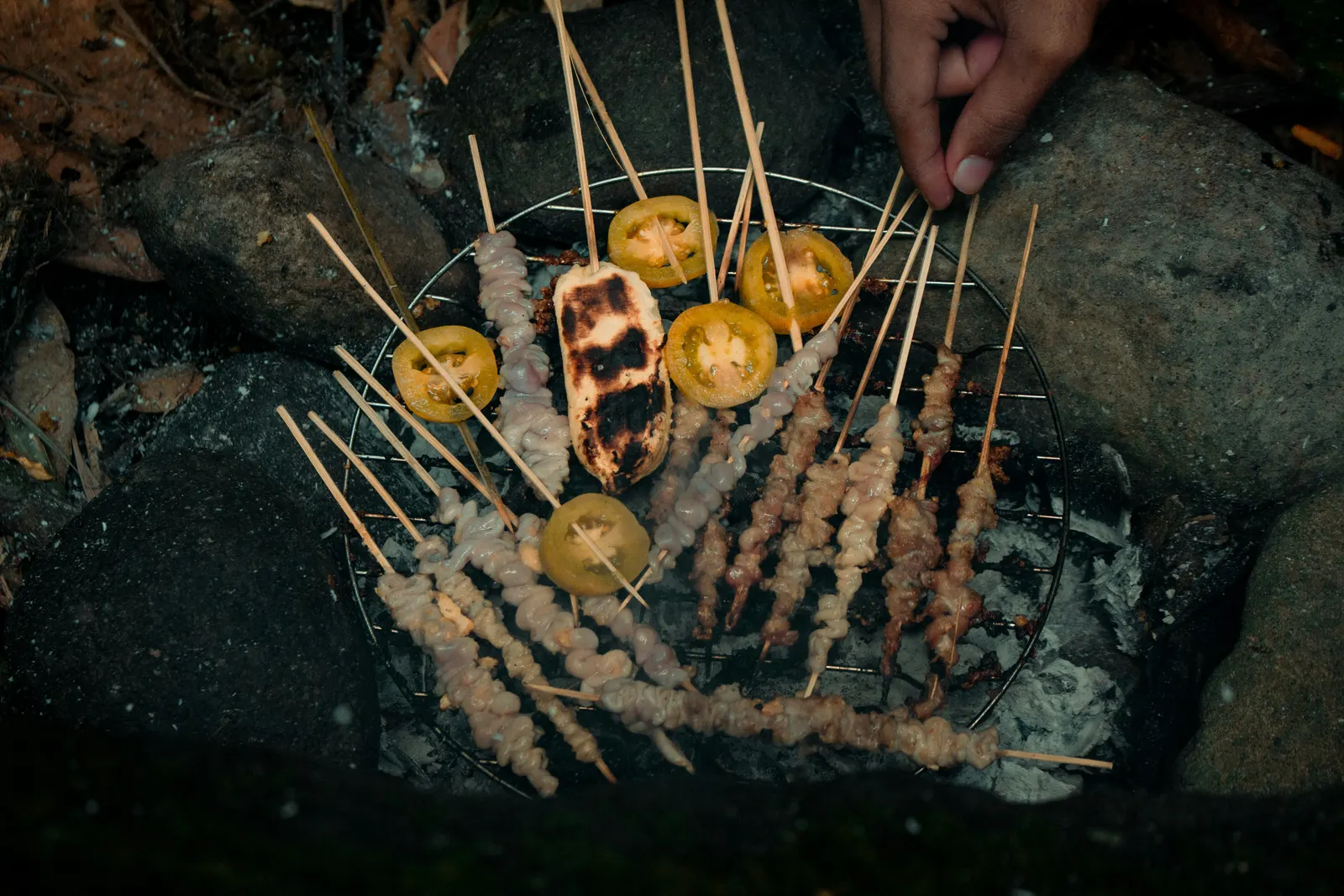
The Filipino dish that anchored every family party at my friend's house was the pork BBQ. His mother made it. Pork shoulder, sliced thin, marinated for hours, threaded onto bamboo skewers, and grilled over charcoal. The skewers were always the first thing to disappear from the spread. The tray would empty before half the side dishes had been touched.
What makes Filipino BBQ taste different from any other barbecue is the marinade. The build is soy sauce, banana ketchup (a Filipino pantry staple, yellow, slightly sweet, made from mashed banana, sugar, vinegar, and spices), calamansi juice, garlic, brown sugar, black pepper, and one less-obvious ingredient: a clear lemon-lime soda like 7-Up or Sprite. The carbonation and citric acidity tenderize the pork. The sugars in the soda caramelize on the grill into a slightly sticky lacquer. The whole thing tastes nothing like American barbecue, which leans on smoke and dry rub. The Filipino version leans on sweetness, vinegar, fermentation, and acid. Most underseasoned home cooking is underseasoned for acid in food, and Filipino cooking is one of the great unsung acid-forward traditions.
Cornsilog and the Filipino breakfast portmanteau
The first time you encounter a Filipino silog plate, the name is a portmanteau that needs explaining. Cornsilog, for example, is three words jammed together: CORNed beef, SInangag (garlic fried rice), and itLOG (egg). Corn-si-log.
This is the entire structure of Filipino breakfast. The silog format is a portmanteau: take any breakfast protein, abbreviate it, then add "-silog." You get:
- Tapsilog (tapa, the cured beef)
- Tocilog (tocino, sweet cured pork)
- Longsilog (longganisa, the garlicky Filipino sausage)
- Spamsilog (Spam, taken seriously)
- Bangsilog (bangus, milkfish)
- Cornsilog (canned corned beef hash)
Whatever the protein, the formula is the same: a portion of the protein, a mound of garlic fried rice, a fried egg, often a small dish of vinegar with garlic and chili for dipping. It is the most efficient breakfast format I have encountered. The American breakfast (three eggs, bacon, hash browns, toast) is by comparison a sprawling, unfocused affair. Cornsilog is one plate, three components, infinitely combinable. The Filipino kitchen had figured out the breakfast plate decades before American food media decided "the bowl" was a meal format.
Dinuguan
Dinuguan is a Filipino stew of pork, often including offal, simmered in pig's blood, vinegar, garlic, chili peppers, and aromatics. The blood is what gives the dish its color (very dark, almost black) and its mineral depth. It is traditionally eaten with rice or with puto (steamed rice cakes).
Dinuguan is also one of the most famous "kid-test" dishes in the Filipino cookbook. There is a long-running joke in Filipino households of telling non-Filipino friends that the dish is "chocolate meat" and seeing if they take a second helping before the punchline lands. The first time I had dinuguan, my friend pulled this one on me at a Filipino restaurant. He told me it was "chocolate meat." I went for it. By the time he came clean about what was actually in the bowl I was already on my second helping. I finished the dish. It was great.
Despite its appearance and the joke that surrounds it, dinuguan is a beloved home cooking staple, not a shock dish. It is rich, vinegary, garlicky, faintly sour, faintly metallic, and at its best one of the most distinctive savory stews of any cuisine.
Lumpia were the party currency
Every Filipino family gathering had a tray of lumpia. Not maybe. Always. Specifically lumpiang Shanghai: small, finger-thin, fried spring rolls filled with ground pork, onion, garlic, and sometimes shredded vegetables, served with a sweet-and-sour dipping sauce. The kids ate them straight off the tray as they came out of the oil. The adults ate them slower, with rice, as part of the larger spread.
Lumpia are the Filipino food the world has agreed it is allowed to love. They are at every Filipino restaurant abroad. They are the dish non-Filipinos can name. What is harder to convey is the way lumpia functions in a Filipino household: it is the party currency. You bring lumpia to a friend's parents' house. You bring lumpia to a christening. You bring lumpia to a funeral. They are made in batches, frozen, fried as needed. The making of lumpia is itself a social event, a circle of family around a table rolling them together.
When my friend group from around the city came through his house, the lumpia tray was always the first thing to get destroyed. Hungry sixteen-year-old boys who knew exactly what lumpia was would build mountains of them on their plates. The aunties refilled the tray. The boys cleaned it again.
Sinigang, the sour soup
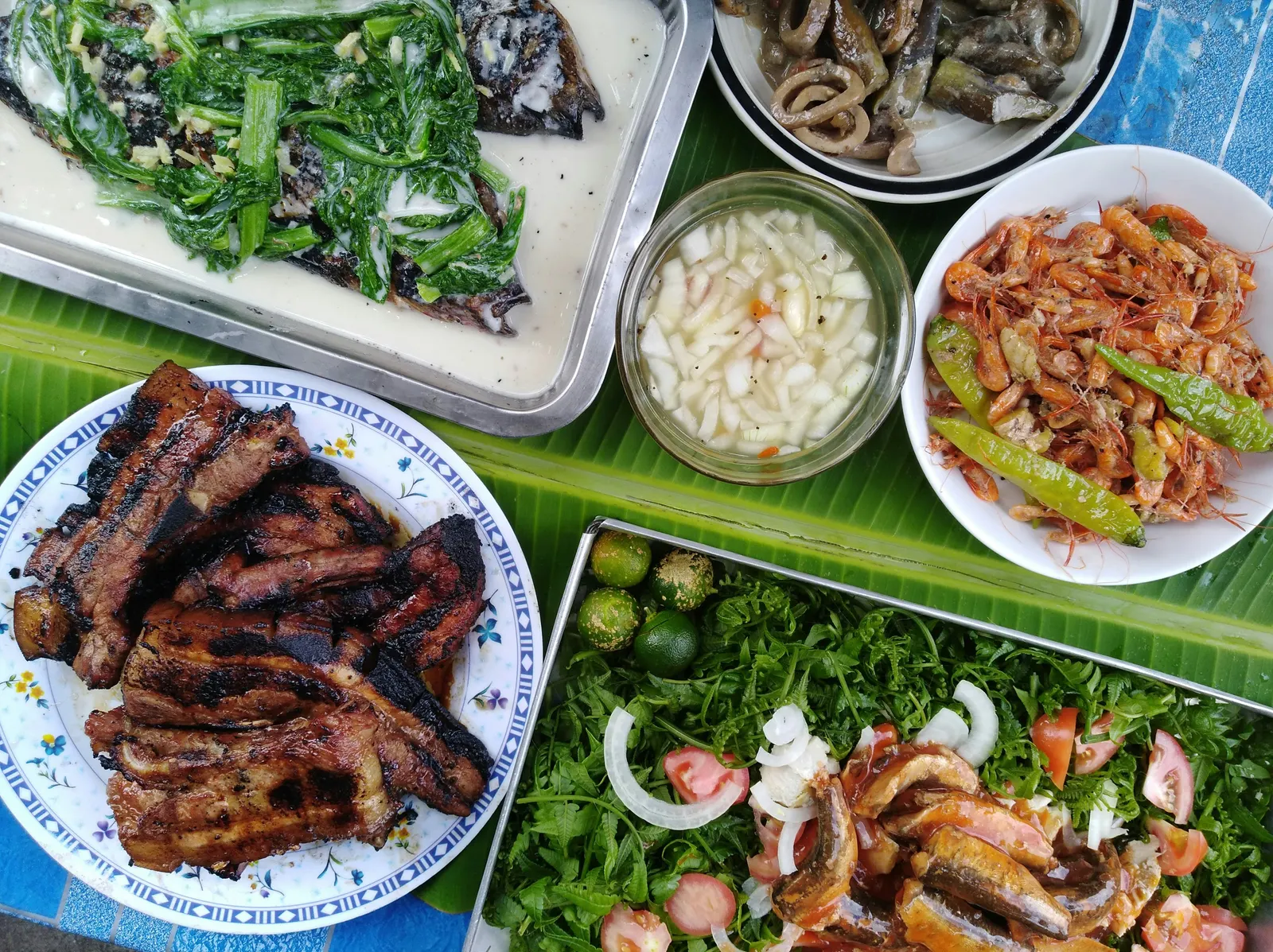
Sinigang is one of the great Filipino contributions to soup as a category. A clear, sour, vegetable-and-meat soup in a thin tamarind-flavored broth, full of leafy greens (often water spinach, kangkong), with chunks of pork, sometimes shrimp, sometimes a piece of bony fish. The sourness is not a finishing acidic squeeze the way most cuisines use it. It is the structural backbone of the broth. The vegetables (kangkong, daikon, eggplant, long beans, okra, taro) go in based on what is around. The protein varies. The constant is the sour broth and the rice on the side.
Sinigang is the dish I most associate with the cold gray months in New York City. The kind of stretch where the snow on the curbs has already turned dirty and the sun has been gone for weeks — sinigang on the stove at my friend's house was exactly what the weather was asking for. Hot, sour, salty, full of greens, eaten over rice.
The same "soup is whatever you have" instinct is at the heart of how to make soup from anything in your fridge, which is the closest article I have written to honoring the way that Filipino kitchen ran.
Balut
Balut is a duck egg that has been incubated for 14 to 21 days and then boiled, so what is inside is a partially developed embryo. You eat it from the shell, with salt or vinegar or chili sauce, usually as an evening snack with beer. It is a popular street food across the Philippines and a beloved one. It is also routinely held up by Western media as the "shocking" Filipino food, which is unfair to it. Inside the Philippines it is unremarkable, the way oysters or escargot are unremarkable to people who grew up eating them.
I was introduced to balut at my friend's house growing up. I was freaked by it. I never had the nerve to try it as a kid. I would try it now. Years of cooking professionally have changed what I am willing to eat — dishes that would have ended the meal for me as a kid are staples in my kitchen as an adult. Mondongo, the Spanish-Latin tripe stew, and its Italian counterpart, are the clearest example. Both are delicious. Both are dishes I would have refused at twelve. Balut probably belongs on the same list.
The other dishes that came across that table
Filipino home cooking goes much further than the few dishes I have so far named, and the rotation at my friend's family's house was wide. Adobo, the unofficial national dish — chicken or pork braised in vinegar, soy sauce, garlic, peppercorns, and bay leaves — was on the table often enough to feel like the basic chord the cuisine is built on. Pancit, the long stir-fried noodles symbolizing long life, was the birthday food: never the main course, always present. Kare-kare, the deep peanut-based oxtail and vegetable stew with shrimp paste on the side, was special-occasion food. Halo-halo, the iconic Filipino dessert of shaved ice, evaporated milk, sweet beans, jellies, fruit, leche flan, and a scoop of ube (purple yam) ice cream all mixed together with a long spoon, turned up in summer — the name literally means "mix mix." Champorado, chocolate rice porridge sometimes served with dried fish on the side for the salt-sweet contrast Filipino breakfast loves, sat in a category I had no other name for at the time. Pandesal, the small slightly sweet morning bread, came out of Filipino bakeries by five in the morning. Gulaman, agar jelly cubes in sweet syrup and condensed milk, was the everyday cousin of halo-halo. Buko pandan, the gelatinous green dessert of young coconut strips and pandan jelly bound in sweetened cream, carries a vanilla-grass smell that defines a lot of Filipino sweet cooking.
And then there is the avocado milkshake. Ripe avocado, ice, condensed milk, blended thick. In the Colombian household I grew up in, avocado was strictly savory: guacamole, sliced over arepas, dressed with lime. The Filipino move of putting avocado in dessert was one of the small revelations of growing up between two food cultures.
Christmas, lechon, and the Filipino party table
Lechon, a whole roasted pig with crackling skin, is the centerpiece of the Filipino Christmas table the way the turkey is the centerpiece of the American Thanksgiving table, except that lechon is more striking visually, more aggressively flavored, and more communal in the way it gets carved and shared. Around the pig sits everything else: pancit for long life, lumpia by the tray, adobo, rice in its constant supply, kare-kare for the special-occasion bracket, gulaman and buko pandan and halo-halo on the dessert end.
The Filipino Christmas table is one of the largest food gatherings of any culture I have encountered. American Christmas as packaged on television assumes a sit-down meal at a specific hour. Filipino Christmas assumes a slow-motion party that runs for most of the day. The lechon is what you start with. The conversation is what continues. The pig at the center of it is worth knowing on its own terms, from the famous Cebu styles to why the skin is the prize: the whole roast pig of every Filipino fiesta.
Why Filipino food felt like home to a Latino kid
When I started actually paying attention to why Filipino food worked for me, the answer was structural. The Philippines and Latin America were both Spanish colonies for several centuries. The Spanish brought their pantry, their techniques, and their religion, and both regions absorbed and remade what was given to them.
A small honest note on this. Colonization is colonization. It was brutal in both places, in different ways and across different timelines, and there is nothing about Spanish colonial history in either region that should be romanticized. But the cultural collision that the colonization triggered, ugly origins and all, produced two of the most distinctive food cultures on earth. Filipino food in particular is one of the great unsung cuisines, and what the Filipino kitchen did with what the Spanish brought, plus what the indigenous tradition already had, plus what Chinese trade and Malay neighbors added, is remarkable. I can hold both things at the same time: history is what it is, and the food that emerged from it is incredible.
The food carries the evidence:
- Both cuisines build around rice as the daily base. Filipino sinangag and Latino arroz are cousins, made differently but serving the same role.
- Both treat vinegar, garlic, and slow braising as a foundation. Filipino adobo and Latin American escabeche are not the same dish, but they are cousins again. Both lean on acid to break down meat over long cooking. Filipino cuisine is, structurally, one of the most acid-forward home cooking traditions in the world: vinegar in adobo, sour tamarind in sinigang, calamansi at every table, fermented shrimp paste as a condiment, sour green mangoes as a snack.
- Both have multiple shared dishes at the center of a meal, rather than one entrée per person. The whole social architecture of dinner is similar: the table fills with three or four dishes, you eat from each in rotation, the meal lasts hours, conversation is the point. This is the same instinct that I have written about in what sobremesa actually means in Spain: the long, slow hour after the food is cleared and the conversation gets real. Filipino households had it too. Nobody called it sobremesa, but it was the same thing.
- Both treat food as the medium of family love. The Colombian household I grew up in and the Filipino household I half-grew-up-in were different in dozens of ways, but both believed that feeding people was how you said you loved them.
I did not see any of this as a kid. I just felt that walking into a Filipino kitchen felt like walking into a kitchen I already knew, even though the dishes were unfamiliar. As an adult who has cooked in dozens of professional kitchens, including a long stretch of NYC line years that taught me what most of New York's restaurants are actually like, I think the kid-instinct was right. The two cuisines share a soul.
What that kitchen taught me about food
The friendship is still real. The friend is still my friend. His family is still his family, and they fed me for years for no reason other than that I was their son's friend and that I was hungry when I walked in the door. That kind of generosity does not get repaid; it gets passed forward, and most of what I now believe about food and hospitality I learned from being on the receiving end of it.
What I took from that decade is hard to summarize, but I will try: that a kitchen is a moral object as much as a cooking object. That rice on the stove all day is not a logistical decision but a posture toward the people who are going to walk in the door later. That a marinade can be invented from a soda can on the counter and still be better than the steakhouse version of the same dish. That the food of a culture you do not belong to can still be the food of your childhood, if the people who fed you decided you were allowed in.
I am not Filipino. I will never be Filipino. But Filipino food is one of the foundations of how I think about food, and I owe that to a family in Queens who never made me feel like a guest. The same way the Mexican cooks I later worked next to in NYC restaurants taught me what real hospitality looks like from the back of the house, which is the same lesson from a different cuisine, a different decade, a different doorway.
That is what growing up on someone else's food teaches you. That food can carry love across borders that nothing else carries. That a kitchen door is wider than a passport. That the people who fed you are, in some lasting way, the people who made you.
FAQ
What is Filipino food?
Filipino food is the cuisine of the Philippines, a Southeast Asian country shaped by indigenous traditions, three centuries of Spanish colonial rule, Chinese trade influence, American occupation, and Malay neighbors. The result is a cuisine built on rice, vinegar, garlic, soy, fish sauce, and a wide vocabulary of pork, chicken, seafood, and vegetable dishes. Hallmarks include adobo (vinegar-soy braise), sinigang (sour tamarind soup), lumpia (spring rolls), lechon (whole roast pig), pancit (noodles), and the breakfast "silog" family of dishes.
What are the most popular Filipino dishes?
The unofficial national dish is adobo, chicken or pork braised in vinegar, soy sauce, garlic, peppercorns, and bay leaves. Other staples include sinigang (sour soup), lumpia (spring rolls), pancit (stir-fried noodles), kare-kare (peanut oxtail stew), lechon (whole roasted pig), sisig (sizzling chopped pork), and the silog breakfast plates. Halo-halo is the iconic Filipino dessert: shaved ice with sweet beans, fruit, and ube ice cream.
Why is rice always served with Filipino food?
Rice is the foundation of nearly every Filipino meal. Most savory dishes are designed to be eaten over rice, and a typical Filipino household keeps a rice cooker on for most of the day. The breakfast "silog" format makes rice central to the morning meal as well: garlic fried rice (sinangag) plus a protein plus an egg. In many Filipino kitchens, the rice cooker never really turns off.
What is Filipino BBQ marinated in?
Filipino pork BBQ marinade is typically built from soy sauce, banana ketchup, calamansi or lemon juice, garlic, brown sugar, black pepper, and one less-obvious ingredient: a clear lemon-lime soda like 7-Up or Sprite. The soda's carbonation and citric acidity tenderize the pork and add a sweet finish. Pork shoulder is cut into thin strips, marinated for several hours or overnight, threaded onto bamboo skewers, and grilled over charcoal.
What is dinuguan?
Dinuguan is a Filipino savory stew made with pork (often offal) simmered in pig's blood, vinegar, garlic, chili peppers, and aromatics. The blood is what gives the dish its deep dark brown, almost black color, and a rich, slightly tangy, mineral flavor. It is traditionally eaten with white rice or with puto (steamed rice cakes). Despite its appearance, it is a beloved home cooking staple, not a "shock" dish.
What is silog and what does the -silog ending mean?
Silog is a Filipino breakfast portmanteau: SInangag (garlic fried rice) plus itLOG (egg). Adding a protein prefix gives you the breakfast format: tapsilog (cured beef), tocilog (sweet cured pork), longsilog (Filipino sausage), spamsilog (Spam), bangsilog (fried milkfish), and cornsilog (corned beef). All of them are served with a fried egg on top of garlic fried rice, with the protein on the side.
What is balut and why is it considered controversial?
Balut is a fertilized duck egg incubated for 14 to 21 days, then boiled and eaten in the shell with salt or vinegar. It is a popular street food in the Philippines, served as a snack with beer or as a protein-rich evening food. It is often called controversial in Western media because the partially-developed duck embryo is visible inside, but in the Philippines it is unremarkable and culturally beloved, similar to how Westerners view oysters or escargot.
How is Filipino food influenced by Spanish cuisine?
The Philippines was a Spanish colony from 1565 to 1898, and the influence on the cuisine is immense. Dishes like adobo, lechon, escabeche, mechado, afritada, menudo, leche flan, ensaymada, and pandesal are direct Spanish lineage or Filipino adaptations of Spanish techniques. Filipino cuisine also shares Spanish ingredients (vinegar, garlic, olive oil, paprika, tomatoes) and the cultural pattern of long, multi-dish family meals. This is part of why Filipino food can feel familiar to Latin American eaters even though the geography is opposite.


