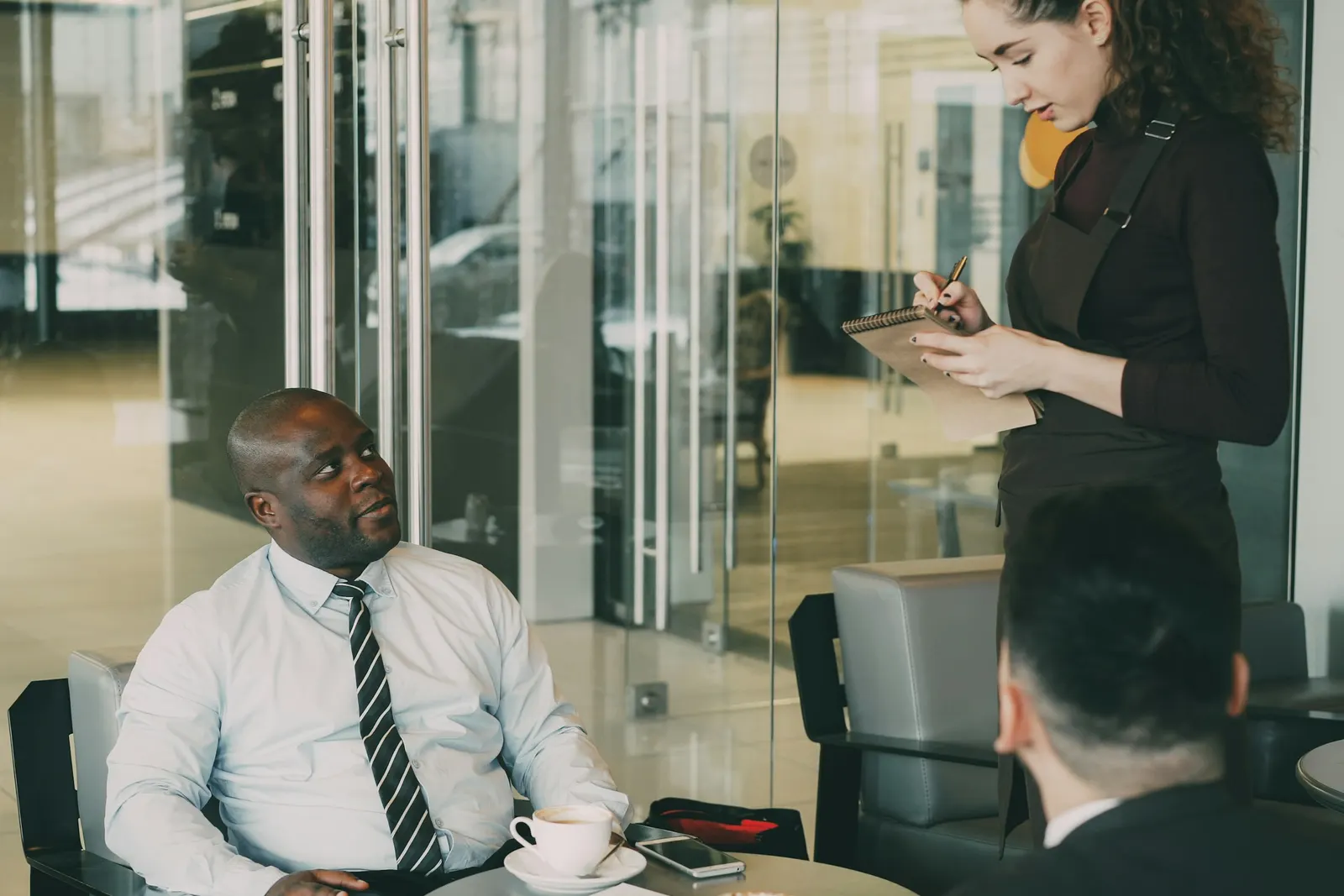
Business dinner etiquette is the set of conventions for handling a meal taken for professional reasons: a client dinner, an interview over lunch, a meeting with a colleague or an investor. The key thing to understand is that a business meal is not really a meal. It is a meeting that happens to involve food, and it doubles as a quiet test. How you treat the server, how you order, how you hold a conversation, and how you handle the check are all being read. This guide covers how to host or attend a business meal well, and it is a companion to the broader guide to dining etiquette. The opposite occasion, a restaurant date night, follows almost exactly the inverse logic: less formal room, shareable food, drinks meant to relax rather than to project competence.
Why a business meal is really a test
Companies move meetings to restaurants for a reason. A conference room shows you what someone is like when they are performing professionalism. A meal shows you what they are like as a person.
Over ninety minutes at a table, a lot becomes visible. Whether someone is gracious to a server who has no power over them. Whether they can carry a conversation that is not strictly about work. Whether they handle a small problem, a wrong order, a slow kitchen, with ease or with friction. Whether they listen. Whether they know how to be a guest. None of that shows up on a résumé, and all of it shows up at dinner.
This is not a reason to be anxious. It is a reason to be deliberate. You do not need flawless fine-dining technique. You need to be considerate, easy to be around, and unbothered by the small mechanics of the meal so your attention can stay on the people. Get that right and the "test" takes care of itself.
Before the meal
Much of business dining is decided before anyone sits down, and most of it falls on the host.
If you are hosting, the choice of restaurant is yours and it carries weight. Pick somewhere appropriate to the guest and the occasion, quiet enough to actually talk, and ideally a place you have been before, so nothing about the room surprises you. Make the reservation, and confirm it. Tell your guest where and when clearly. The general principle behind this choice is that going out to eat is mostly an occasion-fit problem: the right room for a business meal is rarely the right room for any other kind of meal.
Dress for it. A business meal usually calls for business casual or a step above, and the safer move is slightly more formal rather than less. If you do not know the restaurant's expectations, our restaurant dress code guide breaks down what each level actually means.
Arrive on time, which for a host means a few minutes early. Being the one already seated when your guest arrives is part of hosting well. If you are the guest, on time means on time; lateness to a business meal is read as a lack of seriousness, and there is a real logic to arriving at a restaurant at the right moment.
Ordering and alcohol
The menu is a small minefield, and it is navigable with two rules.
First, order in the middle. Not the most expensive thing on the menu, which looks like you are taking advantage of a host, and not conspicuously the cheapest, which can look like discomfort. Aim for the middle of the price range, and take cues from the host on how many courses: if the host proposes an appetizer, it is fine to join; if they order light, follow. Avoid food that is messy or hard to eat while holding a conversation. The right order is the one that keeps you in the discussion instead of fighting your plate. Knowing how to read a restaurant menu quickly helps here, so you are not buried in it while everyone waits.
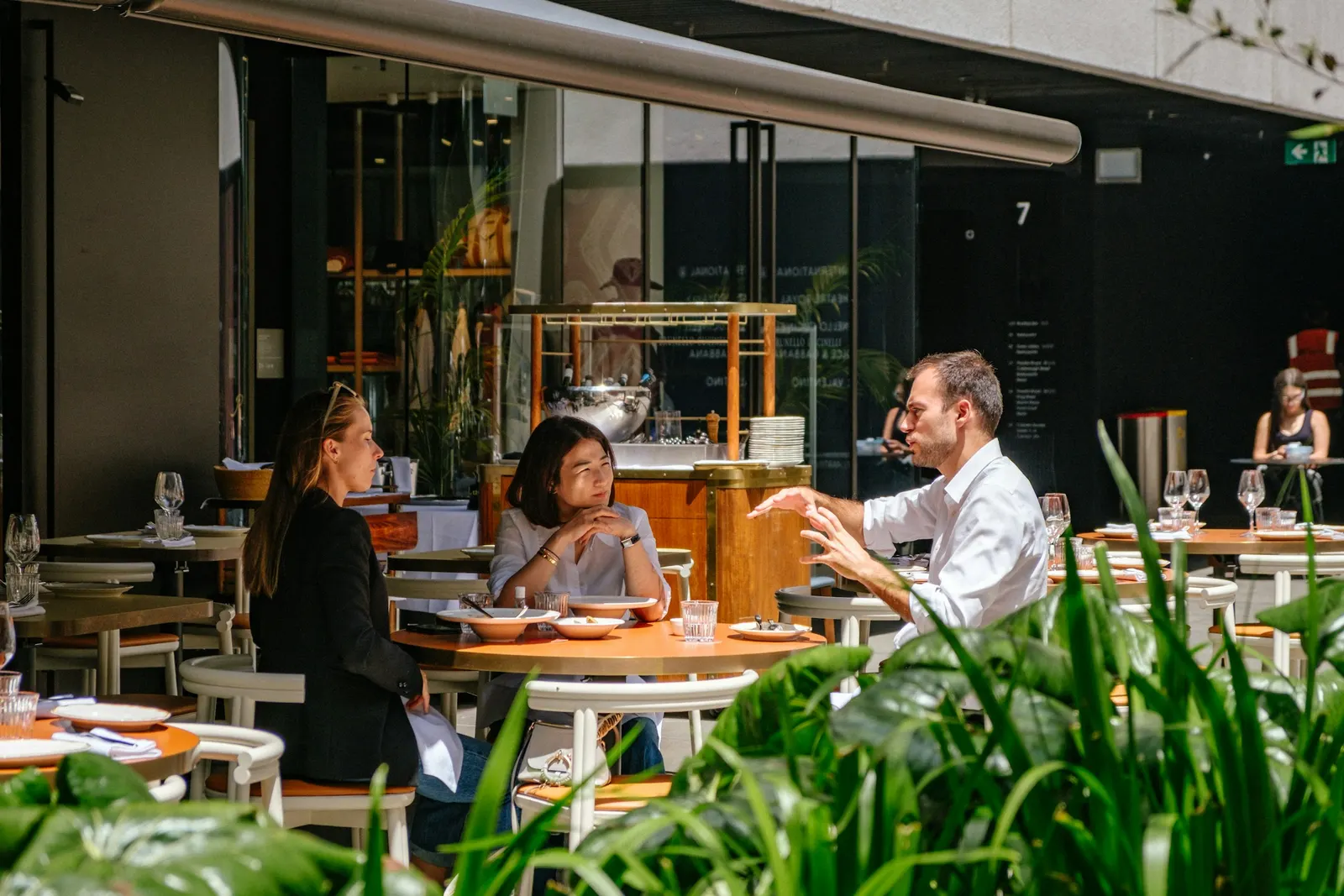
Second, be careful with alcohol. Follow the host's lead: if the host does not order a drink, you should not either. If alcohol is on the table, treat one drink as the ceiling, and understand that skipping it entirely is always acceptable and never counts against you. The meal is work. Being remembered as slightly too careful costs you nothing. Being remembered as someone who drinks too much in front of colleagues or clients can cost you a great deal.
And keep your phone away. Not face-down on the table, away. A phone on the table at a business meal signals that the person across from you is not quite your priority, which is the opposite of the message you are there to send.
When to talk business
The most common mistake at a business meal is rushing to the agenda.
A meal has a rhythm, and business has a place in it, but not at the start. The opening stretch is for genuine small talk: the kind of unhurried, human conversation that lets people relax and actually read each other. Trying to open the deal before anyone has settled reads as graceless and a little anxious.
The natural window to turn toward business is usually after everyone has ordered, or once the first course has arrived and the table has found its ease. If you are the host, you open that conversation, and you do it with a light, clear transition. If you are the guest, let the host make the turn; they will signal it. The food and the business should feel braided together, not bolted on.
The check
The check has one firm rule: the host pays, and the host is whoever extended the invitation. There is no real ambiguity here.
If you are hosting, handle it smoothly and without drama. The most graceful version is to make payment nearly invisible: many experienced hosts settle the bill discreetly before it ever reaches the table, or step away to handle it, so the meal simply ends without a transactional moment. Do not let the check sit in the middle of the table while everyone studies it.
If you are the guest, do not fight for the check. A single, light offer to contribute is courteous; pressing past that puts the host in the awkward position of insisting. Let them host you. The correct response to being hosted is not to wrestle for the bill. It is a clear thank-you in the moment, and a short follow-up message afterward. That follow-up, brief and genuine, is the real close of a business meal, and skipping it is a quiet missed opportunity.
The mistakes that cost you
Most business-dinner failures are not failures of fine manners. They are failures of judgment and consideration. The ones that actually do damage:
- Arriving late. It reads as a lack of respect for the other person's time.
- The phone. On the table, in your hand, or worse, answered. It tells everyone where your attention is.
- Drinking too much. The single fastest way to undo a good impression.
- Ordering the most expensive thing. It reads as someone who takes advantage when given the chance.
- Treating the staff poorly. Curtness to a server is read, correctly, as a preview of how you treat anyone without leverage over you. Your companions notice every word of it.
- Rushing to business. Opening the agenda before the table has settled.
- Dominating the conversation. A meal is a two-way read. Listening is half of it.
None of this requires polish. It requires being on time, being present, being moderate, and being kind to everyone at the table, including the people serving it. A business meal rewards exactly the qualities it is quietly there to measure.
FAQ
Who pays for a business dinner?
The host pays, and the host is the person who extended the invitation. This is one of the firmest rules of business dining. As a guest, a single light offer to contribute is polite, but you should let the host pay without a real fight over the check. A skilled host makes payment nearly invisible, often by settling the bill discreetly before it ever reaches the table.
Should you drink alcohol at a business dinner?
Be cautious. Follow the host's lead: if the host does not order a drink, do not. If alcohol is on the table, one drink is usually the safe ceiling, and skipping it entirely is always acceptable. The meal is work, and the cost of being seen as slightly too careful is nothing next to the cost of being seen as someone who drinks too much in a professional setting.
When should you bring up business during a meal?
Not immediately. Let the meal settle first with genuine small talk. The natural window to turn to business is usually after everyone has ordered, or once the first course has arrived and the table is comfortable. If you are the guest, let the host open the business conversation; they will signal the shift. Ambushing the table with the agenda before anyone has relaxed reads as graceless.
What should you order at a business dinner?
Order in the middle of the menu's price range, never the most expensive item and not conspicuously the cheapest. Take cues from the host on courses: if they suggest an appetizer, it is fine to have one. Avoid food that is messy or awkward to eat while talking. The goal is an order that keeps you present in the conversation rather than wrestling with your plate.
What should you not do at a business dinner?
Do not arrive late, do not put your phone on the table or take calls, do not drink too much, do not order the most expensive thing on the menu, and do not be anything less than gracious to the restaurant staff. Do not launch into business before the table has settled, and as a guest, do not fight the host for the check. Most business-dinner mistakes are failures of judgment and consideration, not of fine manners.


