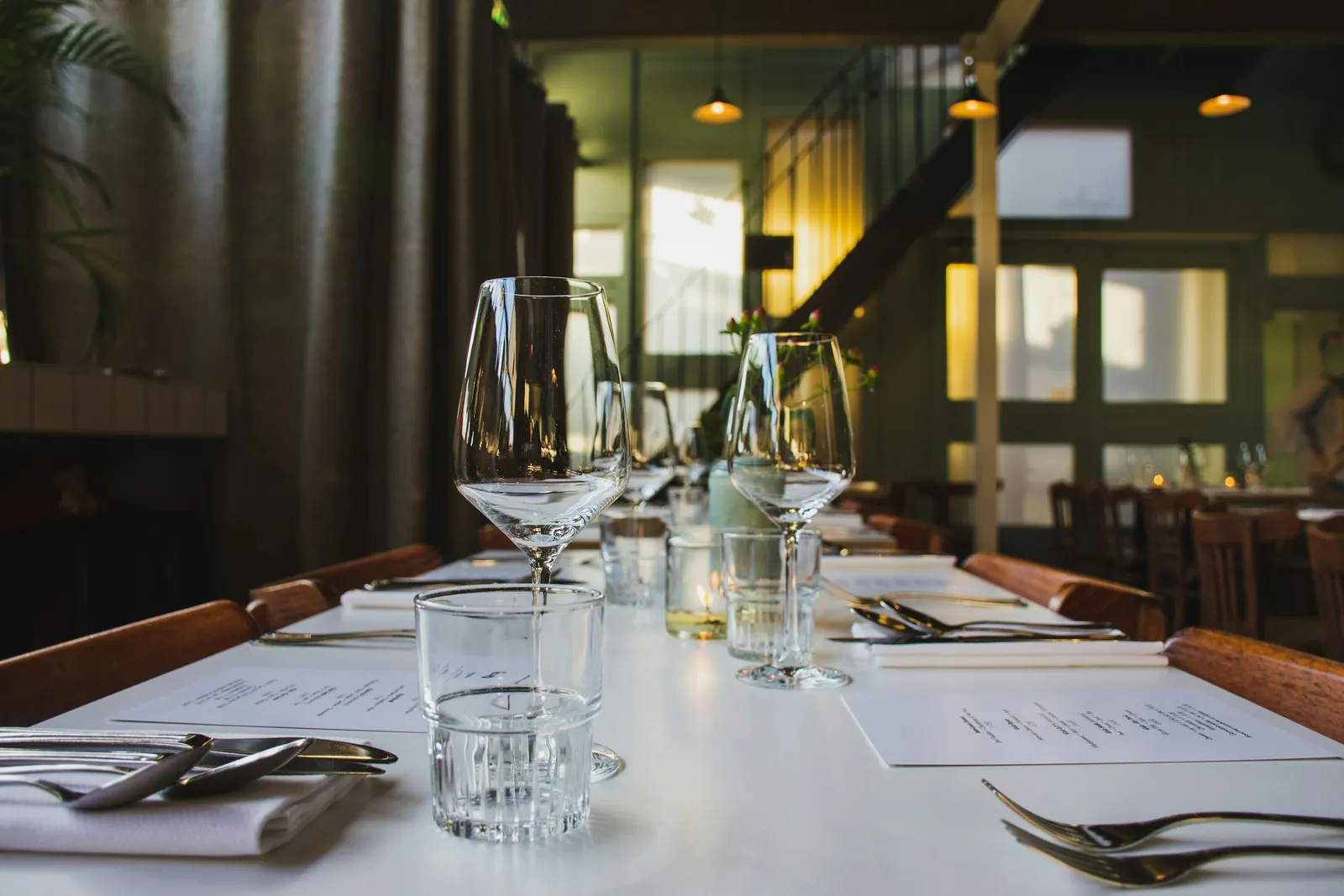
QR code menus and paper menus do the same job, listing what a restaurant serves, but they are not equal. A QR code menu saves the restaurant money: no printing, no reprinting, instant updates. A paper menu costs more to run, but it gives the diner a physical, designed object and keeps a phone off the table. After years of eating with both, my view is straightforward: a sit-down restaurant should keep a paper menu. QR codes are fine as an option. As the only option, they quietly take something from the meal.
The Sunday I couldn't read the menu
My own turning point on this was small and a little absurd. On Sundays in Medellín, where I spend a good part of the year, the city closes streets for the Ciclovía: stretches of road handed over to people walking, running, and cycling. I go to those to move, not to be online, so I usually leave my phone at home.
One Sunday my girlfriend and I stopped, mid-Ciclovía, for a quick lunch. The place had no paper menu. The menu lived behind a QR code on the table, and reading it required a phone I had deliberately not brought. What should have been a thirty-second decision turned into a small production: staff hunting for a printed copy, a workaround, a table waiting on me.
Nobody did anything wrong. But the restaurant had quietly made its menu depend on a device, and the moment I did not have the device, I could not do the most basic thing a guest does, which is find out what there is to eat.
What a QR code menu changes
Walk into a restaurant with paper menus and a small sequence happens. Someone greets you, seats you, and puts a menu in your hands. Often the wine list comes as its own object, and the dessert menu arrives later, after the plates are cleared, as a small second act. None of this is essential to feeding you. All of it is part of being hosted, the same front-of-house craft that makes a good maître d' worth noticing.
The menu handed to you is one of the first things a restaurant gives you, and it sets a tone. I remember it from being a kid: the menu placed in front of me, the small ceremony of opening it, the spread of choices. It felt like being taken seriously at the table. The handoff is a small piece of the etiquette of the table, one of the quiet rituals that tells a guest the meal is for them.
A QR code replaces that with an instruction. You arrive, you sit, and instead of being handed something you are told to take out your phone and scan. The greeting still happens, but the object that used to carry part of it is gone, moved onto your device and your data plan.
A paper menu is a designed object
The other thing a QR code flattens is design. A paper menu is a made thing. Someone chose its size, its paper, its typeface, the order of the sections, how much space each dish gets. I saw this from the kitchen side during my years on the line: owners and chefs did not obsess over the menu every week, but it happened, and when it did it mattered. Where a dish sits on the page, how it is described, what it sits next to: those are deliberate decisions, and they are the same signals a diner can learn to read in how to read a restaurant menu.
A well-built menu gives each dish room to breathe. It guides your eye. It makes choosing feel manageable. A bad menu does the opposite, and everyone has sat with one: a menu so long and so densely packed that you cannot take it in, you choose almost at random, and then you spend the first course wondering whether you ordered the right thing.
A QR code menu does not fix that problem. It usually makes it worse. A long menu on a phone is a long scroll. You see four or five dishes at a time through a screen the size of a playing card, and you pinch and zoom to read a description. The structure a designer built, the way the page was meant to be taken in whole, is gone. The same flattening that has made so many new restaurants look the same happens to the menu itself when it becomes a generic scroll.
Why restaurants switched to QR codes
None of this means restaurants were foolish to adopt QR menus. The reasons are real, and as someone who worked in kitchens I understand them.
A printed menu costs money. Every time a price changes, a dish comes off, or a supplier falls through, a paper menu is suddenly wrong, and fixing it means reprinting. A QR code menu updates instantly and for free. It can carry allergen information and photos without adding pages. It does not get stained, torn, or walked off with. Staff do not have to wipe down and reset a stack of menus between every table. For a thin-margin business, those savings add up.
QR menus also genuinely suit some places. Fast-casual spots, bars with a short drinks list, high-turnover counters: there, a QR code is efficient, and nobody is missing a ritual that was not there to begin with. The argument here is not against QR codes everywhere. It is about the full-service, sit-down restaurant, the kind of place you go to be hosted for a couple of hours.
The savings are the restaurant's. The cost is yours.
Here is the part that bothers me. Nearly every advantage of the QR code menu is an advantage for the restaurant, and nearly every cost of it lands on the guest.
The restaurant saves on printing. The guest pays by taking out a phone, finding the camera, scanning, loading a page, often dismissing a cookie banner, and then reading dinner off a screen. The restaurant gets instant updates. The guest gets eye strain and a pinch-to-zoom. The restaurant sheds a small chore. The guest puts a phone on the table, and a phone on the table rarely goes back in the pocket. It lights up. It pulls a glance. The single object most likely to pull you out of a conversation is now required equipment for reading the menu.
This is the same imbalance behind the case against the tasting menu: a change sold as modern progress whose benefits mostly accrue to the house. A restaurant meal, at its best, is a couple of hours of being present with the people across the table. The QR code menu, to save the house a real but modest amount of money, puts the most distracting device most of us own into the middle of that.
The case for paper
So this is not a call to ban the QR code. It is a call for the paper menu to survive as the default in the restaurants built around hospitality.
The honest position is simple. A sit-down restaurant should keep a paper menu and hand it to you. If it also wants a QR code for people who prefer one, good: offer both, let the guest choose. What a restaurant should not do is make the phone mandatory, because the moment it does, it has decided that its printing budget matters more than your evening.
There are signs the balance is shifting back. After a run of customer complaints, many restaurants have been reintroducing paper menus, with diners pointing to menus that were hard to navigate and a drag on the atmosphere of the room. That is the right instinct. A menu is not just a list. It is the first thing a restaurant hands you, and it is worth handing.
FAQ
Why do restaurants use QR code menus?
Mostly to save money and effort. A QR code menu costs nothing to update, so a restaurant never has to reprint when a price or a dish changes. It can hold allergen details and photos without adding pages, it cannot be stained or torn, and staff do not have to clean and reset menus between tables. QR menus spread quickly during the COVID-19 pandemic as a contactless option, and many restaurants kept them afterward for the cost savings.
Are restaurants getting rid of QR code menus?
Many sit-down restaurants are. After a wave of customer complaints, a number of establishments have reintroduced paper menus, with diners citing menus that were hard to navigate, privacy concerns, and a negative effect on the room's atmosphere. Some restaurants now offer both and let the guest choose. QR codes remain common in fast-casual and high-turnover spots.
What are the downsides of QR code menus for diners?
A QR code menu requires a charged phone, so a diner without one, or with a dead battery, cannot read it. A long menu becomes an awkward scroll on a small screen, often needing pinch-to-zoom. The phone ends up on the table, where it tends to pull attention away from the meal and the company. Some diners also dislike handing over data or loading a page full of cookie notices just to see what is for dinner.
Can you ask for a paper menu at a restaurant?
Yes. Most sit-down restaurants that use QR codes still keep at least a few printed menus on hand, and it is completely reasonable to ask for one. If a restaurant genuinely has no paper menu at all, that itself tells you something about how it views the guest experience.
Are QR code menus more hygienic than paper menus?
Only marginally, if at all. QR code menus spread during the COVID-19 pandemic as a contactless measure, but a diner still handles their own phone, the table, the cutlery, and a card or cash. Shared-surface contact turned out to be a minor transmission route. For most diners today, hygiene is not a strong reason to prefer one format over the other.


