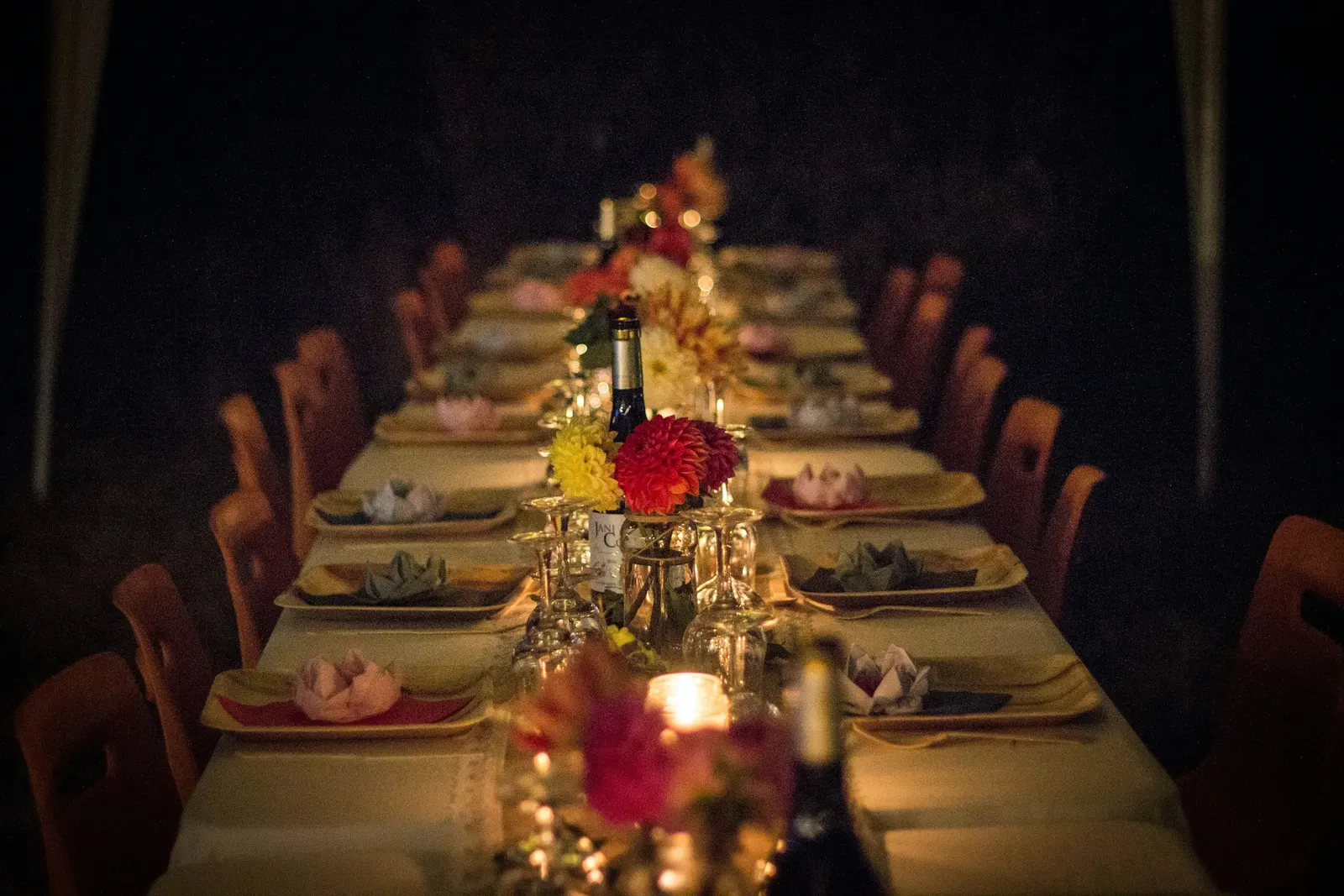
Dining etiquette is the set of customs that govern how people behave while sharing a meal: how you handle utensils, when you begin eating, how you treat the people serving you, and how you avoid making anyone at the table uncomfortable. It is not a fixed rulebook, and it is not snobbery. It works more like a language, one that changes completely depending on where in the world you are sitting. Eating with your hands is impeccable manners in one country and a shock in another. This guide covers what dining etiquette is for, where it came from, the practical mechanics of the table, and how it shifts across cultures and occasions.
What dining etiquette is actually for
It is easy to read etiquette as a velvet rope, a way for some people to feel above others. That reading is not entirely wrong (etiquette has been used that way for centuries), but it misses what the customs are actually built to do.
A shared meal puts several people in close quarters, handling sharp tools, reaching across one another, eating at slightly different speeds, and trying to hold a conversation at the same time. Etiquette is the accumulated, road-tested answer to a simple question: how do we do all of that without friction? Wait until everyone is served, and nobody eats alone. Keep your voice at the table's level, and nobody has to strain or compete. Treat the server as a person, and the whole room runs warmer.
Seen this way, etiquette is not about being correct. It is about being considerate in a form specific enough that strangers can rely on it. The rules are the visible part. The purpose underneath them is constant: reduce friction, signal respect, and make sure nobody at the table feels uncomfortable or excluded.
That purpose is the thing to hold onto, because the rules themselves are far less stable than they look.
Where dining etiquette comes from
Most table manners feel like they have always existed. Almost none of them have.
In medieval European halls, diners shared dishes, ate with knives and hands, and often drank from communal cups. The fork was treated with suspicion for centuries. It arrived in Europe through Italy and the Byzantine world and was widely dismissed as an affectation before it slowly became standard at European tables, a process that took hundreds of years.
The elaborate version of dining etiquette is younger still. The court of Louis XIV at Versailles turned daily life, meals included, into highly choreographed ritual. The word "etiquette" itself comes from the French for a label or small ticket, the kind that once spelled out correct conduct. Dining manners became a code you either knew or did not.
The real explosion came in the 19th century. A rising middle class, anxious about its standing, created enormous demand for etiquette manuals, and dining rules multiplied into the dozens: which fork, which glass, how to hold each one. Manners became a class examination conducted at the table.
The 20th and 21st centuries have mostly loosened that grip. Formal dining still exists, but the broad direction has been toward simpler, warmer, less performative meals. Knowing this history is useful for one reason: it tells you that when a rule feels arbitrary, it often is. Many were invented fairly recently to sort people. The rules worth keeping are the ones that still do real work.
Table manners: the mechanics
Here is the practical core, the part that genuinely helps at a Western table.
The napkin. It goes in your lap, usually once the host is seated. If you leave the table mid-meal, the napkin goes on your chair, not the table. At the end of the meal it goes loosely beside your plate.
The utensils. When a place setting has several, work from the outside in: the outermost fork or spoon is for the first course, and you move inward with each course. Forks sit to the left, knives and spoons to the right. It looks intimidating; the outside-in rule makes it simple.
American vs. Continental style. There are two accepted ways to use a knife and fork. In the American style, you cut with the knife in your right hand and fork in your left, then set the knife down and switch the fork to your right hand to eat. In the Continental style, common across most of the world, the fork stays in the left hand, tines down, and the knife stays in the right throughout. Neither is wrong.
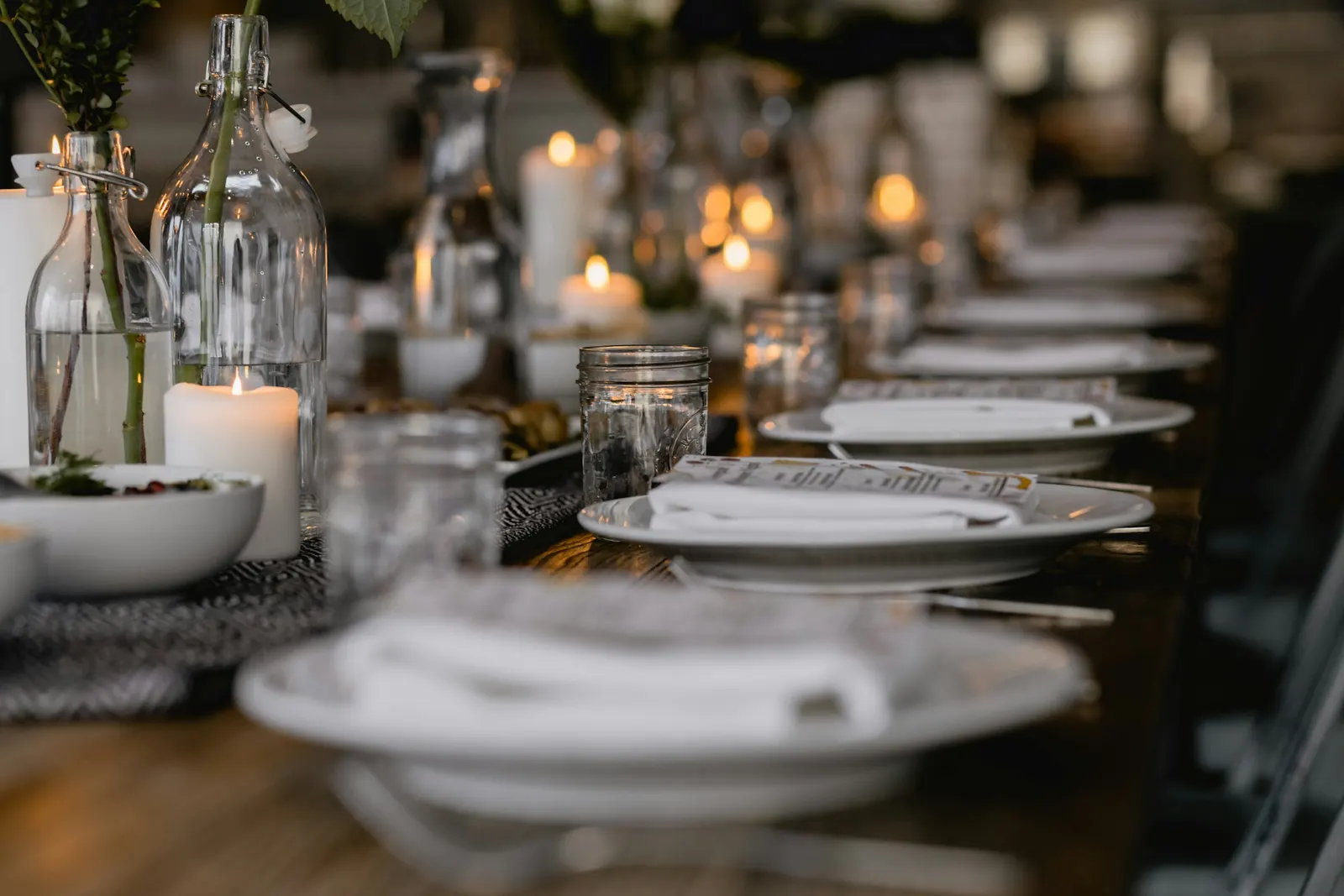
Signaling the staff. Where your utensils rest tells the kitchen what you need. Knife and fork laid together across the plate, usually pointing up and to one side, means "I am finished." Crossed or spread apart means "still working." A good server reads this without a word.
Pacing. Eat at the rhythm of the table, not your own appetite. Racing ahead or lagging far behind both make the meal awkward for everyone else.
The small things. Chew with your mouth closed, do not speak with food in your mouth, pass dishes rather than reaching across someone, and bring food to your mouth rather than lowering your head to the plate. None of this is fussy. It is just the difference between a comfortable table and an uncomfortable one.
Who sits where: seating and the table
Where people sit is its own quiet system, and it carries more meaning than most diners realize.
Nearly every dining culture has a seat of honor. At a Western dinner, the guest of honor is often seated to the right of the host. The host typically takes a position from which they can see the room, signal the kitchen, and manage the meal.
In many cultures the placement is highly specific. At a traditional Chinese banquet, the seat of honor commonly faces the entrance of the room, with the host nearer the door; seating radiates outward by status from there. In Japan, the seat of honor, the kamiza, is traditionally the one furthest from the entrance, while the seat nearest the door, the shimoza, goes to the host or the most junior person. The logic is consistent across both: the honored guest is given the most protected, most comfortable position.
At a business meal, seating is rarely casual either. The host generally decides who sits where, and the most senior guest gets the best seat.
The practical takeaway for a guest: do not seize a chair on arrival. Wait to be directed, or take a clearly modest seat and let the host move you up if they wish. Claiming the wrong seat is a small error, but reading the room is part of dining etiquette too.
Dining etiquette around the world
This is where the idea of "correct" table manners falls apart, in the best way.
There is no global etiquette. What counts as polished manners is decided locally, and the same gesture can mean opposite things a border apart. In much of India, the Middle East, and parts of Africa, eating certain foods with your hand (traditionally the right) is normal and is understood as a fuller, more appreciative way of eating. In a Western formal dining room, the identical act would read as a lapse.
A few more, to show the range. In Japan, slurping noodles is not rude; it can signal that you are enjoying them. Across much of East Asia, standing chopsticks upright in a bowl of rice is avoided, because it resembles incense offered to the dead. In France, bread is commonly placed directly on the table next to the plate, not on a separate plate, and that is correct, not careless. In Ethiopia, a meal is often eaten from one shared platter with the hands, and feeding a choice morsel to someone else at the table is a gesture of affection.
The lesson is not to memorize every country. It is to travel and dine with the assumption that your "rules" are local, and to watch before you reach. For the full country-by-country tour, see dining etiquette around the world, which goes deep on the customs, and the meaning behind them, region by region.
What to wear
Dress is part of dining etiquette, and a restaurant's dress code is a real signal, not a formality.
Most dining dress codes fall on a ladder: casual, smart casual, business casual, cocktail or "elegant," and black tie at the top. Each rung carries genuine expectations, and a restaurant that states a dress code is telling you something about the experience it intends to give you. A restaurant that does not state one is still signaling, through its price, its room, and its reputation.
The single most useful principle: when you are unsure, lean slightly toward overdressed rather than underdressed. Being a touch more formal than the room reads as respect for the occasion and is almost never held against you. Being clearly underdressed can make both you and your hosts uncomfortable, and at the strict end can cost you the table entirely.
Decoding each dress code tier, learning how to read an unstated one, and figuring out what to actually wear is involved enough to have its own guide: see restaurant dress code: what to wear, tier by tier.
Etiquette toward the restaurant and its staff
Most etiquette advice covers how diners treat each other. Just as important, and more often neglected, is how a diner treats the restaurant itself.
Reservations. If you book a table, honor it. A no-show, or a silent failure to cancel, leaves a small business holding an empty table it turned other guests away to keep. If your plans change, call. It takes a minute and it matters more than most diners think. (Arriving at the right moment helps too; there is a real logic to the best time to arrive at a restaurant.)
The staff. Treat servers, hosts, and bussers as professionals and as people. Do not snap fingers, do not summon with a raised voice, and make eye contact when you speak to them. The way a guest treats the staff is, fairly or not, read by everyone else at the table as a measure of character.
Sending a dish back. It is acceptable to send back a dish that is genuinely wrong, cold, or not as described. Do it early, do it calmly, and be specific and kind. The goal is to fix the plate, not to perform displeasure.
Complaints. Real problems should be raised with the staff quietly and directly, not aired loudly to the table or saved for a furious review later. Most issues a restaurant can fix, it will, if it is told plainly and in good faith.
The table is not yours forever. Lingering over coffee is part of the pleasure of eating out. Lingering for an hour past the meal while a restaurant has a full waiting list is a different thing. Read the room. The friction between a relaxed meal and a needed table is real, and a considerate guest stays aware of it.
Host or guest: the two sides of the meal
Dining etiquette is not one set of rules. It splits in two, depending on which role you are playing.
If you are the host, the meal is your responsibility. You choose the place and time, you handle the reservation, you guide the seating, you set the pace, and above all you make sure every guest feels comfortable and included. A good host watches the quietest person at the table as closely as the loudest. In most of the world, the person who extends the invitation is also the person who pays; offering to host and then angling to split the bill sends a confused signal.
If you are the guest, your job is to be easy to host. Reply to the invitation promptly so the host can plan. Arrive on time, which usually means neither early nor more than a few minutes late. Follow the host's lead on when to sit and when to begin. If the meal is at a home, bringing something small is customary in many cultures. And afterward, thank the host clearly, in the moment and ideally again later.
The bill is where roles and cultures collide most. In some places splitting evenly is normal; in others it is mildly rude, and the host or the eldest simply pays. Tipping varies just as sharply from country to country, which is a subject in itself; the shifting economics of tipping are worth understanding before you travel. When unsure, ask quietly or watch what others do.
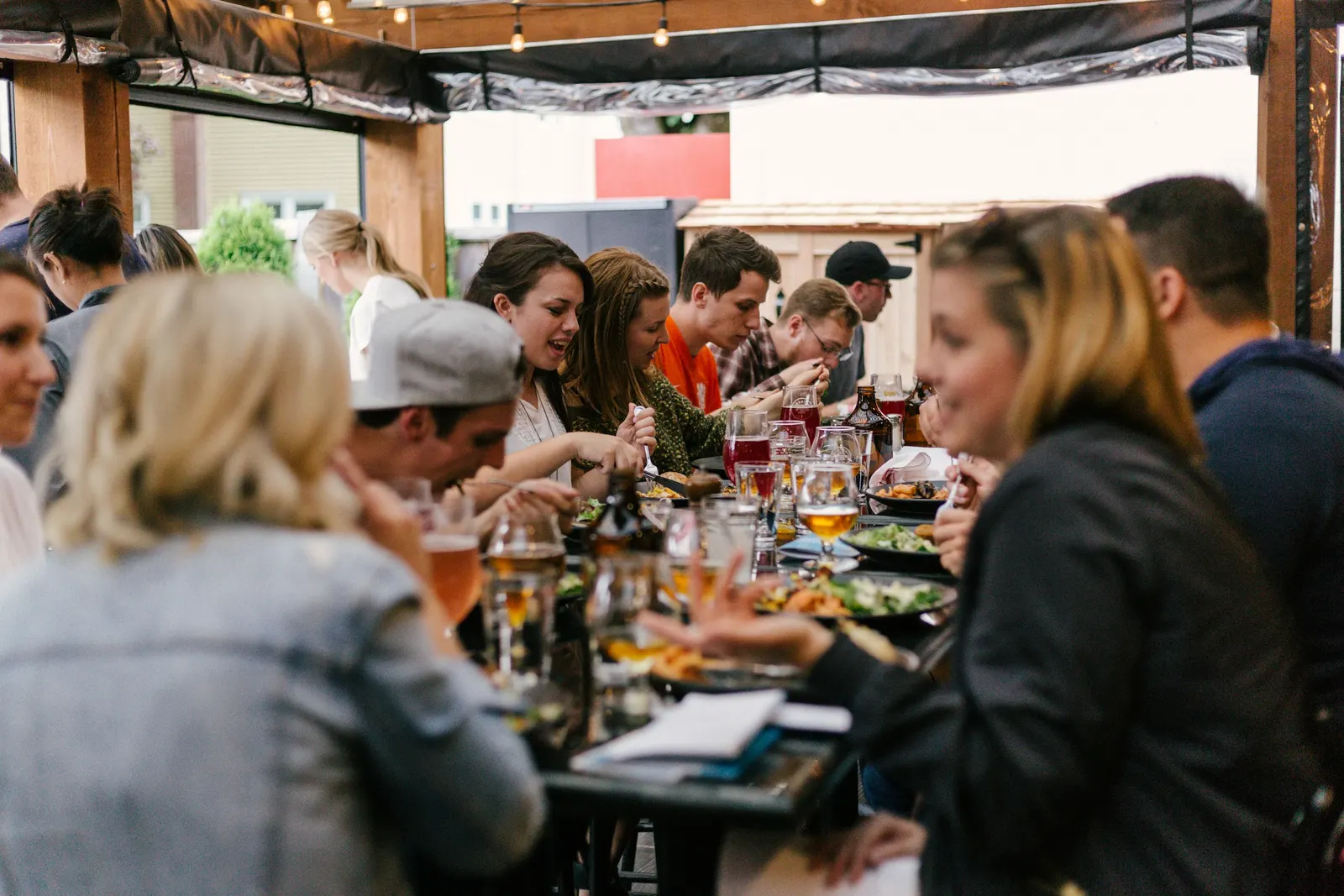
The business meal
A meal taken for work runs on its own rules, because it is not really only a meal. It is a meeting that happens to involve food, and often a quiet evaluation.
The broad strokes: let the host lead, order in the same range as everyone else rather than the most or least expensive thing, be cautious with alcohol, keep your phone away entirely, and treat the staff well, because your companions are watching. The check is the host's to handle. And there is a rhythm to when business is actually discussed, usually not before the meal has properly settled.
Because the business meal has its own distinct stakes, it gets its own full guide: business dinner etiquette: the meal as a test.
Modern dining etiquette
Some dining questions did not exist a generation ago. They are now part of the etiquette whether anyone has formalized them or not.
Phones. The strongest current convention is simple: the phone does not belong on the table. Face-down is better than face-up, away entirely is better still. Taking a call at the table, in most settings, is a genuine breach.
Photographing food. A quick photo is widely accepted now. A long photo shoot that holds up the table, or that stops everyone from eating while the light is right, is not. Be fast and be done.
Menus and ordering. Even how you read a menu has shifted; the rise of scan-to-order changed the texture of sitting down, which is its own debate in QR code menus vs. paper menus. Knowing how to read a restaurant menu well is a quiet etiquette skill of its own, since a confident order keeps the table moving.
Splitting the bill by app. Settling up by phone is normal now, but do it after the meal, not as a distracting negotiation at the table.
Dietary needs. Communicating allergies and restrictions clearly and early, to the host or the server, is good etiquette on both sides. A guest should not hide a serious allergy to avoid fuss, and a host should ask before planning a meal.
When you don't know the rule
You will, eventually, sit at a table where you do not know the rules. A different country, a more formal room, a family with customs of its own. This is the most important part of dining etiquette, because it is the part you will actually use.
The method is the same every time. Slow down. Watch the host and the others at the table, and follow them; let someone else pick up the first fork. If you genuinely do not know something, it is almost always fine to ask quietly and warmly rather than guess. And remember the purpose underneath all the form: etiquette exists to make the people around you comfortable and to show them respect.
A diner who breaks a small rule of form but is plainly attentive, warm, and considerate has not really failed at etiquette. A diner who executes every rule perfectly while making the table tense has missed the point of it. The spirit outranks the letter. Get the spirit right and the rest is detail.
FAQ
What is dining etiquette?
Dining etiquette is the set of customs that govern how people behave while sharing a meal: how you handle utensils, when you begin eating, how you treat the people serving you, and how you avoid making others at the table uncomfortable. It is not a fixed rulebook and it is not snobbery. It works more like a language, and it changes depending on the culture, the formality of the occasion, and whether you are the host or a guest.
What are basic table manners?
The most widely shared table manners are simple: wait until everyone is served (or until the host begins) before eating, keep your phone off the table, chew with your mouth closed, do not talk with your mouth full, use utensils from the outside of the place setting inward, keep your napkin in your lap, and treat the people serving you with courtesy. Beyond these near-universals, specific rules vary widely by country and by how formal the meal is.
What is the difference between American and Continental dining styles?
In the American style, you cut food with the knife in your right hand and fork in your left, then set the knife down and switch the fork to your right hand to eat. In the Continental (or European) style, the fork stays in the left hand, tines down, and the knife stays in the right throughout. Continental style is more common worldwide; American style is mostly confined to the United States. Neither is incorrect.
Is it rude to eat with your hands?
It depends entirely on where you are. In much of India, the Middle East, and parts of Africa, eating certain foods with your hands (traditionally the right hand) is normal and is seen as a fuller, more appreciative way of eating. In most Western formal settings, the same act would read as a breach of manners. Etiquette is local: what is gracious at one table is a faux pas at another.
What should you not do at a restaurant?
Avoid the things that make the meal worse for other people and the staff: do not show up significantly late or fail to honor a reservation, do not snap your fingers or be curt with servers, do not take a phone call at the table, do not let a large group leave a tiny tip where tipping is customary, and do not linger long past the meal when a restaurant clearly needs the table. Courtesy toward the staff and the room is the core of restaurant etiquette.
How do you behave at a formal dinner?
At a formal dinner, follow the host's lead: wait for them to be seated and to begin, work your utensils from the outside in as courses arrive, keep your napkin in your lap, pace yourself to the table rather than racing ahead, and keep your phone away entirely. When in doubt about a specific rule, watch what the host and other guests do and follow it. The goal is ease, not performance.


