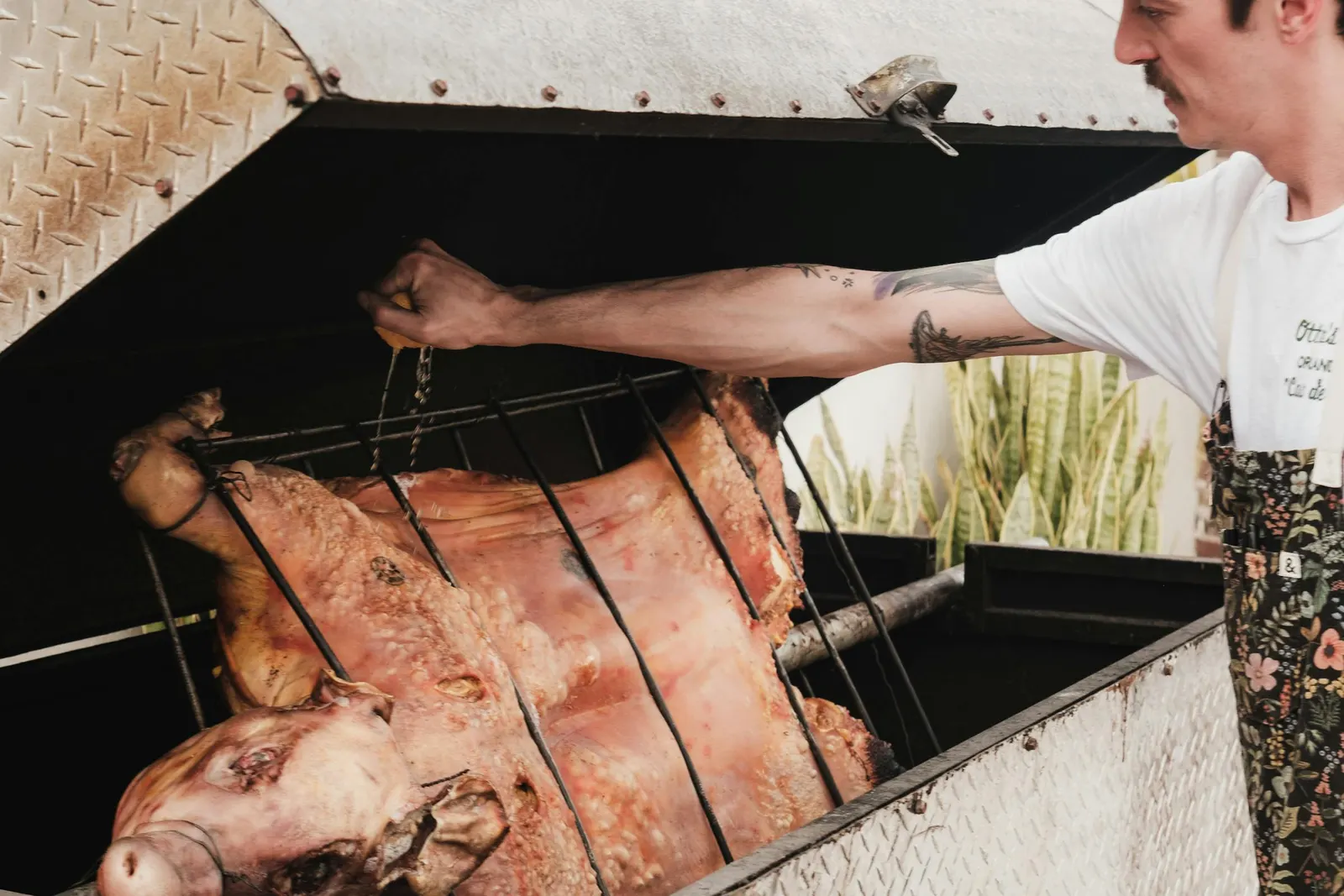
Filipino lechón is a whole pig roasted on a spit over charcoal until its skin turns to crackling. It is the most literal surviving form of lechón, the roast pig of the Spanish-speaking world: where other countries reshaped the dish, the Philippines kept it whole. The pig is cleaned, seasoned, run through with a bamboo or metal pole, and turned slowly over coals for several hours while the cook bastes and watches the skin. When it is done, the skin shatters under a knife and the meat underneath is moist. It is the unmistakable centerpiece of a Filipino fiesta, and for many Filipinos it is the single most important dish in the cuisine.
What makes Filipino lechón different
The other branches of the lechón family changed the dish to fit a local pantry. Colombia stuffed the pig with rice. Spain shrank it to a milk-fed piglet. Puerto Rico, on most home tables, swapped the whole animal for a shoulder. The Philippines did none of that. Filipino lechón is still a whole pig, cooked the old way, over live fire, turned by hand.
That is partly because spit-roasting was already deep in the local cooking culture when the Spanish word arrived, and partly because the dish never needed improving. A whole pig over charcoal, basted patiently for hours, is hard to beat. The technique survived because it works.
The roasting itself is simple to describe and hard to do well. The pig turns at a steady, unhurried pace. Too fast and the skin will not crisp. Too slow, or too close to the coals, and the skin scorches before the inside is cooked. The cook spends the whole roast managing that balance, moving the coals, adjusting the height, basting the skin.
The skin is the whole point
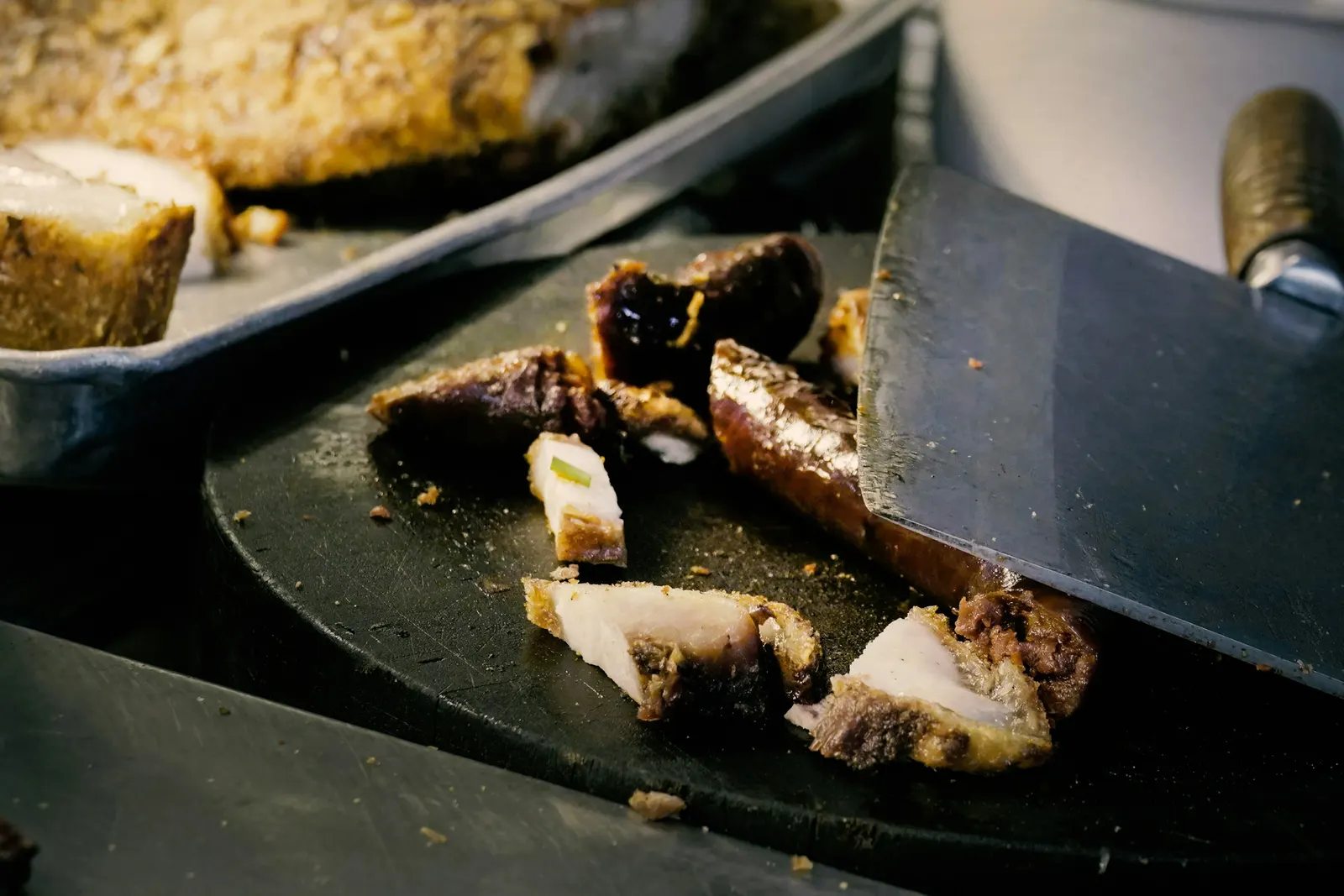
Ask a Filipino what makes a lechón good and the answer is the skin. A great lechón has skin that is uniformly thin, deep mahogany, and so crisp it cracks audibly. It is rendered completely, with no soft or chewy patches, and it pulls away from the meat in shards.
Everything in the technique serves the skin. The pig is often air-dried before roasting so the surface is dry going onto the fire. It is basted during the roast, sometimes with a simple mix that helps the skin color and blister. The slow turn over charcoal is, more than anything, a method for rendering skin evenly. When the carving starts, the skin is portioned out deliberately, because at a real fiesta it runs out before the meat does.
Lechón is the center of the fiesta
In Filipino culture, lechón is not a dish you make on a normal night. It is the dish a celebration is organized around. A baptism, a birthday, a town fiesta, a wedding, Christmas: the lechón arrives whole, it is set where everyone can see it, and the party effectively starts when it is carved.
I grew up around this through a close Filipino friend. At his family's parties, the lechón was the centerpiece, the thing the whole room oriented toward. Seeing that whole pig come out, toasted dark and crackling, is a specific kind of anticipation, and nothing else on a party table quite matches it. That is the role the dish plays. It is not only food. It is the visual proof that the day is a real occasion. The same instinct runs through the rest of the cuisine I wrote about in growing up on Filipino food.
Cebu and the regional styles
The Philippines does not roast one lechón. The most famous regional style comes from Cebu. Cebu-style lechón is seasoned aggressively inside the cavity, with aromatics that can include lemongrass, garlic, scallion, bay, and black pepper, so the meat itself carries flavor all the way through. It is considered good enough to eat on its own, with no dipping sauce, and Cebu's lechón has a national reputation that locals defend fiercely.
The Luzon style, including the version common around Manila, is typically less seasoned inside and is served with a sauce. The classic accompaniment is a thick, slightly sweet, liver-based lechón sauce, sold commercially under names that have become almost generic. The split is real and Filipinos have firm opinions about it: Cebu eats lechón clean, much of the rest of the country reaches for the sauce.
What happens to the leftovers
A whole pig is more than even a large party finishes, and Filipino cooking has a dedicated answer for the second day. Paksiw na lechón is leftover lechón simmered down in vinegar, the leftover lechón sauce, garlic, and spices into a dark, sour, rich stew. It is one of the small genius moves of the cuisine: the celebration dish has a built-in afterlife, and some people quietly prefer the leftovers to the roast. Cooking the next meal from what is already in the house is an old kitchen instinct, the same one behind building a meal from whatever the fridge holds.
For how the same Spanish word produced four unrelated dishes, including Colombia's rice-stuffed lechona, it is worth seeing the whole family side by side.
FAQ
What is Filipino lechón?
Filipino lechón is a whole pig roasted on a spit over charcoal until the skin becomes a crisp crackling and the meat is cooked through. It is the centerpiece dish of Filipino celebrations and is carved and served whole.
Why is Cebu lechón so famous?
Cebu-style lechón is seasoned heavily inside the cavity with herbs and aromatics such as lemongrass and garlic, so the meat is flavored throughout. It is considered good enough to eat with no dipping sauce, which is unusual, and Cebu has built a national reputation around it.
What sauce goes with lechón?
Outside Cebu, lechón is usually served with a thick, dark, slightly sweet liver-based sauce, often called lechón sauce. Cebu-style lechón is typically eaten plain, because the meat is already seasoned from the inside.
What is paksiw na lechón?
Paksiw na lechón is a dish made from leftover lechón, simmered in vinegar, lechón sauce, garlic, and spices until it becomes a dark, sour, rich stew. It is the traditional way to use the leftovers of a whole roast pig.
How long does it take to roast a whole lechón?
A whole pig roasted over charcoal generally takes several hours of slow, steady turning, with the exact time depending on the size of the pig and the heat of the coals. Most of that time is spent managing the fire so the skin crisps evenly without scorching.