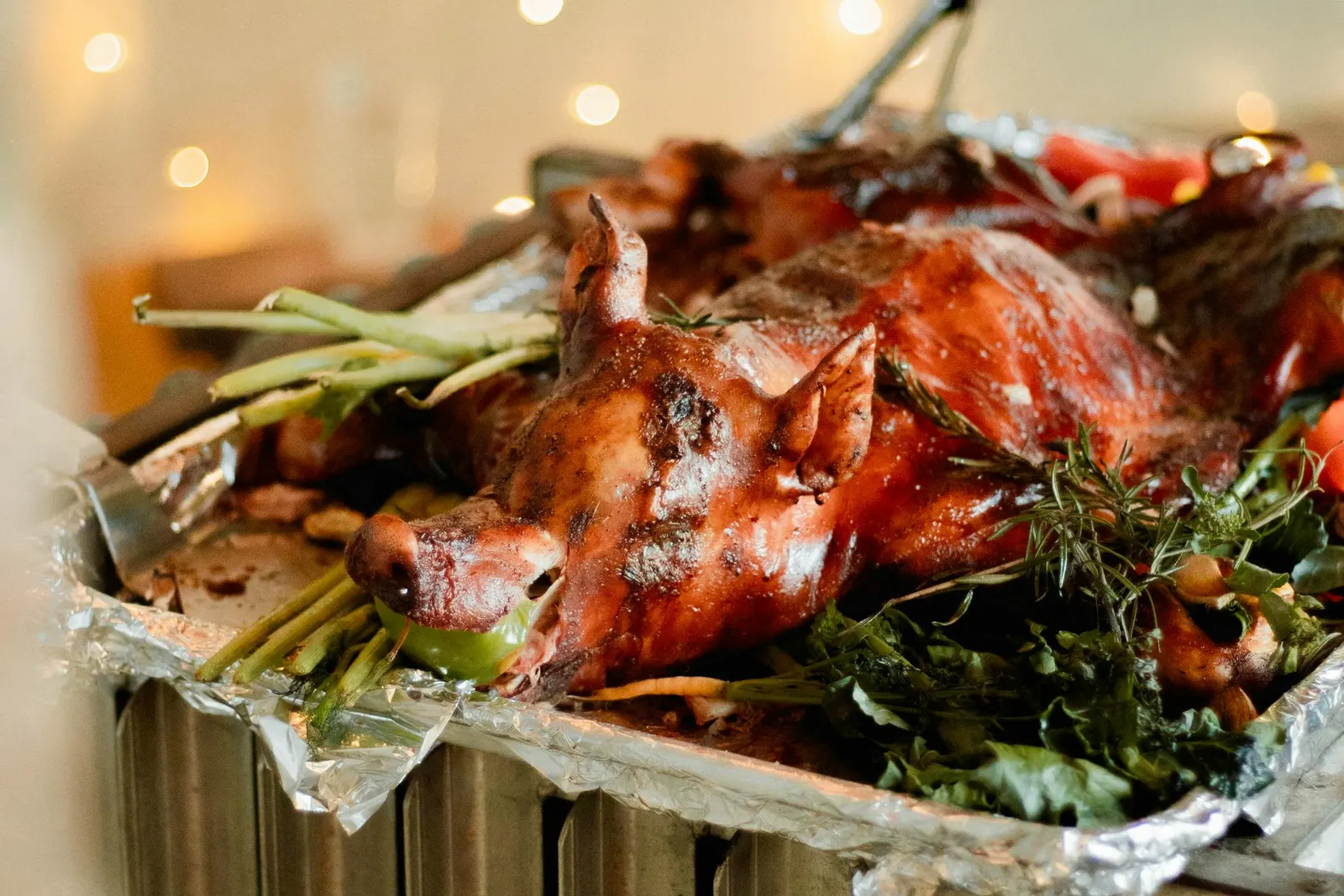
Lechona is Colombia's version of lechón, and it is the most heavily transformed member of the family. Where the Philippines roasts a whole empty pig, Colombia turns the pig into a container. The animal is deboned, with the skin and a layer of meat kept intact as an outer shell, then packed full of a filling built on rice, yellow split peas, and the pig's own seasoned meat. The whole thing roasts for many hours in a wood-fired oven until the skin crackles and the stuffing sets into a dense, savory mass. It is sold by the pound, eaten at celebrations and ordinary weekends alike, and it is one of the dishes Colombians are most attached to.
What goes inside a lechona
The filling is what makes lechona lechona. The base is rice and arveja, the yellow split pea, cooked together with the chopped, seasoned meat that was taken off the pig during deboning. Onion, scallion, garlic, cumin, and other seasonings go in, and the proportions are a matter of regional and family pride.
That filling is not a side dish stuffed in for convenience. It is the point of the meal. As the pig roasts, fat and juices from the meat and skin render down into the rice, and the stuffing slowly cooks into something far richer than rice cooked on its own could ever be. When a serving is cut, most of what is on the plate is that filling. The pork and the skin frame it. It is a deeply rich plate, the kind that begs for something bright and sour alongside it, the job a tart fruit like maracuyá does so well against fatty pork.
How lechona is cooked
A lechona is a slow project. After the pig is deboned and stuffed, it is sewn or trussed closed so the filling stays in, and then it goes into a horno, traditionally a wood-fired brick or clay oven, for a long, low roast that often runs eight to twelve hours or more.
The long cook does two jobs at once. It renders and crisps the skin into crackling, and it gives the dense stuffing inside enough time to cook through completely. Because the pig is a sealed package, the inside cooks gently in its own steam and fat while the outside takes the direct heat. Getting both right, a shatter-crisp skin and a fully set, well-seasoned filling, is the whole craft of a good lechonero.
Lechona tolimense and the Tolima region
Lechona is eaten across much of Colombia, but its home is Tolima, the central region whose capital is Ibagué, and the dish is often called lechona tolimense in full. The town of El Espinal in particular is strongly identified with it, and lechona is central to the region's mid-year San Pedro festivities. Those festivities run as much on the region's anise aguardiente, the Tolima guaro sold as Tapa Roja, as they do on the pork.
In Tolima, lechona is not reserved for holidays. It is a normal thing to buy: dedicated lechona shops and market stalls roast whole pigs and sell servings by weight throughout the week. A standard serving is a scoop of the rice-and-pork filling, a piece of the crackling, and an arepa, the plain Colombian corn cake, to round it out. The cooking culture of Tolima runs parallel to the way other Colombian regions guard their specialties, the way coffee country treats its harvest in a coffee town that exports its best beans.
Eating lechona, and learning to chase it
I am Colombian, and the first time I really understood lechona was at a market in Ibagué. There was a whole pig on the counter, head still on, already half sold off through the afternoon, and the vendor cut a portion straight from it. It came with a small gelatin-like sweet on the side, one of the many sweets Colombians put at the end of a meal. It was, simply, delicious, and it reset what I thought the dish was.
Since then, going to Ibagué without eating lechona is not something I do. It has become a small ritual. My brother-in-law is the family's lechona authority, the one who knows which place is roasting well right now, and over the years I have turned into one of those people myself. That is the thing about lechona. It is regional enough, and variable enough between one lechonero and the next, that people who love it become quiet experts in where to find the good version.
How lechona differs from the rest of the lechón family
Set lechona next to its relatives and the difference is immediate. Filipino lechón is a whole pig with an empty cavity, prized for its skin and its smoke. Puerto Rican pernil is a marinated shoulder, not a whole animal at all. Spanish cochinillo is a tiny milk-fed piglet roasted pure, with nothing added.
Lechona is the outlier that turned the pig into architecture. The animal is a shell, the rice is the substance, and a single Spanish word, lechón, stretched far enough to cover both a bare spit-roasted pig in Manila and a rice-packed one in Ibagué.
FAQ
What is lechona?
Lechona is a Colombian roast pig dish. A whole pig is deboned, leaving the skin and a layer of meat as an outer shell, then stuffed with a filling of rice, yellow peas, and seasoned pork, and roasted for many hours until the skin crackles and the filling is cooked through.
What is the difference between lechón and lechona?
Lechón is the broad Spanish term for a roast pig. Lechona, the feminine form, names a specific Colombian dish in which the pig is deboned and stuffed with rice. Filipino lechón, by contrast, is a whole pig roasted with nothing inside it.
Where is lechona from?
Lechona is most strongly associated with the Tolima region of central Colombia, where it is called lechona tolimense. The town of El Espinal is especially known for it, though the dish is eaten across much of the country.
What is lechona served with?
A standard serving of lechona is a portion of the rice-and-pork filling topped with a piece of crackling skin, usually with an arepa, the Colombian corn cake, on the side.
How long does lechona take to cook?
After the pig is deboned, stuffed, and trussed closed, it is roasted in a wood-fired oven for a long, slow cook that often runs eight to twelve hours or more, long enough to crisp the skin and fully cook the dense stuffing inside.