To make confit, you cook something low and slow while it sits completely submerged in fat, until it turns meltingly tender, then store it under that same fat. With meat, like the classic duck legs, you salt-cure it first. That is the whole technique, and it is centuries old. The word comes from the French confire, "to preserve," and confit began as a way to keep meat through the winter before refrigeration existed. Restaurants still lean on it, but for a different reason now: it is the best make-ahead protein in the building. Cook a batch of duck legs once, hold them for days, and crisp one to order in minutes. And it isn't only for duck: the same salt-cure-and-submerge method turns cheap chicken legs into something silky for a fraction of the price.
What confit actually is
The thing to understand first is that confit is not frying. Frying is fast and hot. Confit is slow and barely warm. The fat is not there to crisp the meat; it is there to cook it gently and then to seal it. The meat sits fully submerged in fat held at a low temperature, well under a simmer, and poaches there for hours. Collagen breaks down, the meat slackens off the bone, and none of the moisture escapes into a watery braising liquid, because there is no water. There is only fat, and fat at low heat is patient.
That is also why it preserves. Once the meat is cooked and left submerged, the layer of fat seals it off from air. As the Wikipedia entry on confit lays out, this is one of the oldest preservation methods there is, older than canning, older than the icebox. The salt cure does the seasoning and pulls out some moisture; the fat does the cooking and the keeping. Two ingredients, time, and low heat. Nothing else.
Where confit comes from
Confit is peasant logic. It grew up in Gascony and the rest of southwest France, where families raised ducks and geese, rendered the fat, and used that fat to cook and store the meat so it would last. Nothing was bought that could be made, and nothing was wasted. It belongs to the same lineage as the rustic European cooking I spent years cooking professionally: dishes built around what was available, what could last the winter, and what fed a table without money.
You can taste that history most clearly in French cassoulet, the great white-bean dish of Languedoc, which is built on a foundation of duck or goose confit baked into the beans. The confit is the luxury everyone fixates on, but in its origin it was the opposite of luxury. It was insurance. It was how you got through to spring.
How restaurants actually do it
The restaurant method has three parts, and the order matters.
First, the cure. The meat gets coated in salt, usually with aromatics worked in, often garlic, thyme, bay, sometimes a little sugar or crushed pepper, and left overnight in the fridge. This is the same principle as salting a steak well ahead: the salt seasons deep into the meat instead of sitting on the surface, and it firms up the texture by drawing out a little water. The next day you rinse or wipe off the cure and pat the meat dry.
Second, the slow cook. The cured meat goes into a deep pan, gets covered completely in fat, and cooks low and slow for hours until it is tender enough to pull from the bone with no resistance. The fat should barely move. If it is bubbling hard, it is too hot.
Third, and this is the part home cooks tend to skip, the hold. The cooked meat stays submerged in its fat and goes into the cold. That is the genius of it in a working kitchen. When I cooked on the line, we made confit in big batches: duck legs cured, cooked down in fat, and held cold for service. The slow work happened once, days ahead. Service was just pulling a leg from the fat and crisping the skin to order in a hot pan. That is the rhythm: confit is the ultimate make-ahead mise en place, the dish that does ninety percent of its work before the first ticket prints.
Crisping it to order
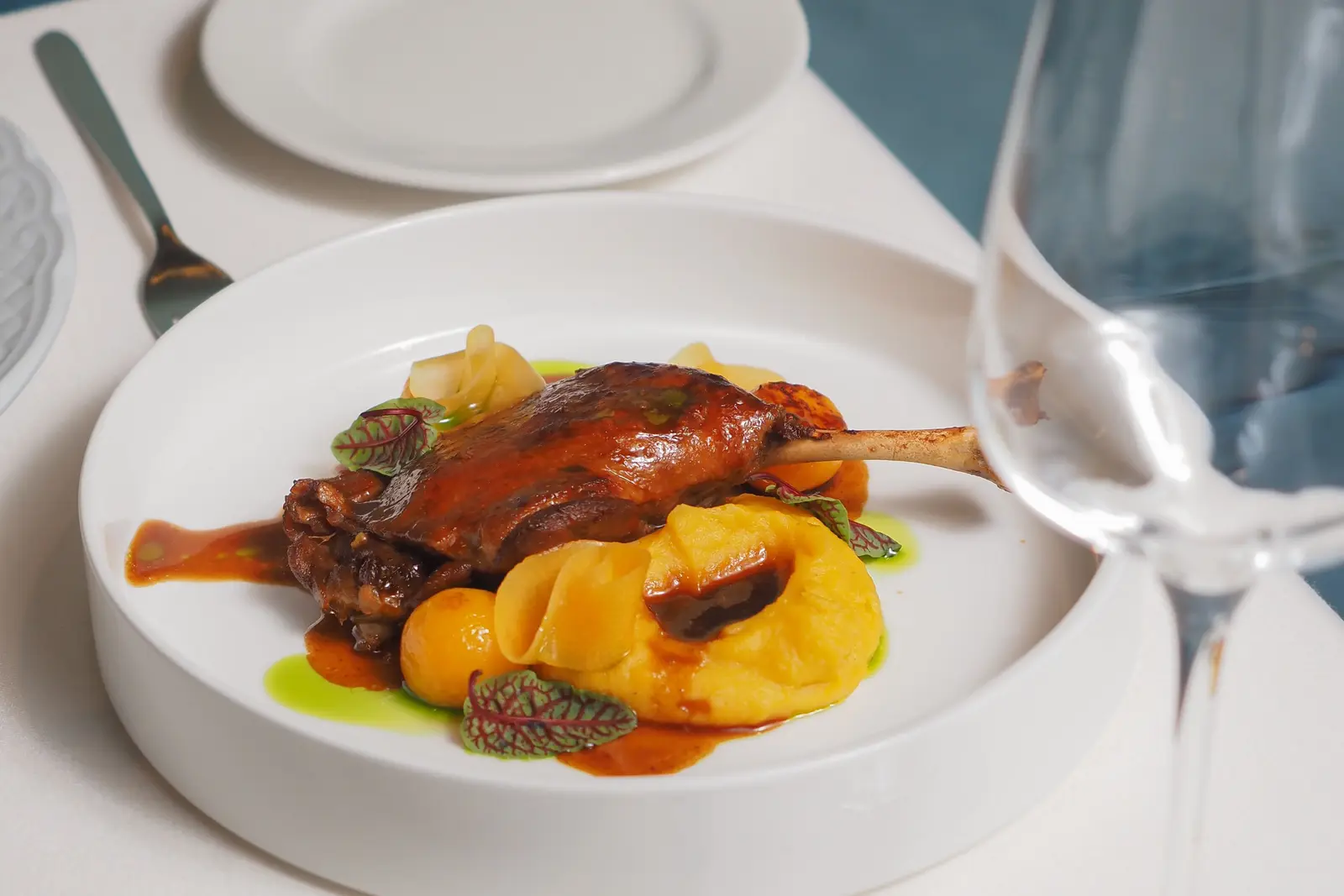
Everything up to this point leaves you with meat that is preserved, soft, and pale. The crackling skin is a separate step, and it is its own small skill. Pull a leg from the cold fat, scrape off the excess, and lay it skin-side down in a dry, heavy pan over medium heat. There is plenty of fat in the skin already, so you do not add any. Let it render slowly without moving it around. The skin tightens, browns, and turns to glass while the meat underneath comes up to temperature at the same pace. Rush it over high heat and you scorch the skin before the inside is warm. Take your time and you get the contrast that makes confit worth all the waiting: a shattering top over meat that gives way to a fork.
The hardest, crispest scraps of skin are the cracklings, and they are arguably the best part of the whole dish.
Why it is worth the effort
Confit gives you three things almost nothing else does at once.
- Texture you cannot get any other way. The meat is silky and yielding all the way through, and the skin, crisped at the end, shatters. That contrast, soft underneath and crackling on top, is the entire appeal.
- A make-ahead protein that improves with a few days' rest. Like a lot of cured and slow-cooked things, confit tastes better on day three than on day one. You are not racing the clock; the clock is on your side.
- Economy. Confit was designed for tougher, cheaper, harder-working cuts. Legs, not breasts. The fat renders down and gets reused, picking up flavor each time. A kitchen treats its confit fat as an asset, not a cost.
Duck confit is my desert-island dish. If I ever get a last meal, that is what I am ordering. The best version I ever ate was a duck confit poutine at a place where the cooks ate off the menu instead of a family meal: fries, cheese curds, gravy, the confit pulled apart over the top, and crackling-crisp duck skin scattered over all of it. It is a ridiculous, glorious plate of food, and it is built entirely on the patience of the confit underneath.
What else you can confit
Duck is the headliner, but the technique does not care what is in the fat. The principle, gentle heat, full submersion, salt up front, generalizes cleanly. A whole pork shoulder, broken into chunks and confited, is one of the best cheap places to take it next.
- Garlic confit. Whole cloves cooked soft and sweet in olive oil. A staple of restaurant prep and the most useful thing on this list. (Read the safety note below before you store it.)
- Tomato confit. Slow-cooked in oil until the flavor concentrates into something halfway to candy.
- Chicken confit, the underrated cousin of duck: cheaper, easier to source, and most of the same payoff.
- Pork shoulder, confited in fat instead of braised in liquid, which is a quietly excellent argument for slow-cooking pork.
- Even farm rabbit, whose lean, hard-working legs were practically built for the method.
Each of those is worth its own piece, and they are coming. The point for now is that confit is a technique, not a single recipe.
The one rule that keeps it safe
Confit's preserving power has a hard limit, and it is worth saying plainly because the stakes are real. Fat seals out air, and a low-acid food sealed away from air is exactly the environment that Clostridium botulinum, the bacterium behind botulism, thrives in. This is most notorious with garlic in oil. Garlic is low-acid, the oil locks out oxygen, and at room temperature that combination can grow a toxin you cannot see, smell, or taste.
So here is the rule. Treat confit as a refrigerated food with a short life, not a shelf-stable one. Keep it cold. Do not leave garlic confit or oil-submerged anything sitting on the counter. And for the exact cure times, fat temperatures, and storage windows, follow a tested recipe rather than improvising, because those numbers are where the safety actually lives. The CDC's botulism-prevention guidance is the place to start, and it is blunt about garlic and herb oils: refrigerate them and throw them out after a few days. For the duck itself, a detailed recipe like D'Artagnan's duck leg confit will give you the specifics this article deliberately does not.
A dish worth the wait
Confit asks for patience up front and hands all of it back later. You spend one slow afternoon, and for days afterward you are ten minutes from the best thing on your own menu. That is the trade the old farmhouses made and the trade every restaurant still makes: do the hard, slow part once, when no one is waiting, so that later, when everyone is, the only thing left to do is make the skin crackle.
FAQ
What does confit mean?
Confit comes from the French verb confire, meaning "to preserve." It describes food that has been salt-cured and then cooked slowly while fully submerged in fat, then often stored in that same fat. The term is most associated with duck and goose, but it applies to any food cooked this way, including garlic and tomato.
What is the best fat for confit?
Traditionally, duck or goose fat, because confit grew up in regions that raised those birds and rendered their fat. Rendered pork fat (lard) works well too. For vegetables like garlic and tomato, good olive oil is standard. The fat should be one you do not mind reusing, since a kitchen confits in the same fat repeatedly and the flavor only deepens.
Is confit greasy? Does the meat absorb all that fat?
No. Because the fat stays at a low temperature, the meat does not soak it up the way deep-fried food does. The fat is the cooking medium and the seal, not a coating. Properly made and then crisped, confit is rich but not greasy, and most of the fat stays in the pan to be reused.
Can you make confit without duck fat?
Yes. The technique depends on submersion in fat at low heat, not on which fat. Lard, olive oil, or even a neutral oil will cook a confit. Duck fat is traditional and tastes the most "right" for duck, but it is not a requirement, and for garlic or tomato confit, olive oil is the better choice anyway.