The trick to cooking rabbit meat without drying it out is to stop treating it like one thing. Rabbit is one of the leanest meats there is, with almost no fat to protect it, so the legs and the loin want opposite handling. Cook the legs low and slow, braised or confit, until they slacken off the bone. Cook the loin fast and brief, ideally wrapped in fat. And because a lean meat gives you no margin, brine or marinate it first. Do that, and rabbit goes from dry, chewy disappointment to one of the best things you can put on a plate.
Why rabbit dries out so fast
Almost everything that goes wrong with rabbit traces back to one fact: it is extraordinarily lean. There is very little intramuscular fat, and fat is what buys you time. A fatty cut like pork shoulder or duck leg forgives you, because the fat keeps the meat feeling moist even when it is technically overdone. Rabbit has no such cushion. The window between perfectly cooked and dried out is narrow, and once you cross it, the meat goes stringy and tight and tastes like it is apologizing.
That leanness is also exactly why people who know what they are doing prize it. Cooked correctly, rabbit is delicate, clean, and tender, somewhere between the best chicken you have ever had and something more interesting. The whole game is respecting how little room for error it gives you.
Cook the legs and the loin like two different animals
This is the single biggest thing home cooks miss, and it is the heart of the whole problem. A rabbit is not uniform. The front and hind legs are worked, sinewy muscle full of connective tissue. The loin, the long muscle running along the saddle, or back, is tender and almost fat-free and cooks in a fraction of the time. Cook them together, the same way, and you are guaranteed to ruin one of them: braise the whole rabbit long enough for the legs to give up and the loin turns to chalk; cook it fast enough to spare the loin and the legs come out tough.
So the first move happens before any heat. Break the rabbit down and treat the pieces as what they are. (If you have never done it, taking a rabbit apart is quicker and cleaner than people expect.) The legs go one way, the loin goes another. Once you internalize that, most of the dryness problem solves itself.
The legs: braise them, or confit them
The legs are where the flavor is, and they want time. In the restaurants where I cooked rabbit, the legs were the whole point, and we almost always cooked them with a slow, moist method. Braising is the honest workhorse: brown the legs, then let them simmer gently in liquid, low and slow, until the connective tissue melts and the meat surrenders off the bone. You cannot really overcook a braise the way you overcook a roast, because the meat is sitting in liquid the whole time. The liquid does not need to be elaborate. Brown the legs hard for color, soften some onion and garlic in the same fat, add wine or stock to come partway up the meat, then cover it and hold it at a bare simmer on the stove or in a low oven until a fork meets no resistance. White wine, a spoonful of mustard, and a few herbs turns that braise into something close to the French country classic. In the kitchens where I worked, the legs went in on the bone and cooked low until they gave up completely, and the meat slid off in tender shreds.
The most succulent version of all, though, is confit. Cure the legs in salt, then cook them slowly submerged in fat until they are meltingly tender. Rabbit's lean, hard-working legs were practically built for it, the same way duck legs are. If you have not done it before, the method is the same one laid out in how to make confit: low, slow, fully submerged, no rush. Confit rabbit legs, then crisped in a hot pan to order, are about as good as the animal gets.
The loin: a fast, hot flash in a fat jacket
The loin is the opposite problem. It is so lean and tender that it needs almost no cooking, and the second you overdo it, it is gone. Treat it like the prize it is: a fast, hot flash and nothing more. Sear it hard, give it a minute or two, and pull it while it still has give. There is no braising the loin. There is no walking away from it.
Because it has no fat of its own, the loin benefits enormously from a fat jacket. Bard it, which just means wrapping it in something fatty, classically a layer of bacon or pancetta or caul fat, before it hits the heat. The fat bastes the lean muscle as it cooks, slows down the drying, and adds the richness rabbit lacks on its own. It is one of the oldest tricks in the book for a reason.
In restaurants the more refined version of this is to bone the loin out entirely, roll it into a tight roulade, often around its own trim, then wrap that cylinder in caul fat or thin-sliced fatback before cooking it gently and slicing it into clean rounds. It is the same idea dressed up: protect the lean muscle with fat, cook it briefly, never let it sit in the heat. You do not need to go that far at home. A few strips of bacon around the loin do most of the work.
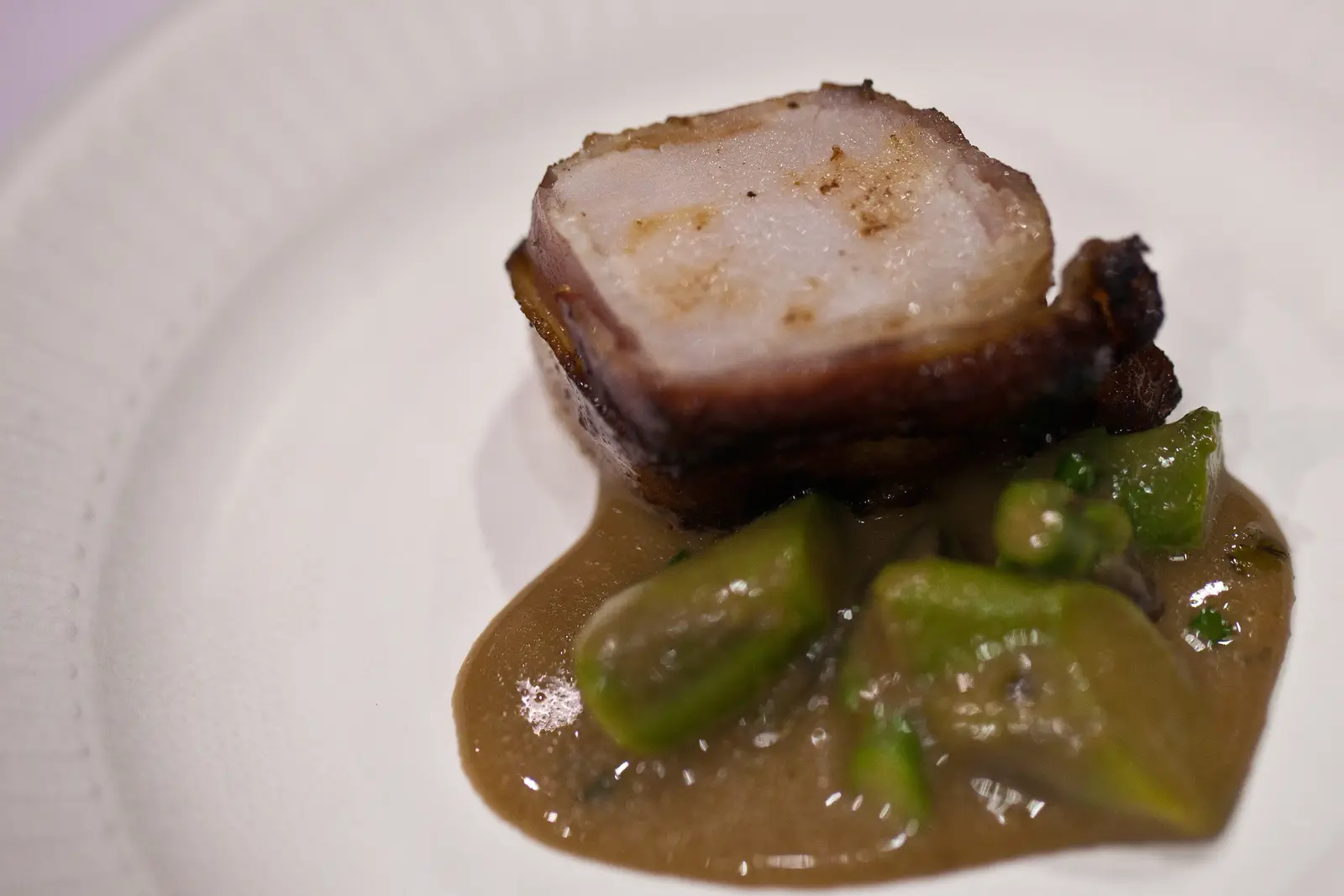
The other thing the loin demands is that you cook by feel and not by the clock. A minute too long is the difference between juicy and chalky, and no timer knows what your pan is actually doing. This is one of those moments where reading the meat instead of a recipe earns its keep. Press it, watch it, pull it early, and let it rest. It will carry over.
Lean meat needs help: brine or marinate first
Whatever method you choose, give the meat something before it cooks. A lean protein has nothing to lose moisture-wise, so you want to load it up first.
A wet brine is the most reliable insurance. Soak the rabbit in salted water, the same way you would protect a lean pork chop, and the meat holds onto more moisture through cooking and seasons all the way through. Brining does real, measurable work on lean meat, which is exactly why it is worth the extra few hours. A workable brine is roughly a quarter cup of salt per quart of water, enough to submerge the rabbit, with a few smashed garlic cloves, peppercorns, and a bay leaf if you have them. A few hours does real good; overnight is better, and rabbit is forgiving about being left in there.
A marinade does double duty, adding moisture and flavor at once. Keep it simple: oil, garlic, fresh herbs, a little acid. An old country option is a buttermilk soak, the same trick used for fried chicken and game birds, which tenderizes the meat gently while it seasons. Whatever you use, the point is the same: a lean meat has nothing of its own to give up, so you put something in before the heat ever takes something out.
And do not overlook mustard. Rabbit and mustard is a classic pairing for a reason, enshrined in the French country dish lapin à la moutarde, rabbit braised in a tangy mustard sauce. Mustard seasons, tenderizes a little, and gives the clean meat something to push against. If you sear the loin and want to do something with the pan, building a quick mustard pan sauce is the move.
If you want to grill it
Grilling is the riskiest way to cook rabbit, the method with the least room for error, because dry high heat and a lean meat are natural enemies. I have grilled it, and it can be excellent, but only with protection behind it. Never put a naked piece of rabbit over live fire. Brine it or marinate it first, without exception, keep the loin moving fast and brief, and give the legs the gentlest part of the grill or finish them low. If you skip the brine and just throw it on the grates, you will get exactly the dry, tight rabbit that gave the meat its bad reputation.
The dryness was never the rabbit's fault
Rabbit earned its dry reputation honestly, but the fault was always in the cooking, not the animal. Treat the legs and the loin as the two different things they are, give a lean meat the fat and the brine it cannot supply itself, and pull it off the heat a beat before you think you should. Do that, and you stop fighting rabbit and start understanding why most of the world never gave it up.
FAQ
Why does rabbit always come out dry?
Because it is one of the leanest meats there is, with almost no fat to keep it moist, and because most people cook the whole rabbit the same way. The legs need slow, moist cooking and the loin needs a fast flash. Cook them identically and one of them overcooks. Match the method to the cut, and brine or marinate first, and the dryness goes away.
What is the best way to cook rabbit meat?
For the legs, braising or confit, both slow and moist, give the most tender, forgiving result. For the loin, a fast sear, ideally wrapped in fat, keeps it juicy. The single best all-around result comes from breaking the rabbit down and cooking the parts separately rather than roasting or grilling it whole.
Should you brine rabbit before cooking?
Yes, especially for fast or dry-heat methods like grilling or pan-searing. A wet brine helps a lean meat hold moisture and seasons it throughout, the same logic you would use on a lean pork chop. For slow braises and confit it matters less, because the meat is already cooking in liquid or fat.
Can you cook rabbit like chicken?
Not exactly, and assuming you can is the most common mistake. Rabbit is far leaner than chicken, so it dries out faster and punishes overcooking harder. The cuts also behave differently from each other. You can borrow chicken techniques, braising legs, searing the tender cuts, but you have to cook rabbit with a lighter hand and more protection.