You learn to cook the way you learn anything else: by paying attention, repeating the work, and letting your senses do most of the thinking. Recipes are a starting point at best, and a crutch at worst. The exception is baking, where chemistry actually demands precision. Everywhere else, what separates a confident cook from a recipe-dependent one is a handful of underlying things: heat, salt, fat, acid, time, and the senses to read what is happening in the pan. The rest is practice. This piece is about how to get there.
I was cooking before I could read a recipe
When I was a kid, I was already making things in the kitchen. Whatever was around. Some of it worked. Some of it did not. Most of it I do not remember. What I do remember is the feeling of standing in front of an open cabinet and a half-stocked fridge and deciding what to do with what I could see. That instinct, the one of looking at what is in front of you and figuring out how to combine it into something edible, is the instinct every cook eventually has to develop. I had it early. Not because I was unusually talented. There was nobody telling me to follow a recipe. The kitchen was not a place where I went to execute someone else's instructions. It was a place where I went to make something.
That feeling stayed with me through adulthood. It stayed with me through the years I worked in professional kitchens. It is the same feeling I have now, decades later, when I open my own fridge at home. The instinct to look at what I have and decide what to do with it does not come from a recipe book. It comes from years of paying attention.
If you have ever stood in a kitchen, opened your fridge, and felt completely lost about what to make, the thing you are missing is not a recipe. It is the ability to look at what is there and see possibilities. That is also the instinct behind cooking on a budget: the cook who can make a meal out of what is already in the kitchen does not get pushed around by the grocery bill.
The cake exception, and where recipes do belong
The first thing I ever baked was a cake. It was for one of my sister's birthdays. I followed the recipe to the letter, because that is what you do with cakes. The chemistry of baking is unforgiving. The wet-to-dry ratio matters. The leavening matters. The temperature of the butter, the temperature of the oven, the order you cream things in. All of it is a chain reaction, and if one link breaks, the result is wrong.
This is the one place where I tell people to use a recipe. And not just to use one. To weigh the ingredients in grams, not cups, because volume measurements in baking are notoriously imprecise. A cup of flour scooped tightly weighs about thirty percent more than a cup of flour spooned in lightly. The recipe writer measured it one way. You are probably measuring it another. The scale removes the variable.
But here is the catch. Even in baking, the recipe is a starting point. I almost always cut back on the sugar in dessert recipes, because most baking recipes are sweeter than they need to be. I sometimes add a little acid to a dessert: a squeeze of lemon to a custard, a splash of vinegar in a glaze, a teaspoon of buttermilk in a pound cake. The recipe gets you the structure. The cook gets to make it taste like food.
That qualifier, that even in the most recipe-dependent corner of cooking there is room to adjust, is the thing recipes do not tell you. The recipe is the framework. You are still the cook.
What cooks are doing instead of reading a recipe
If you watch a good cook work, the recipe is not in their hand. They might glance at one for a quantity early on. They might have the spec sheet for a new dish taped near the pass. But during the cooking itself, the recipe is not what they are reading. What they are reading is the pan.
The senses are what cooks build over time. Each one tells you something a recipe cannot.
- Hearing. The sizzle when food hits the pan tells you how hot the fat is. A weak sizzle means the pan was not hot enough, and the food will absorb oil and turn soggy. A violent sizzle means it is too hot, and the surface will burn before the inside cooks. The crackle of butter going from foaming to silent to nutty-brown is the difference between sauce-grade butter and ruined butter. Listen to your pan.
- Smell. Garlic about to burn smells different from garlic that is browning. Onions sweating to translucent smell sweet. Fat at the smoke point smells acrid and metallic. The first time you smell a sauce go past where it should have stopped, you remember it for life.
- Sight. The transition of an onion from white to translucent to golden to amber to bitter is something you watch happen, not time. The wet sheen of a piece of fish that is not yet cooked through. The fond on the bottom of the pan, the brown bits that mean you have built flavor. The color of properly seared meat versus the gray-and-leathery look of overcooked meat.
- Touch. The give of a steak that is medium-rare. The give of bread dough that is properly developed. The way pasta feels between your fingers when it is one bite from done. The split second a lean cut like rabbit goes from juicy to overdone, with no fat to hide the mistake.
- Taste. The most underused tool in a home kitchen. Taste the food at every stage. Before salting. After salting. Before the acid. After the acid. The recipe cannot taste it for you.
The recipe gives you instructions. The senses give you the truth. The longer you cook, the more you trust the senses over the instructions.
The four things you should be learning instead
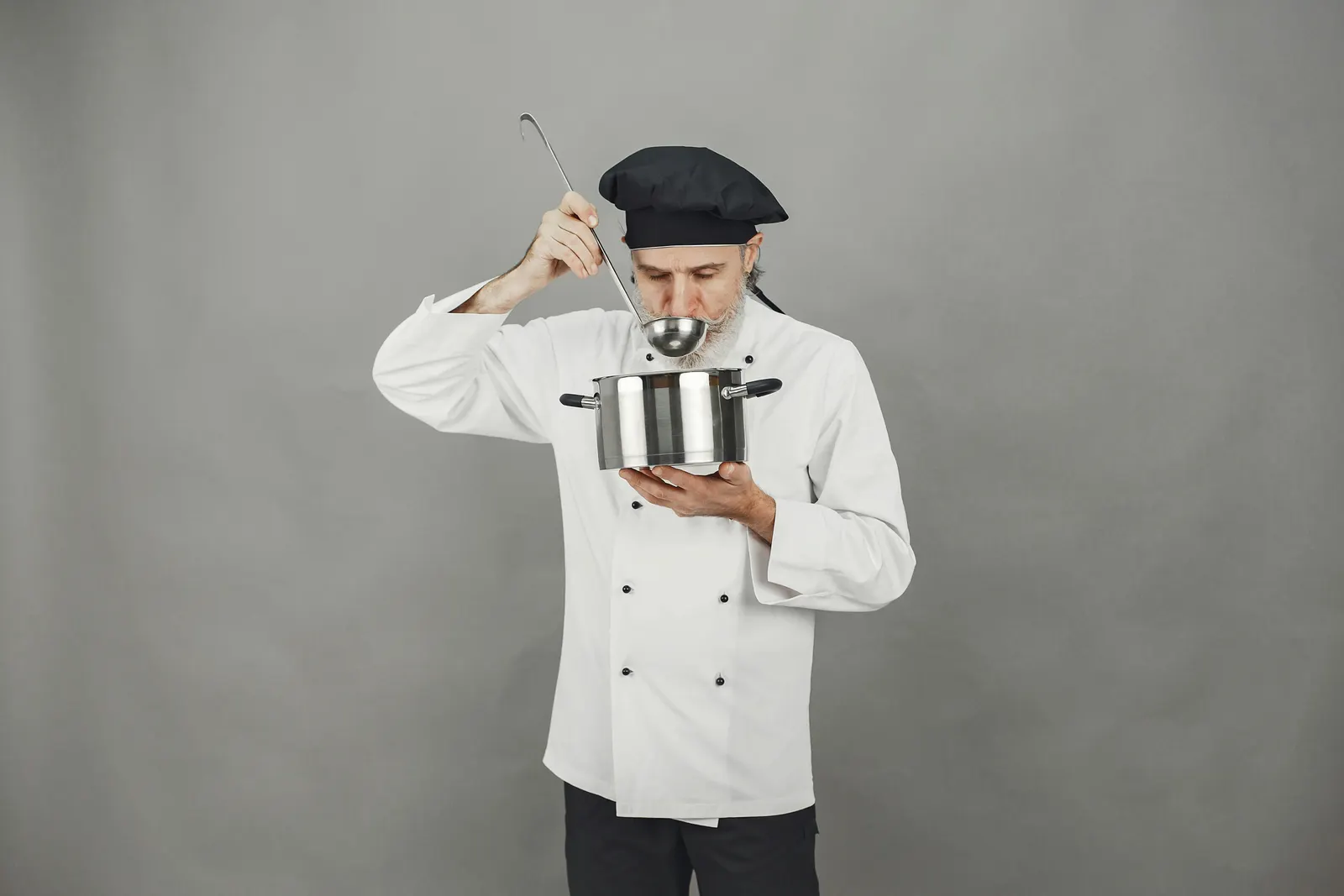
Samin Nosrat's book Salt, Fat, Acid, Heat made the framework famous, but the four principles have been in every working kitchen forever. If you understand what each one is doing and why they work together, you do not need most recipes.
Salt
Salt does not just add flavor. It unlocks it. Salt pulls out the inherent taste of an ingredient and amplifies what is already there. The difference between underseasoned vegetables and properly seasoned vegetables is not "more salt for the sake of more salt." It is salt revealing the vegetable's actual flavor. The same lever is what separates salting a steak properly from sprinkling salt on raw meat at the last minute.
Tip: undersalt is always recoverable, oversalt rarely is. Salt early for flavor that penetrates the food. Salt late for crunch on the surface. Both have a place.
Fat
Fat is the carrier. Fat dissolves flavor compounds that water cannot. The reason you toast spices in oil at the start of a curry, or bloom garlic in olive oil at the start of a pasta, is because the flavors actually come out and ride the fat into the dish. Fat is also texture: butter finishing a sauce, olive oil drizzled on a finished plate, the rendered fat at the bottom of the roasting pan that becomes the base of a gravy.
Tip: a pat of cold butter swirled into a hot sauce at the end is the difference between a sauce that tastes good and a sauce that tastes finished. The technique is called mounting, and it is one of the most reliable upgrades a home cook can learn.
Acid
Acid is the corrective. Almost every time someone tells me their food "needs something" but they cannot tell what, the answer is acid. A squeeze of lemon. A splash of vinegar. A spoonful of yogurt. A few drops of lime over a finished plate of beans. Acid wakes up flavors that have gone flat and balances rich dishes that feel heavy.
Tip: a squeeze of citrus at the end fixes most of what people call "bland." Try it before reaching for more salt. Half the time, the food was already salted enough; it was just dull.
Heat
Heat is the transformation. Dry heat browns, caramelizes, and develops the deep flavors you cannot get any other way. Moist heat is for tenderizing tough proteins and gentle cooking. The mistake most home cooks make is treating these the same. Searing a steak in a pan that is not screaming hot gives you steamed meat, not seared meat. Braising a brisket in a pan that is too hot gives you tight, dry brisket, not the falling-apart kind. The temperature of the cooking medium is not a detail. It is the difference.
Tip: preheat your pan longer than feels necessary, especially for searing. A drop of water should jump and disappear. If it sits and steams, your pan is not hot enough yet.
The pairings tell you why food works:
- Salt + fat. Anchovy melted into pasta water. The reason cured meats taste so deep. The salt pulls flavor; the fat carries it.
- Sweet + salt. Salted caramel. Prosciutto with melon. The two opposites that amplify each other.
- Sweet + acid. Vinaigrette. The reason a balsamic reduction works on strawberries.
- Fat + acid. Olive oil and lemon. Butter and white wine. The structure of half the sauces in the European tradition.
Once you understand these four things and how they pair, almost every recipe is a variation on a combination you already know.
A recipe lies because conditions change
Here is something most home cooks never get told. Recipes do not work the same way every time, even when you follow them perfectly. The conditions in your kitchen are not the conditions in the test kitchen the recipe came from. Humidity, room temperature, the freshness of your ingredients, the responsiveness of your stove, the size of your pan. All of these change the outcome.
A simple example. In professional kitchens and restaurants, dough recipes get adjusted by season. In the summer, when the kitchen is hot and humid, you use slightly less water in the same dough because the flour is already absorbing moisture from the air. In the winter, when the kitchen is dry, you use slightly more water because the flour is starving for it. Same recipe on the spec sheet. Different amounts in the bowl. The cook in front of the dough adjusts.
This is not an edge case. It is the entire game. A working kitchen adjusts the recipe every single day based on what the ingredients are doing that day. The home cook who follows the recipe to the letter has no idea why their bread is dense or their sauce is broken. The recipe did not lie. The conditions changed, and they did not.
Tip: read the dough, the sauce, the pan. Not the recipe card. If something looks too wet, add a little flour. If it looks too dry, add a little water. The recipe is a suggestion. The bowl is the truth.
This is also why the older European traditions of cooking, the kind of cooking you see in rustic European kitchens, tend to be the most recipe-flexible. Those cuisines were built by cooks who were paying attention to what was in front of them, not following a printed instruction.
Portion size changes timing more than most people realize
This is the part of cooking that almost nobody thinks about. The recipe says simmer for thirty minutes. But the recipe was written for a specific amount in a specific pot at a specific heat. If you double the amount of food in the same pot, the timing changes. If you halve it, the timing changes.
More rice in the pot can cook faster than less rice, because the mass of rice traps the steam and cooks itself. Less rice in the same pot has more surface area exposed to direct heat and can scorch on the bottom before the top is done. More meat in a stew traps more heat and braises faster than a tiny portion. A full pan of vegetables steams. A half-pan caramelizes.
Tip: when you scale a recipe up or down, the time changes, but never linearly. Watch the pan, not the timer. A roast at half the size is not roasted in half the time. A double batch of stew is not finished in double the time. The pan tells you when it is done.
The pot tells you when something is done. The timer tells you when to start checking. Those are not the same thing.
How to actually learn to cook without recipes
The path is simple. It is just not fast.
Pick three or four things you want to be able to make without thinking. Simple foundational dishes. A pasta. A roasted chicken. A simple soup made from what is in your fridge. A vegetable side. Cook each one twenty times. Not twenty different recipes. The same one, twenty times. Each time, change one thing. More salt. Less salt. More acid. Higher heat. Less time. Watch what happens.
Tip: keep a notebook for the first month. Write down what you changed and what happened. After about thirty cooks, you will not need the notebook anymore. Your hands will remember.
The other half is tasting. Most home cooks under-taste. They taste once at the end, decide the food is fine or not fine, and serve it. A real cook tastes constantly. Before salting. After salting. Before the acid. After the acid. After the fat goes in. A clean spoon goes in every time.
Tip: keep three or four small tasting spoons next to the stove. The friction of going to the drawer is enough to make most people skip tasting. Remove the friction.
Tip: when you taste, take a spoonful out of the pot and walk a few steps away. Distance changes how you read flavor. Tasting directly over a hot pan, with the steam in your face and the smell of the pan dominating your nose, gives you a partial reading. Step away, taste, decide.
The deeper habit is patience. Confidence in the kitchen comes from doing the same things over and over until you are not paying attention to the recipe anymore. You are paying attention to the food. That is when you are actually cooking.
When recipes do belong (the honest qualifier)
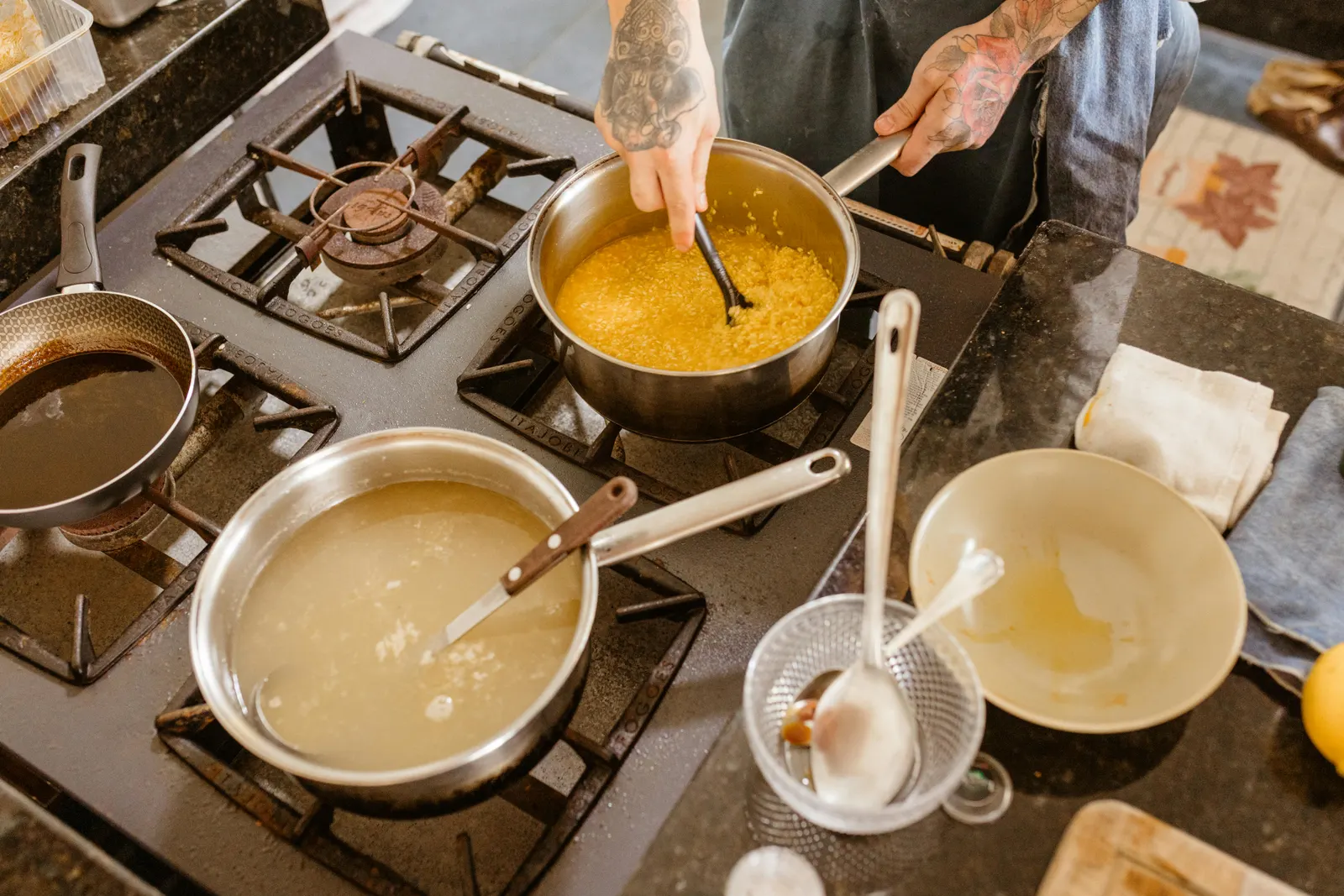
I am not anti-recipe. I am anti-recipe-as-crutch. There are real places where recipes belong, and ignoring them would be foolish.
Baking and desserts. Already covered. Chemistry demands precision. Use the recipe. Use a scale.
A cuisine you do not have the framework for. If you have spent your life cooking Italian and Mexican food and you decide to learn Thai cooking, recipes are how you build the road map. You do not yet have the muscle memory for fish sauce, palm sugar, lime leaves, galangal. Recipes give you the structure. Cook ten or fifteen Thai dishes following the recipes exactly. After that, you will start to see the principles underneath, and then you can start to cook from instinct.
A traditional dish you want to do right. If you are learning your grandmother's pernil, your great-aunt's tamales, a regional dish that has a specific texture and flavor profile that has been refined for generations, get the recipe from a trusted source and follow it. Tradition is its own kind of expertise.
A technique you have not done before. If you have never made hollandaise or aioli or fresh pasta dough, the first few times you do it, follow a recipe. The recipe is teaching you the technique. Once the technique is in your hands, you do not need the recipe.
The pattern: recipes are for learning. They are not for cooking. Once you have learned, you cook.
Cooking is a craft, not a procedure
The trouble with treating cooking as a series of recipes is that it puts the cook in the wrong role. A recipe-dependent cook is an executor. They are following someone else's directions. They are not really cooking; they are assembling. The food works or it does not, and they often cannot tell you why.
A cook who has learned the principles is doing something different. They are responding to the food in front of them. They are tasting, adjusting, listening, smelling, watching the pan. They are making the dish that the ingredients are pointing them toward, on the day that those ingredients arrived. The dish is not predetermined. It is a conversation between the cook and the food.
That is the version of cooking I think most home cooks actually want. They just have not been told that the path to it does not run through more recipes. It runs through fewer. The same instinct, scaled up over years of doing it every day, is what professional cooks live inside of every shift. Home cooks can have a version of that same craft, with none of the punishment.
FAQ
How do you learn to cook without following recipes?
Pick three or four foundational dishes. A pasta, a roasted chicken, a simple soup, a vegetable side. Cook each one twenty times. Each time, change one thing and watch what happens. Taste at every stage. Pay attention to the senses: the sound of the pan, the smell of the fat, the color of the food. After three months of this practice, you will be cooking from instinct. Recipes will become a reference, not a script.
What do you focus on instead of a recipe?
Four things: salt, fat, acid, and heat. Salt unlocks flavor. Fat carries it. Acid sharpens and balances. Heat transforms. Once you understand what each one is doing, almost every recipe is a variation on a combination you already know. Add in the senses, the sound, smell, sight, and touch of food cooking, and you have the entire toolkit a working cook uses.
Are there times you should follow a recipe?
Yes. Baking and desserts, because the chemistry is unforgiving. A cuisine you do not yet have the framework for, so you learn the road map. A traditional dish where the precision matters. A technique you have not done before, while you are learning it. The rule: recipes are for learning. Once the technique is in your hands, you do not need the recipe.
Why do my recipes never come out right?
Usually because the conditions in your kitchen are different from the conditions in the test kitchen the recipe came from. Humidity, room temperature, the freshness of your ingredients, the size of your pan, the responsiveness of your stove. All of these change the outcome. A working cook adjusts the recipe in real time based on what they are seeing. A recipe-dependent cook gets the same instruction and a different result, and cannot tell you why.
How long does it take to learn to cook without recipes?
There is no fixed answer, but a useful benchmark is three to six months of regular practice on a handful of foundational dishes. By month three, you will be making most of your weeknight meals without opening a recipe app. By month six, you will be looking at your fridge and deciding what to cook based on what you see, not what you searched. The skill is not innate. It is built.