The best cuts of beef for any occasion depend entirely on what you are cooking, not on the price tag of the meat. Grilling on a Saturday calls for ribeye, New York strip, or bavette. A weeknight dinner calls for skirt, flank, or ground. A Sunday slow-cook calls for chuck, brisket, or short rib. Stew calls for chuck. A steakhouse occasion calls for one of the premium grilling cuts. Carne asada calls for skirt or flank. Once you know what you are cooking, the cut chooses itself. The most common mistake home cooks make is buying by price first and worrying about the dish second.
The framework: occasion first, cut second
Most home cooks pick beef backwards. They scan the case, see what's on sale, and decide what to make from that. The cooks who eat well do the reverse: they start with the meal (Saturday grilling, Tuesday tacos, Sunday braise, family carne asada), let the meal narrow the cut to two or three real options, then handle budget within that range.
The right cut for a stew is chuck. The wrong cut is a lean sirloin that turns into shoe leather by hour two. The right cut for a Saturday-night steak is a well-marbled ribeye. The wrong cut is a four-dollar lean sirloin that you wish was more.
The rest of this piece is broken down by what you're cooking. Pick the occasion. The cut is in that section.
The grilling and steakhouse cuts
The cuts most people think of when they think "steak." Well-marbled, naturally tender, built for fast high-heat cooking. They cost more because they're the parts of the animal that did the least work.
- Ribeye. My go-to. The most reliable single steak in any American grocery store. Heavy marbling, deep flavor, forgiving on the grill or in a cast-iron pan. Pick boneless unless you specifically want a slower, more uneven cook.
- New York strip. Tighter grain, less marbling, beefier flavor. Cooks fast, sears clean. The pick when you want the steak experience without ribeye's heavy fat. The head-to-head between ribeye and strip covers which cut is the smarter buy for which kind of dinner.
- Filet mignon. Most tender cut, from the least-used muscle. Almost no marbling, almost no flavor. Some love it for the texture; I think it tastes like nothing. Better as a small portion alongside something bigger than as the whole meal. The full tenderness-versus-flavor case for filet against ribeye covers when the leaner steak is actually the right call.
- Porterhouse and T-bone. Two cuts on one bone (a strip on one side, a filet on the other). Porterhouse has a larger filet portion; T-bone smaller. Hard to cook well at home because the two halves want different temperatures.
- Tomahawk. A ribeye with a long bone left attached for presentation. The bone does not add meaningful flavor. It's theater. Costs two to three times a boneless ribeye and eats the same. If you want to spend that money, spend it on a thicker dry-aged ribeye instead. Looks great on Instagram. That's most of what it's for, and the long version of what a tomahawk steak is and whether it's worth it makes the case with the receipts.
This is also where salting matters most. A premium grilling cut salted the night before is a noticeably different steak than the same cut salted three minutes before cooking.
The fast weeknight cuts
The cuts you actually want most nights of the week. Cheaper, fast-cooking, made for tacos, stir-fries, sandwich meat, and any dinner that comes together in twenty minutes.
- Skirt steak. Long, thin, deeply beefy. Coarse grain that asks to be sliced thin against it. The classic carne asada cut. Hard sear on a screaming-hot pan, fast cook, fast slice.
- Flank steak. Similar in shape but a different muscle. Slightly leaner, slightly less aggressive. Fajita meat in most American kitchens. Same rules: hard heat, fast cook, slice against the grain. Don't take it past medium-rare; it gets tough.
- Hanger steak. The cut chefs used to keep for themselves before it became fashionable. One per animal, hung from the diaphragm, deeply flavorful, slightly more tender than skirt. Cook like skirt or flank; the thin-cut decision between hanger and skirt walks through where they actually differ in the pan.
- Ground beef. The grind matters more than the lean percentage. A coarsely ground 80/20 chuck from a real butcher beats a finely ground 90/10 supermarket tube every time. Burgers want chuck or chuck-brisket blend. The lean-percentage panic at the supermarket has produced an entire generation of bad burgers. Fat is flavor.
A note on bavette, the chef's secret
Bavette deserves its own section because most home cooks have never heard of it, and that is the only reason it stays cheap.
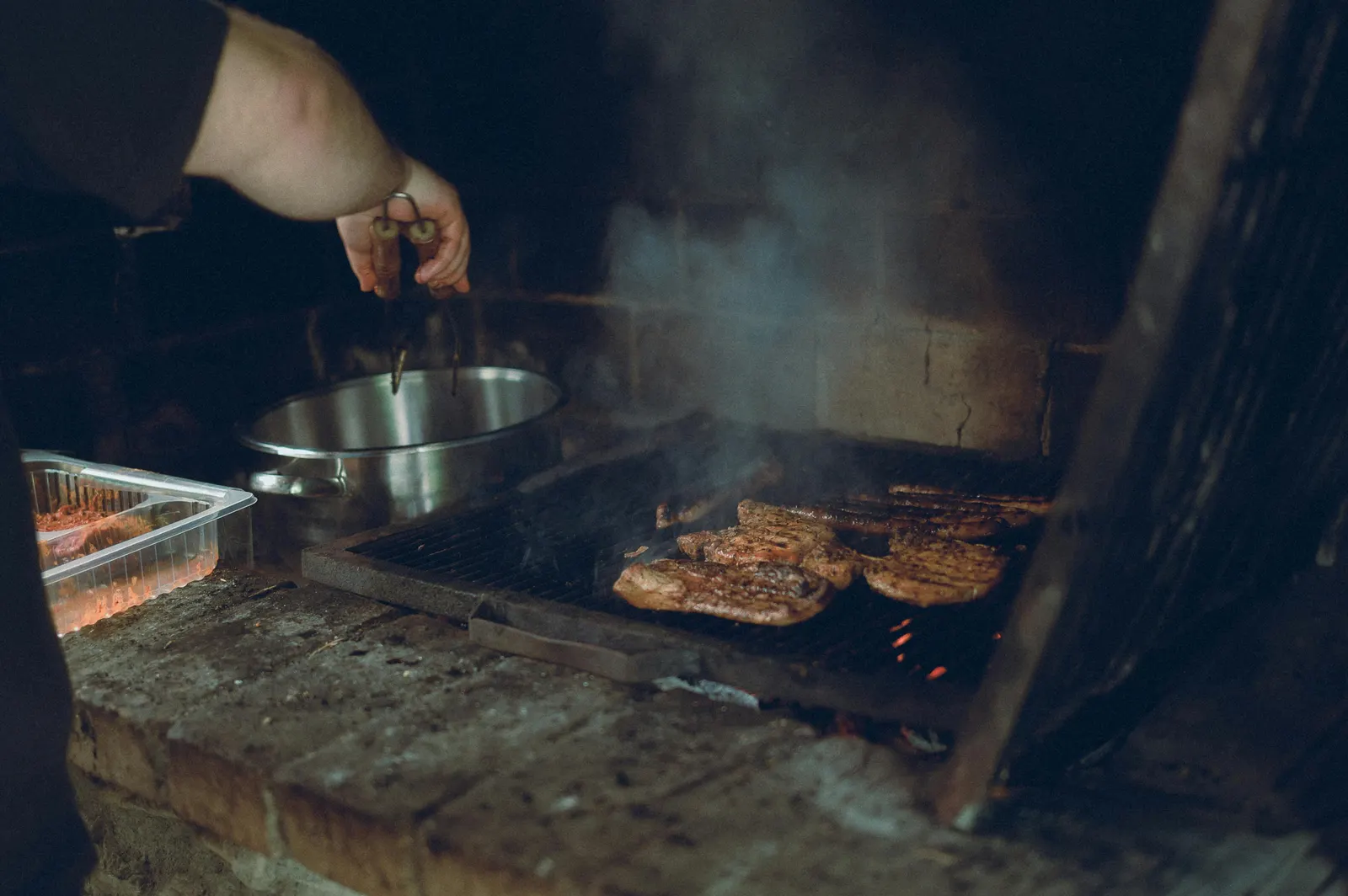
Bavette is the French name for what American butchers usually call flap meat or sometimes sirloin tip. Sirloin family. Coarse grain. Deep flavor. Cooks fast, slices thin against the grain, and eats like a much more expensive steak than it is. It is the cut I cooked for years on a charcoal grill and one of my personal favorites for a home dinner.
The reason most American grocery stores do not carry it under its proper name is that it does not have a clean place in the American steak menu. It is not as pretty as a ribeye, not as branded as a New York strip, not as marketed as a tomahawk. It sits in the case under a generic label, priced like the working cut it is, and most shoppers walk right past it.
If you can find it, buy it. Marinate it briefly or just salt it well. Cook it over very high heat, three or four minutes a side at most for a thick cut, less for a thin one. Rest it five minutes. Slice it thin against the grain at a slight angle. Serve it on a wooden board with a sharp knife and lemon or chimichurri on the side.
It is the steak experience for a fraction of the steakhouse price. Ask your butcher for bavette, flap meat, or sirloin tip. If they look confused, ask for skirt's cousin from the bottom sirloin. They will know what you mean.
The slow-cook and braising cuts
The cuts that reward patience. These are the muscles that did the most work, which means they have the most connective tissue. That connective tissue is collagen, which slowly converts to gelatin over hours of moist heat and turns a tough cut into something tender, rich, and dripping with body.
- Chuck. The shoulder. The single most useful cut in the slow-cooking world. Beef stew, pot roast, ragu, chili. Right ratio of meat to fat to connective tissue, takes well to almost any moist-heat method, genuinely cheap.
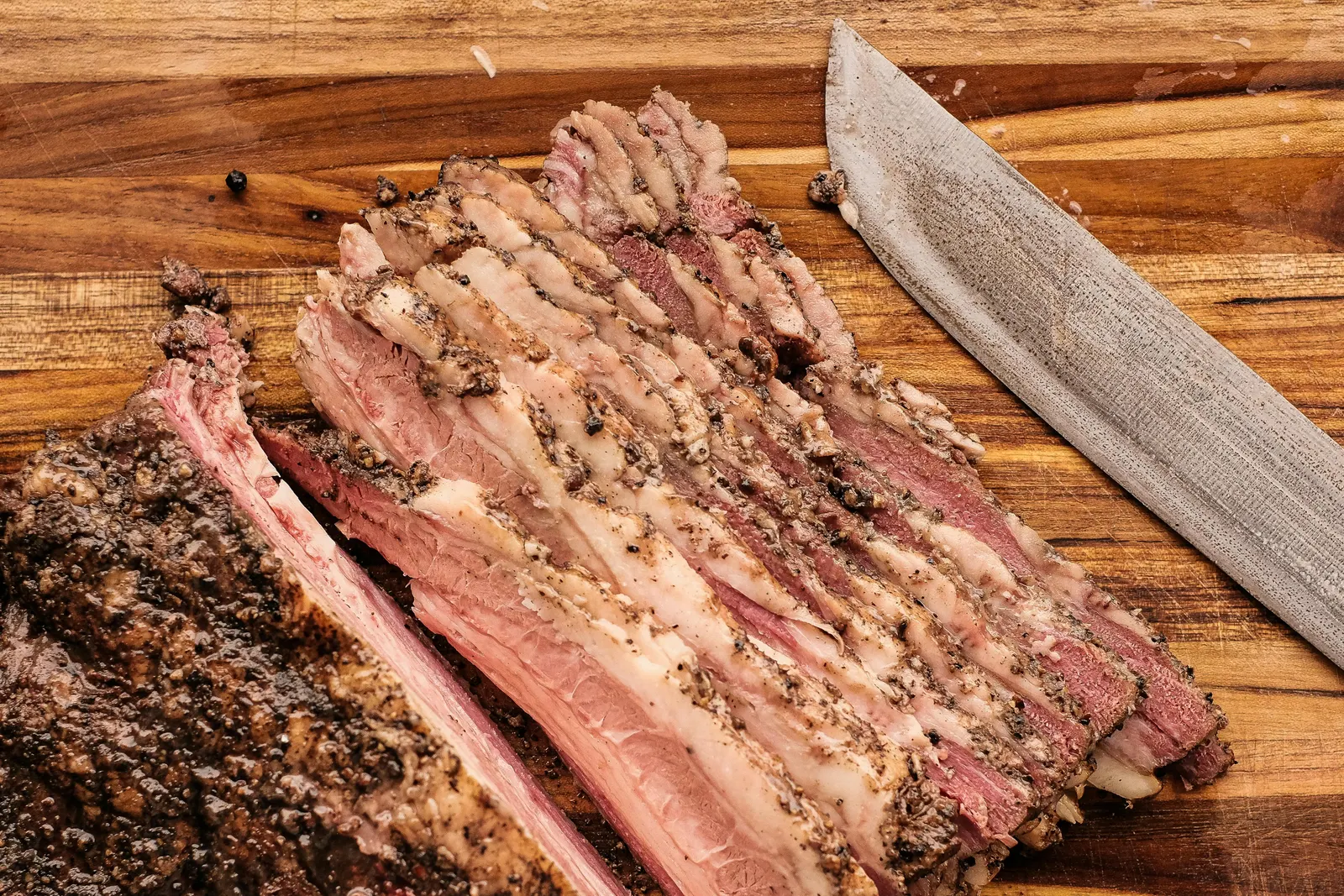
- Brisket. The chest. Two halves: the point (fatty, melty, makes great burnt ends) and the flat (leaner, slices for sandwiches). Wants either hours over wood smoke or a long slow oven braise. No shortcut.
- Short rib. Heavily marbled, rich, with a bone that adds body to the braising liquid. Bone-in short rib slow-braised in red wine is a special-occasion meal that costs less per portion than a ribeye and feels twice as luxurious.
- Oxtail. Heavily collagenous, deeply flavorful, almost designed for slow cooking. Treated with reverence across Caribbean and Latin American kitchens. In American grocery stores it sometimes sits forgotten in the back of the case. Braise it three hours with onion, garlic, herbs, stock. It converts skeptics.
These cuts all need time. You can't fast-cook a chuck roast into tenderness. You can't grill a brisket. A long braise also loves a hit of acid at the end, a splash of vinegar or a squeeze of lemon to brighten what hours of meat and fat have built.
A note on steak tartare
I love steak tartare. It is one of my favorite ways to eat beef, full stop. The cleanness of raw beef done right, the texture of a properly chopped tartare against the warmth of an egg yolk and the bite of capers and shallot, is its own experience entirely.
I am not going to tell you how to make it at home. That is a deliberate omission. Tartare is one of the few dishes where the difference between the right way and the wrong way is the difference between dinner and a hospital visit, and that kind of advice is not something I want to put into a blog post. If you love tartare, the right move is to order it at a serious restaurant with a real kitchen and a real source for their beef. Let the people who do it every day do it.
What I will say: the existence of tartare is part of why a respect for the cut of beef matters. Raw beef is not forgiving. The wrong cut, the wrong handling, the wrong source becomes obvious immediately. A great tartare is the opposite. It makes the case for beef as something more than a thing to cook. It is one of the cleanest demonstrations of what beef actually tastes like when nothing is done to it.
A cultural note: well-done versus medium-rare
I grew up in a Colombian household where steak was always well-done. My mother and father would never eat a medium-rare steak, and even now, the idea of a medium steak is something they push back against. This was true across most of the older generation I grew up around. Beef was cooked through. Period.
Living in Colombia now, the cultural pattern is still mostly the same. Most traditional Colombian restaurants serve steak well-done by default unless you specifically ask for it cooked less. I have had to push back politely many times on a server bringing out a piece of beef cooked to the texture of a wallet. Things are changing in upscale Colombian restaurants. The younger generation of chefs is moving toward medium-rare as the default, but the broader culture has not arrived yet.
I am not here to argue with anyone's mother. If you grew up on well-done steak and you love it, eat it that way. The point of this section is just to flag that "medium-rare is the right temperature" is an opinion of one particular food culture, not a universal truth. Most of Latin America cooks beef longer than most American steakhouses do. Most of Asia cooks beef differently again. The cut you pick matters less than how you and your family actually want to eat it. A skirt steak well-done is still a meal. A ribeye medium-rare is still a meal. Pick what you like and stop apologizing for it.
If you want my honest cooking opinion: most cuts in this article are at their best between medium-rare and medium. Past medium, the fat renders out and the texture tightens, which is fine if that is what you like but real if you do not.
Marbling, grading, and the price tag
Three things drive the price of a steak in an American grocery store: the cut, the grade, and the marbling. Knowing how each one works lets you shop smarter than the sticker tells you to.
The cut is the muscle. We just covered every important one. Ribeye is more expensive than chuck because it is more tender and more in demand, not because it is "better" beef.
The grade is the USDA classification. The three you will see in a normal grocery store are Prime, Choice, and Select. Prime is the highest, given to about three percent of beef in the United States. Choice is the standard mid-tier. Select is the leanest and lowest in marbling. Prime ribeye costs more than Choice ribeye because Prime has more marbling on average. Most American grocery stores carry Choice and Select; Prime usually requires a butcher counter or a higher-end grocer.
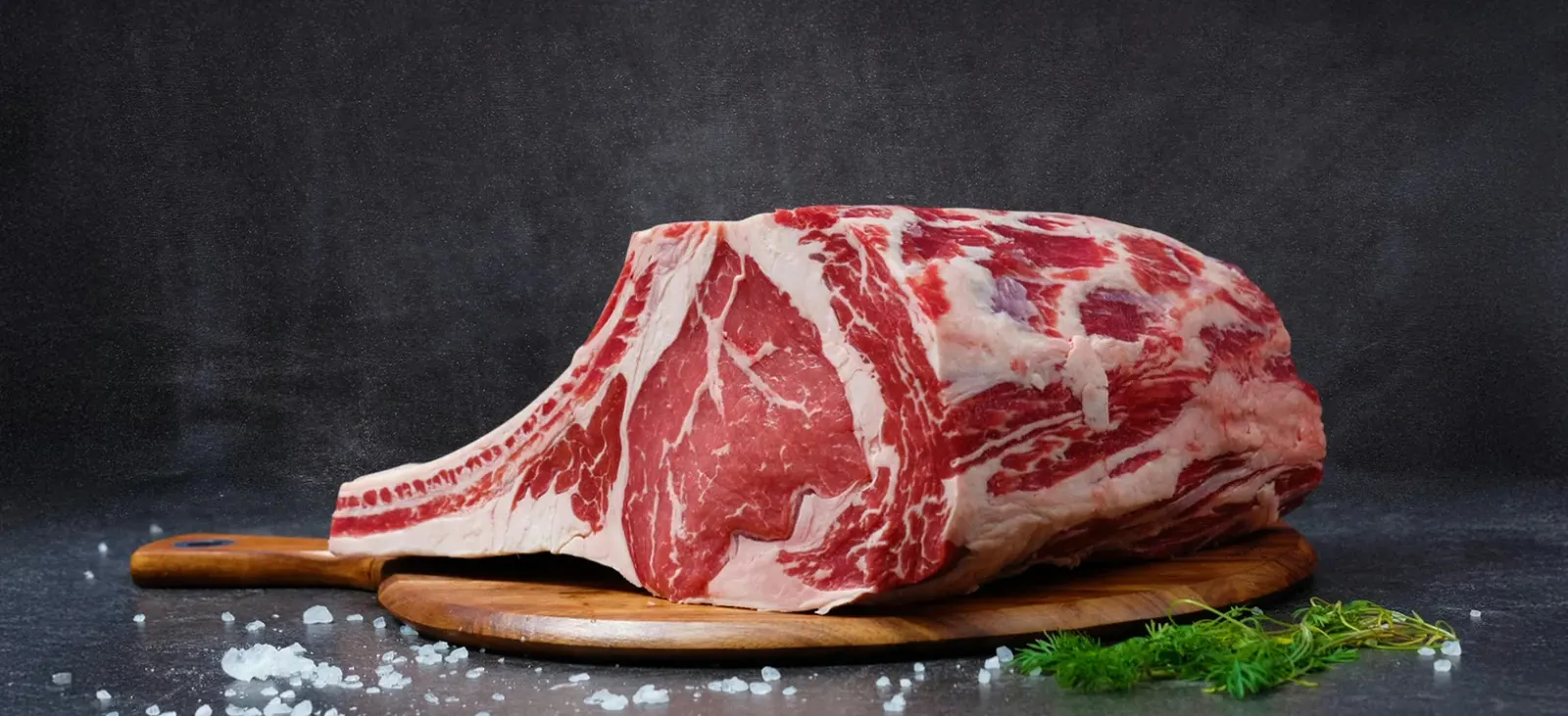
The marbling is the actual fat inside the meat. The fine white veining that runs through a well-marbled ribeye. Marbling is what melts when the meat cooks and gives beef its richness, its juiciness, and most of its flavor. More marbling equals more flavor, more tenderness, and a more forgiving cook.
Here is the key point: the grade is an average, the marbling is the specific piece of meat. A heavily marbled Choice ribeye often eats better than a poorly marbled Prime ribeye. The sticker says Prime; the actual fat content says otherwise. Pick the steak with the visible marbling, not the steak with the highest grade. Trust your eyes more than the label. The full version of this argument, including when the Prime upgrade is actually worth the money, is in prime vs choice beef and whether the upgrade is worth it.
Wagyu and Kobe deserve their own line. They are different cattle breeds with genetically higher marbling. Real Japanese A5 Wagyu is a different eating experience from any American beef, but the price is also five to ten times higher. American Wagyu and Australian Wagyu are crossbreeds that sit between Prime and true A5 in price and quality. Worth it occasionally; not worth it weekly.
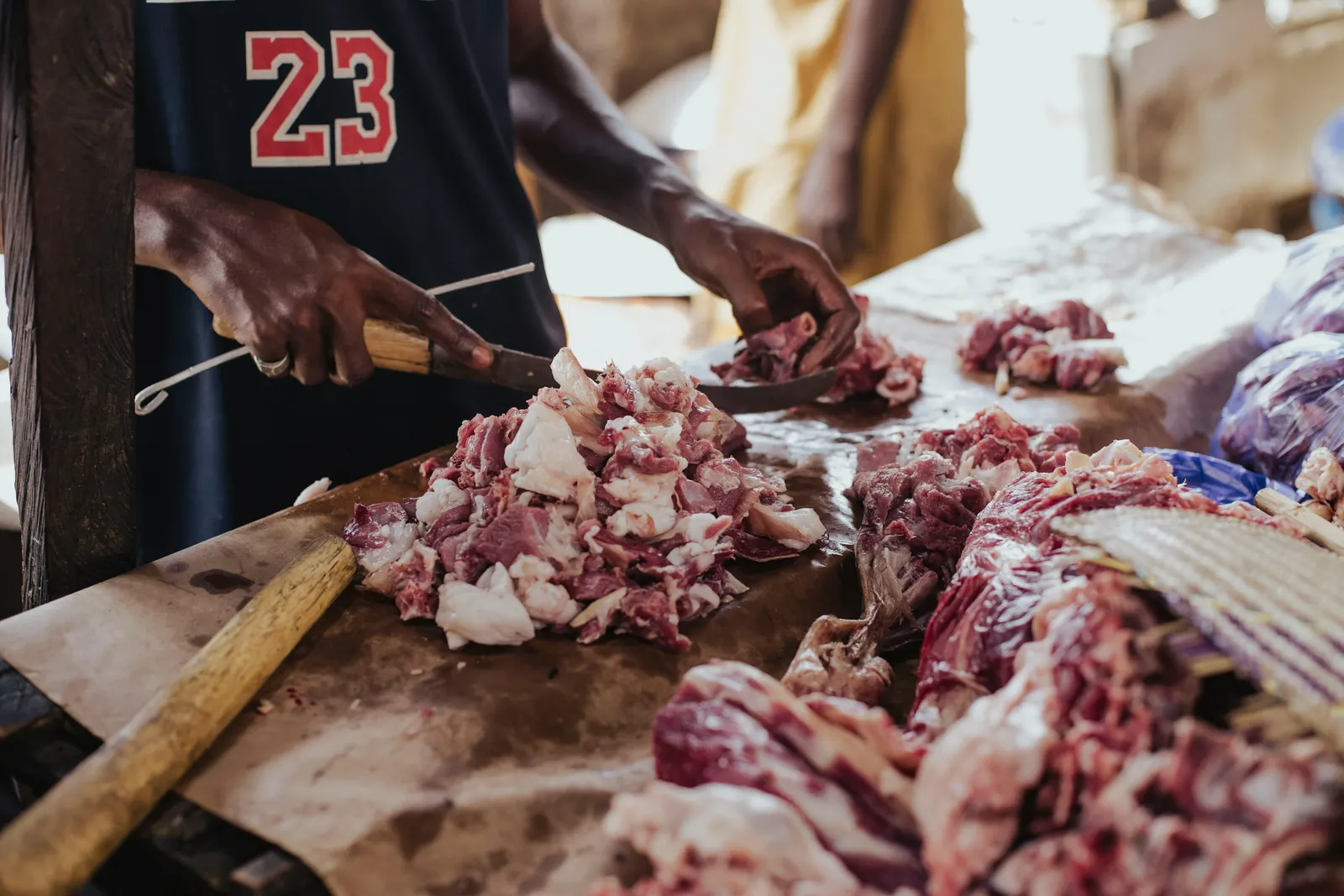
What to look for at the butcher
A short field guide for picking the right steak once you are at the case. The longer version of this thinking, focused specifically on steak, is in what makes a good steak and why the butcher matters.
- Look at the color. Fresh beef should be deep red, not gray. Vacuum-sealed beef sometimes looks darker; this is normal, and exposure to air will bloom it back to red within minutes.
- Look at the marbling. Fine white flecks distributed evenly through the muscle. The more, the better. A clean piece of red meat with no visible marbling is going to eat lean and tough.
- Look at the surface. The cut should look freshly butchered, not weeping. A pool of liquid in the package is a sign of older meat or a poor seal.
- Smell it if you can. Fresh beef smells like very little. Off beef smells faintly sour or metallic. If something seems wrong, it is.
- Ask the butcher. A real butcher counter is one of the most under-used resources in any city. Ask what came in fresh today. Ask for cuts that are not in the case. Ask for bavette by name, or by its English aliases, and see what they bring out. The conversation usually upgrades whatever you walk out with.
The same general principle behind picking a great restaurant for the occasion applies to picking beef at the butcher. Pick by the meal you are actually cooking. Pick by what looks right in front of you. Ignore the marketing on the label.
If your budget is tight and a premium cut is not in the cards, the cheaper-cut path is genuinely good cooking, not a compromise. The right chuck for a slow stew or a pot of beans feeds four people on a few dollars and feels generous. The cut is half of cooking. The technique is the other half.
If you're at the grocery store right now
The shortlist that covers ninety percent of what most home cooks actually cook with beef:
- Steak night: ribeye
- Stew or Sunday pot roast: chuck
- Burgers: ground chuck (or chuck-brisket blend if your butcher will grind it)
- Fast weeknight (tacos, fajitas, stir-fry, carne asada): skirt, flank, or bavette if you can find it
- Special-occasion celebration: bone-in short rib slow-braised, or a thick dry-aged ribeye
The other ten percent is the special-occasion stuff and the long slow-cook projects. Everything else falls out from there.
FAQ
What is the best cut of beef?
There is no single best cut. The best cut depends on what you are cooking. Ribeye is the best cut for a Saturday-night grilled steak because of its marbling and forgiveness on heat. Chuck is the best cut for a Sunday stew because of its connective tissue. Skirt or flank is the best cut for carne asada because of its coarse grain and fast cooking. The mistake is treating "best cut" as a universal answer rather than as a function of the meal.
What is the most flavorful cut of beef?
For premium grilling cuts, ribeye is the most flavorful because of its heavy marbling. For working cuts, hanger steak and bavette are the most flavorful per dollar. Both are deeply beefy and significantly cheaper than ribeye. For long-cooked dishes, oxtail and short rib have the deepest flavor because of their high collagen content. Flavor in beef is mostly about fat content, connective tissue, and the muscle's role on the animal; the most-used muscles develop the most complex flavor.
What is the most tender cut of beef?
Filet mignon is the most tender cut of beef because the muscle it comes from (the tenderloin, or psoas major) does the least work on the animal. The trade-off is that filet has very little marbling and very little flavor compared to ribeye or strip. For most home cooks, a well-marbled ribeye offers a better balance of tenderness and flavor than a filet.
What cut of beef is best for grilling?
Ribeye, New York strip, and bavette are the three most reliable grilling cuts. Ribeye is the most forgiving because of its marbling. New York strip cooks fast and sears cleanly. Bavette is the underrated chef pick: cheaper than the other two, deeply flavorful, and outstanding on a charcoal grill. For fast hot-grill cooking with sliced-thin presentation (carne asada, fajitas), skirt or flank is better than any of these.
Is USDA Prime worth the extra money over Choice?
Sometimes, but not always. Prime has more marbling on average than Choice, but the grade is an average, not a guarantee. A heavily marbled Choice ribeye often eats better than a poorly marbled Prime one. The smarter shop is to look at the actual piece of meat in front of you and pick by visible marbling, not by the grade sticker. Save the Prime upgrade for the occasions where the grade is consistent (a dry-aged Prime ribeye at a serious butcher, for example), and shop by appearance for everything else.