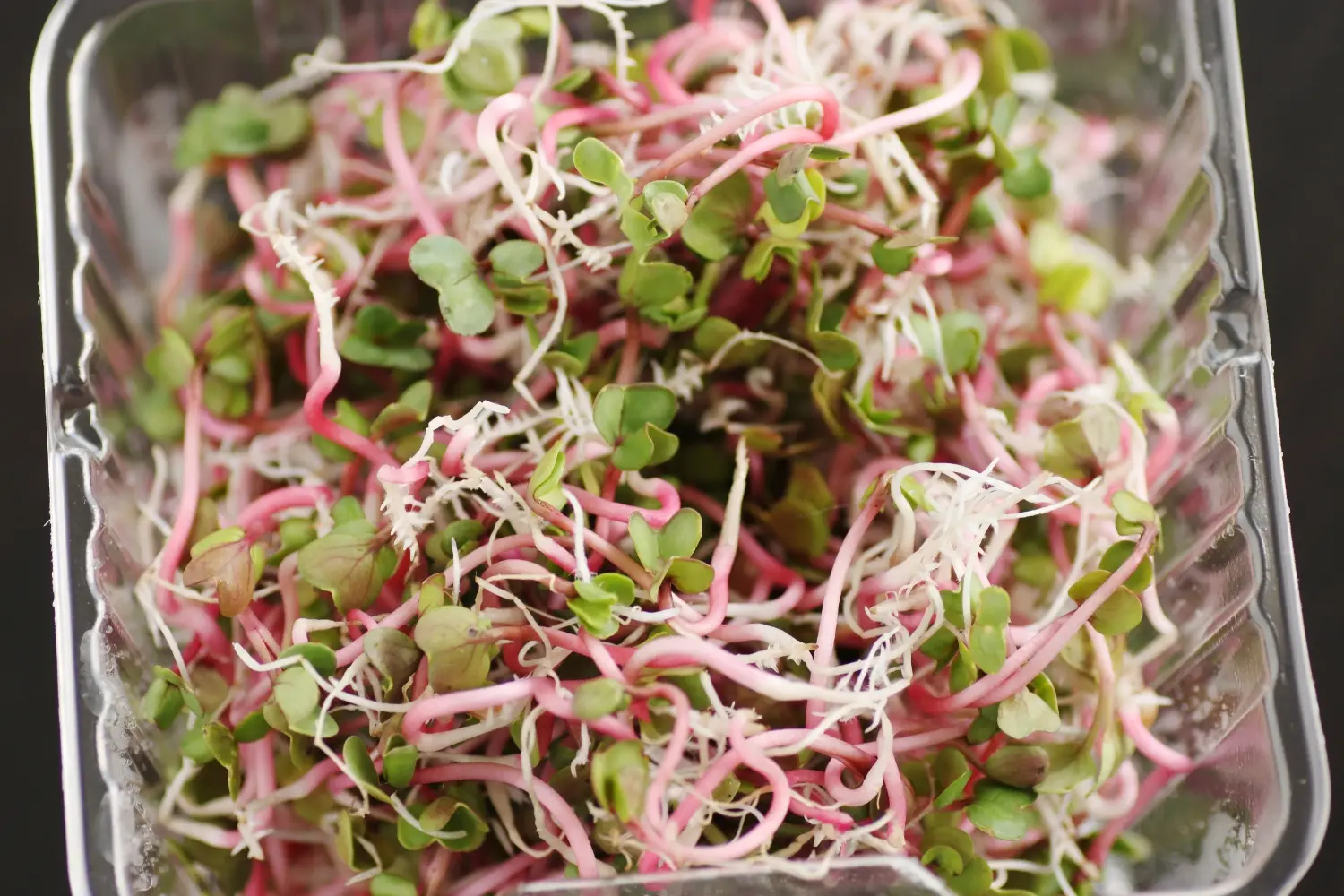
Eat microgreens the way you would eat a salad green or a soft herb: raw, in volume, added at the very end, and never cooked. The nine uses that will actually finish a box are a sandwich, a wrap, a burger, eggs, a smoothie, avocado toast, a bowl of soup, pesto, and a grain bowl. The mistake nearly everyone makes is treating them as decoration, which is how a four-dollar clamshell ends up in the trash with most of it untouched. A handful of microgreens is an ingredient. Use them by the fistful rather than the pinch, and match the variety to the plate.
What microgreens actually taste like
"Microgreen" tells you nothing about flavor. It describes a stage of growth, not a plant, the same way "cheese" describes a process rather than a taste. A tray of radish and a tray of sunflower have almost nothing in common on the tongue.
Flavor runs by family, and it runs surprisingly hot. Radish microgreens are genuinely spicy, closer to fresh horseradish than to a salad. Mustard is sharper still. Broccoli and cabbage are milder, green and faintly sulfurous in the way the mature vegetable is. Arugula tastes like arugula, concentrated.
The legumes go the other direction entirely. Pea shoots are sweet, grassy, and crunchy enough to have real texture. Sunflower is nutty and thick-stemmed, the most substantial of the common varieties, and the closest thing in this category to something you could eat as a salad by itself. Chia and flax are mild, mostly green and vegetal, which makes them useful where you want the texture without a flavor argument.
If you have only ever bought the generic "microgreen mix" at the supermarket and found it underwhelming, that is the mix doing you a disservice. Buy one variety, taste it on its own, then decide where it belongs.
The three families, and which to buy first
A microgreen is a seedling harvested young, somewhere between roughly seven and twenty-one days depending on the variety, and cut above the soil line. Most are picked at the cotyledon stage, when the two seed leaves have opened but the first true leaves have barely started. Penn State Extension's primer on microgreens walks through the timing by variety if you want the detail.
For cooking purposes, three groups cover almost everything you will encounter.
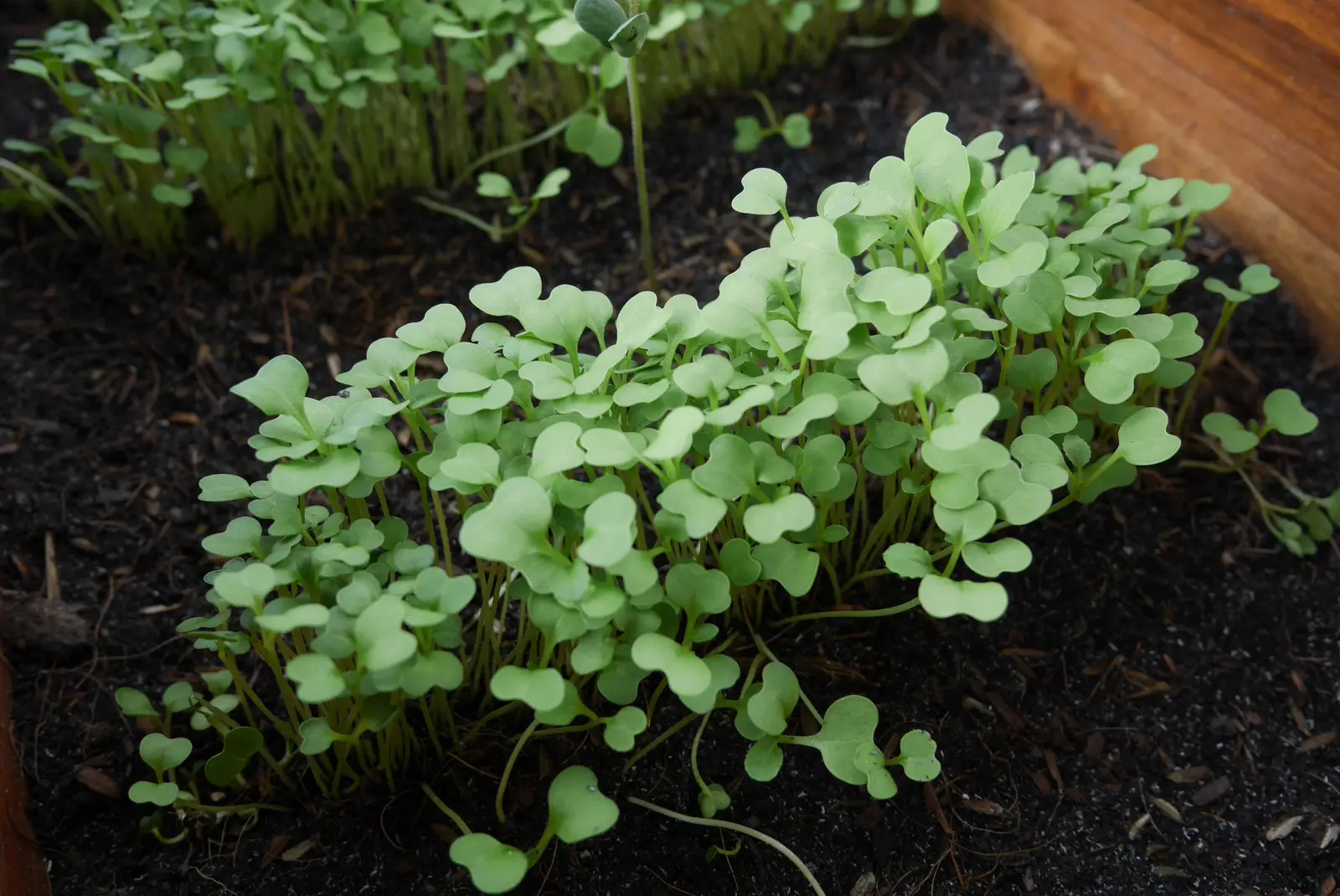
Brassicas
Radish, broccoli, mustard, cabbage, kale, arugula. These are the peppery ones, and they are what most people picture when they hear the word. They grow fast, they are cheap, and they carry the most assertive flavor in the category.
Use them where you want heat and a little bitterness: on a burger, in a sandwich with something fatty, against a rich egg. Keep them out of anything sweet. A brassica microgreen in a fruit smoothie tastes like drinking a salad that has gone wrong.
Mucilaginous seeds
Chia, flax, basil, cress. These seeds form a gel when they hit water, which is why they behave differently from everything else in this list at every stage. The flavor is mild and the texture is fine and soft rather than crunchy.
They are the least useful family for eating in bulk and the most useful for folding into something wet, where their softness disappears. They are also, contrary to how often they get recommended to beginners, the hardest of the three to grow.
Legumes and shoots
Pea, lentil, chickpea, sunflower. This is the family worth buying first if you are new to it. The flavors are sweet and nutty rather than aggressive, the stems have body, and a handful reads as food rather than as a topping. Pea shoots and sunflower in particular are sturdy enough to survive being put inside a sandwich and pressed.
| Family | Examples | Flavor | Best for | Relative cost |
|---|---|---|---|---|
| Brassicas | Radish, broccoli, mustard, arugula | Peppery to genuinely hot | Burgers, rich sandwiches, eggs | Cheap |
| Mucilaginous seeds | Chia, flax, basil, cress | Mild, soft, vegetal | Smoothies, folding into wet dishes | Cheap, hard to grow |
| Legumes and shoots | Pea, lentil, chickpea, sunflower | Sweet, nutty, crunchy | Salads, wraps, grain bowls, pesto | Cheapest in bulk |
Microgreens and sprouts are not the same thing
This distinction gets blurred constantly, including by people selling both, and it matters for two reasons.
A sprout is a germinated seed grown in water, usually in a jar, with no soil and no light. You eat the whole thing: seed, root, and shoot. A microgreen is grown in a medium under light and cut above the root, so you eat only the stem and leaves. Sprouts are ready in two to five days. Microgreens take one to three weeks.
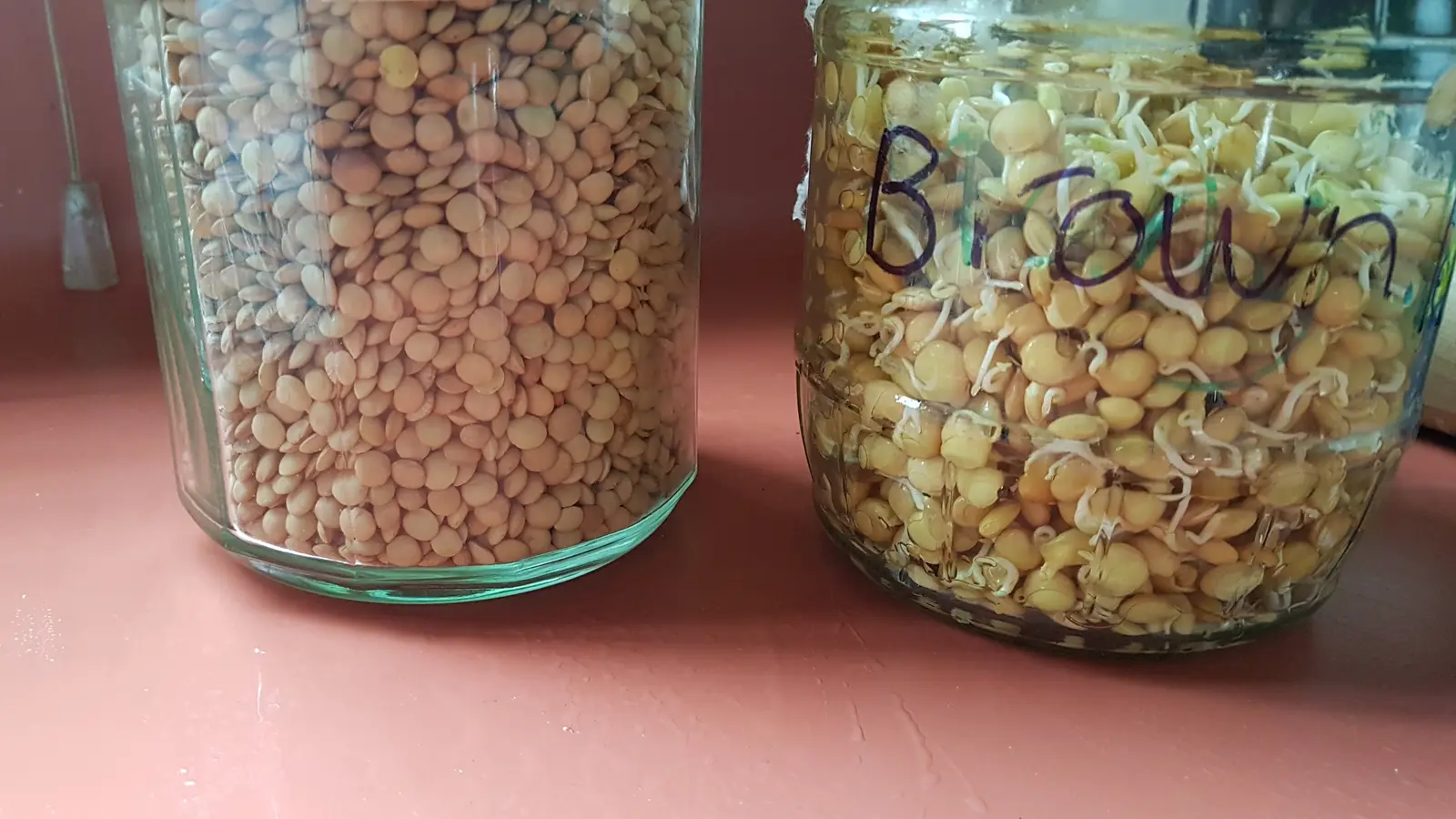
The second reason is food safety, and it is not a small difference. The warm, wet, nutrient-rich conditions that make a seed sprout in a jar are also close to ideal conditions for bacteria. The FDA's guidance on sprout production records 52 reported foodborne illness outbreaks linked to sprouts between 1996 and 2020, accounting for at least 2,700 illnesses, 200 hospitalizations, and three deaths. The agency recommends that children, older adults, pregnant people, and anyone immunocompromised avoid raw sprouts entirely.
Microgreens are not risk-free, but they do not spend days submerged in warm standing water, and the seed itself is left behind in the tray. If you are choosing between the two for a household that includes anyone in those groups, that is the deciding factor.
On nutrition, the honest answer is that the research is thinner than the marketing. The most-cited work is a 2012 study in the Journal of Agricultural and Food Chemistry by Xiao and colleagues, which measured vitamin and carotenoid concentrations across twenty-five varieties and found them generally higher per gram than in the mature leaves. Per gram is the important qualifier. Nobody eats microgreens by the pound, and that is roughly where I would leave the subject.
Nine ways to actually eat them
1. In a sandwich, replacing the lettuce
This is the single best use and the one that will move the most volume. Lettuce in a sandwich is mostly water and structure; microgreens bring actual flavor to the same job. Sunflower and pea shoots hold up best under pressure because the stems have body. A thick layer against mayonnaise, avocado, or a soft cheese is the whole idea, and it turns a sandwich into a plate you assemble instead of cook without any additional work.
Use more than looks reasonable. A sandwich wants a half-inch layer, not a scatter.
2. In a wrap
The one format where they genuinely cannot be crushed. A wrap gets rolled rather than pressed, so a loose, bulky handful stays loose. Anything in the legume family works. This is also where the brassicas earn their place, because a wrap tends to be heavy on starch and soft fillings, and something sharp cutting through it is exactly what the format lacks.
3. On a burger
Under the patty, not over it. Put microgreens on top of a hot patty and the residual heat wilts them into a dark smear within a minute. Put them on the bottom bun, under the meat, and they stay intact while the cheese and the juices land on top of them.
Radish is the right call here. A burger is fat, salt, and sweetness from the bun, and a peppery green is the missing fourth element.
4. In an omelet or scrambled eggs
At the fold, off the heat. The moment the eggs come off the burner, scatter a generous handful across the surface and fold them in. They will soften slightly from the residual warmth without cooking, which is exactly what you want. Fold them in any earlier and you will produce a gray omelet.
Broccoli and radish both work. So does pea, if you want the sweetness rather than the heat.
5. In a smoothie
Legumes only. Pea and sunflower blend into fruit without arguing with it, and chia and flax disappear entirely. A brassica in a smoothie is a genuine mistake; radish and mustard turn sharp and sulfurous the moment they are broken up in a blender with something sweet.
A large handful into a banana-and-berry base is roughly the right ratio. You will taste green, not pepper.
6. On avocado toast
Predictable and still correct. Avocado is soft, fatty, and one-note, and it wants texture and acid against it. A thick layer of any variety plus lemon and flaky salt fixes the monotony that makes most avocado toast boring by the third bite.
7. Finishing a bowl of soup
In the bowl, never in the pot. Ladle the soup, then drop a handful on top at the table. They will wilt slowly from the steam and stay recognizable. Added to the pot, they vanish within seconds and contribute nothing but a little color that also disappears.
This is one of the easiest upgrades to a pot of soup built from whatever's around, which tends to be long on softness and short on anything fresh.
8. As pesto
The most important use on this list, because it is the only one that consumes an entire box at once. Microgreens substitute directly for basil: a packed cup or two of greens, garlic, a handful of nuts, hard cheese, olive oil, salt, blitzed.
Sunflower makes the best version, nutty and thick. Pea makes a sweeter, brighter one. Radish makes something closer to a peppery salsa verde that is very good on a steak. If a clamshell is three days old and starting to look tired, this is where it should go, and it freezes.
9. Over a grain bowl or plain rice
Rice, farro, or quinoa, still warm, with a handful stirred through at the end and another on top. The warmth of the grain softens them just enough. Add a fried egg and this stops being a side and becomes dinner.
Can you cook microgreens?
Not really, and you should stop trying.
They are seedlings with almost no fiber and a very high water content, so any direct heat collapses the cell structure immediately. What comes out the other side is a dark, slick, faintly bitter residue with none of the texture that made them worth buying. There is no sauté that works. There is no wilting stage where they land somewhere good, the way spinach does.
Residual heat is the exception and the only one. Folded into eggs off the burner, stirred through warm grains, dropped onto hot soup in the bowl, they soften without breaking down. The rule is that heat should reach them from a dish that has already stopped cooking.
If you want a cooked green, buy the mature vegetable. Broccoli microgreens are not a cheaper way to get broccoli.
How to store microgreens so they don't turn to slime
The four-day slide into liquid is the reason most people stop buying these, and it is mostly preventable.
Do not wash them until the moment you use them. Surface water on a cut seedling is what starts the rot, and the clamshell has no drainage. If they came damp, open the container and let them air out for a few minutes before it goes in the fridge.
Line the container with a dry paper towel, lay the greens in loosely, and put another dry towel on top. Change the towel when it feels damp. Store them in the main body of the fridge, not the crisper drawer, which is designed to hold humidity in and is actively working against you here. Keep them in something rigid so nothing presses down on them.
Handled that way, most varieties hold for five to seven days, and the sturdy legumes can go longer. Bruised or crushed greens go first, which is another argument for a rigid container over the bag.
The broader point is that these belong to the same category as every other piece of produce that wilts before you get to it: the waste is not really about the ingredient, it is about not having decided what it is for before you bought it. Pick two of the nine uses above before the box comes home.
Why I'm growing them instead of buying them
The math on buying microgreens is bad and it does not improve. A clamshell runs three to five dollars and holds a couple of ounces, which is one sandwich and one omelet if you use them at the volume this article is arguing for. A pound of dried lentils costs about the same as one clamshell and will produce trays of shoots for weeks.
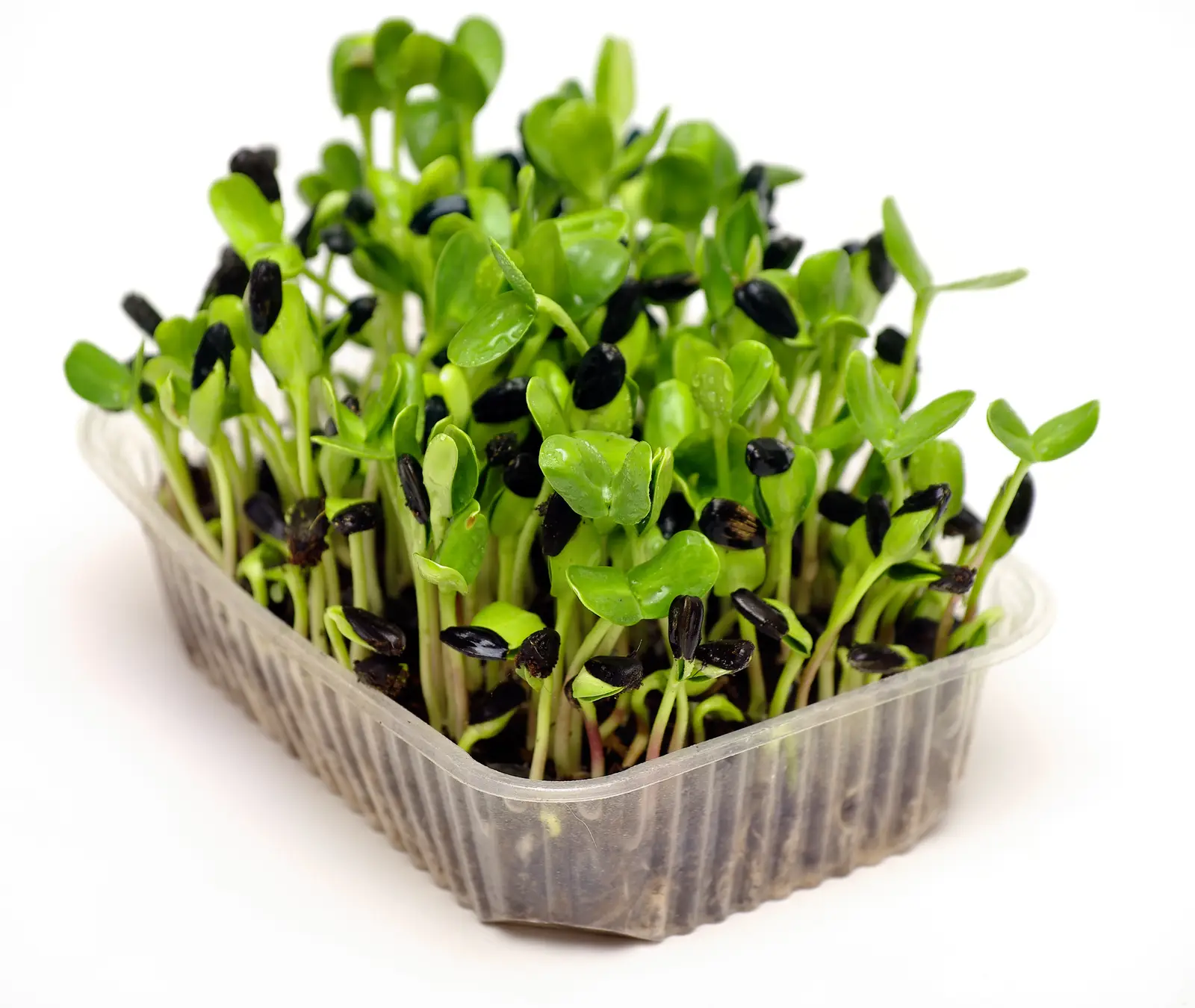
So I have a rack and a set of grow lights coming, and I am starting with food-grade seed bought in bulk rather than packets labeled for microgreens: whole dried peas, whole brown lentils, chickpeas, in-shell black oil sunflower, plus chia and flax. All of it is seed sold for people to eat, so none of it is treated. It is the same logic as buying dry goods in bulk for anything else, and the markup on a small packet with the word "microgreen" printed on it is considerable.
Three things are worth knowing before you copy this, because each one will quietly ruin a first tray. Split peas and split lentils will not germinate, since splitting damages the embryo, so the bag has to say whole. Hulled sunflower seeds will not grow either; you need them in the shell. And chia and flax cannot be soaked the way the legumes can, because they gel on contact with water. Those two get surface-sown on a damp paper towel instead, where the gel actually works in your favor and holds moisture against the seed.
I have not run a tray yet, so I am not going to tell you how it went. That part gets added to this article when there is something real to report. What I can say is why the legumes come first: they are the cheapest seed, the most forgiving, and the family whose flavor I would actually want a lot of.
FAQ
What do microgreens taste like?
It depends entirely on the variety. Brassicas like radish and mustard are peppery and can be genuinely spicy. Broccoli and cabbage are milder and slightly sulfurous. Legumes like pea and sunflower are sweet, nutty, and crunchy. Chia and flax are mild and vegetal. The word "microgreen" describes a stage of growth, not a flavor, so buying a generic mix tends to produce a muddled, underwhelming result.
Can you cook microgreens, or do they have to be raw?
They should be raw. Microgreens are seedlings with very high water content and almost no fiber, so direct heat collapses them into a slick, bitter residue almost instantly. The only heat that works is residual: folded into eggs after the pan comes off the burner, stirred through warm grains, or dropped onto hot soup once it is already in the bowl.
How long do microgreens last in the fridge?
Five to seven days for most varieties if you store them properly, and longer for sturdy ones like sunflower and pea. Do not wash them until you use them, keep them between two dry paper towels in a rigid container, change the towel when it goes damp, and store them in the main fridge rather than the crisper drawer, which traps the humidity that makes them rot.
Are microgreens the same thing as sprouts?
No. Sprouts are germinated in water without soil or light and eaten whole, including the seed and root, usually within two to five days. Microgreens are grown in a medium under light for one to three weeks and cut above the root, so you eat only the stem and leaves. The FDA has linked dozens of foodborne illness outbreaks to raw sprouts, largely because the warm standing water that sprouts need also suits bacteria, and it advises higher-risk groups to avoid them.
What are the best microgreens to eat?
Start with the legume family: pea shoots and sunflower. They are sweet rather than aggressive, they have enough texture to work as an ingredient instead of a topping, and they are sturdy enough to survive being put inside a sandwich. Radish is the best of the peppery varieties and the right choice on a burger, but it is a strong flavor and worth buying second.
The clamshell in your fridge right now is not going to survive the week. Make the pesto.


