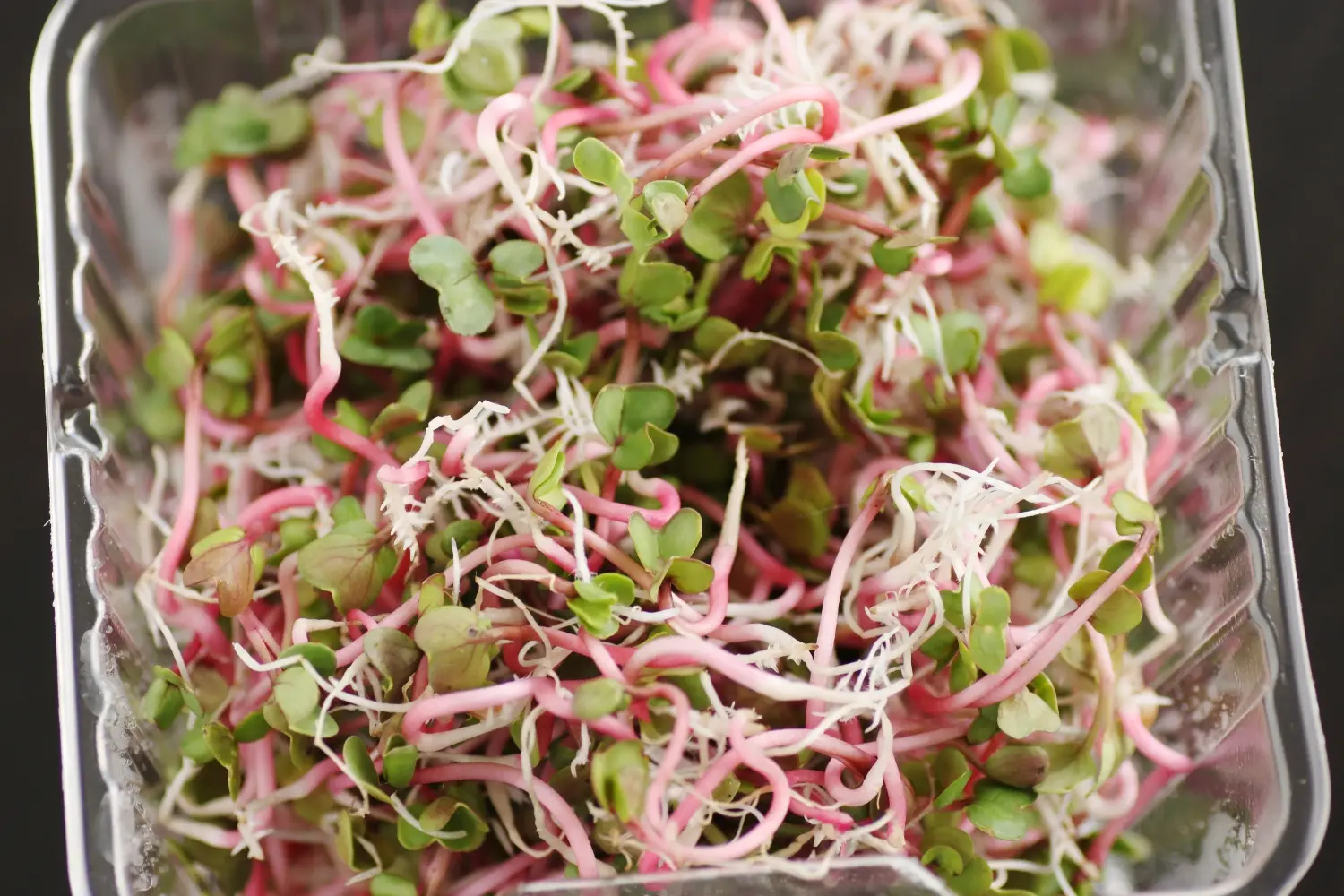
Cooking for one is a different skill from cooking for a family, and that is why it goes wrong. Scale a standard recipe down and you get leftovers you will not eat, produce wilting in the crisper, and a fridge of half-used jars. The fix is not smaller portions. It is restructuring how you shop, what you keep on hand, and how you think about a week of meals. Solo cooking should look like a restaurant staff meal, not a Sunday family dinner: small amounts of many ingredients, low-stakes assembly, everything repurposed. The pantry is the lever that makes it work.
I cooked for hundreds before I cooked for one
When I came up through New York City restaurants, I never had to cook for myself. Every shift ended with staff meal, where the cooks made dinner from scraps, leftovers, and whatever wasn't moving on the line. I'd leave the kitchen at 1 AM with a full stomach. On my days off, I went out to eat. The bachelor cook reality: living alone, eating well, never grocery shopping for serious cooking.
When I moved out of professional kitchens and into tech and online marketing, working from home changed the math. No staff meal. No expense account for daily lunches. A kitchen I'd outfitted for serious cooking, with no occasion to cook for more than one. The first six months, I ate out for almost every meal because cooking for one was harder than I'd expected. The recipes I knew were calibrated for a six-top family dinner or a ten-cover restaurant ticket. Scaling them down didn't work. It just meant smaller portions of food I had no plan for after one meal.
It took me about a year to build a system. The system below is what I'd hand to any home cook in the same spot.
Why most "cooking for one" advice misses
Most cooking-for-one advice is the same: buy smaller portions, batch-cook on Sunday, freeze the rest. It isn't wrong. It's just the easy half of the answer. The hard half is structural. You have to think differently about what's in your kitchen and how you decide what to cook in any given moment.
The default home-cook mindset is "what recipe am I making tonight?" That works for families because the recipe sets the grocery list and feeds everyone. For one, it's wrong. The right mindset is closer to a professional kitchen: "what do I have on hand, and what's the lowest-effort meal I can build from it?" That mental flip is the whole game.
In a restaurant, cooks don't decide what's for dinner the day-of. They have a stocked station with proteins, sauces, garnishes, and starches that can be combined in dozens of ways. Solo cooking is the home-scale version of this. You stock for combinations, not for recipes.
The chef-side principle home cooks never use
Professional kitchens track food cost percentage on every dish. The math is simple: ingredient cost divided by menu price, times 100. Most casual restaurants target 28 to 32 percent. Fine dining tolerates 35 to 40. (We built a food cost calculator for restaurant operators at Crewli that does this math interactively, with the industry benchmarks built in.)
Home cooks don't run this math, ever. They should, even loosely. Here's why it matters for cooking for one specifically.
When you spend $11 on a small package of bay scallops and turn them into one meal, you just ran an effective 100 percent food cost on that dish. Two of those a week and you should have eaten out for less money. The math forces you to think about every dish as ingredients-in versus meals-out, which is exactly what a restaurant does and exactly what most home cooks don't.
You don't need to spreadsheet this. A loose mental model is enough. When you put a $14 protein in your basket, ask whether you'll get two meals out of it or one. If one, put it back. If two, plan the second meal before you check out.

The solo pantry: stock for combinations
The single biggest move in solo cooking is having a pantry that supports four to six different meals without a grocery run. Once you have it, weekly shopping becomes lighter, less wasteful, and faster.
The basics most home cooks get wrong:
- Oil and acid first. A good extra-virgin olive oil and three different acids (lemon, sherry vinegar, soy sauce) cover most flavor profiles. Skip the 12-vinegar collection that goes rancid before you finish it.
- Three or four pantry proteins. Canned beans (chickpeas, white beans), good tuna packed in oil, eggs, and one dried option (lentils or pasta). These all keep, all combine with fresh ingredients, all turn into meals fast.
- One real onion, one head of garlic, one piece of fresh ginger. Always. The aromatic base for almost any meal you'd ever cook. (For the technique of using these properly, the anatomy of a soffritto is the foundation.)
- Hard cheese. A wedge of parmesan or pecorino keeps for a month and improves any dish. Salt, umami, and texture in one move.
- Frozen vegetables, judiciously. Frozen peas, corn, and chopped spinach are usually better than the wilted versions in the produce section after day five.
For the broader pantry framework that supports this, how to stock a pantry from scratch is the longer version of the same logic.
With this in place, your weekly grocery shop is just one or two fresh proteins, three pieces of produce, bread or grain, dairy if you use it. Maybe $40 to $60. Anything else means you bought too much.
Recipe scaling is harder than people think
Scaling a recipe down isn't just dividing the ingredients. Three things break:
- Cooking time and pan size. A four-serving stew in a Dutch oven becomes a one-serving stew that scorches in the same Dutch oven because there's not enough liquid to insulate the bottom. Use a smaller pan or change the technique.
- Aromatic ratios. Garlic and salt scale linearly. Onion does not. Half an onion is too much for one serving of pasta sauce. The smallest cohesive aromatic base is a single shallot or quarter-onion.
- Eyeballing fails. When the original recipe calls for 1 tablespoon of soy sauce, a quarter of that is half a teaspoon, not "a splash." Solo cooking is when measuring matters more, not less, because the absolute quantities are small enough that one mis-eyeball ruins the dish.
A $20 digital kitchen scale is the most useful tool a solo cook can buy after a sharp knife. The other half of recipe scaling is reading the recipe properly in the first place; reading a recipe like a professional is what separates cooks who scale well from cooks who guess.
The weekly reset
The reset is the practice that ties the system together. Once a week (Sunday evening for most people, but pick whatever fits your schedule), do this:
- Empty-out audit. Open the fridge. Anything within 48 hours of going bad: tonight's dinner uses it, no exceptions.
- Pantry skim. What jars are open? What boxes are half-empty? Anything that should be eaten this week, write it on a piece of paper.
- Plan three meals, not seven. Most weeks you'll only cook three or four dinners at home. The rest is leftovers, takeout, or skipped. Plan accordingly. Don't shop for seven dinners.
- One staple cook. Make one bigger thing that becomes two or three meals: a roast chicken, a pot of beans, a tray of roasted vegetables. The leftover is the foundation of Tuesday and Wednesday.
- Shop short. With three meals planned and the staple cook accounted for, your shopping list is small and specific.
This routine takes 20 minutes. It probably saves $150 to $250 a month in produce that would otherwise wilt.

What I actually rotated in the bachelor era
The meals I came back to over and over weren't fancy. None of them required new shopping if the pantry was stocked. Most of them were, frankly, broke meals, the cheap rotation a cook leans on when money is tight.
- Pasta with whatever's in the fridge. A box of dried pasta, salted water, garlic, oil, parmesan, and whatever vegetable was going. An egg makes it carbonara-adjacent. (For the technique that makes the sauce actually cling to the pasta, a real pan sauce is the same starch-and-fat principle.)
- A pan-seared protein with a salad. Chicken thigh or pork chop, ten minutes a side. A salad of whatever greens are still good, with olive oil and lemon. Fifteen minutes total.
- Eggs over rice. When the fridge had nothing, eggs over rice with soy sauce and scallions was the closest thing to a 90-second restaurant meal. Surprisingly good and almost free.
- Cheese, bread, salad. Not always cooking. A wedge of decent cheese, a loaf of bread, dressed greens, maybe an olive or pickle. A meal in five minutes that's better than most takeout.
The lesson: solo cooking should not aim for "elaborate." Most nights, a cook with a stocked pantry can be eating in 15 minutes from "I'm hungry" to "I'm done."
What restaurants do that home cooks don't
Three things professional kitchens do that translate directly to better solo cooking:
- Mise en place. Everything prepped before the heat goes on. For one, this is even more important than for a family meal: the cooking is faster, and you don't have time to chop while something is sizzling. Two minutes of prep before turning on the burner saves ten minutes of stress and a burned bottom. If you adopt nothing else from this article, understanding mise en place properly is the single biggest difference between cooking for one being a chore and a 15-minute habit.
- Staff meal logic. The cooks made dinner from leftovers, scraps, and ingredients that wouldn't last another day. That's exactly what your "what's in the fridge" night should be. Combine, don't recipe. The soup template that turns any leftovers into a coherent meal is the most reliable version of this.
- Salt at every layer. Restaurants taste and salt at every step. Home cooks salt at the end. Salt earlier, in smaller amounts, more times, and the food gets better without adding more total salt.
When eating out is the right move
Cooking for one isn't always the right answer. The food cost math goes both ways. Some weeks the time is the constraint. Some nights the apartment is too hot to cook. Some moods don't want it.
The bachelor cook lesson I learned was to not feel guilty about ordering takeout twice a week if my groceries already covered three home meals and the leftovers covered another. The goal isn't 100 percent home-cooked. The goal is no waste. As long as the food I bought got eaten, eating out is just convenience, not failure.
FAQ
How do you cook for one without wasting food?
Stop scaling down four-serving recipes. Build a pantry that supports four to six fast meals from cold, then shop weekly for one or two fresh proteins and three pieces of produce. Plan three home dinners a week, not seven. Cook one staple per week (a roast chicken, a pot of beans, roasted vegetables) that becomes the base for two or three meals. Eat what's closest to going bad first. The waste comes from cooking like a family, not from cooking small.
What should I keep in my pantry if I cook for one?
A good extra-virgin olive oil. Three acids (lemon, sherry vinegar, soy sauce). Three or four pantry proteins (canned beans, good tuna in oil, eggs, dried lentils or pasta). One onion, one head of garlic, one piece of fresh ginger always on hand. A wedge of hard cheese (parmesan or pecorino). Frozen peas, corn, and spinach. With this, you can make four to six different meals without a grocery run.
How do I scale recipes down to one serving?
Three things break when you scale down. First, pan size: a quarter-recipe in the original pot scorches because there's not enough volume to insulate the bottom. Use a smaller pan. Second, aromatics don't scale linearly: half an onion is too much for one serving of pasta sauce, so use a single shallot or quarter-onion as your smallest cohesive aromatic base. Third, eyeballing fails at small quantities: a kitchen scale is the most useful tool a solo cook can buy after a sharp knife.
Is cooking for one cheaper than eating out?
Only if you eat what you buy. The home-cooked cost of a meal can be three to five dollars; takeout is typically twelve to twenty. But if half your groceries spoil, the math flips. The trick is matching your weekly shop to the meals you actually cook plus the leftovers you actually eat. Aim for three home dinners a week, not seven, and let takeout cover the rest without guilt.
What's the easiest meal to cook for one when you're tired?
Eggs over rice with soy sauce and scallions. Pan-seared chicken thigh with a salad. Pasta with garlic, oil, and parmesan. Cheese, bread, dressed greens. Any of these takes ten to fifteen minutes from the moment you decide to eat. The trick is having a stocked pantry so the decision is "I'm hungry, what do I have" rather than "I'm hungry, what do I have to buy."