
The best hangover food I ever ate was made by Mexican line cooks at two in the afternoon, out of fish that would otherwise have been thrown away that night. This is not a list of cures and none of it is medical advice. It is what I ate after a decade of New York restaurant nights, and how the answer changed as I got older. At twenty-five it was grease. At forty-five it is broth. What runs through both is salt, warmth, and enough going on in the bowl to make you feel like a person again.
Everything here is personal experience, not health guidance. See our medical disclaimer.
What the crew ate
I came up in New York kitchens, and the crews I worked with were mostly Mexican. We drank together after shifts. The next day, somebody would cook, and it was almost never what an American would have reached for.
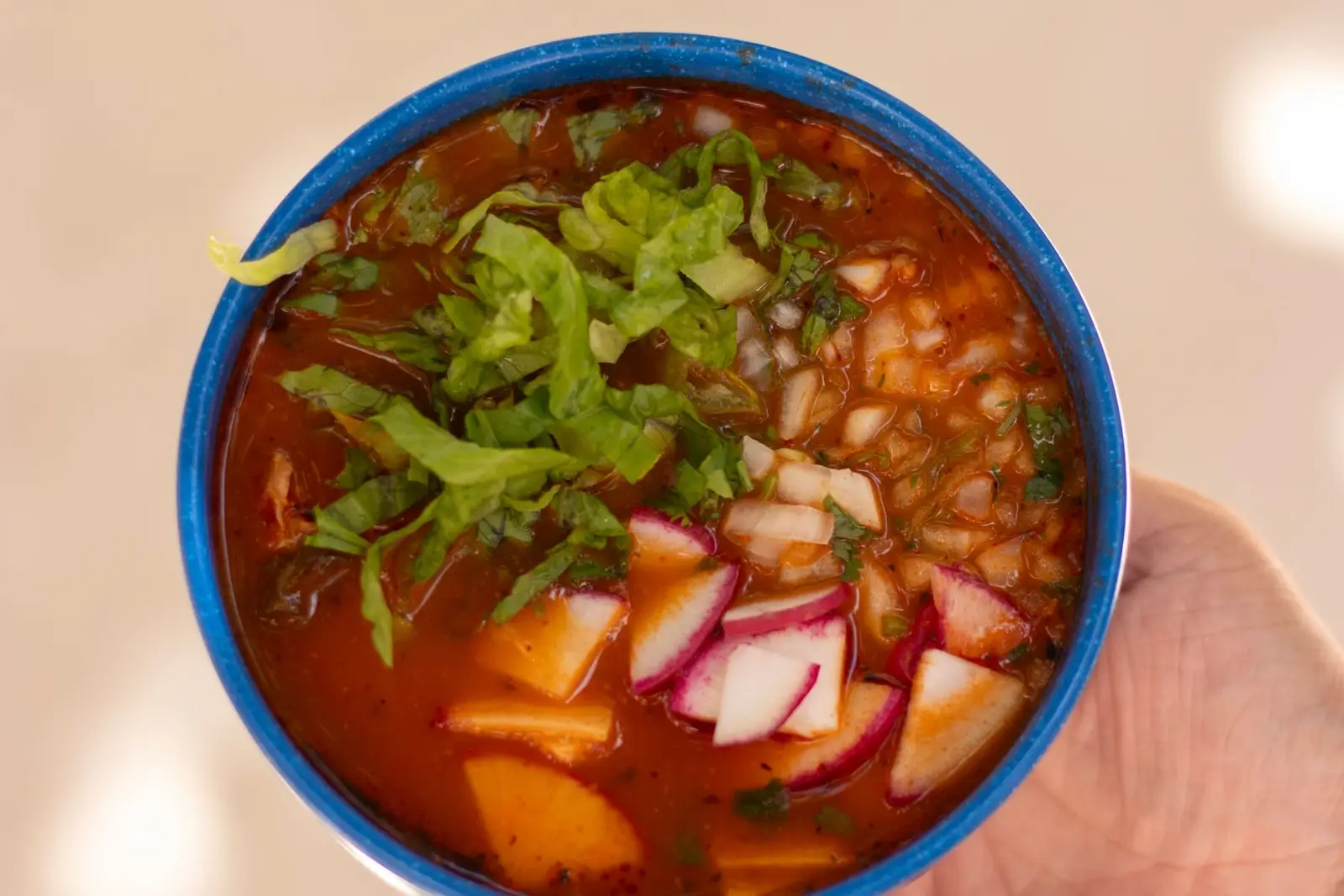
Pozole. The big corn soup, hominy and shredded chicken, sometimes green and sometimes red, garnished at the table with radish and cabbage and lime. It was already a Sunday ritual in those kitchens for exactly this reason. I wrote about what those cooks taught me about hospitality and pozole shows up there too, because it was the thing that appeared whenever a group of people needed putting back together.
A poor man's bouillabaisse. This one was pure kitchen economics. When you break down whole fish for service you are left with heads, frames and trim that never go on a plate. Rather than bin them, somebody would put them in a pot with whatever aromatics were already open. An hour later there was a broth that tasted like it had been planned. It cost nothing, it was built from the parts nobody sells, and it did more for me than anything I could have gone out and bought. The same instinct is the one behind building a soup out of whatever is in the kitchen.
Chicken tinga. Shredded chicken in chipotle and tomato, usually with tortillas and whatever was left of the rice. More substantial than the soups, and the one I wanted when I was hungry rather than fragile.
None of this was framed as a remedy. Nobody said the word hangover. Somebody just started cooking, and everyone ate.
The grease years
In my twenties I wanted grease and nothing else.
A burger. A slice, sometimes two. Something fried at a counter on the way home. I could put down an enormous, badly assembled meal at noon and be fine by two. The logic felt obvious at the time: I felt hollowed out, so I wanted density. The night before had usually ended with whatever the gas station across the street was selling, so this was the second bad decision in a twelve-hour sequence.
I worked shifts that ended at one in the morning and then went out, which is its own particular kind of life around an industry bar. Grease held that whole arrangement together for about fifteen years.
I want to be honest that it worked for me then and does not now. That is not a health claim, it is just what happened. Somewhere in my thirties the burger stopped fixing anything and started being a second problem.
Chinese food is the complete answer
If I was off the next day and genuinely wrecked, Chinese food was the thing.
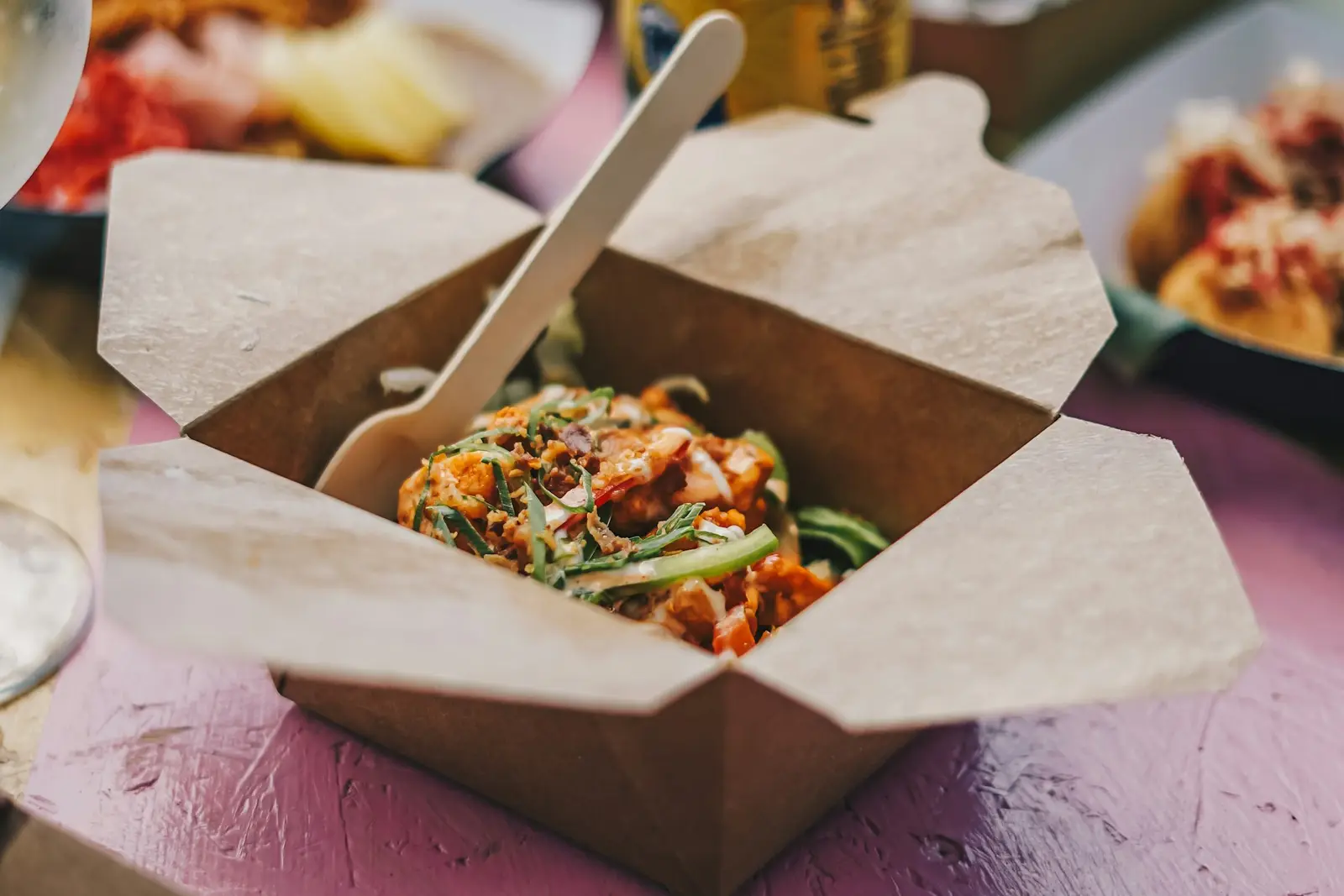
It is worth saying why, because I do not think it is an accident. A Chinese takeout order hits everything at once. Starch, in volume. Protein you do not have to work at. Fat carrying the flavor. Salt, more than you would put on anything yourself. Vegetables in there somewhere. And sauce, which means every bite is savory and nothing is dry.
That is a completely built plate arriving in a bag, requiring nothing from you. When you have no capacity to make decisions, the meal that makes zero decisions for you to make is the correct meal.
What Bourdain got right
Anthony Bourdain's hangover ritual, which he described to TMZ Sports, included a cold Coca-Cola and spicy Sichuan food. He also told Men's Journal that you should "schedule your hangover," which is the part people quote least and I think about most.
The cold Coke I agree with completely, and I will come back to it. The spicy Sichuan I agree with conditionally.
At twenty-five, absolutely. Heat, salt, fat and enough chile to make you sweat is close to what I described about Chinese food, just louder. It shocks you awake and gives you something to focus on other than how you feel.
At forty-five it would put me back in bed. My stomach does not want to be shouted at anymore. So he was right, and he was right for a version of himself and a version of me that no longer exists. Which is the honest thing about all of this: the food that works is the food that matches the body you currently have, not the one you had when you started drinking.
The scheduling part is the underrated advice. Getting up early and eating deliberately, rather than sleeping until two and stumbling into whatever is closest, is the one piece of it I still follow.
The broth era
Now it is broth, almost every time.
Something hot and salty with a little acid in it. Pho if I am ordering. A seafood soup if I am cooking. Anything with shredded chicken and lime and something green on top. If there is a Latin thread in my life it shows up here, because the soups I reach for now are the ones I first ate standing in a kitchen at two in the afternoon with people who had been drinking the night before.
I think the shift is partly that I want to feel warm rather than full. Grease is about volume. Broth is about temperature and salt, and it asks nothing of you. You can drink most of it.
The eggs are the other constant. Scrambled soft, a lot of butter, salt, toast. Not exciting, always right.
What I drink
Coca-Cola, cold, out of a can. That is the one thing that has never changed for me across twenty years, and it is the point where Bourdain and I completely agree.
Gatorade or vitamin water otherwise, usually alongside rather than instead. I am not going to tell you what these do physiologically, because I do not know. I came up in kitchens, not in medicine. I can only tell you that a cold Coke at eleven in the morning after a long night has never once failed to make me feel better than I did before it.
FAQ
What is the best hangover food?
There is no single answer, and in my experience it changes with age. In my twenties it was grease: burgers, pizza, anything fried. In my forties it is broth: pho, seafood soup, pozole, anything hot and salty with acid in it. What both have in common is salt, warmth, and being effortless to eat. This is personal experience rather than medical guidance.
What did Anthony Bourdain eat for a hangover?
Bourdain's ritual, described to TMZ Sports, included a cold Coca-Cola and spicy Sichuan food. He also advised Men's Journal readers to "schedule your hangover" by getting up early and doing it deliberately rather than sleeping through the worst of it.
Why do people crave greasy food after drinking?
I can't tell you the physiology and won't pretend to. What I can say from years of it is that greasy food is dense, salty and requires nothing of you, and that after a heavy night what you want is a meal that makes no demands. In my own case it stopped working somewhere in my thirties, and broth took its place.
What do restaurant cooks eat when hungover?
In the New York kitchens I worked in, mostly soup. Pozole, a broth built from the fish heads and frames left over after butchering, chicken tinga if people were properly hungry. It was never framed as a hangover cure. Someone would start cooking around two in the afternoon and everyone would eat.
Is Chinese food good for a hangover?
It was my go-to for years, and I think the reason is structural rather than medicinal. A takeout order arrives with starch, protein, fat, salt and sauce already assembled, and requires no decisions from you at a moment when making decisions is hard. Whether it does anything beyond that, I have no idea.


