An industry bar is a late-night bar that serves the restaurant industry first and the public second. They open in the early evening, run until two or three or four in the morning, keep a kitchen open most of the night, and fill at midnight with cooks, bartenders, and servers coming off shift at restaurants nearby. The drinks are usually serious. The food is usually serious. The crowd is the people who feed and serve a city for a living, eating and drinking at the only places open by the time their shifts end. This is what I saw working at one for years.
What an industry bar actually is
The first thing to know is that an industry bar is built around a schedule that the rest of the city does not run on.
Most bars close at one, two at the outside. An industry bar runs until four in the morning. Most kitchens close at ten or eleven. An industry bar's kitchen runs until two or three. Most bars get busy at nine and empty out at one. An industry bar gets busy at midnight and gets crowded at one, because that is when the line cooks and bartenders and servers in the surrounding blocks finally walk off their shifts. The whole operation is tuned to a clock that the rest of the city sleeps through.
The second thing to know is that this is a category, not a single venue. Every serious food city has a version of it. Manhattan has several. So do Chicago, San Francisco, New Orleans, Austin, Nashville, Los Angeles. The specific bar is different in each city. The structural features are the same. Late hours. Kitchen open most of the night. Real bar program. Located near a restaurant corridor. A crowd that fills with people who do this work for a living.
The third thing to know is that the term sometimes gets confused with a specific bar. Searching "industry bar" online surfaces an actual venue by that name in New York, plus a tavern in Atlanta called Industry Tavern, plus various local equivalents in other cities. The phrase has stuck to enough specific places that the underlying category, the type of room, gets lost in the search results. This piece is about the type.
Two restaurants, four blocks apart
I want to ground what I am saying about industry bars in a specific one. I worked at one in New York for a stretch of years, in the bar's earlier era. Sous chef. I want to tell you how I ended up there, because the way I ended up there is itself a textbook story of how the industry actually works.
At the time, I was working a few blocks away at a rustic European restaurant. The room was calm. The food was subtle. The pace of service was steady. The vibe was the opposite of what you would find at a club. It was the kind of place a couple from the neighborhood would come to on a Wednesday and not raise their voice. I loved working there.
Four blocks away was the bar I would soon be working at. A completely different operation. It was speakeasy-style: hidden entrance, period decor, the whole register, designed to feel like an underground room from another era. By any normal-restaurant standard, it ran more like a club than a restaurant. The room was dark. The crowd was loud. The bar was a serious cocktail program with a real name in the trade. The kitchen ran late. The doors did not shut until four.
I got the sous chef job there through my roommate. My roommate at the time, the guy I lived with in Brooklyn, was a busboy at the bar. The kitchen was looking for a sous chef. He told the crew about me, walked me in to meet them, and I had the gig within a couple of weeks. That is how almost every restaurant job in the industry gets filled. It is not posted. It is not applied for. It is a roommate or a friend or a former line cook saying I know someone, I'll bring him in. The trade runs on those introductions. If you have never worked in restaurants, this is one of the harder things to understand about how the industry actually moves people through it.
For a stretch, I was doing both jobs. The rustic European place on day shifts. The cocktail bar on nights. Four blocks of pavement between two restaurants that could not have felt more different. Same city block, two completely different cooking lives.
The room: the tarot reader, the line, the bouncer at four
Some things about this bar were specific to it, and worth telling you because they are part of how that particular room felt.
There was a tarot reader. She sat just past the entrance, in a small space framed off from the rest of the room, doing readings for whoever walked in and wanted one. This is not a normal feature of a cocktail bar. It is not a normal feature of any bar. It was great. It set the tone for the place. You walked in past someone reading cards, and you immediately understood that you were in a room that took theatrical decisions seriously without taking itself too seriously.
There was a line out the door most nights. Past a certain hour, you waited to get in. Past a certain later hour, you waited longer.
There was a bouncer working until 4 AM closing, because the room did not slow down until then. By the time the doors finally shut for the night, every other bar in the neighborhood had been closed for two hours.
And then there was the chicken soup. At closing, the kitchen would put out a special chicken soup. On the house. Literally on the house. We made it specifically to be served to the room at the end of the night, partly to feed the staff still working, partly to feed the customers who had stayed until last call, and partly, I always thought, to give people a soft signal that the night was over. You finished your bowl of soup. You went home. Nobody had to physically push you out the door. The soup pushed you out the door for them.
A lot of bars have a closing ritual. Most of them are some version of the lights coming up and the bartender stacking chairs. Our ritual was a bowl of soup. That is the part of the place I still think about most, years later.
The food and the drinks
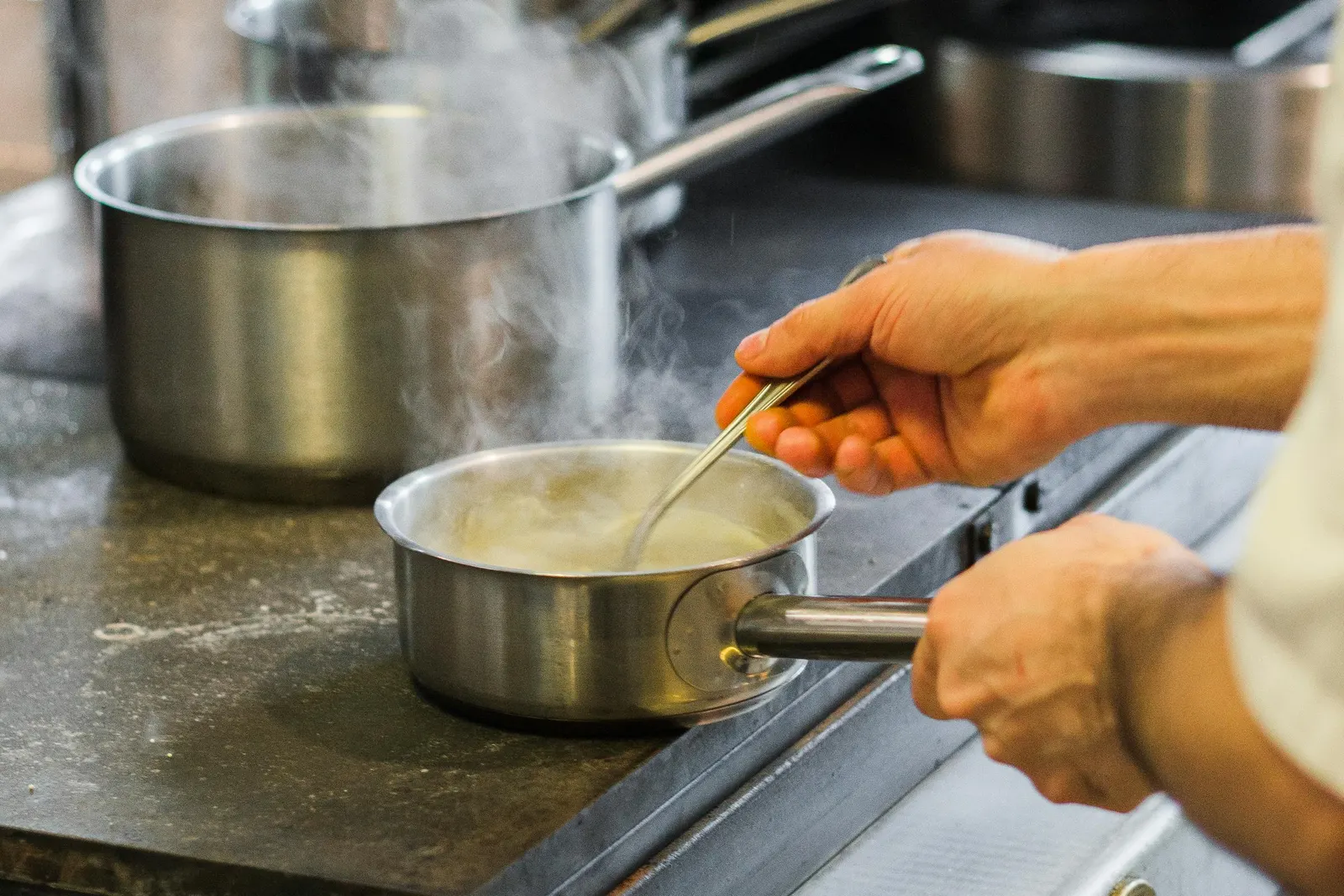
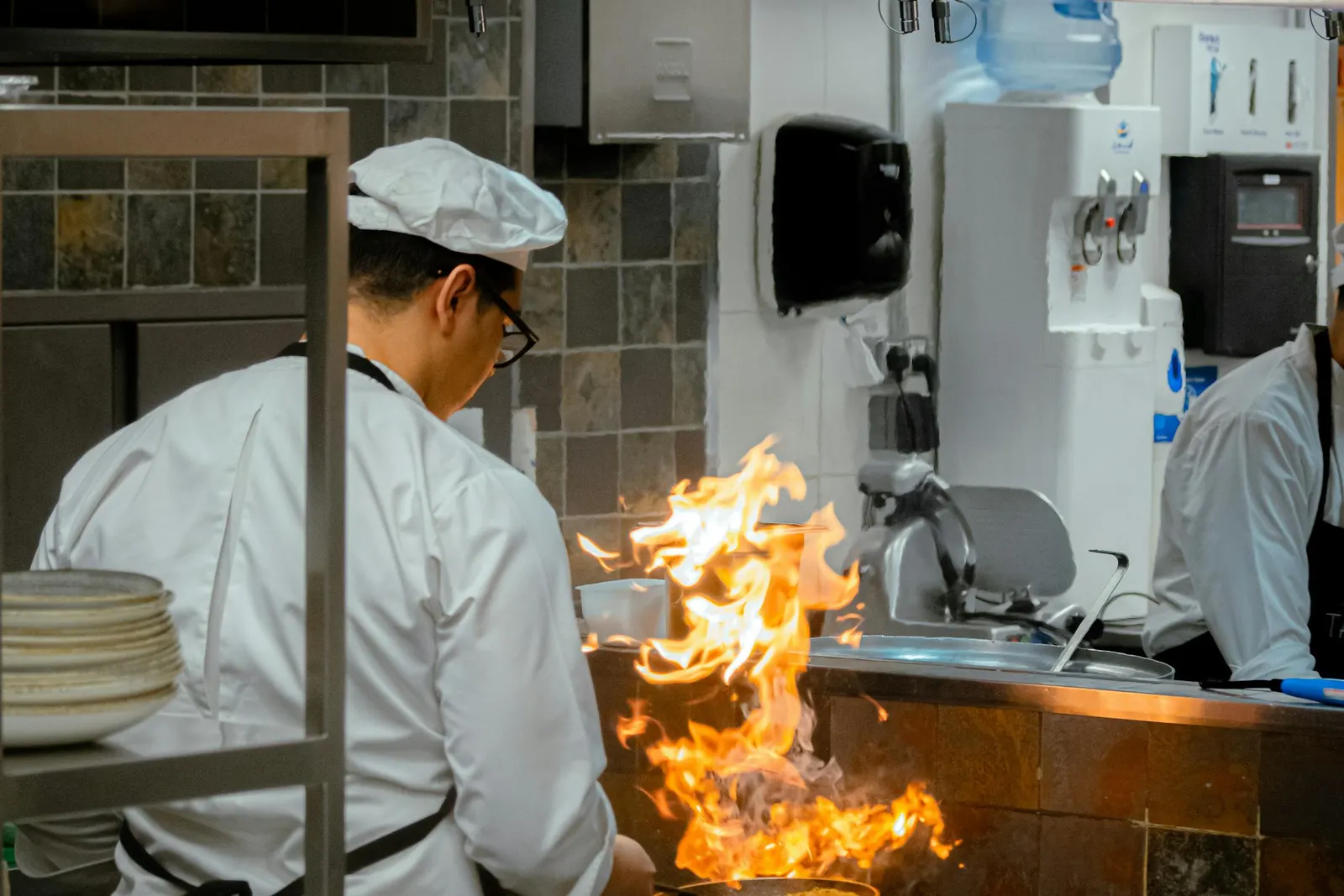
People who only ever experienced the bar as a cocktail destination may not realize how seriously the kitchen took the food. The cooking was top-notch. I do not say that lightly. The cooks who came through that kitchen took the food seriously, and the plates that came out of the pass were not bar food in the dismissive sense of the term. They were real dishes, plated with care.
The reason was structural. We were serving our own people. Industry people came in every night. They would walk in at midnight and they would eat. If a chef from a serious nearby restaurant orders a steak at 1 AM and we send out a steak that does not deserve the name, that chef will know, and so will every other industry person in the room. The bar inside an industry bar's kitchen is therefore set by the most demanding diners in the city, not by the most casual ones. Restaurants whose customers do not know what good food tastes like can get away with worse food. Restaurants whose customers cook for a living cannot.
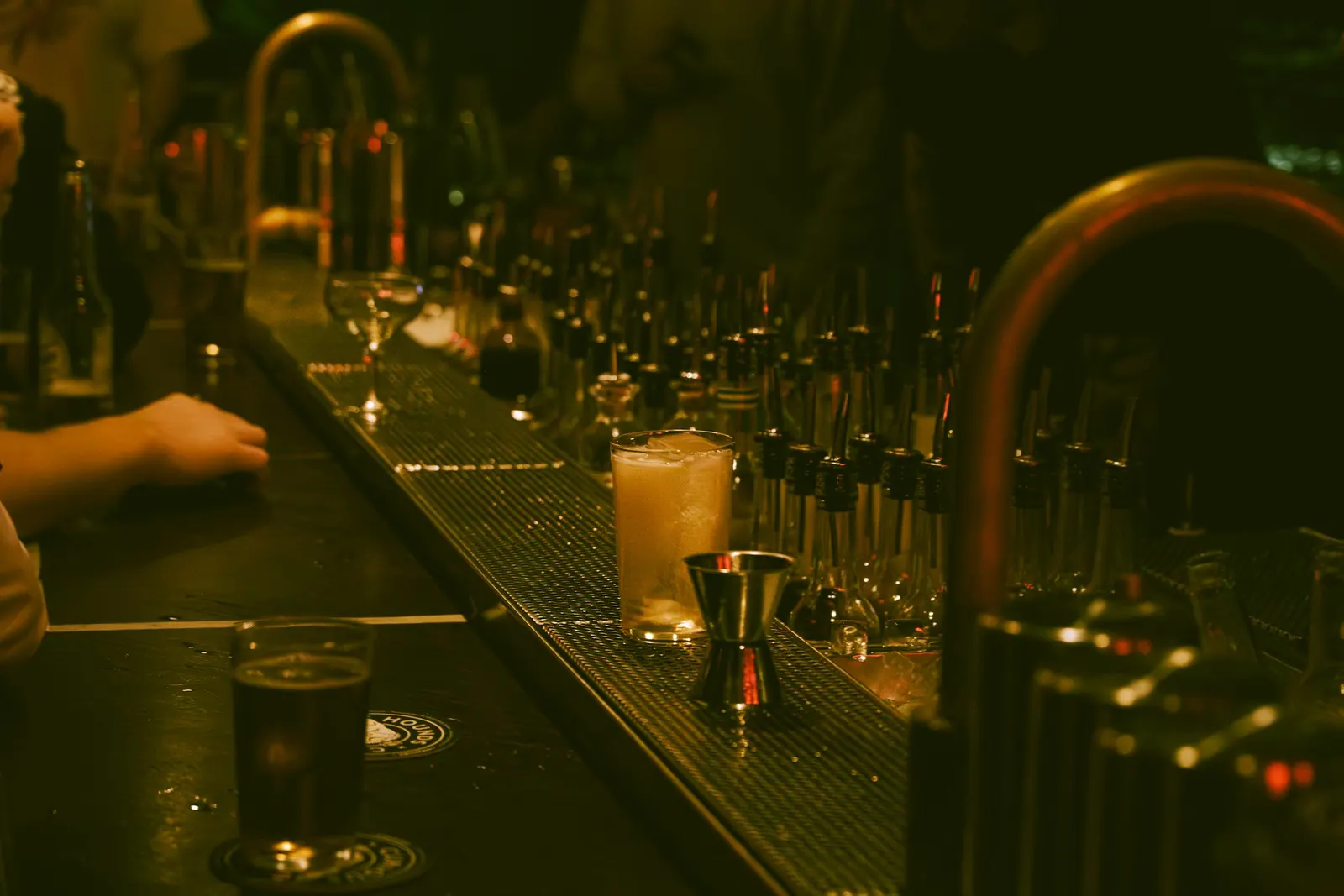
The cocktail program at the bar I worked at was the part most people knew about, and for good reason. It had real recognition in the cocktail world, the kind of awards from international rankings that put a bar on serious lists. The bartenders I watched work behind that bar were doing the same level of craft that the cooks were doing in the kitchen. Same standard. Same audience. Same reason for the standard.
That is the structural insight about industry bars. The food and the drinks have to be good because the customers know. Take that away and the room cannot function as an industry bar, because the industry will simply stop coming.
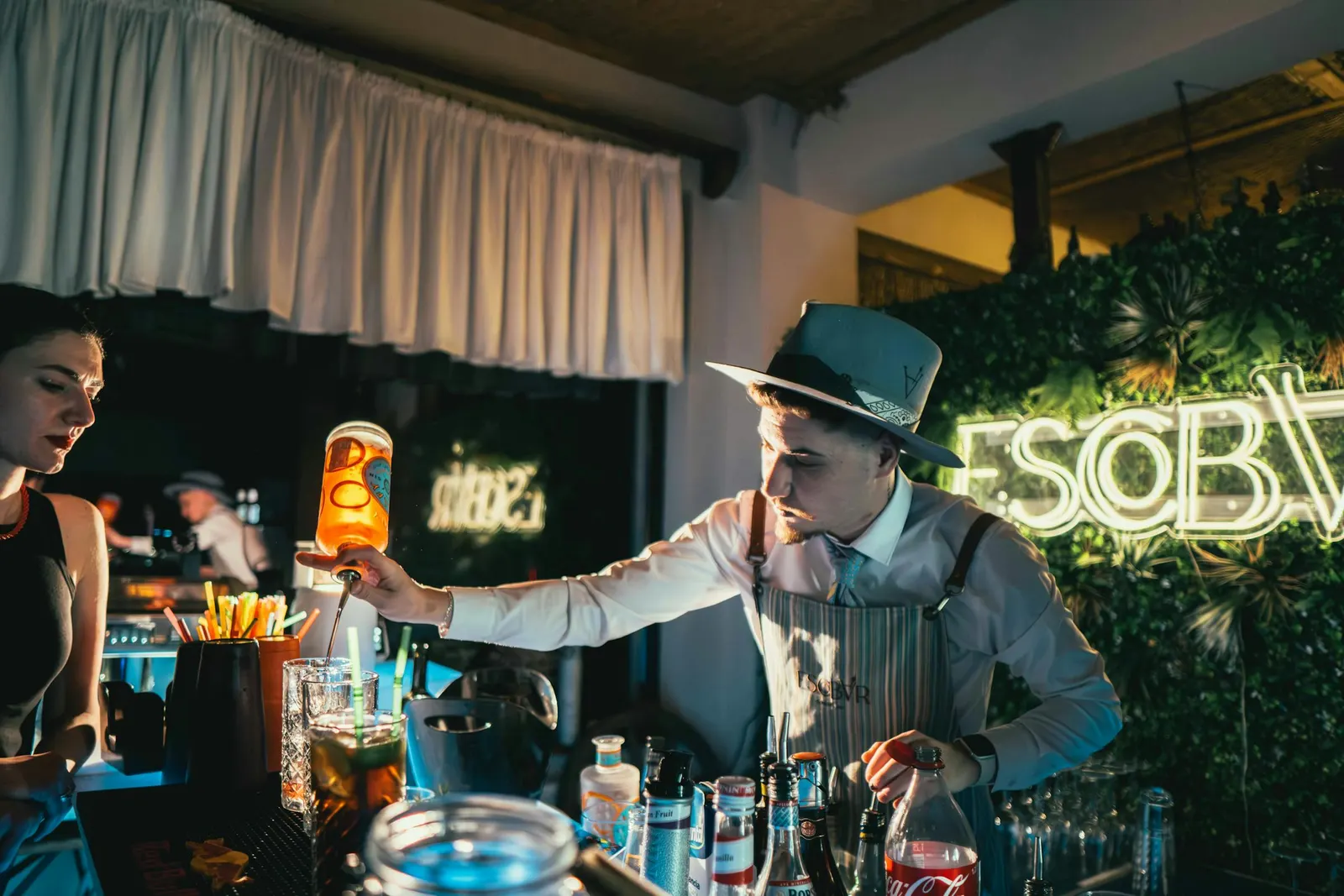
Where all worlds met
The most striking thing about working a kitchen at an industry bar was who walked into the room.
At midnight, the front door would open and a line cook from a place six blocks away would walk in, still in chef pants, an apron tucked under one arm, looking for the bartender he had come in to see. Forty-five minutes later, a movie star or a musician we all knew would walk in and post up at the same bar. Two seats apart. The line cook and the famous person. Same drink. Same midnight. Same room. Neither of them treating the other as anything other than the person next to them at a bar.
All worlds met at that bar. That is the thing I want non-industry people to understand about a real industry bar. It is one of the few rooms in a city where the hierarchy that runs the daytime version of that city loosens for a few hours. The chef and the diner are next to each other now. The musician and the busboy are at adjacent stools. There is something specific about being inside the trade that earns you a place at that bar, and once you are inside the room, the trade itself flattens out across stations.
I am someone who grew up too young to have experienced 1970s and 1980s New York. The grimy version of the city. The version where the underground and the famous and the working class met in rooms because there were only a few rooms to meet in. I missed it. I have always known I missed it. The bar I worked at, in the years I worked it, was the closest glimpse I ever got. A room that looked and felt like an underground place everyone in the trade knew about. A speakeasy register, but with the unmistakable feeling that you were inside something real, not staged. It had the vibe of the older city, even if it was a 21st-century operation.
Some of the most interesting conversations I had in my twenties happened standing at that bar after a shift. Two seats from a stranger, both of us tired, both of us still on industry adrenaline, both of us still half a drink from going home. The kind of conversation where you learned something about the city you would not have learned in your day life.
What industry people actually know
People sometimes look down on cooks and waiters. The cultural assumption is that a job in restaurants is something you do until you find something else. The pay is uneven. The hours are bad. The work is physical. There is a class register to the trade that some readers absorb without thinking about it.
I want to push back on that, because it is wrong, and an industry bar is the room where it gets exposed as wrong.
Most waiters in a major food city are some of the most street-smart people you will ever meet. They have to be. They are reading rooms every night. They are tracking which dishes go out fast and which come back. They are noticing which tables are about to fight and which couple just got engaged. They are reading the manager. They are reading the kitchen. They are reading the room and adjusting their behavior in real time, every night, for years. That is a skill, and it builds people who know things about the city in a way most office workers do not.
The same is true of cooks, who do not see the dining room but see the rest of the city through their ingredients and their suppliers and their late-night walks home. The same is true of bartenders, who are arguably the most informed working people in any city, because every interesting person eventually sits at a bar and tells them something. And it is true of the line cooks and dishwashers and prep cooks at the bottom of the brigade, who frequently come from immigrant communities with deep food traditions the rest of the trade learns from. I have written about how the NYC food scene runs on that immigrant labor and knowledge, and most of what is interesting about eating in that city traces back to it.
Restaurant industry people eat, breathe, and smell the city every day. They know what is opening. They know what is closing. They know which chef just walked out of which kitchen. They know which place is suddenly worth the trip and which place has quietly stopped being worth it. They know where you should eat tonight, and they know it before the food press knows it. This is the audience that fills an industry bar at midnight. This is why the conversations at the bar are different from the conversations at most other bars. The people are unusually well-informed and willing to talk.
What it's like to walk in as a civilian
If you are not in the trade and you walk into a real industry bar at midnight on a Tuesday, here is what you find.
The room is fuller than you expected. The lighting is dim. The bar is doing real work, which means the bartenders are not slinging beers, they are mixing actual drinks with real components. The food, if you order it, comes out hot and finished, even though it is past midnight.
The crowd does not look like a normal nightlife crowd. People are wearing chef coats or have a chef coat in a bag at their feet. There are aprons. There are knife rolls leaning against bar stools. People are quiet in a specific way that is not introversion. They are tired in a specific way that is not low energy. The room reads alive but not party-mode. It is the calm a kitchen feels after the rush has ended, scaled up to fill a bar. You will not have experienced that exact register in another room.
You are welcome there. Real industry bars do not gatekeep at the door. The hospitality runs front-of-house, like at any other bar. But you should understand that you are not the audience. The audience for the room is the people three stools down with the apron. You are a guest in their hour. The right move is to enjoy the atmosphere without trying to make it about you, ask the bartender what they like to make, order something the room seems to be ordering, and let the night happen around you.
When a shift has just landed at the bar, you will sometimes overhear them talk about being in the weeds at whichever room they came from. That conversation is one of the universal conversations of the trade. Listen if you can. It is the closest thing to a glimpse of the back of the house most civilians ever get.
How to spot an industry bar in your city
If you are in a food city and you want to find one, here is what to look for.
A real industry bar will have:
- A late closing time. Two, three, or four in the morning. Anything earlier than two is a regular bar with a late kitchen, not an industry bar.
- A kitchen open past midnight. Not just snacks. Real food. The menu does not shrink at 11 PM.
- A serious bar program. Cocktail list with depth. House drinks named after the bar. Bartenders who know what they are doing.
- An "industry night" sometimes. Sunday or Monday, with discounts or special pricing for industry workers. Many bars advertise it on the front door.
- Proximity to a restaurant corridor. The industry crowd has to be able to walk over after their shift. Bars located in commercial restaurant neighborhoods are more likely to function as industry bars.
- A crowd that fills out late. If the room is half-empty at 10 PM and full at midnight, you are probably in one.
- A speakeasy or low-key aesthetic. Not always, but often. Many industry bars deliberately do not advertise themselves loudly.
I am not going to name specific places in specific cities, partly because the inventory changes (bars close, owners move, neighborhoods drift) and partly because the type matters more than the name. Once you know what to look for, you can find one in any food city. Ask a bartender at any serious restaurant where they drink after work. They will tell you. That is the most reliable directory there is.
Why you should go
If you have a late night ahead of you in a food city and you do not know where to spend the last hour or two, find an industry bar. You will see and hear things you will not see and hear in any other room. It is the answer to the late-night version of the bigger going out to eat question: which kind of room fits which kind of moment.
You will experience the trade. The energy of people who have been on their feet for ten hours and are now eating and drinking with the same care they spent their day giving other people. You will see the social architecture of a city that the daytime version does not show you. You will overhear what is actually happening in restaurants the food press has not written about yet. You will eat food cooked by people who are cooking for their own. And if it is a good one, you will finish the night with something soft. A piece of dessert. A final drink. Sometimes a bowl of chicken soup, the same way a bowl of chicken soup at four in the morning used to send people home from the bar I worked at.
That is the room. Late-night kitchens that take themselves seriously, bars that take themselves seriously, run by and for the people who feed the city. It is one of the best inventions in modern urban life, and most people never walk into one. You should. An industry bar is also the one room in any city where the usual rules of late night dining flip: walking in past midnight is exactly what the kitchen is built for, instead of an imposition on it.
If you have ever wondered why I still walk into bars even though I barely drink, this is most of the reason.
FAQ
What is an industry bar?
An industry bar is a late-night bar built around the schedule of restaurant workers. It typically opens in the early evening, runs until two, three, or four in the morning, keeps a kitchen open past midnight, and fills at midnight with cooks, bartenders, and servers coming off shift at nearby restaurants. The food and drinks are usually serious, because the audience is people who do that work for a living.
What makes an industry bar different from a regular bar?
Three things mainly. First, the hours: an industry bar runs much later than a regular bar, with a kitchen still open. Second, the crowd: at midnight, the room is mostly food and beverage workers, not the office-job crowd that fills bars at restaurant happy hour. Third, the food and drink quality: because the customers are industry, the bar cannot get away with mediocre work. The standard is set by the people in the chairs.
When do industry bars get busy?
Industry bars start filling around midnight and peak between 1 AM and 2 AM, after most restaurants in the surrounding area have closed and the staff have walked over. The "industry rush" is the late wave that the rest of the city sleeps through. Many industry bars also run an "industry night" on Sundays or Mondays, the typical days off for restaurant workers, with discounts or special pricing for the trade.
Can you go to an industry bar if you don't work in the industry?
Yes. Real industry bars do not gatekeep at the door. Anyone can walk in, order, and stay. The thing to understand as a civilian is that you are a guest in someone else's working hour. The audience for the room is the industry people three stools down. The right move is to enjoy the atmosphere, talk to the bartender, and let the night happen around you without trying to make it about you.
How do you spot an industry bar in your city?
Look for a bar that closes at 2 AM or later, keeps a real kitchen open past midnight, has a serious cocktail program, sits near a restaurant corridor, and fills up late. Many advertise an "industry night" on Sundays or Mondays. The most reliable way to find one is to ask a bartender at any serious restaurant where they drink after work. They will tell you. That referral is more accurate than any list online.