Being in the weeds. Man, what can I say. I have been out of the professional restaurant business for a little over twelve years now, and I still, from time to time, have nightmares about the ticket machine. In the weeds is restaurant slang for a moment in service when a cook, server, or bartender becomes so overwhelmed that the system stops working. Orders back up, timing slips, the room goes quiet in your head and loud everywhere else, and the only question is whether you can dig out before the next push. That is the strict definition. The lived version is harder to put on paper.
What 'in the weeds' actually means
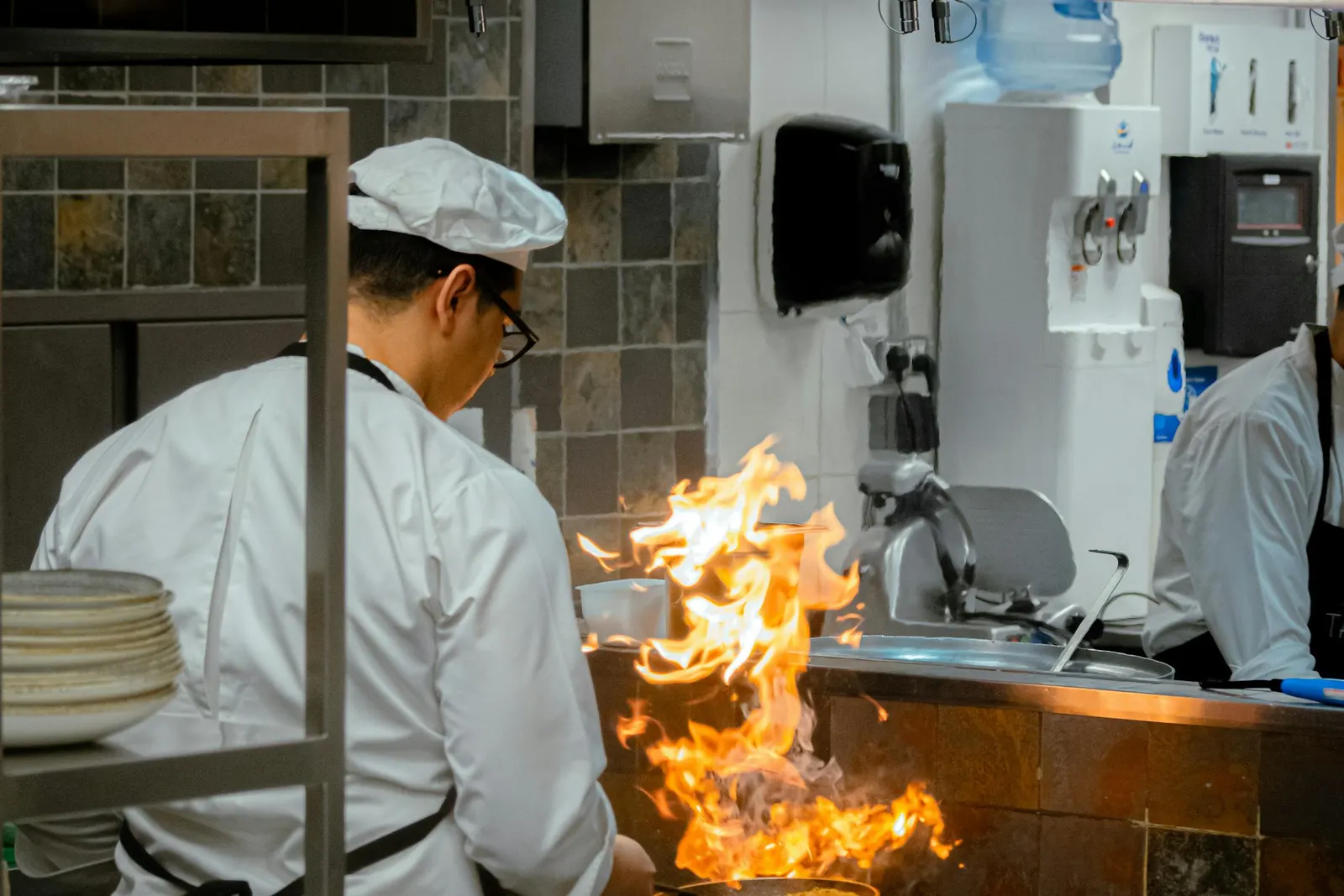
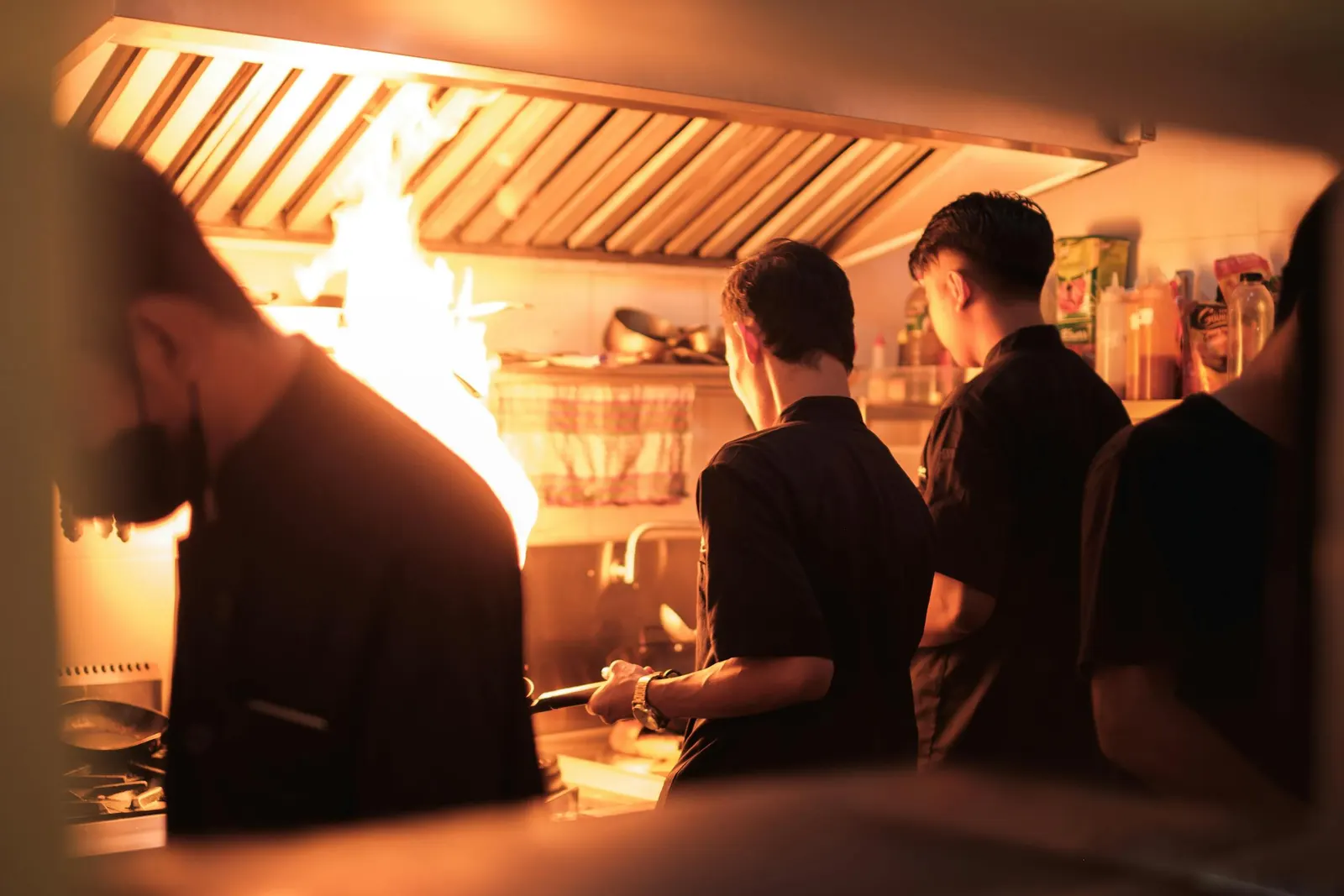
In a restaurant kitchen, being in the weeds is the moment when the gap between what is coming in and what you can put out has gotten too wide to close on your own. It is not just a busy hour. It is the busy hour past the point where you can recover without help. Tickets stack up, plates sit on the pass, the expediter is firing the next round before the last one is even out of the window, and your station has stopped feeling like a station and started feeling like a problem.
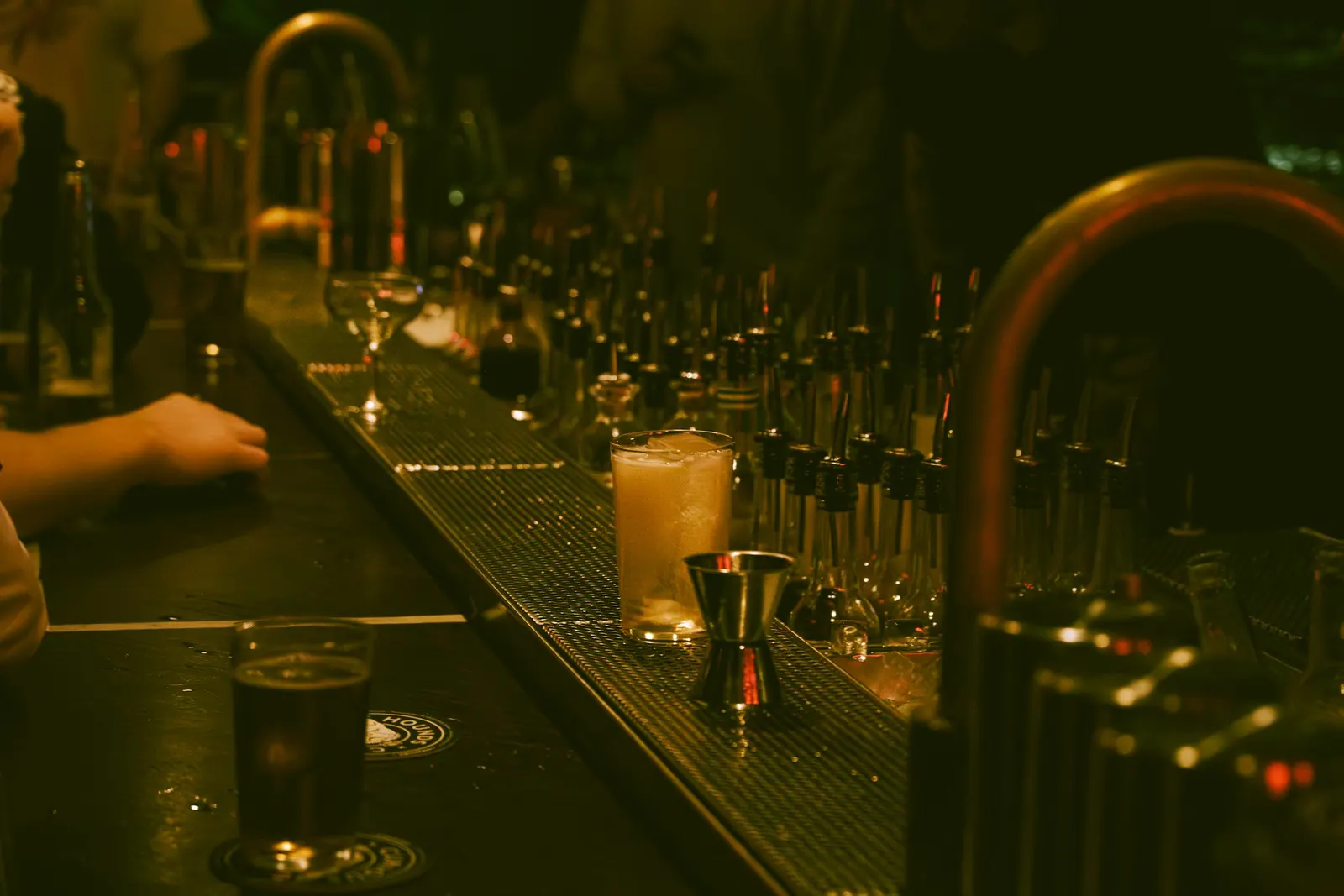
The phrase covers everyone in service. A server with eight tables and four of them turning at once is in the weeds. A cook on sauté with twelve tickets backed up is in the weeds. A bartender at a Friday happy hour with a deep order rail and a comped birthday party that just walked in is in the weeds. The shared meaning is the same across roles. The load has gotten past what the person can carry, the timing is breaking, and someone is going to have to step in.
The word travelled. In the weeds is now used in politics ("getting into the weeds of policy") and in business ("we're deep in the weeds on this") to mean lost in detail. Those uses borrowed from the kitchen original. They lost the panic in translation. In a kitchen, being in the weeds is not detailed work that demands focus. It is the opposite. It is the feeling that focus itself is becoming impossible.
Twelve years out and the ticket machine still won't leave me alone
I worked the line for years in New York City, line cook up through executive chef. I have been out of professional kitchens for a little over twelve years. The ticket machine still finds me in my sleep.
It is a specific sound. D-d-d-d-d-d-d-d-d. The thermal printer at the pass, eating through a roll of paper, spitting tickets into the rail faster than anyone working the line can read them. You learn the sound during your first hard service and you do not unlearn it. Twelve years and a different career later, the sound shows up in my dreams unprompted. I am not at a stove. There is no kitchen around me. There is just that printer, somewhere just out of frame, going.
It is psychological. Being in the weeds messes you up in a way that does not stop when service stops. The stress level you feel during a real one is hard to describe to anyone who has not stood at a pass at 8:15 on a Saturday with eighteen tickets in the rail and the next four-top about to be seated. You stop seeing the dining room. You stop hearing your name. The light at the end of service shrinks down to a point you cannot quite see, and the only thing your brain does is keep printing tickets, even after you go home.
What it did to my nervous system
I want to be honest about the part of this nobody puts in the magazine feature.
I developed anxiety and panic attacks in my twenties, when I was starting out in that world, and they followed me into my thirties. Being in the weeds was a reliable way to find one. I am not going to romanticize that. It is not a chef's badge of honor. It is the nervous system of a young person being asked to do something it was not built to do, three or four nights a week, for years on end, with no recovery time built into the job.
The thing nobody tells you when you sign up for the line is that the body keeps the score on this. The cortisol of a real service does not go away when you punch out. It compounds. You sleep poorly. You drink to come down. You wake up and do it again the next day. Eventually something gives, and for me what gave was my nervous system. The panic attacks were the bill.
I am not the only one this happens to. I have seen grown, tough, capable men break down crying in the walk-in fridge during the worst part of a service. Men who were not the type to cry anywhere else in their lives. The walk-in is where you go to lose it for sixty seconds because nobody else can see you in there. I have witnessed it more than once. Anyone who has worked the line for any length of time has seen it too. They will tell you the same thing if you ask them honestly.
This is not what kitchens like to talk about publicly, but it is an industry-wide problem real enough that organizations like The Burnt Chef Project now exist specifically to address mental health in hospitality. It is real, and it is part of what being in the weeds actually means.
Let me be honest, nobody is dying
I want to be careful here, because I never want to overstate what we do.
I had a sister who worked in the emergency room in New York City through the 1980s and 1990s. I have a friend in the New York City Fire Department. What they did, what he still does, is not in the same universe as cooking a busy service. Those are jobs where lives are actually on the line, where a bad night means someone does not go home. I would never compare a kitchen rush to that. It is not the same and it never will be.
There is a LeBron James line, paraphrased, about putting the game in perspective: it's just basketball. And at the end of the day, what we do is just food. It is just cooking. Nobody dies if a dish goes out ten minutes late. Nobody loses their kid because the risotto is a touch overdone. The stakes are not actual stakes.
And yet.
The industry, especially in big food cities like New York and Chicago, manufactures the pressure of a real-stakes job inside the box of a not-real-stakes job. Service is treated like a performance with no margin for error. Tickets are treated like patients. A backed-up rail is treated like a code blue. None of it is, but the body answers as if it is. That mismatch is most of why being in the weeds breaks the people it breaks. You feel a five-alarm response to a problem that has no actual emergency on the other side of it. The body does not know that.
So I am not saying this is the hardest job in the world. It is not. I am saying the way the job is structured produces real physiological consequences for the people in it, and pretending otherwise has not done the industry any favors.
What being in the weeds actually looks like
If you have never lived one, here is the real version, not the yes chef version.
You planned for a busy night. You walked into prep with a list, you knocked it out clean, your station is set up the way you like it. First seating goes fine. You are in command. Then the second turn comes in heavy. The host has triple-sat your section without telling you. The expediter starts firing tickets faster than your sauté pans can come off the burner. You glance at the rail. There are now twelve tickets where there were three. You begin to fall behind. You do not know it yet, but you have just crossed from busy into the weeds.
Then the ticket machine runs out of paper. In the middle of a rush. You have to fish a fresh roll out of the box under the pass and thread it in while the next four-top's order tries to print into nothing. The expediter is yelling. You have lost twenty seconds. Twenty seconds in a real push is a hole you may not climb out of.
Your second, the cook you depend on, just ran through a tray of mise. The mise you needed for the next eight covers. You are now prepping while cooking, which is the kind of thing that works for one minute and stops working in the second minute. The new hire on the line, three weeks in, is in his own version of the weeds, on his own station, and he just dropped a sheet tray of pasta on the floor. The whole walkway behind the line is slippery with starch water and oil. Every towel you reach for is dirty. The clean ones are in the dish pit, behind a stack of mise trays that came back unfinished from front of house.
You are still cooking. Tickets are still printing. You are listening to d-d-d-d-d like it is the only sound in the world, and somewhere underneath that you are looking for a single clean spot in your station to put down a hot pan. There is none. You put it on the cutting board, which you should not, and you keep going.
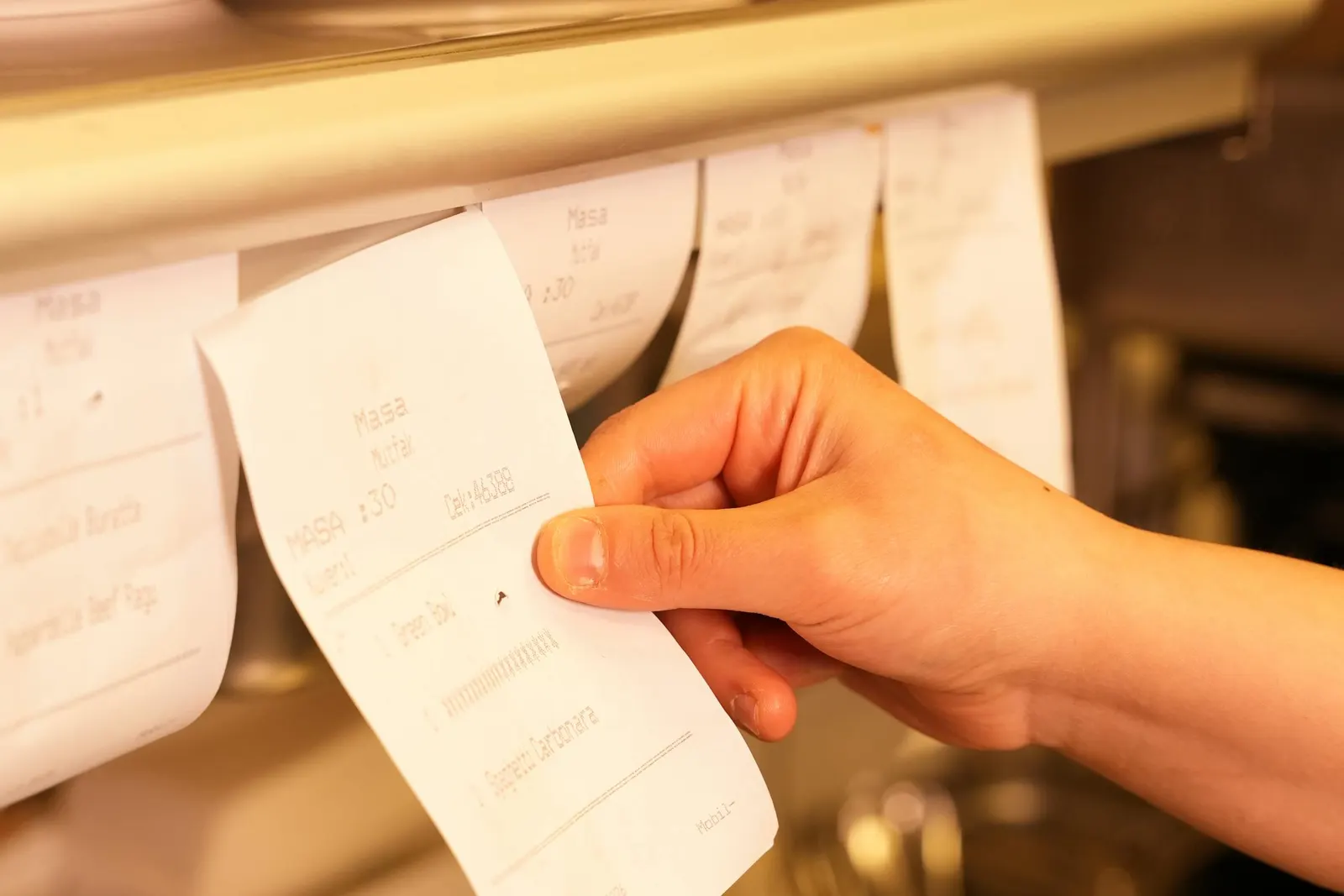
That is being in the weeds. Not a clean kitchen with a quick-witted chef calling for two on the fly. A station that has stopped being a station, a floor that has stopped being a floor, and a brain that has stopped doing anything except watching the next ticket print. Even on a night the kitchen avoids the weeds, the suffering can come in a different shape: a four top walking in thirty minutes before close. The cost of late night dining is its own kitchen problem, related to the weeds but not the same animal.
Why the movies and shows get it wrong
The reason I am writing this in this much detail is that nobody making a TV show is going to.
I love The Bear. The drama is real, the relationships are real, the depiction is closer than anything that came before it. But the visual language of a kitchen show is still choreographed. The chef yells, the cook says yes chef, the camera pans, the ticket comes off the rail, the plate goes up clean. The floor is still wet only when it needs to look stylish. The pans are still hung in straight lines. The Bear has its panic moments, and they are good, but even those moments are framed.
No Reservations, the Catherine Zeta-Jones film about a perfectionist chef, has a few service scenes that try at this. They look like ballet. Real service is not ballet. Real service, when it goes badly, is a series of bad decisions made by a tired person who is just trying to make the next decision.
Movies and TV cannot really show the weeds without losing the story. The weeds is a feeling. It is the absence of all the things a TV scene needs to work. There is no dialogue worth recording. There is no clean wide shot. There is just a person at a station doing one wrong thing after another and somehow not stopping. That is the experience. It does not film well, which is partly why it does not get told well.
What got me through it
The honest answer is preparation. It is not glamorous and it is not what anyone wants to hear, but it is the truth.
The cooks I worked with who never went into the weeds, or who got out fast when they did, were the ones whose mise en place was airtight before the doors opened. Every ramekin where it belonged. Every backup at the ready. The next four hours' worth of work staged like a project plan. Mise en place is the boring discipline that pays off only when service goes sideways. The cooks who skipped it were always the first ones to drown.
Beyond the prep, the second answer is: put your head down and keep going. When you are in the weeds, the worst thing you can do is start panicking about the weeds. Stop thinking about the rail. Cook the ticket in front of you. Then the next one. The push has an end. The push always has an end. Even the worst Saturday in the worst restaurant ends at some point, and you survive by getting one more plate up, then one more.
The third answer is calling for help. The young me did not do this. I thought asking the chef or the cook next to me for a hand was a failure of the job. I learned over years that the cooks who actually run good kitchens ask for help fast and offer it faster. The weeds are everyone's problem when they happen. The cooks who try to carry it alone are the ones the chef has to bail out anyway, except by then the bail-out is too late and the table has already walked. (For the broader why-this-trade-is-this-hard picture, see is becoming a chef worth it.)
Other things help too. Knowing your station cold so you are not thinking about basics during a push. Triaging tickets by what plates take the longest first. Working with an expediter who knows what to fire and when. None of it replaces the prep, but all of it adds up. All of it is also what the kitchen brigade structure was built to teach you, by design.
If you take one thing from this section it is the boring one. Be ready before service starts. Then when service starts you do not have to be ready. You can just cook. (It is one of the reasons I sometimes regret leaving the line for a different kind of kitchen, the corporate one, where the rush never quite happens the same way. I wrote about that in why I regret leaving corporate dining for restaurant work.)
Where the phrase comes from
The honest answer is that nobody really knows. In the weeds has been used in restaurant kitchens for decades. Beyond that, the explanations vary.
One theory traces it to golf, where a ball lost in the rough is in the weeds. Another points to literal gardening, where you find yourself slowed down or tripped up by overgrowth. A third theory connects it to Prohibition, when bootleg liquor was sometimes hidden in tall weeds along transport routes. A fourth, less well-attested theory points to the rice and sugar cane fields of the Caribbean, where enslaved people escaping forced labor would hide in the weeds.
I am not going to pretend to know which one is right. The earliest unambiguous restaurant usage is hard to pin down, and the various etymology pages disagree. What I will say is that the phrase carries the same image in every version. Someone caught up in something they cannot move through quickly, slowed by something they cannot push aside. That is the right metaphor for what it feels like. (A lot of the restaurant lessons I carry came out of the same era. I wrote about taking that city for granted in I took New York City's food scene for granted.)
FAQ
What does it mean to be in the weeds?
In the weeds is restaurant slang for being so overwhelmed during service that you cannot keep up. For a cook, it means tickets are backing up faster than you can fire them. For a server, it means tables are turning faster than you can manage them. The system has stopped working and you cannot recover on your own.
What does it mean to say someone is in the weeds?
It means that person is in over their head, either literally during a service or in a broader sense. In the kitchen it is the active version, said about a cook who is drowning at their station: Mike is in the weeds on grill, somebody go help him. Outside the kitchen, the phrase is used more loosely to describe anyone overwhelmed by complexity or volume.
Why do chefs say "in the weeds"?
Because the phrase was born in restaurants and most of the people using it most often work in them. The exact origin is debated, but the visual is the same in every version: a person slowed down or tripped up by something they cannot move through. In a kitchen at the height of a service, that captures the feeling exactly. The word stuck because the picture works.
How do you get out of the weeds?
Three things, in order. First, ask for help, fast. Pride is the reason most weeds get worse. Second, triage the tickets: figure out what plate takes the longest and start it, then move down. Third, narrow your focus to the next one item. Stop watching the rail. Cook what is in front of you. The push always ends. Survive it one plate at a time.
What is the difference between being in the weeds and being slammed?
Slammed is busy at the top of capacity. In the weeds is past capacity. A slammed kitchen is moving fast and getting it done. A kitchen in the weeds is moving fast and falling behind. The difference is whether the cook can still recover on their own. Slammed is hard. Weeds is broken.