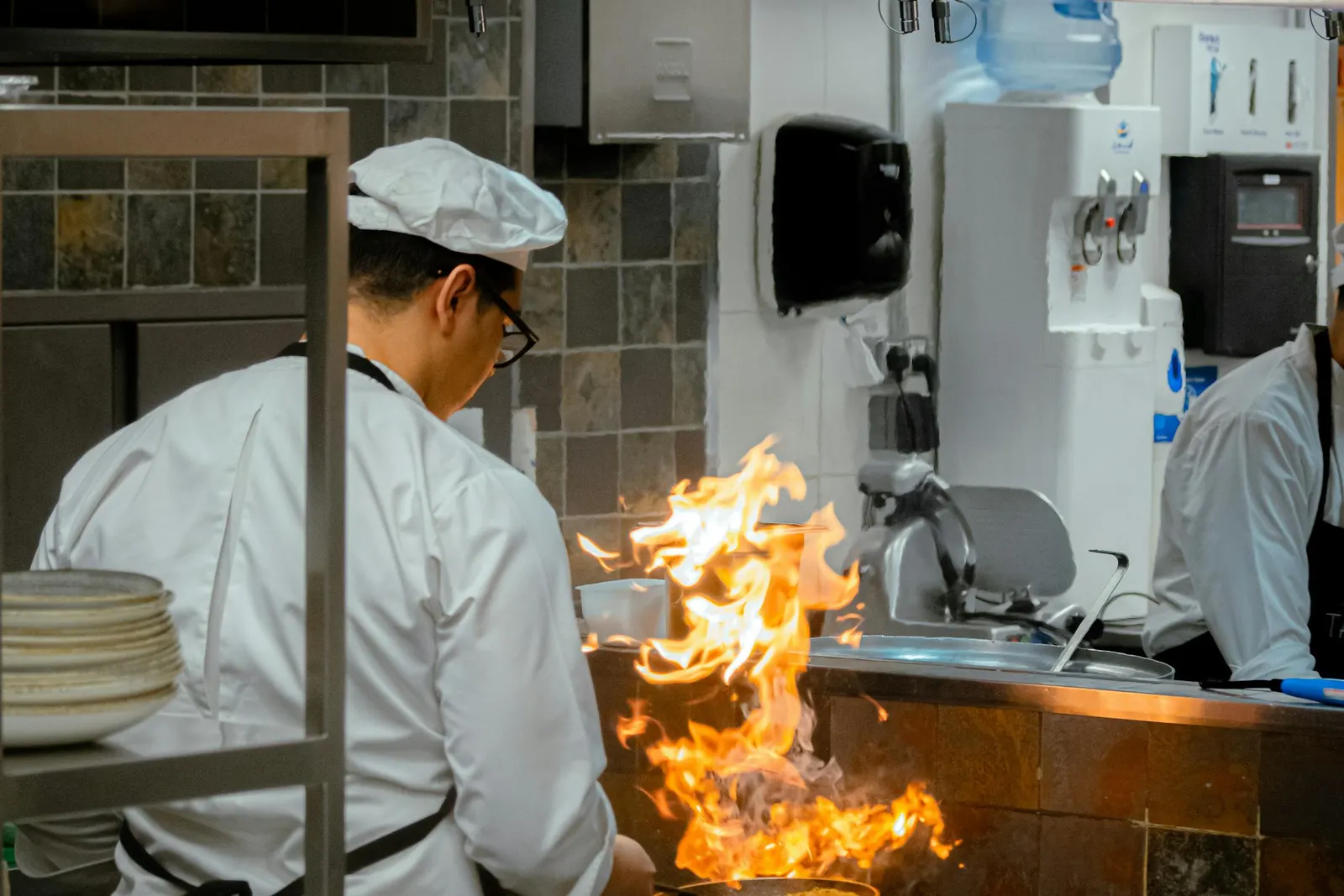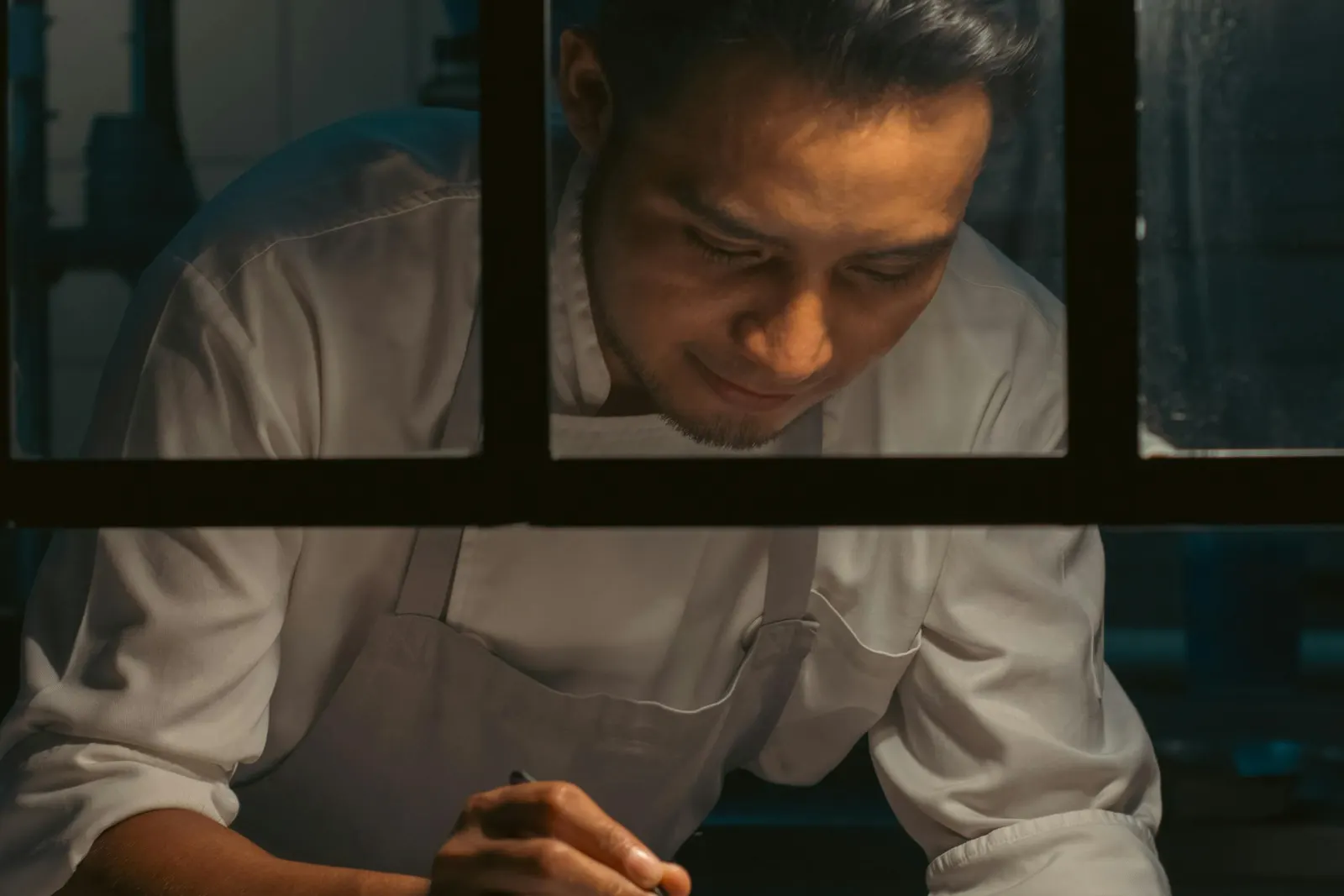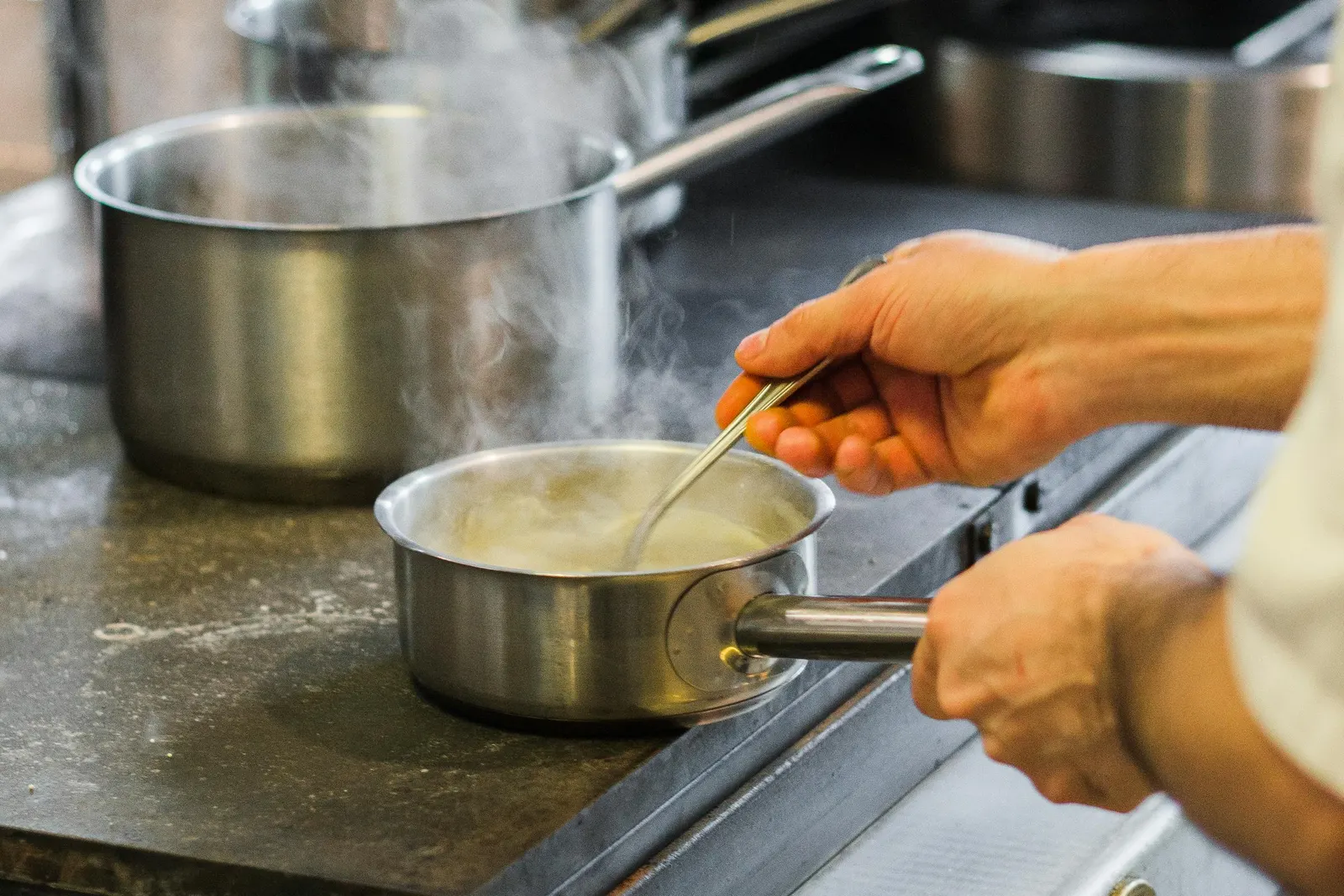
A saucier is the cook in charge of the sauce station in a professional kitchen. The role covers all of the kitchen's sauces, most of its sautéed dishes, and the warm proteins that are finished with a sauce. In the classical kitchen brigade that Auguste Escoffier codified, the saucier was the most respected chef de partie position, because sauces were the spine of French cooking and the saucier touched almost every plate that went out of the kitchen. The role still exists in serious fine dining. In most modern American casual restaurants, it has been folded into a generalized sauté station, but the work is the same.
What a saucier actually does
The saucier owns the kitchen's sauces and most of its sautéed proteins. In a working day:
Prep. The saucier prepares the kitchen's stocks (veal, chicken, fish, vegetable) and reduces them into the mother sauces and their derivatives. They portion sauces for service, prep the mise for every sautéed dish on the menu, and confirm the station is ready before the doors open.
Service. The saucier cooks every sautéed dish on the menu and finishes most warm proteins with their sauce. A typical sauté station handles steak with red wine reduction, pan-seared chicken with mushroom cream, sautéed fish with brown butter, scallops, foie gras, anything the menu calls for that needs the sauce-and-sear treatment. The saucier hands every plate to the expediter at the pass.
Coordination. Because so many dishes pass through the saucier on their way out of the kitchen, the saucier coordinates closely with every other station. A steak from the grill needs its sauce. A roasted protein from the rôtisseur needs its jus. The saucier is often the bottleneck during a busy service, and a good one keeps the line moving by anticipating what is coming.
Why the saucier was historically the most respected position
In Escoffier's brigade, the saucier sat at the top of the chef de partie hierarchy, above the poissonnier, the rôtisseur, and the rest. The reason was the food itself.
Classical French cooking is built on sauces. The five mother sauces (béchamel, velouté, espagnole, tomate, and hollandaise) and the dozens of derivative sauces that come from them are the spine of the cuisine. A grand-hotel menu in 1900 had a sauce on nearly every plate, and the quality of those sauces was the single biggest determinant of how the kitchen tasted. The saucier was the cook responsible for that quality.
The training reflected the importance. A young cook joined the brigade as a commis and rotated through stations to learn each one. The saucier post was reached last, and only after the chef judged the cook capable. By the time a cook ran the sauce station, they had typically spent five to ten years in the brigade learning the food well enough to handle the most exacting station in the kitchen.
The cultural weight of the position has carried forward. Even in modern kitchens that no longer use the title, the cook running the sauté station is often the strongest cook on the line.
What survives in modern kitchens
In a modern American casual restaurant, the saucier is rarely a named position. The work has been merged into a generalized sauté station, where one cook handles sauces, sautéed proteins, and whatever else the menu sends through that station. The depth of sauce work has thinned as menus have shifted away from classical French sauce cookery toward simpler reductions, vinaigrettes, and finishing oils.
In fine dining, particularly in French and tasting-menu rooms, the saucier still exists as a distinct chef de partie role. A three-Michelin-star kitchen will have a dedicated saucier with their own commis, running the sauce work as a specialized station. The job description is closer to what Escoffier wrote down.
In hotel kitchens, large catering operations, and serious banquet rooms, the saucier role survives because the volume of sauce work justifies a dedicated cook. The role is also still taught in serious culinary schools as part of the classical brigade curriculum, even where most graduates will never work in a kitchen that names the position.
The sauces that defined the role
The sauces a classical saucier was expected to know cover most of the technical foundation of French cooking. A short list:
- Béchamel (milk thickened with roux): the base for cheese sauce, soubise, and dozens of gratin and casserole applications.
- Velouté (light stock thickened with roux): the base for allemande, suprême, and most cream sauces built on white stock.
- Espagnole (brown stock reduced with roux and aromatics): the base for demi-glace, the foundation of nearly every classical brown sauce.
- Tomate (tomato-based): the base for the entire Italian and Provençal tomato family.
- Hollandaise (emulsified egg yolk and butter): the base for béarnaise, mousseline, and the entire warm-emulsion family.
A working saucier was expected to make any of these from memory, plus the dozen or more derivative sauces built from each one. The training was operational and immediate. You learned by making the sauce a thousand times under the eye of someone who had made it a hundred thousand. The same long-form sauce tradition is the foundation of much of rustic European cooking, where slow reduction and stock work define entire regional cuisines.
A note from a former saucier
I worked saucier in a couple of French brasseries earlier in my career. The thing nobody tells you about the station is how much standing still you do. You are at the station for the entire service, with the sautéed dishes coming through you faster than any other station, and the only way to keep up is to anticipate every ticket before it arrives. The sauces are pre-made. The protein portion is pre-cut. The mise is already on the rail. What you are doing during service is sequencing, not deciding.
The other thing I learned from saucier work was that the station made me a better cook than any other one. The repetition was the teacher. You make a pan sauce a hundred times in a week and you stop thinking about whether the butter is going to break. You internalize the technique. The depth that comes from spending years on one station is most visible at saucier. The cooks who have run that seat for a few years tend to be the strongest technical cooks in the building.
FAQ
What does a saucier do?
A saucier is the cook in charge of sauces and most sautéed proteins in a professional kitchen. They prepare the kitchen's stocks and sauces, cook the sautéed dishes during service, and coordinate with other stations on plate timing. In the classical kitchen brigade, the saucier was the most prestigious chef de partie position.
What does "saucier" mean?
Saucier is French for "sauce cook" or "sauce maker." The word names the position in the kitchen brigade responsible for the kitchen's sauces. It has been used in French professional kitchens for centuries and was formalized in the brigade structure Escoffier codified in the early 1900s.
Why is the saucier considered the most important chef de partie?
In classical French cooking, sauces were the spine of the cuisine. The saucier touched nearly every plate that went out of the kitchen, either by saucing it directly or by providing the reduction or jus that finished it. Because so much of the kitchen's reputation rode on the quality of the sauces, the saucier was the most respected line position in the brigade.
Do modern restaurants still have a saucier?
In serious fine dining, particularly French and tasting-menu rooms, yes. The saucier is still a named position. In most modern American casual restaurants, the role has been merged into a generalized sauté station, where one cook handles sauces, sautéed proteins, and whatever else the menu sends through. The work is the same. The title has thinned.
What are the five mother sauces a saucier should know?
The five mother sauces of French cooking are béchamel (milk and roux), velouté (white stock and roux), espagnole (brown stock and roux), tomate (tomato-based), and hollandaise (emulsified egg yolk and butter). A classical saucier was expected to make each from memory, along with the dozens of derivative sauces built from them.