Chicken confit is chicken, usually legs or thighs, salted and then cooked low and slow while fully submerged in fat until the meat turns silky and pulls off the bone with a fork. It's the cheaper, easier cousin of the famous French duck confit, built on the exact same technique. You don't need duck, you don't need special equipment, and you barely need skill. A few cheap chicken thighs, enough oil or fat to cover them, a low oven, and a couple of hours give you meat that tastes like it came out of a restaurant kitchen. That's the whole trick, and almost nobody at home bothers to use it.
What is chicken confit?
"Confit" comes from the French confire, to preserve. Long before refrigeration, cooks in southwest France would salt duck and goose legs, cook them slowly in their own rendered fat, and then store them packed under that fat, where they'd keep for months. The fat sealed out air and the salt held off spoilage. It was survival food that happened to taste incredible.
Chicken confit takes that same method and points it at the cheapest bird in the case. The key thing to understand is that the fat is not frying the chicken. You're keeping the temperature low, somewhere around a bare quiver rather than a bubble, so the fat gently poaches the meat. At that low heat, over a couple of hours, the collagen in the dark meat melts into gelatin and the muscle relaxes completely. What you get is meat that's cooked well past "done" but is more tender, not less, because the connective tissue has turned to silk. It's the same low-and-slow logic behind every classic confit, just applied to chicken instead of duck. Point it at a cheap pork shoulder and you have pork confit, the same payoff on an even more forgiving cut.
Why it's the cheap, easy cousin of duck confit
Duck confit has a reputation. It shows up on bistro menus, it's the soul of a proper French cassoulet, and it carries that whiff of special-occasion, someone-who-knows-what-they're-doing cooking. Part of that reputation is earned and part of it is just marketing. Duck legs are expensive, they're not at every supermarket, and the traditional recipe asks you to find and use a quart of duck fat, which is its own small fortune.
Chicken confit quietly does the same job for a fraction of the price and effort. Bone-in chicken thighs are one of the cheapest proteins you can buy, they're at literally every grocery store, and you can confit them in plain olive oil or neutral oil instead of hunting down duck fat. Same technique, same melting texture, same trick of turning a humble cut into something that feels luxurious. The result isn't a downgrade from duck. It's the everyday version of a restaurant move, and for most home cooks it's the one that actually makes sense to do on a regular Tuesday.
What you need
You don't need much, and that's the point.
- The cut. Bone-in, skin-on chicken legs or thighs. This matters: dark meat has the fat and connective tissue that confit is designed to break down, so it stays juicy and gets tender. Chicken breast will just turn dry and stringy. Skip it.
- The fat. Traditionally duck fat, and if you have it, great. But olive oil, a neutral oil like canola, or rendered chicken fat (schmaltz) all work beautifully, because all you're really doing is submerging the meat in something fatty and warm. Olive oil is the accessible, affordable default.
- The cure. Plenty of salt, which seasons the meat deeply and pulls out a little moisture. Add aromatics to the salt: smashed garlic cloves, thyme, bay leaves, black peppercorns. A few cloves of garlic confiting alongside the chicken is a bonus you'll want to spread on bread later.
- The vessel. A small, deep oven-safe dish or pot where the chicken pieces fit snugly. The tighter they sit, the less fat you need to cover them.
How to make chicken confit
The recipe is mostly waiting. Active time is maybe fifteen minutes.
Ingredients
- 4 bone-in, skin-on chicken thighs or legs
- 2 to 3 tablespoons kosher salt
- 6 cloves garlic, smashed
- 4 to 5 sprigs thyme
- 2 bay leaves
- 1 teaspoon black peppercorns
- 3 to 4 cups olive oil, neutral oil, or duck fat (enough to submerge)
Steps
- Cure the chicken. Pat the pieces dry, then rub them all over with the salt and scatter the garlic, thyme, bay, and peppercorns on top. Cover and refrigerate for at least 4 hours, ideally overnight. This seasons the meat through and is the difference between flat confit and deeply savory confit.
- Rinse and dry. Wipe or briefly rinse off the excess salt and aromatics, then pat the chicken very dry. Nestle the pieces into your dish skin-side up, snug against each other.
- Submerge. Tuck the garlic and herbs back in around the chicken and pour over enough oil or fat to cover the meat completely.
- Cook low and slow. Put it in a 275°F (135°C) oven, uncovered, and let it go for 2 to 2.5 hours. You want the fat barely moving, never at a hard simmer. The chicken is done when a fork slides in with no resistance and the meat wants to fall off the bone.
- Rest in the fat. Let it cool in its fat. At this point you can serve it right away, or store it (more on that below).
A note on temperature, since people ask: confit lives in the range of about 200°F to 300°F. Lower and slower is more forgiving and gives a silkier result; a touch higher gets you there faster. Anywhere in that window works. The thing to avoid is a rolling boil, which toughens the meat and defeats the entire purpose.
It also scales effortlessly. Confiting four thighs takes the same fifteen minutes of hands-on work as confiting a dozen, so it's worth filling the dish while the oven's on. And the fat is reusable: strain it once it cools, keep it in the fridge, and confit your next batch in it. Each round picks up a little more garlic-and-herb flavor than the last, which is why a well-used jar of confit fat is something cooks guard.
Getting the skin crispy
Here's the one thing to know: straight out of the fat, confit chicken is meltingly tender but the skin is soft. That's not the finished dish. The finish is crisping it.
Lift a piece out of the fat, let the excess drip off, and pat the skin dry. Then either lay it skin-side down in a hot, dry skillet for a few minutes, or run it under a broiler or in a screaming-hot oven until the skin goes deep golden and shatters when you bite it. That contrast, glass-crisp skin over meat so soft it barely holds together, is the whole reason to make confit instead of just braising. Don't skip it.
Ways to use chicken confit
This is where confit earns its place in your fridge. You're not making a single dinner, you're making a building block. One batch of confit chicken turns into a week of fast meals.
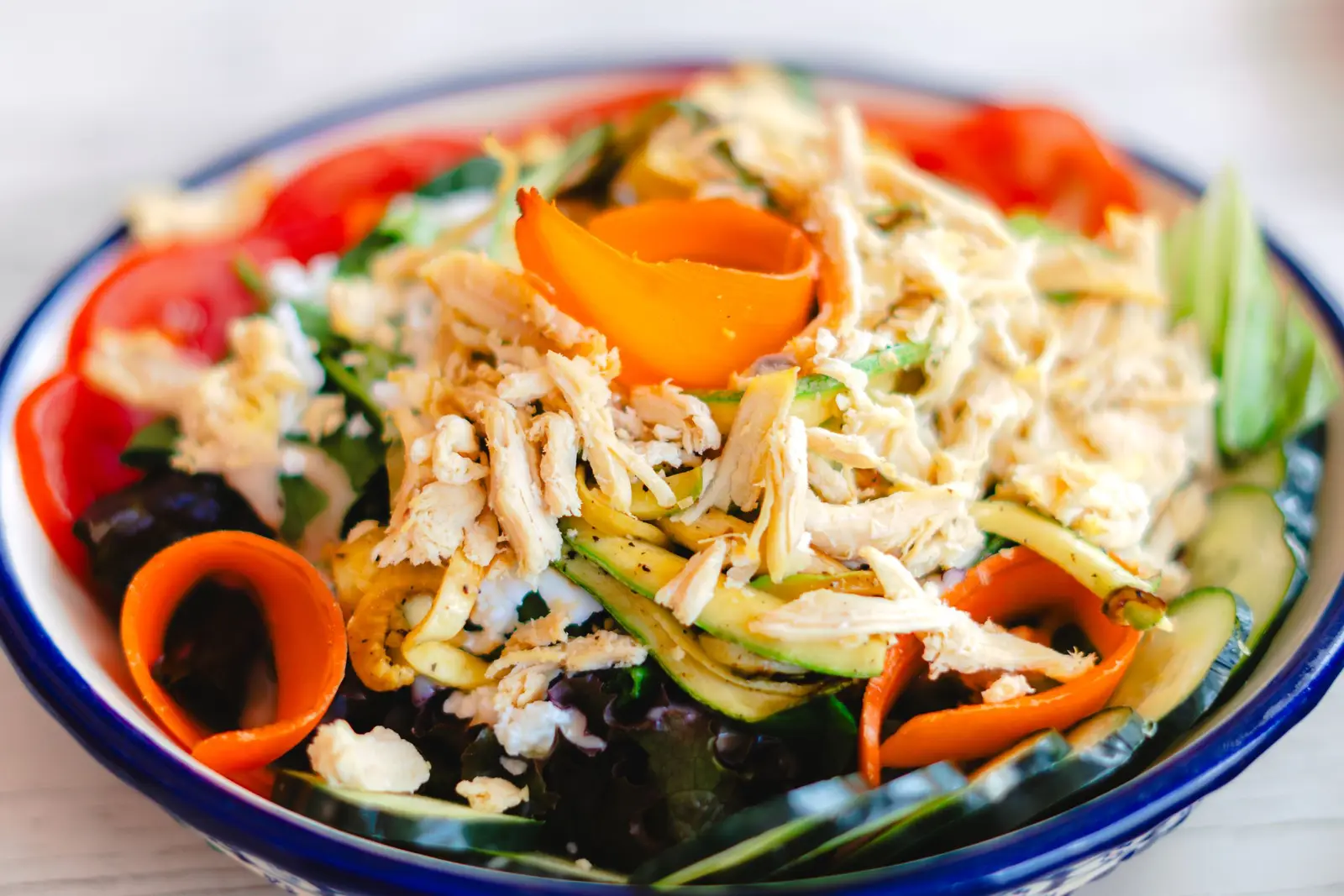
- Shredded into a salad. Pull the meat off the bone, warm it slightly so the fat loosens, and pile it over greens. Rich confit wants something sharp against it, so hit it with a bright, acidic dressing, a squeeze of lemon, or quick-pickled onions. The contrast is what makes it sing.
- Tacos. Crisp the shredded meat in a hot pan and tuck it into warm tortillas with onion, cilantro, and salsa.
- Pasta and grain bowls. Fold it through pasta with garlic and chili, or spoon it over rice, farro, or lentils.
- Sandwiches and melts. Pile it on crusty bread with melted cheese and something pickled.
- On toast. Smash it onto grilled bread with that confited garlic for an instant snack.
- Soups and ramen. Drop a few pieces into broth at the end for an effortless upgrade.
And don't pour out the fat. After cooking chicken in it, that fat is liquid gold, infused with garlic and herbs. Roast potatoes in it, fry an egg in it, or start your next pot of beans with a spoonful. Use it until it's gone.
How to store it
This is confit's hidden superpower, the reason the technique exists at all. Pack the cooked chicken into a container and pour the fat over it until the meat is fully submerged and sealed off from air. Covered like that in the fridge, it keeps for two to three weeks, the texture only getting better as it sits.
When you want some, scoop a piece out (you may need to warm the fat slightly to free it), wipe it down, and crisp it. It goes from fridge to plate in minutes. That's the real luxury here: not one fancy meal, but a stash of restaurant-quality chicken sitting in your fridge, ready whenever you are.
FAQ
What is chicken confit?
Chicken confit is chicken, usually legs or thighs, salted and then slowly cooked while fully submerged in fat at a low temperature until it's extremely tender. It's based on the traditional French method used for duck confit, originally a way to preserve meat by storing it sealed under its own fat.
Can you make chicken confit without duck fat?
Yes. Duck fat is traditional, but olive oil, neutral oil, or rendered chicken fat all work just as well. You're gently poaching the chicken in fat, so any fat that covers the meat will do the job. Olive oil is the cheapest and most accessible choice.
What temperature should you confit chicken at?
Low: roughly 200°F to 300°F (95°C to 150°C), with around 275°F (135°C) being a reliable middle. The fat should barely move, never reach a hard simmer. Plan on 2 to 2.5 hours until the meat is fork-tender.
How long does chicken confit last?
Stored fully submerged in its fat in the fridge, chicken confit keeps for about two to three weeks. The layer of fat seals the meat from air, which is exactly how the technique was originally used to preserve food.
What's the difference between chicken confit and duck confit?
The technique is identical: salt-cure the legs, then cook them low and slow submerged in fat. The difference is just the bird. Duck confit is richer and more expensive; chicken confit is cheaper, easier to source, and can be made in olive oil instead of duck fat, while delivering the same silky, fall-off-the-bone texture.
Can you confit chicken?
Absolutely, and it's one of the best uses for cheap bone-in thighs and legs. Chicken takes to the confit method just as well as duck, turning a budget cut into something tender and luxurious.