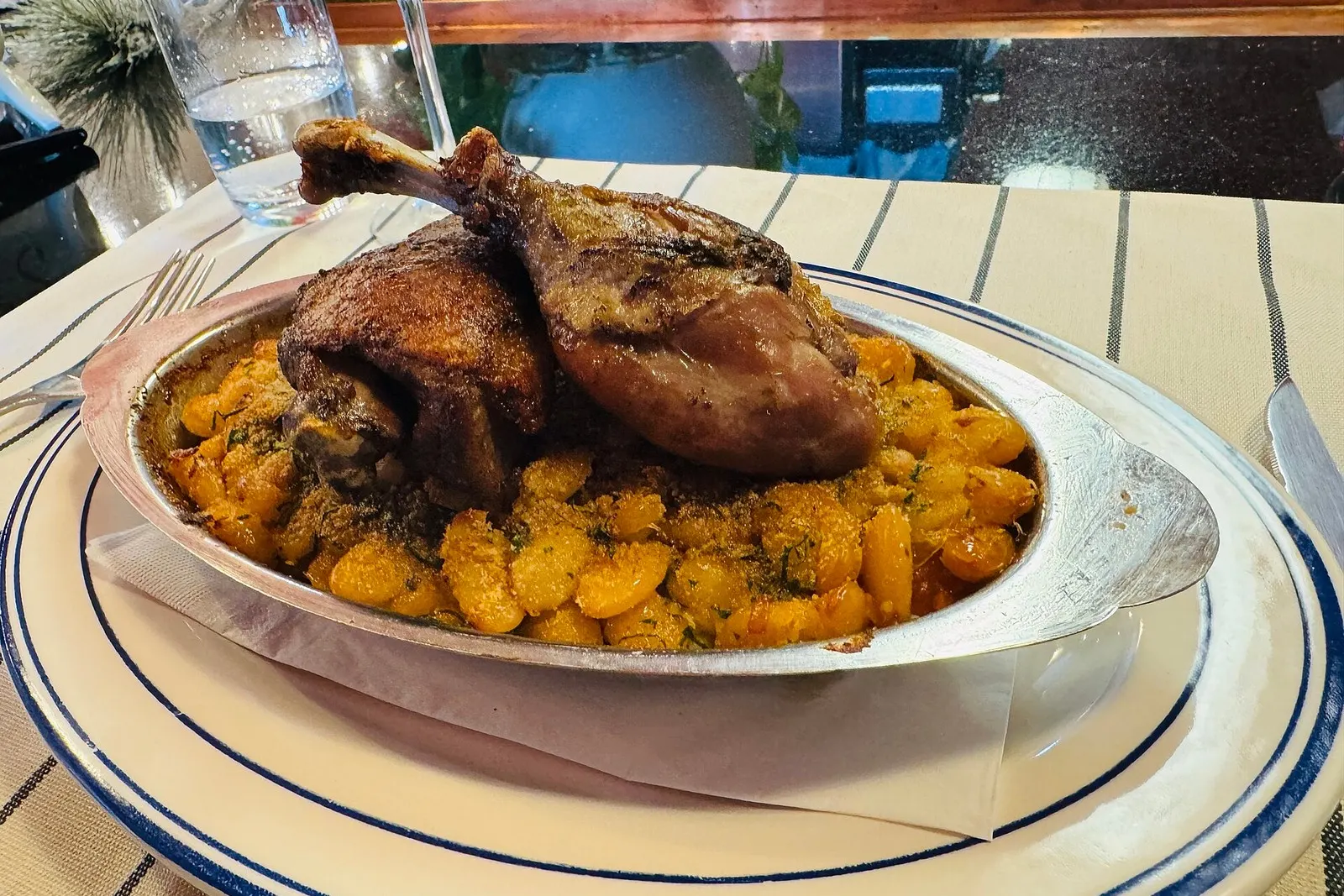
French cassoulet is a slow-cooked white-bean casserole from Languedoc, in southwest France, built from dried white beans and a mix of preserved and fresh meats: pork, sausage, and usually duck or goose confit, baked slowly until the top sets into a crust. It is named for the cassole, the earthenware pot it cooks in. Made properly, it takes the better part of a day, and it is one of the great dishes of the world. It is also, I will say it plainly, kind of ugly. That turns out to be the whole point.
I cooked professionally for over a decade, in fine dining, in rustic European kitchens, and in the kind of small Italian places that live or die on five fresh ingredients. Whenever someone asked me my favorite dish to cook, this was the answer. And I think it is quietly disappearing, not because it is hard to execute, but because it asks for something almost nobody wants to give a single dish anymore: a whole day.
What cassoulet actually is
Strip away the mystique and cassoulet is peasant food. It started as farmhouse cooking in Languedoc, a way to turn dried beans and whatever cured and fresh meat a household had into something that fed a table for a long time. The Britannica entry puts its roots squarely in that southwest French countryside, and that humble origin matters, because everything good about the dish comes from it. It was never meant to be elegant. It was meant to be enough.
The name tells you how the dish thinks of itself. It comes from the cassole, the wide, conical clay pot the beans bake in. The pot was made in Issel, a village near Castelnaudary, and as Saveur has documented, a small workshop still throws them by hand today. The dish is named after its vessel, not its meat or its region. That is a peasant's logic: the form follows the pot, the season, and the patience available.
The beans and the meats
The bean is the spine of the dish, not a side character. The classic choice is the haricot tarbais, a creamy, thin-skinned white bean from the Tarbes region that was the first bean in France to earn a Label Rouge, in 1997, and a protected geographical status in 2000, as D'Artagnan lays out. You do not need to mail-order them to make something honest. Any good dried white bean works: cannellini, Great Northern, navy. What you cannot do is open a can and call it cassoulet. The beans have to cook slowly enough to go creamy inside while staying whole, soaking up the fat and the meat around them.
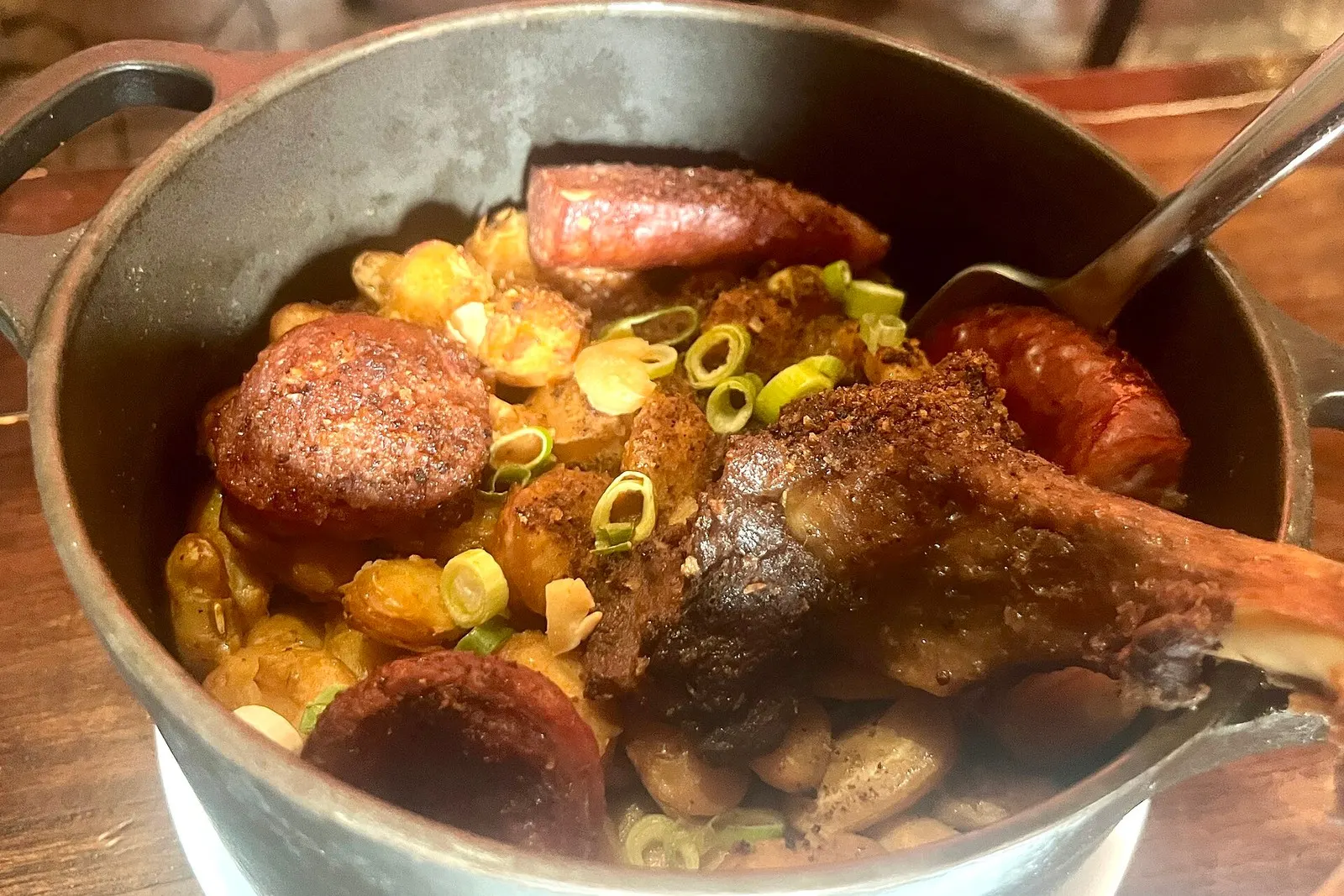
The meats are where the regions argue, but the bones of it are consistent: pork in a few forms (shoulder, belly, the rind for richness), a coarse pork sausage in the Toulouse style, and confit, duck or goose legs cured in salt and cooked slowly in their own fat. The confit is the luxury that everyone fixates on, but it is the rind and the sausage and the pork fat that actually carry the flavor. (At home, plenty of cooks quietly swap in cheaper chicken confit and lose very little.) Nothing here is delicate. Everything is built to give itself up to the beans over hours.
The fight over whose cassoulet is real
There is a genuine, centuries-old argument over which town makes the true cassoulet, and it is worth knowing because it tells you something about authenticity in general. The three claimants are Castelnaudary, Carcassonne, and Toulouse. In 1929 the chef Prosper Montagné settled it with a joke that stuck: cassoulet is the god of southwest French cooking, and Castelnaudary is God the Father, Carcassonne is God the Son, Toulouse is the Holy Spirit. National Geographic walks through the differences: Castelnaudary leans hard on pork, Carcassonne sometimes adds mutton or game, Toulouse brings its sausage and its duck.
Here is my honest take on fights like this. They are mostly noise. The argument assumes one version is correct and the others are corruptions, but all three are just families and towns cooking what they had. A dish that survives for centuries and gets claimed by three cities is not fragile. It is the opposite. The same thing is true of the last producers still curing ham on the bone: the tradition holds not because someone certified it, but because it is genuinely better, and people keep choosing it. Authenticity is not a trophy. It is just the version that kept getting made.
What it takes to cook it for service
I have only ever cooked cassoulet in two restaurants, and both taught me the same lesson: you cannot make it the traditional way during a dinner service. There is no version of standing over a pot all day while tickets are flying. So we did what every working kitchen does with a slow dish. We broke it into parts and prepped them ahead.
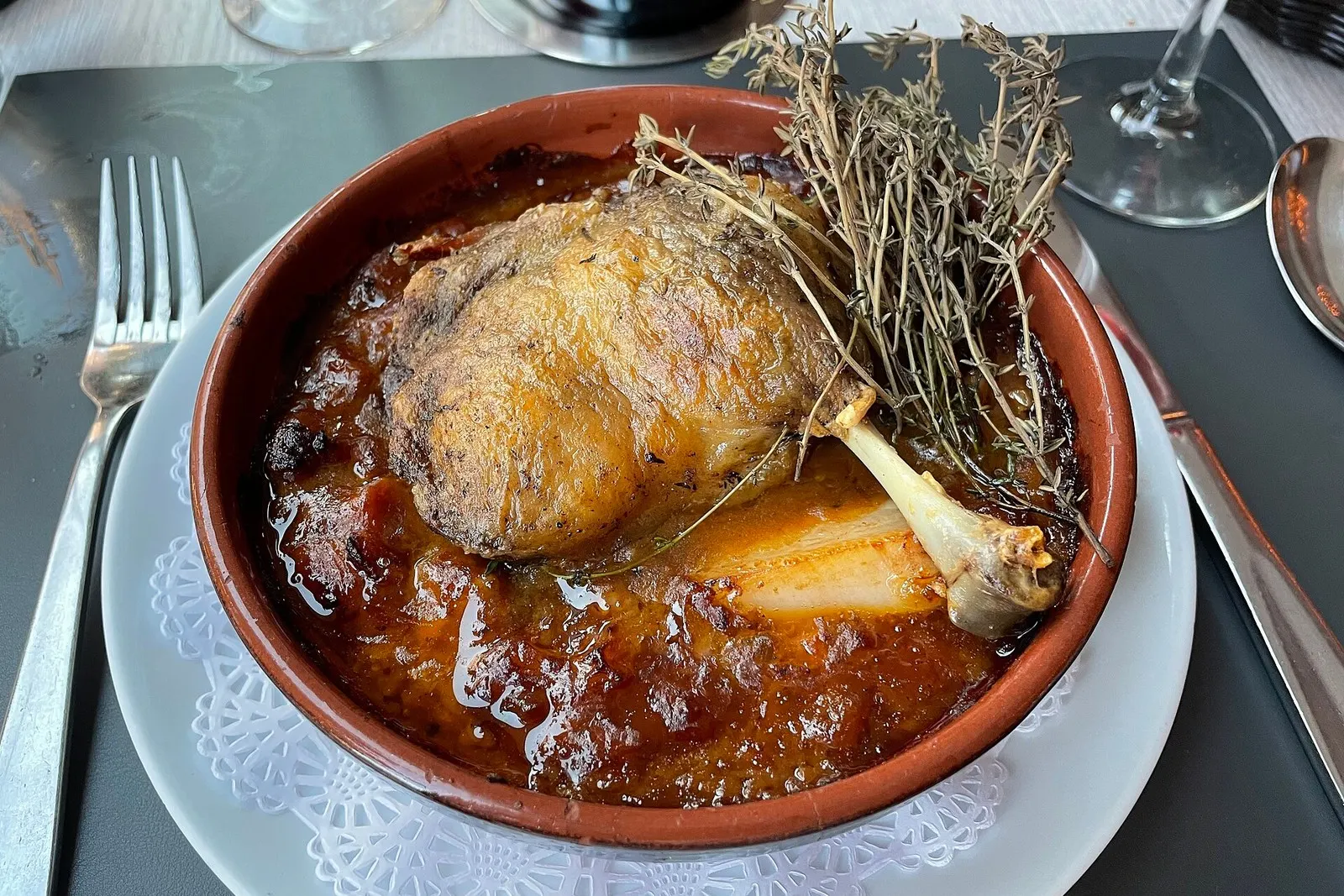
The confit was cured and cooked days before. The sausage and the pork were seasoned and ready. The beans were cooked separately, almost to done, holding in their liquid. Then, to order or close to it, we assembled the components in the pot and finished them in a wood-burning oven, the same kind of wood oven that crisps the skin on a suckling pig. That is how you get the crust, the brown skin that forms on top as the fat and beans bake. The old move is to break that crust and fold it back in, then let it form again, more than once. Each time, the dish gets deeper.
Leave it ugly
A finished cassoulet is brown. It is plain. It is not a dish you photograph for the light. Set next to almost anything else on a menu it looks like a bowl of beans, and that is exactly the trap that has made it nearly extinct on restaurant floors.
Because some kitchens cannot resist trying to make it pretty. They plate it clean, a tidy mound of beans with a piece of meat set carefully on top, skip the breadcrumb crust, and serve you something that photographs well and tastes like a third of what it should. That is not cassoulet. Cassoulet is the melding of everything, the crust worked back in, the confit and the sausage and the pork and the beans collapsed into one thing where you stop being able to tell where the bean ends and the duck begins. The moment you deconstruct it to look good, you have broken the only reason it exists.
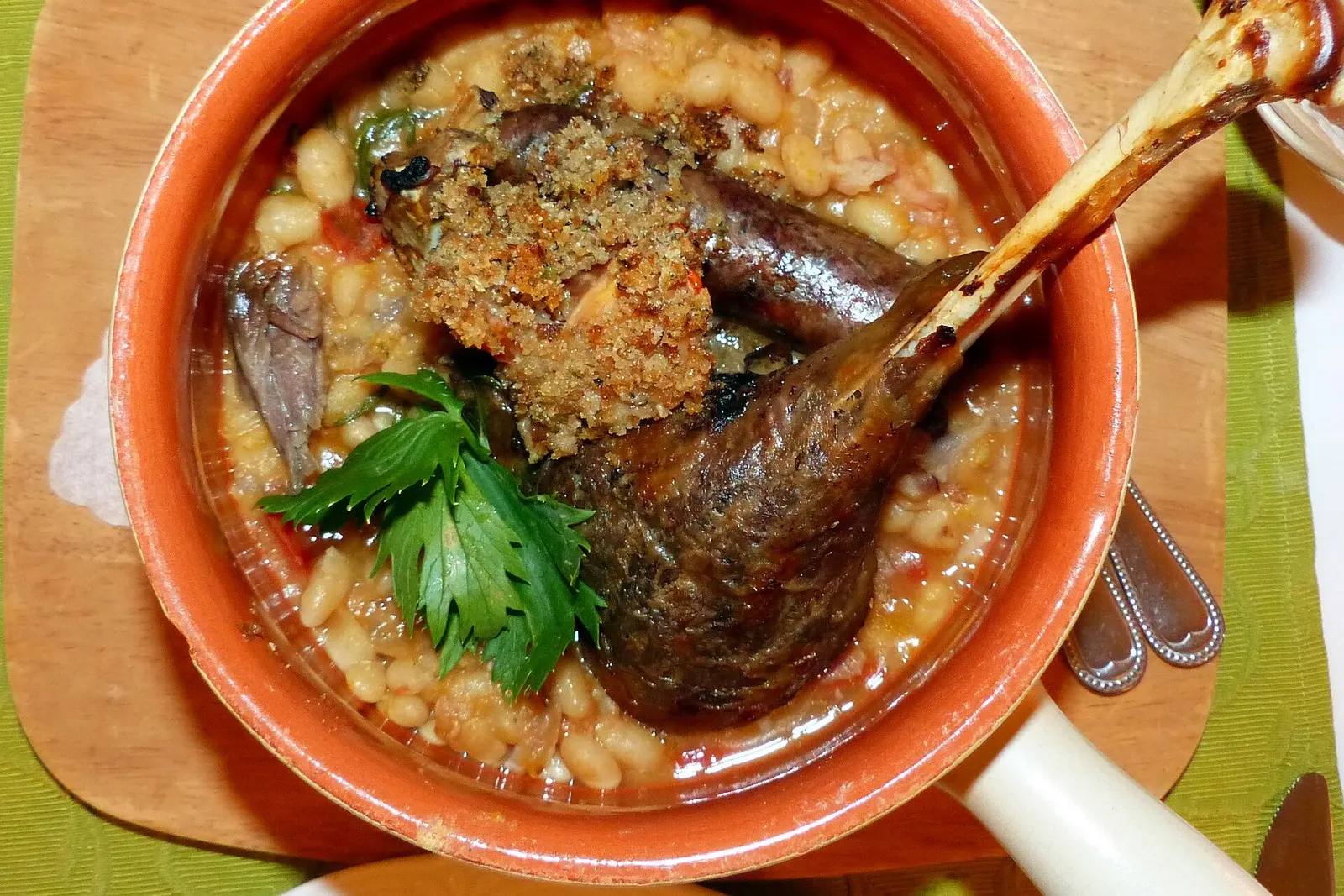
I have eaten it at a handful of New York tables over the years, but never the way it should be, and mostly it simply is not on the menu at all. For all the years I spent in kitchens, I made it in two of them and rarely saw it anywhere else. A dish this good should not be this rare.
So here is the case, and it is not complicated. A dish being slow is not a reason to abandon it. You are not going to make cassoulet for yourself on a Tuesday, and you should not try. But the next time your family is actually together, the holiday, the long weekend, the reason everyone is in one place, that is what it is for. Lose the day on purpose. The brown, unphotogenic, hours-long thing that comes out of the oven is worth more than almost anything you could plate in twenty minutes.
FAQ
What is cassoulet?
Cassoulet is a slow-cooked casserole from the Languedoc region of southwest France, made from dried white beans baked with pork, sausage, and usually duck or goose confit until a crust forms on top. It began as peasant farmhouse food and is named after the cassole, the earthenware pot it cooks in.
What beans are used in cassoulet?
The traditional bean is the haricot tarbais, a creamy, thin-skinned white bean from the Tarbes region with protected status in France. If you cannot find it, any good dried white bean works well: cannellini, Great Northern, or navy beans. The key is using dried beans cooked slowly, never canned.
What is the difference between Toulouse and Castelnaudary cassoulet?
Castelnaudary's version is the most pork-forward and is often called the original. The Toulouse version uses smaller amounts of the same pork but adds the region's coarse Toulouse sausage and duck or goose confit. Carcassonne, the third classic version, sometimes adds mutton or game. All three are considered legitimate.
What do you serve with cassoulet?
Cassoulet is a full meal on its own, so it needs very little: a sharp green salad to cut the richness, good bread, and a robust red wine. Regional reds from the southwest like Cahors, Minervois, or a Languedoc blend pair naturally, in the same spirit as the French apéro ritual that often opens the meal.
Can you make cassoulet in a slow cooker?
You can cook the beans and braise the meats in a slow cooker, but you will miss the crust, which is half the dish. The browned top that forms in an oven, and gets broken and folded back in, is what gives cassoulet its depth. If you use a slow cooker for the long braise, finish it uncovered in a hot oven to build that crust before serving.