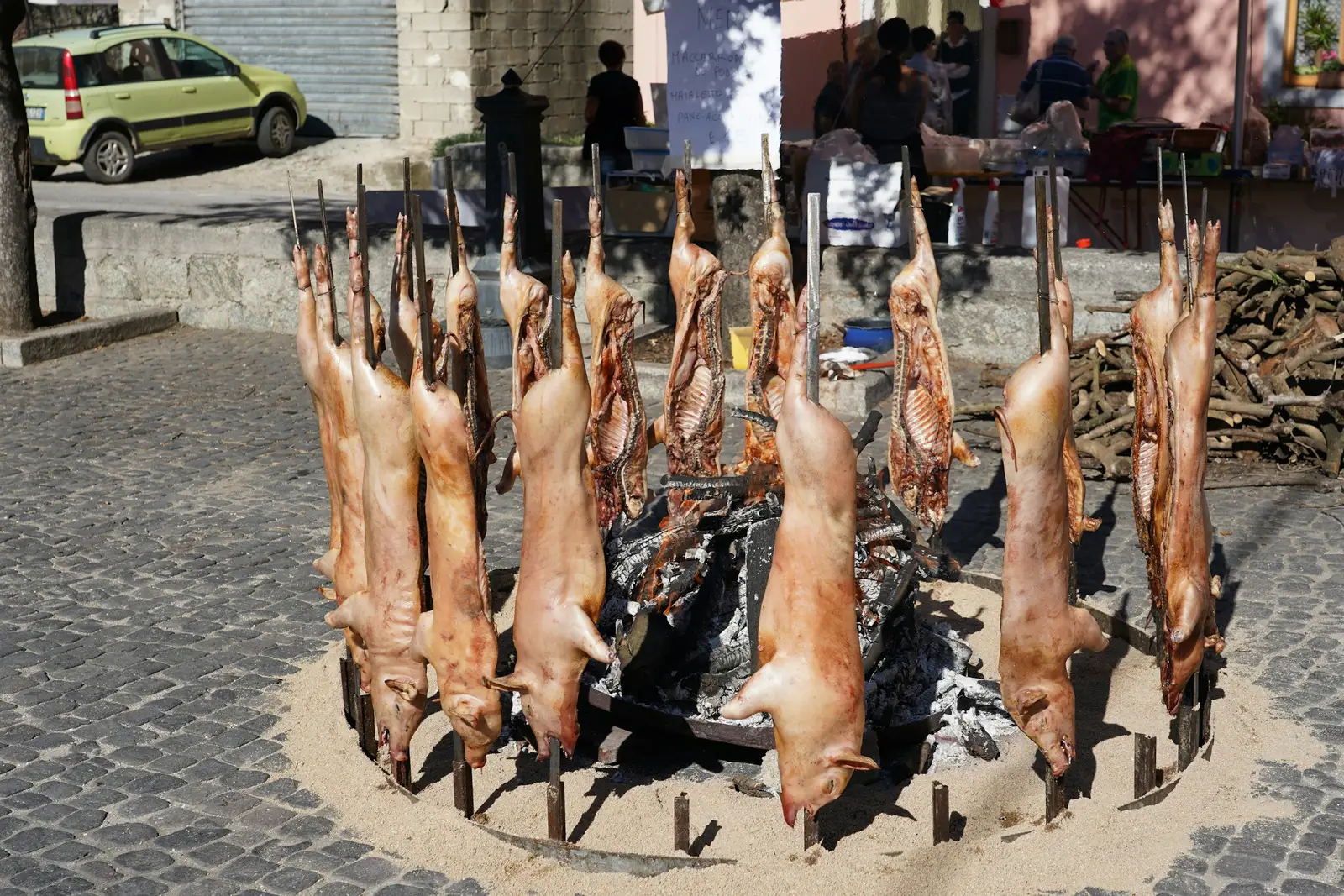
Cochinillo asado is Spain's roast suckling pig, and it is the most restrained dish in the lechón family. A cochinillo is a piglet only a few weeks old, still milk-fed, slaughtered before it has ever eaten solid feed. It is roasted whole in a wood-fired oven with almost nothing added: water, perhaps a little lard or white wine, salt. The result is a small animal with skin so thin and crisp it shatters and meat so tender it barely holds together. Where Filipino and Colombian cooks built their roast pigs up with smoke and stuffing, Spain kept cochinillo stripped down to the pig itself.
What a cochinillo actually is
The precision of the word matters here. In much of Latin America and the Philippines, lechón drifted to mean a roast pig of any size. Spain held the line. A cochinillo, sometimes called lechón or lechoncillo in Spain as well, is specifically a suckling piglet: an animal roughly three weeks old, weighing only a few kilograms, that has fed on nothing but milk.
That diet is the whole reason the dish exists in this form. Milk-fed meat is pale, mild, and extremely tender, with a soft fat layer and a delicate skin. An older pig cannot produce the texture a cochinillo is prized for. The animal has to be young, which makes it small, which is why it can be roasted whole in a single oven and served as one neat centerpiece.
How cochinillo is roasted
The technique is almost aggressively simple. The piglet is split so it lies flat, placed skin-up in a shallow earthenware dish, and roasted in a hot wood-fired oven. Often the only additions are a little water in the dish and a brushing of lard. Salt goes on, and not much else.
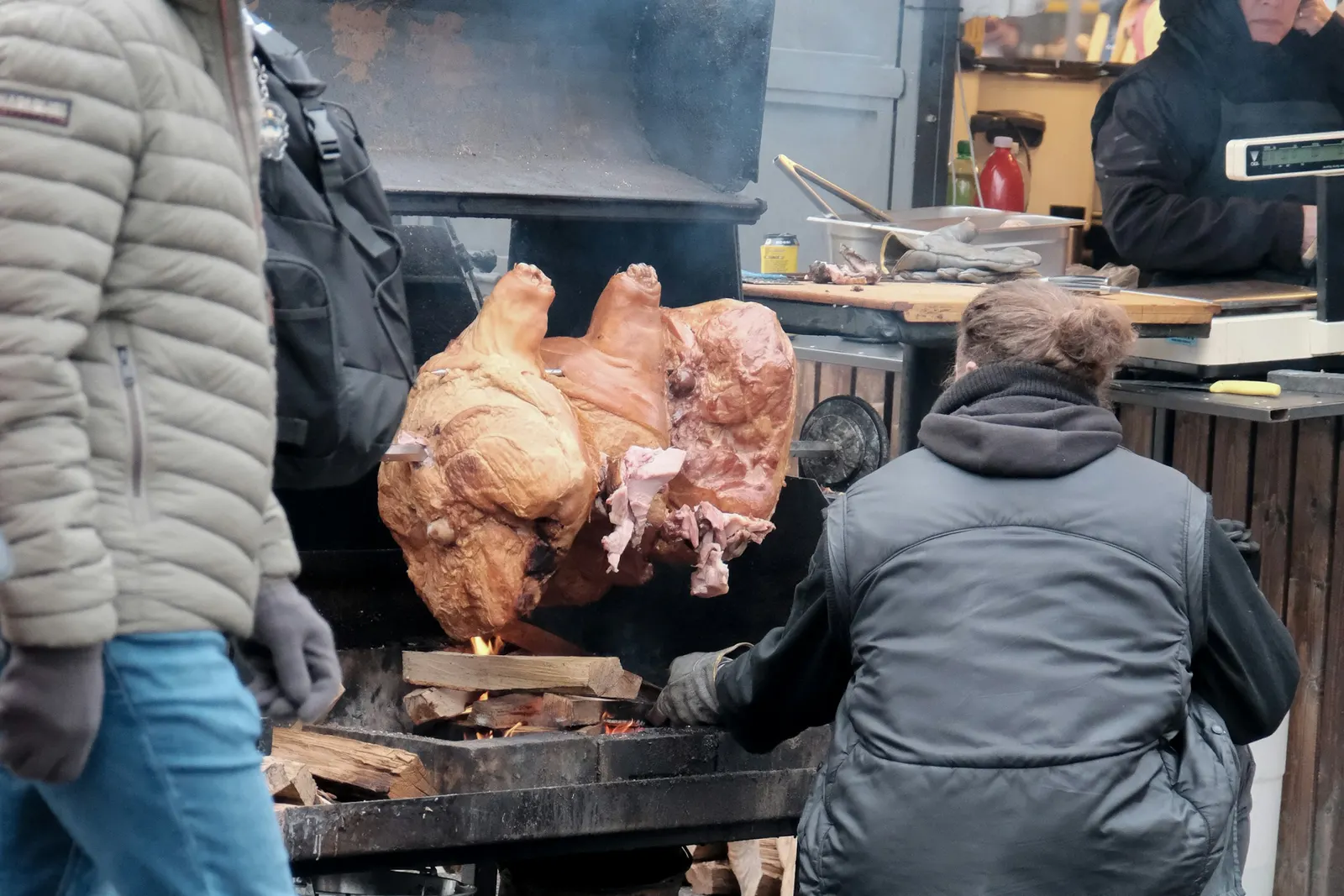
The roast is managed in stages. The pig usually cooks skin-down first, so the meat cooks gently, then is turned skin-up and the heat is pushed so the skin blisters and crisps in the final stretch. The earthenware dish and the small amount of water keep the meat from drying while the oven does its work on the skin. There is no marinade, no rub, no smoke. A cochinillo lives or dies on the quality of the piglet and the cook's control of a wood oven.
Cochinillo de Segovia
Cochinillo is eaten across the high plains of Castile, but one city owns its reputation: Segovia. Cochinillo de Segovia is a recognized regional specialty with its own quality mark, and the city's restaurants have made the dish a reason to visit. The surrounding region of Castilla y León, with its long tradition of wood-oven roasting, treats both suckling pig and roast lamb as cornerstones of its cooking. The same kind of oven, across the border in southwest France, is what builds the crust on a classic French cassoulet.
Segovia's most famous cochinillo restaurant, Mesón de Cándido, sits beneath the city's Roman aqueduct and has carried the dish's reputation for generations. The Castilian roast-house, the asador, is a specific kind of establishment built around a wood oven, and it is as much a part of the regional food culture as the long table is to the Spanish practice of sobremesa.
The plate-carving tradition
Cochinillo comes with a piece of theater. In the Segovian asador tradition, a roast cochinillo is carved not with a knife but with the edge of a plain plate, pressed down through the meat to portion it. The point is a demonstration: if the pig is properly roasted, it is tender enough that a plate is all the blade you need. In the most theatrical version of the ritual, the plate is then thrown to the floor and smashed.
It is a tourist-facing performance now as much as a tradition, but it makes a real claim about the food. A cochinillo that needs a sharp knife has failed. The texture is the dish.
How cochinillo differs from the rest of the lechón family
Cochinillo is the purist's corner of the lechón world. Filipino lechón is a full-grown pig built on charcoal smoke and crackling. Colombian lechona turns the pig into a shell for seasoned rice. Both add things. Cochinillo subtracts. It insists on the youngest possible animal and then does as little to it as possible.
That restraint is the link back to the word itself. Lechón means a milk-fed pig, and cochinillo is the one dish in the family that still requires the meat to be exactly that. It is less a different recipe than the original definition, kept intact while the rest of the family travelled and changed. The same instinct toward tradition runs through Spanish cured pork in the last of the bone-in hams.
FAQ
What is cochinillo?
Cochinillo, or cochinillo asado, is a Spanish dish of roast suckling pig: a milk-fed piglet only a few weeks old, roasted whole in a wood-fired oven until the skin is crisp and the meat is very tender.
Is cochinillo the same as lechón?
They are closely related. Lechón is the broad Spanish term for roast pig, used widely in Latin America and the Philippines, and it often refers to a full-grown animal. Cochinillo specifically means a roast suckling pig, and it is the term most used in Spain.
Why is cochinillo associated with Segovia?
The city of Segovia, in Castilla y León, is the most famous home of the dish. Cochinillo de Segovia is a recognized regional specialty with its own quality mark, and the city's wood-oven roast houses have built the dish's reputation over generations.
Why is cochinillo carved with a plate?
In the Segovian roast-house tradition, a cochinillo is carved with the edge of a plate to prove how tender it is: if the pig is properly roasted, it does not need a knife. In the full version of the ritual, the plate is then smashed on the floor.
How is cochinillo seasoned?
Very lightly. A traditional cochinillo is roasted with little more than water, salt, and sometimes a brushing of lard or a splash of white wine. The dish depends on the quality of the piglet and the crisp skin, not on a marinade or rub.