The best food in Rome is not a restaurant you have to hunt down. It is a short, fixed list of dishes, and almost all of it is peasant cooking: the four Roman pastas (cacio e pepe, gricia, amatriciana, and carbonara), artichokes fried or braised, offal cuts like oxtail and tripe, a supplì eaten standing up, and a maritozzo for something sweet. Order those dishes at a place where Romans actually eat, and you will eat better than nine tourists out of ten. The city's genius is not variety. It is doing a handful of humble things almost perfectly.
So this is not a list of the best places to eat in Rome. Addresses change, chefs move, the trattoria that was perfect five years ago gets discovered and coasts. The dishes do not change. Learn what to order and why it exists, walk into a place full of locals, and the room takes care of the rest.
I did not grow up on Italian food. I grew up Colombian, on rice and my grandmother's stews, and I came to Roman cooking the way a lot of cooks do, through work. Most of the kitchens I trained in were Italian, and the Roman dishes are the ones that stuck. I have never been able to name a single favorite city for Italian food, but Roman cooking sits in my top five without much of an argument, and it gets there on almost nothing. No luxury ingredients, no long import list. Guanciale, pecorino, black pepper, eggs, a few tomatoes, olive oil, and whatever the butcher could not sell to anyone richer. That constraint is the whole story.
Why Roman Food Tastes the Way It Does
To understand what to eat in Rome, you have to understand that this is cucina povera, poor kitchen, the cooking of people who had very little and wasted nothing. Roman food is not refined court cuisine. It is the food of shepherds, tradesmen, and the workers of the Testaccio slaughterhouse, and every quirk of it traces back to scarcity. This is the same impulse that runs through peasant traditions all over the continent, the case for which I made in a piece on why rustic European food doesn't need fixing, and Rome is one of its clearest examples.
Three sources feed the Roman table. The first is the shepherd's pantry: sheep's-milk pecorino romano, a hard, sharp, salty cheese, and guanciale, cured pork jowl, richer and more savory than pancetta. Add black pepper and you already have the backbone of three of the four famous pastas. The second is the slaughterhouse. Testaccio grew up around the city's main abattoir, and the workers there were often paid partly in the quinto quarto, the "fifth quarter," the offal and off-cuts the wealthy would not buy: tails, tripe, sweetbreads, cheeks. Roman cooks turned those scraps into some of the city's signature dishes rather than throwing them away.
The third source is the old Jewish Ghetto, one of the oldest Jewish communities in Europe. Roman Jewish cooking gave the city some of its most beloved dishes, above all the fried artichoke. Put those three threads together, sheep, slaughterhouse, and Ghetto, and you have most of what makes Roman food specific. It is savory, salty, fatty, and built for people who worked hard and ate to keep going.
The Four Roman Pastas
If you eat one category of food in Rome, eat the pasta. There are four canonical Roman pastas, and the beautiful thing is how closely related they are. They are essentially variations on the same tiny pantry.
- Cacio e pepe is the simplest and the hardest: just pecorino romano, black pepper, and starchy pasta water, emulsified into a creamy sauce with no cream in it. Two ingredients and a technique, and reaching for parmesan instead makes a different dish. When it breaks, it clumps; when it works, it is one of the great plates of food anywhere.
- Gricia adds guanciale to that base. It is often called "white amatriciana," pecorino and crisped pork jowl and pepper, and it is the oldest of the four, the parent dish the others grow from.
- Amatriciana takes gricia and adds tomato. Guanciale, pecorino, tomato, a little chili. It comes originally from Amatrice, in the mountains outside Rome, and it is the one most people know.
- Carbonara takes gricia and adds egg instead of tomato. Guanciale, pecorino, black pepper, and raw egg yolk cooked gently by the heat of the pasta into a glossy sauce. No cream, ever. Carbonara is actually the youngest of the four, a 20th-century dish, despite how ancient it feels.
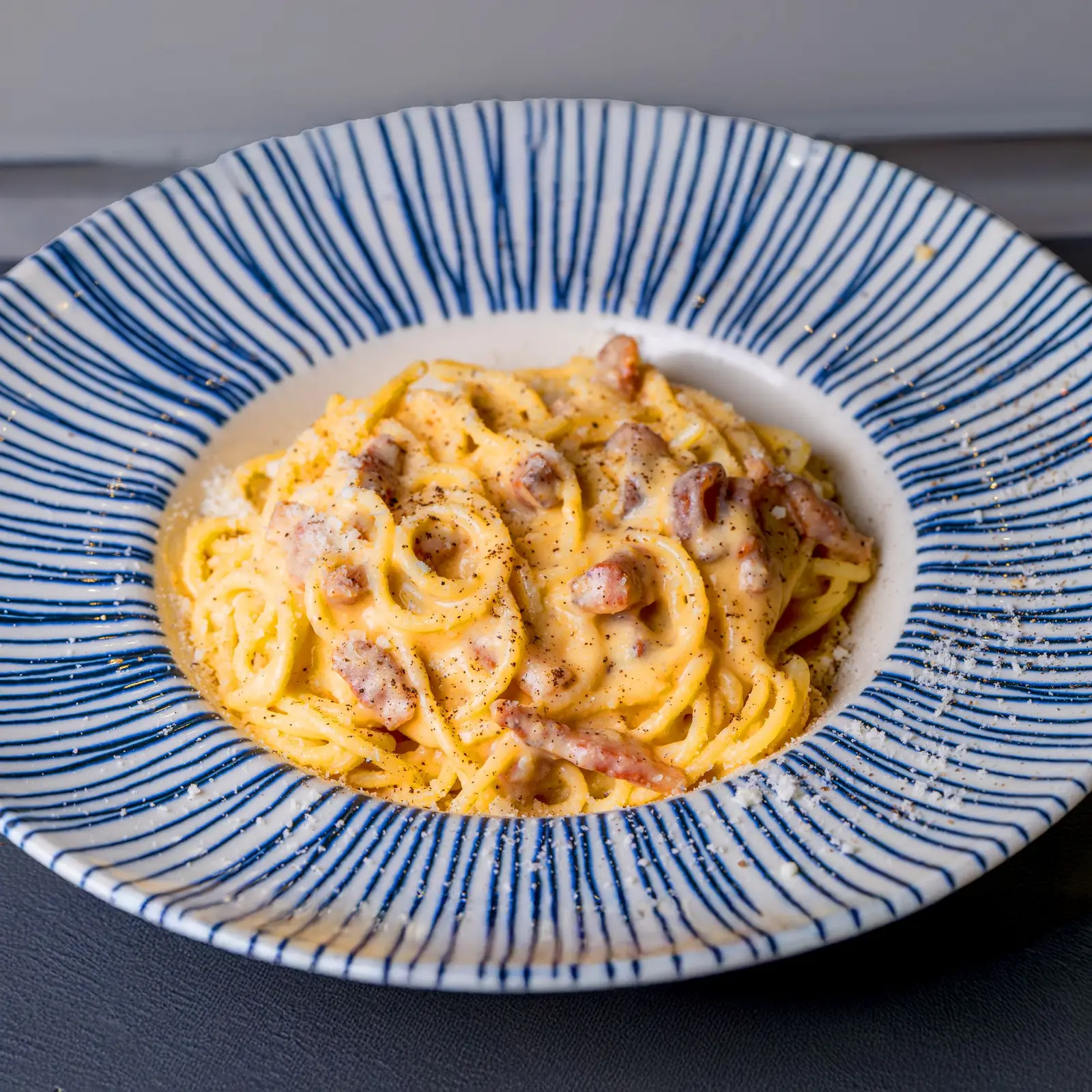
The reason these matter is that they are technique dishes, not shopping dishes. Nothing on that list is expensive. What separates a great plate from a gluey one is entirely in the handling: the heat, the timing, the emulsion of cheese and fat and starchy water. It is the same set of moves behind cooking any pasta well, which I broke down step by step in a guide to cooking pasta properly. Get those right and four cheap ingredients turn into something you will think about for years.
One more thing the tourist menus get wrong: the shape is part of the dish. Cacio e pepe traditionally goes on tonnarelli, a fresh square-cut spaghetti that grabs the cheese. Amatriciana belongs on bucatini, rigatoni, or mezze maniche, tubes with enough body to carry the tomato and pork. This pairing logic is not fussiness; it is engineering, and it runs through all of Italian cooking. I laid out which shape is built for which sauce in its own guide, but in Rome the short version is: trust the traditional pairing, and be a little suspicious of a place serving cacio e pepe on plain dried spaghetti.
Beyond Pasta: The Roman Table
Pasta is the headline, but the dishes that really tell you where you are come from the other two threads, the Ghetto and the slaughterhouse.
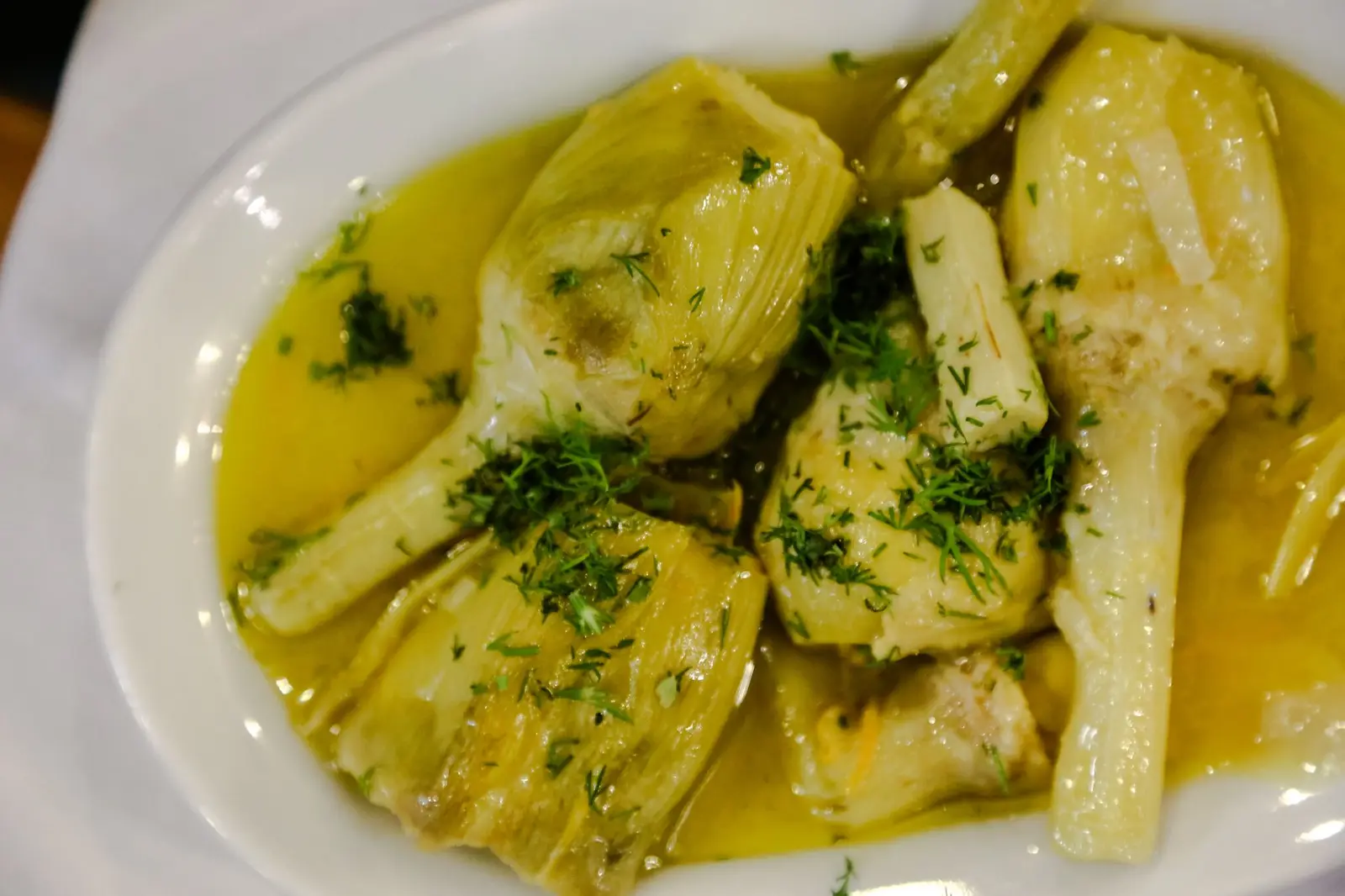
Start with the artichokes, because Rome does them two ways and both are essential. Carciofi alla romana are braised whole with mint, garlic, and olive oil until meltingly soft. Carciofi alla giudia, "Jewish-style," come from the Ghetto: the whole artichoke is fried twice until the leaves open into a crisp golden flower and shatter like a chip. Order them in late winter and early spring, when Roman artichokes are in season, and you understand instantly why the city is obsessed with them.
Then the offal, the quinto quarto dishes that scare people off and should not. Coda alla vaccinara is oxtail braised for hours with tomato, celery, and a whisper of cocoa and pine nuts in the old recipes, and it is one of the deepest, most rewarding braises in the Italian canon. Trippa alla romana is tripe cooked in tomato and finished with pecorino and mint. If you have never liked tripe, Rome is the place to give it one more try, because this is the tradition that figured out how to make it delicious.
Around those anchors sit the everyday greats:
- Saltimbocca alla romana: veal scaloppine with prosciutto and sage, cooked fast in butter and white wine. The name means "jumps in the mouth," and it should.
- Supplì: fried rice croquettes with a molten mozzarella center. The Roman cousin of the Sicilian arancino, eaten as a snack, often at a pizza counter. Pull it apart and the cheese stretches; that stretch is why some call it supplì al telefono.
- Abbacchio: milk-fed spring lamb, usually roasted with rosemary and garlic (abbacchio scottadito, "burn your fingers," for the little grilled chops you eat by hand).
- Puntarelle: a bracing salad of chicory stems dressed with anchovy, garlic, and lemon. A cold, bitter, sharp counterpoint to all that rich pork.
- Pizza romana: not the Neapolitan puff. Roman pizza is thin and crisp, and the everyday version is pizza al taglio, sold by weight from a long tray and cut with scissors. Pizza bianca, just dough, oil, and salt, is a snack Romans eat all day.
You do not need all of it in one meal. Two or three of these dishes, ordered where locals eat them, is a better night than any twelve-course tour.
Something Sweet: Maritozzi and Gelato
Roman dessert is short and worth it. The signature is the maritozzo, a soft, lightly sweet bun split and overfilled with unsweetened whipped cream, eaten for breakfast with coffee. It is centuries old, and in recent years it has become fashionable again, which means it is easy to find and easy to do well.
Beyond that, good gelato is everywhere, but so is bad, industrial gelato dyed bright and piled in tall fluffy mounds. The tourist tell is exactly that: mounded, neon, over-decorated. Real gelato sits flatter in its tub, in muted natural colors, and the shop usually makes a shorter list of flavors. That is the same instinct that guides everything else here, which brings us to the only real skill this whole guide asks of you.
How to Actually Order It (Eat Like a Roman)
Knowing the dishes is most of the battle. The rest is knowing where to order them, and the filter is simple: go where Romans go.
- Eat at a trattoria, not a "ristorante" with a host outside. The family-run trattoria is the natural home of every dish above, and knowing how to read one is its own small skill I covered in what "trattoria" actually means. A handwritten menu, a room full of locals at 1:30 p.m., and no photos of the food is the sign you want.
- Be suspicious of menus in four languages and anyone waving you in from the street. The best rooms do not need to chase you.
- Order the primo. In Rome, the pasta course is where the kitchen shows off. Skipping it to save room is a mistake.
- Eat seasonally. Artichokes in late winter and spring, lamb around Easter. The city still cooks to the calendar.
- Walk a few blocks off the monument. The trattorias within sight of the big sights are almost never the good ones. Two or three streets away, they become real again.
None of this requires a reservation at the hardest table in the city. It requires ordering the four pastas, an artichoke, maybe an oxtail, and a maritozzo, at a place that would be there whether or not you found it.
FAQ
What food is Rome famous for?
Rome is famous for its four classic pastas (cacio e pepe, gricia, amatriciana, and carbonara), all built from guanciale, pecorino romano, and black pepper. Beyond pasta, the city is known for its artichokes (braised alla romana and fried alla giudia), its offal dishes like oxtail (coda alla vaccinara) and tripe, saltimbocca, supplì, thin Roman pizza, and the maritozzo cream bun. It is peasant cooking, built on a few humble ingredients done extremely well.
What are the four Roman pastas?
Cacio e pepe (pecorino and black pepper), gricia (pecorino, pepper, and guanciale), amatriciana (gricia plus tomato), and carbonara (gricia plus egg). They are all variations on the same small pantry of guanciale, pecorino romano, and pepper, which is why learning one gets you most of the way to the others.
Is carbonara really from Rome?
Yes. Carbonara is a genuinely Roman dish, though it is the youngest of the four classic pastas, dating to the mid-20th century rather than the distant past. The authentic version uses guanciale, pecorino, egg yolk, and black pepper, with no cream and no onion. The creaminess comes from egg and starchy pasta water, not dairy cream.
What is the difference between Roman and Neapolitan pizza?
Neapolitan pizza has a thick, airy, blistered crust and is eaten as a personal round with a knife and fork. Roman pizza is the opposite: thin and cracker-crisp when served as a round, or sold as pizza al taglio, baked in long trays, cut with scissors, and sold by weight. Roman pizza bianca, just dough, oil, and salt, is an all-day snack.
When is the best time to eat artichokes in Rome?
Roman artichokes are in season from roughly late winter through spring, with the peak around February to April. That is when both carciofi alla romana and the fried carciofi alla giudia are at their best, so if you are visiting in that window, order them without hesitation.
I keep coming back to how little Roman food actually asks for. A wedge of sheep's cheese, some cured jowl, a fistful of pepper, the cuts nobody else wanted. That is not a limitation the city overcame. It is the whole point, and it is the best argument I know that great eating was never about expensive ingredients in the first place.