Pasta shapes are not interchangeable. Each one is designed to hold a particular kind of sauce, and matching the two is the whole quiet logic of the Italian table. Broadly, pasta falls into a handful of families: long strands like spaghetti and bucatini, ribbons like tagliatelle and pappardelle, tubes like penne and rigatoni, short twisted and pressed shapes like fusilli and orecchiette, filled shapes like ravioli and tortellini, flat sheets like lasagna, and tiny shapes for soup like orzo and ditalini. The rule that ties them together is simple: the heavier and chunkier the sauce, the more structure the shape needs to catch it, and the lighter and silkier the sauce, the longer and smoother the shape can be.
That principle is worth more than memorizing a hundred names. Once you understand why a shape exists, you can look at a bag you have never seen, read its length, surface, and hollows, and know roughly what to do with it. This guide walks through the major families, what the well-known shapes in each are actually for, how to say the tricky ones, and where they come from. Cooking any of them well is its own subject, covered in the full guide to cooking pasta properly; here the focus is the shapes themselves.
One personal note before the taxonomy. Most of the kitchens I came up in were Italian, and I spent real time making fresh pasta by hand: rolling sheets, cutting ribbons, folding filled shapes one at a time. What still amazes me about pasta is how much range lives inside something so plain. It is flour and water, or flour and egg, and from that you get everything from a bowl of spaghetti to a hand-pleated tortellino. The shapes are where that range lives.
Why Pasta Shapes Exist
Shape is engineering, not decoration. A pasta shape is a tool for delivering sauce to your mouth in a specific ratio and texture, and every design choice serves that job.
Ridges, hollows, and twists all grab sauce. A smooth strand carries a thin, clinging coat of sauce. Add ridges (the rigate versions of shapes) and the surface holds more. Make it a tube and the hollow traps sauce and small pieces of meat or vegetable inside. Twist it, and the grooves catch and hold. This is why chunky, meaty sauces go with tubes and twists, while a delicate oil-based sauce goes with a smooth strand: each shape meters the sauce to match.
Bronze dies versus Teflon dies. Dried pasta is pushed through a die to form its shape, and the die material changes everything. Traditional bronze dies (trafilatura al bronzo) leave the surface slightly rough and porous, almost chalky, and that texture grips sauce beautifully. The cheaper Teflon-lined dies most supermarket pasta uses produce a slick, glassy surface that sauce slides off. If a package says bronze-cut and costs a little more, this is what you are paying for, and it is usually worth it.
Fresh versus dried is a real divide, not a quality ranking. Dried pasta is typically durum-wheat semolina and water, extruded and dried hard. It has bite and structure and is the tradition of southern Italy. Fresh pasta is usually soft wheat flour and egg, rolled and cut, tender and rich, and the tradition of the north, especially Emilia-Romagna. Neither is better. A dried rigatoni is right for a hearty baked dish; a fresh tagliatelle is right for a silky ragù. The shape and the dough are chosen together.
How to Read a Pasta Shape
Faced with an unfamiliar shape, ask three questions and you can predict its use:
- Length. Long shapes want sauces that coat and cling along their whole length. Short shapes want sauces with pieces that lodge among them.
- Surface. Smooth surfaces carry light sauces. Ridged or rough surfaces hold heavier ones.
- Hollow or solid. Hollows and cups trap sauce and morsels inside. Solid shapes rely on their outer surface alone.
A ridged tube (rigatoni) reads instantly as built for a chunky, meaty sauce. A smooth thin strand (spaghettini) reads as built for oil and garlic. That is the whole method, and it works on shapes you have never seen.
Long Strands
The most familiar family, and the one most people default to. Long round or thin strands, best with sauces that coat rather than cluster.
- Spaghetti: the classic medium-thick round strand. Versatile, but happiest with tomato, oil-and-garlic, and seafood sauces rather than heavy meat ragùs.
- Spaghettini and vermicelli: thinner spaghetti, for lighter and more delicate sauces.
- Capellini (angel hair): the thinnest strands, for the most delicate treatments only; they overcook in seconds and drown under anything heavy.
- Bucatini: spaghetti's fatter cousin with a hole running through the center (the name comes from buco, hole). That hollow makes it chewier and lets sauce coat the inside as well as the outside. It is the traditional shape for bucatini all'amatriciana, the Roman-Lazio dish of guanciale, tomato, and pecorino.
- Pici: a thick, hand-rolled strand from Tuscany, like a fat, irregular, eggless spaghetti. Rustic and chewy, made for gutsy sauces like cacio e pepe or a garlicky tomato aglione.
Ribbons
Flat strands, cut to various widths. The extra surface area of a flat ribbon carries richer, often meatier sauces than a round strand can.
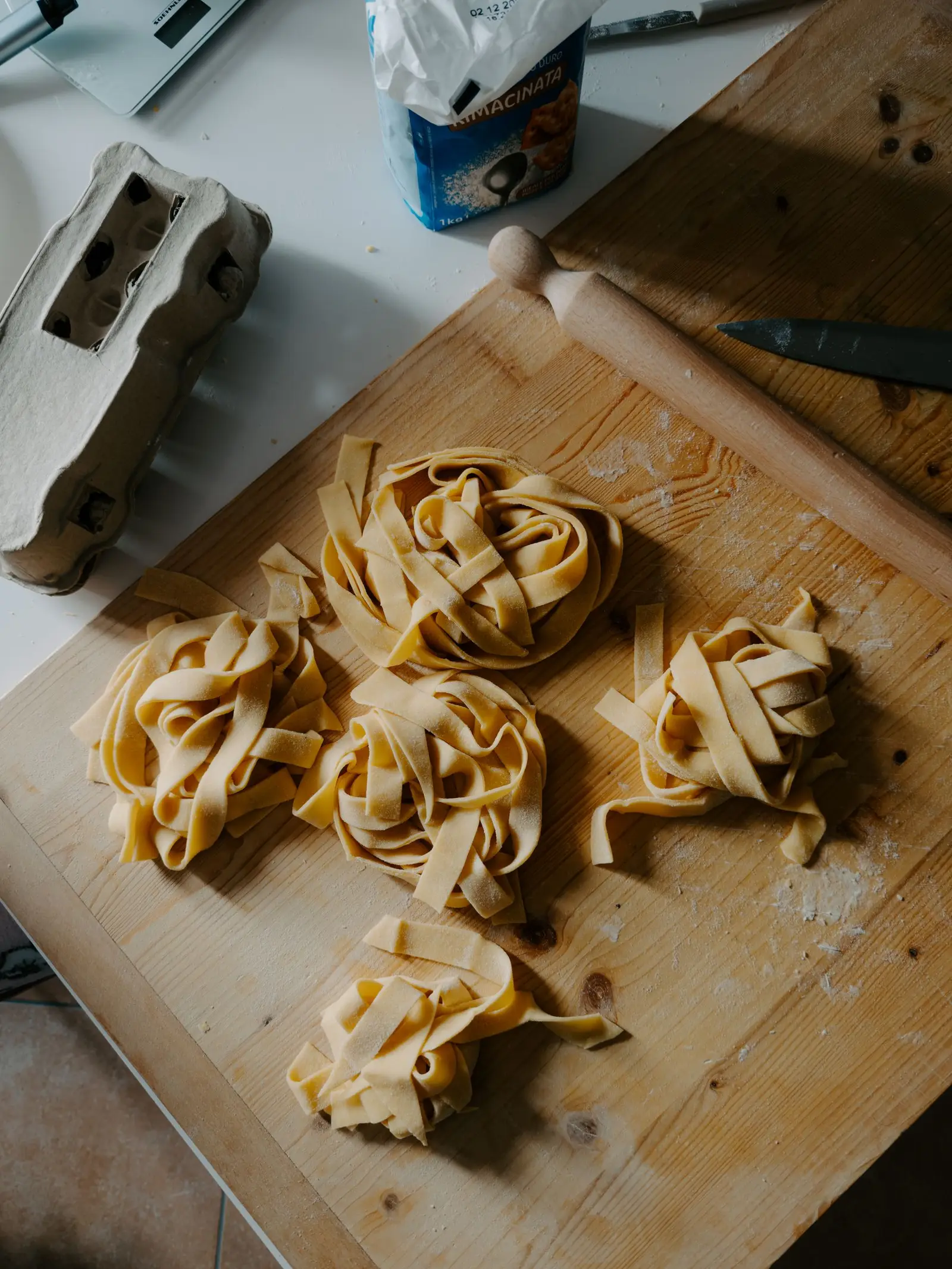
- Fettuccine and tagliatelle: these two cause endless confusion, so here is the distinction. They are both flat egg ribbons of similar width, but tagliatelle is the traditional shape of Emilia-Romagna (Bologna), cut slightly wider and thinner, and it is the authentic partner for a proper Bolognese ragù. Fettuccine is the Roman-central name, cut a touch narrower and thicker, and it is the one Americans know from fettuccine Alfredo. In practice they are close enough to swap, but tagliatelle leans northern and eggy, fettuccine leans central. Neither belongs under a thin marinara; they want butter, cream, egg, or meat.
- Pappardelle: the widest ribbon, sometimes an inch across. Built for the richest, chunkiest braises: wild boar (cinghiale), short rib, duck ragù. The kind of regional cooking you find in a good Tuscan trattoria.
- Linguine: not quite a ribbon and not quite a strand, linguine is a flattened oval, narrower than fettuccine. It is the classic partner for seafood sauces and pesto, especially in Liguria.
Tubes
Hollow shapes, straight or slightly curved, smooth or ridged. The hollow is the point: it traps sauce and small pieces inside as well as out.

- Penne: the everyday tube, cut on a diagonal into points (penne means quills). The ridged version, penne rigate, holds sauce far better than the smooth penne lisce. Good all-rounder for tomato, vegetable, and baked dishes.
- Rigatoni: wider than penne, cut straight across, and always ridged. The big hollow and deep ridges make it a magnet for hearty, meaty sauces and for baked pasta. If a sauce is chunky, rigatoni is rarely the wrong answer.
- Paccheri versus rigatoni: paccheri are very large, smooth, straight tubes from Campania (Naples), wide enough to collapse a little on the plate and often stuffed or served with seafood and thick tomato sauces. The quick distinction: both are wide straight tubes, but rigatoni is ridged and medium, while paccheri is smooth and much larger, almost a short cannelloni you can eat with a fork.
- Ziti and maccheroni: long or short smooth tubes common in southern Italian baked dishes. Long ziti, snapped by hand into rough lengths, is also the traditional partner for Naples' great onion ragù, where the tubes catch the thick, sweet sauce.
Short, Twisted, and Pressed Shapes
The most inventive family, full of regional specialties. Twists, spirals, and pressed forms with grooves and cups that trap sauce mechanically.
- Fusilli: corkscrew spirals whose grooves wind sauce around them. Great with pesto, tomato, and chunky vegetable sauces, and sturdy enough for cold pasta salads.
- Casarecce: a short, narrow S-shape, rolled with a groove down the middle, from Sicily. The twist and the channel hold onto pesto and light meat or vegetable sauces beautifully. One of the most useful shapes to keep in the cupboard.
- Trofie: thin, short, hand-rolled twists from Liguria, tapered at the ends. Their traditional and near-perfect partner is Genovese basil pesto, which catches in the twist.
- Gemelli: two strands twisted together (the name means twins). Looks braided, holds sauce in its grooves.
- Cavatappi: a ridged, hollow corkscrew (the name means corkscrew). Playful, sturdy, excellent in baked dishes and mac-and-cheese-style sauces.
- Strozzapreti: hand-rolled short twists from Emilia-Romagna, dense and chewy, with a memorable name that translates as "priest stranglers."
Shaped and Cupped
Pressed or formed into cups, shells, and figures that scoop and hold sauce.
- Orecchiette: "little ears" from Puglia, small domes with a thin center and thicker rim, made by dragging a thumb across a disc of dough. The cup catches sauce; the classic pairing is with broccoli rabe and sausage.
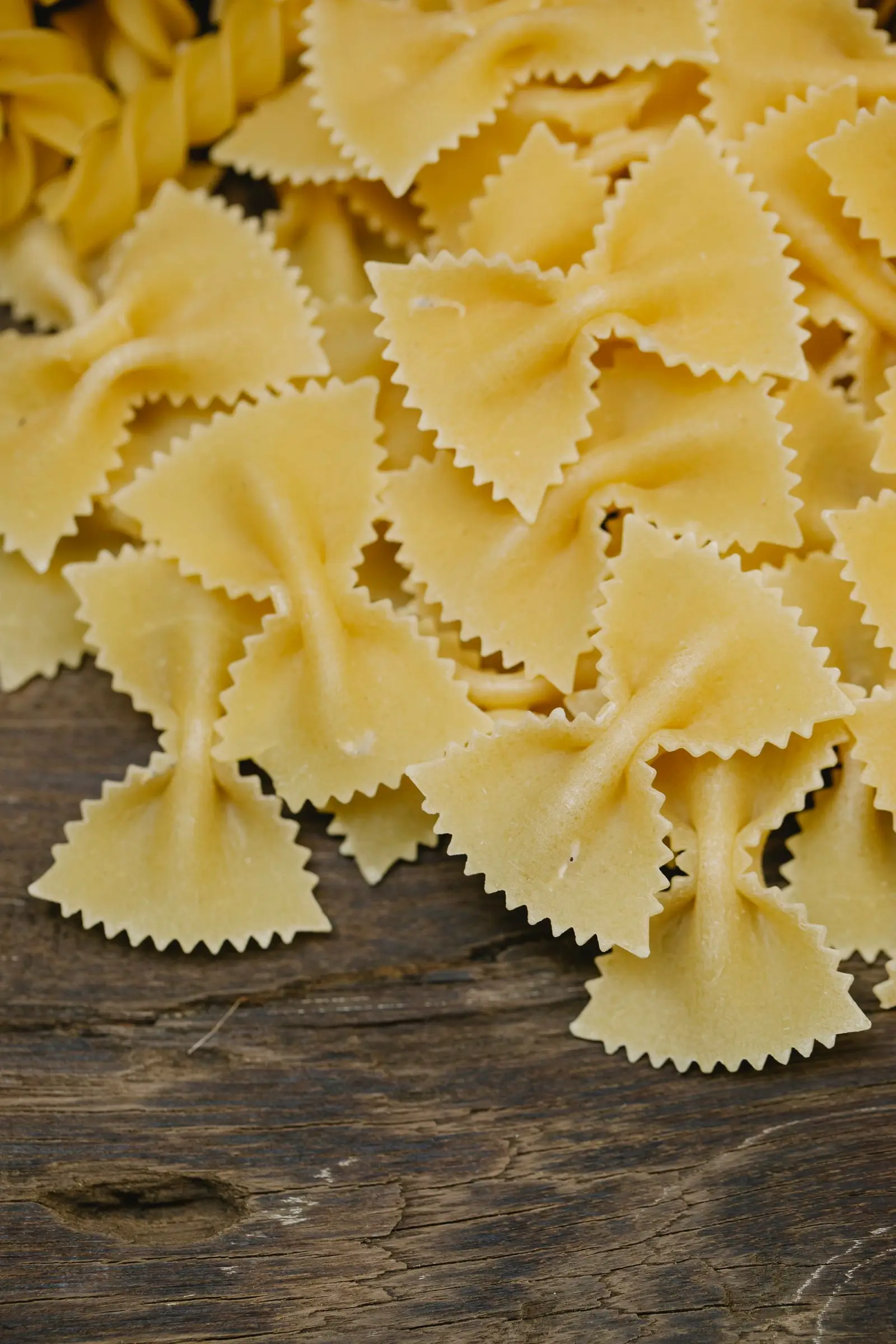
- Farfalle: "butterflies," known in English as bow-ties, pinched in the center from a rectangle with pinked edges. The pinched middle stays firm while the wings cook softer, and the whole shape catches light cream and tomato sauces. Reliable in cold salads too.
- Conchiglie: shells, from tiny (conchigliette, for soup) to jumbo (conchiglioni, for stuffing). The cup is built to hold sauce and morsels.
- Cavatelli: small, hollowed shells of eggless semolina dough from southern Italy, dragged into a little cup. Rustic and chewy, good with tomato and vegetable sauces.
- Radiatori: ruffled shapes resembling little radiators, all ridges and folds, for grabbing thick sauces.
Filled Pasta
Sheets of fresh dough wrapped around a filling. Here the sauce is usually restrained on purpose, because the flavor is inside.
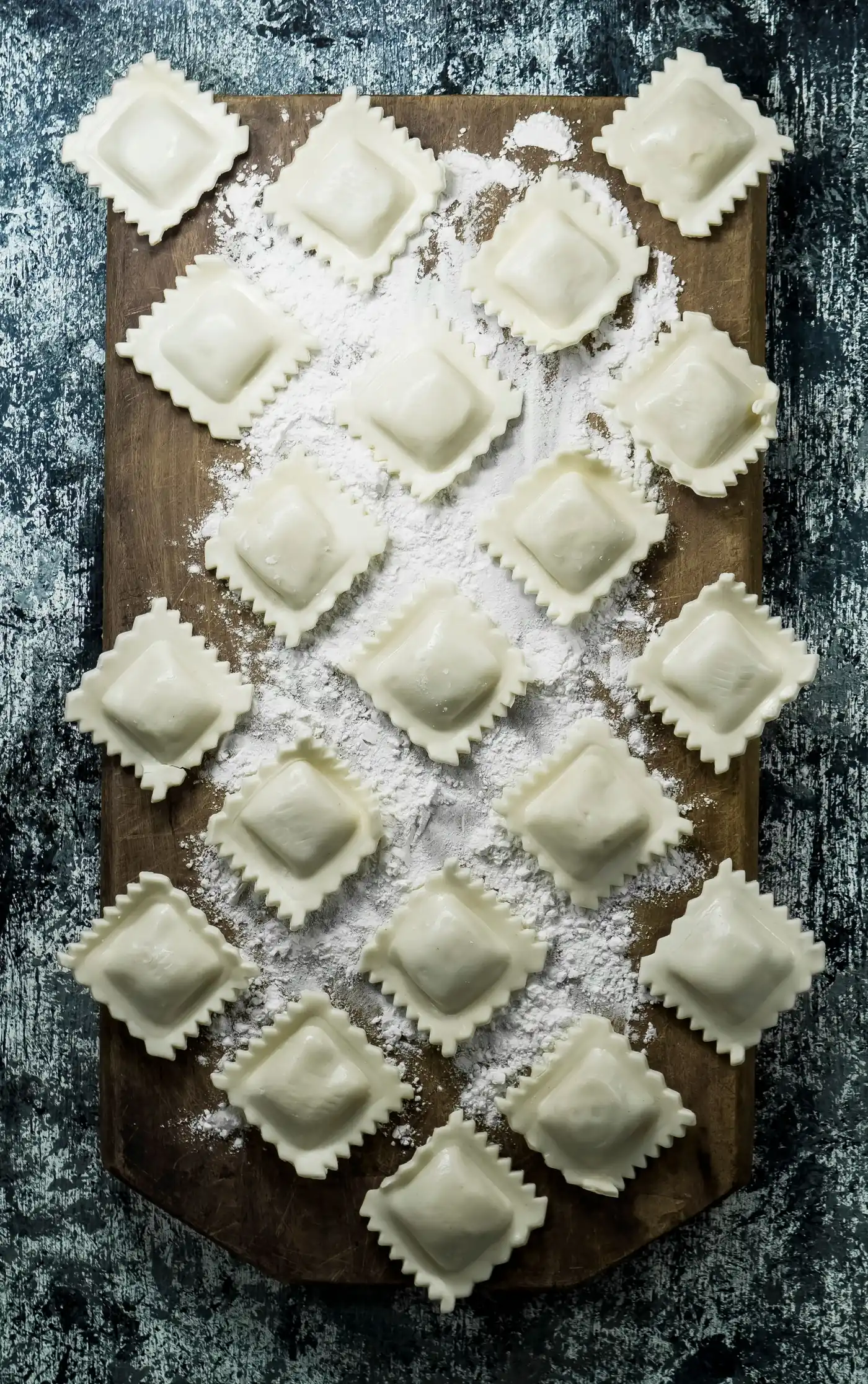
- Ravioli: square or round pillows of dough around a filling of ricotta, greens, meat, or squash. Usually dressed simply, with brown butter and sage or a light tomato, so the filling leads.
- Tortellini: small rings, traditionally filled with pork and cheese, from Emilia-Romagna. Classically served in a clear meat broth (in brodo) rather than a heavy sauce.
- Agnolotti: Piedmontese filled pasta, often little pinched rectangles stuffed with roasted meat, dressed with butter or a light roast jus.
- Cappelletti: "little hats," similar to tortellini, often served in broth around the holidays.
Sheets, Baked, and Soup Shapes
Two smaller families worth knowing.
Sheet and baked shapes. Lasagna are wide flat sheets layered with sauce, cheese, and filling and baked. Cannelloni are large tubes (or rolled sheets) stuffed and baked. These are structural shapes, chosen for how they hold up in the oven.
Tiny shapes for soup (pastina). A whole world of miniature shapes made to be eaten by the spoonful in broth: ditalini (little thimbles), stelline (little stars), orzo (rice-shaped, also called risoni), and acini di pepe (peppercorns). Pastina is the first solid food many Italian children eat, and a bowl of it in broth is comfort cooking at its most basic.
Quick Reference: Shape, Sound, and Sauce
A cheat sheet for the shapes people ask about most. Pronunciations are approximate but close enough to order confidently.
| Shape | Family | Say it | Best with |
|---|---|---|---|
| Spaghetti | Long strand | spah-GEH-tee | Tomato, oil and garlic, seafood |
| Bucatini | Long strand (hollow) | boo-kah-TEE-nee | Amatriciana, rich tomato |
| Pici | Long strand | PEE-chee | Cacio e pepe, garlicky tomato |
| Tagliatelle | Ribbon | tah-lyah-TEL-leh | Bolognese ragù, butter |
| Fettuccine | Ribbon | feh-too-CHEE-neh | Cream, butter, egg |
| Pappardelle | Wide ribbon | pah-par-DEL-leh | Boar, duck, short-rib braises |
| Linguine | Flat strand | lin-GWEE-neh | Seafood, pesto |
| Penne | Tube (ridged) | PEN-neh | Tomato, vegetable, baked |
| Rigatoni | Tube (ridged) | ree-gah-TOH-nee | Meaty and chunky sauces, baked |
| Paccheri | Large tube | PAH-keh-ree | Seafood, thick tomato, stuffed |
| Fusilli | Twist | foo-SEE-lee | Pesto, chunky vegetable, salad |
| Casarecce | Twist | kah-sah-REH-cheh | Pesto, light meat, vegetable |
| Trofie | Twist | TROH-fee-eh | Genovese pesto |
| Orecchiette | Cup | oh-reh-KYET-teh | Broccoli rabe and sausage |
| Farfalle | Shaped | far-FAL-leh | Light cream, tomato, salad |
| Ravioli | Filled | rah-vee-OH-lee | Brown butter, light tomato |
| Tortellini | Filled | tor-teh-LEE-nee | In broth |
A Note on Cooking Them
Shape affects cooking, not just saucing. Thin strands and small shapes cook fast and have a narrow window; thick tubes and twists are more forgiving. Fresh filled and ribbon shapes cook in a couple of minutes, dried shapes in several. Across all of them, the target is the same firm-to-the-bite doneness, which is a specific and visible moment worth understanding in its own right; I break down exactly what al dente means and how to catch it separately. Whatever the shape, salt the water well, taste as you go, and finish the pasta in its sauce rather than drowning a drained pile.
FAQ
What is bucatini?
Bucatini is a long, thick pasta strand that looks like a fat spaghetti with a thin hole running through the center, which is where its name comes from (buco means hole in Italian). That hollow gives it more chew and lets sauce coat the inside as well as the outside. It comes from central Italy, especially Lazio, and its signature dish is bucatini all'amatriciana, made with cured guanciale, tomato, and pecorino cheese.
What is casarecce pasta?
Casarecce is a short pasta shaped like a narrow, twisted S with a groove running down its length. It originates from Sicily, and the name means "homemade." The twist and central channel make it excellent at holding onto pesto and lighter meat or vegetable sauces, which makes it one of the most versatile short shapes to keep on hand.
What is trofie pasta?
Trofie are short, thin, hand-rolled twists of pasta with tapered ends, traditionally from Liguria in northwestern Italy. They are classically eaten with Genovese basil pesto, often alongside potatoes and green beans, because the twisted shape catches and holds the pesto in every groove.
What is pici pasta?
Pici is a thick, hand-rolled pasta strand from Tuscany, essentially a fat, slightly irregular, eggless spaghetti made from just flour and water. Its chewy, rustic texture suits robust sauces like cacio e pepe, a garlicky tomato aglione, or hearty meat sauces.
What is the difference between fettuccine and tagliatelle?
They are both flat egg-pasta ribbons of similar width, and in everyday cooking you can substitute one for the other. The differences are regional and slight: tagliatelle comes from Emilia-Romagna, is cut a little wider and thinner, and is the traditional partner for Bolognese ragù; fettuccine is more central and Roman, cut a touch narrower and thicker. Both want rich sauces, butter, cream, egg, or meat, rather than thin tomato.
What is the difference between paccheri and rigatoni?
Both are wide, straight-cut tubes, but paccheri are much larger and smooth, while rigatoni are medium-sized and ridged. Rigatoni's ridges grip meaty, chunky sauces and it holds up well in baked dishes. Paccheri, from the Naples area, are big enough to be stuffed or served with seafood and thick tomato sauces, and they often flatten slightly on the plate.
How do I choose the right pasta shape for a sauce?
Match the weight of the sauce to the structure of the shape. Thin, oily, or delicate sauces go with long smooth strands like spaghetti or linguine. Rich, creamy, or meaty sauces go with ribbons like tagliatelle and pappardelle. Chunky sauces with pieces of meat or vegetable go with tubes and twists like rigatoni, fusilli, and casarecce that trap the pieces. Filled shapes like ravioli need only a light dressing so the filling leads.