Pasta alla Genovese is a Neapolitan ragù of onions and beef, cooked so low and so long that the onions dissolve completely into a sweet, deeply savory sauce the color of amber. Despite the name, it has nothing to do with Genoa and nothing to do with pesto. There is no tomato, almost no technique, and a short list of ingredients. What it asks for instead is patience. It is also, in my experience, the single dish most likely to turn someone who is lukewarm on pasta into someone who asks for the recipe before they leave.
What pasta alla Genovese actually is (and why the name lies)
The name is the first thing that trips people up. Genovese means "from Genoa," yet this dish belongs entirely to Naples, and pesto alla Genovese, the basil sauce people picture, has nothing to do with it. The origin of the name is genuinely debated. One theory is that it was invented by a Neapolitan cook whose surname or nickname was "il Genovese." Another, better documented one, is that it traces to the Genoese cooks working the port of Naples under Aragonese and Spanish rule in the fifteenth century, who were known for their meaty, slow-cooked sauces. The dish shows up as a ragù in Ippolito Cavalcanti's nineteenth-century Neapolitan cookbook, so its history in the city runs deep.
Whatever the etymology, the dish itself is clear. Beef and a mountain of onions go into a pot together and cook for hours until the onions surrender all their texture and become the sauce. That is the part newcomers can't quite believe: there are more onions than meat, by a lot, and the onions aren't a background note. They are the whole thing. The beef is there for its fat and collagen, which melt out and give the sauce body, but the flavor you taste is concentrated, jammy, almost sweet onion carrying the savor of the meat.
Few ingredients, but the ratio is everything
There is no long shopping list here, which is exactly why the proportions matter so much. Get the ratio wrong and you have a pot of beef with some onions in it. Get it right and you have something else entirely.
| Element | The traditional choice | Why it matters |
|---|---|---|
| Onions | Roughly twice the weight of the meat, minimum | The sauce is the onions, not a garnish |
| Beef | A collagen-rich cut: shin, chuck, or brisket | It melts and enriches instead of drying out |
| Added fat | A little diced pancetta or prosciutto fat (optional) | Rounds out a leaner cut so it renders into the sauce |
| Aromatics | A quiet soffritto of carrot and celery | The savory floor under all that sweetness |
| Liquid | Dry white wine, and no tomato | Keeps the sauce amber and sweet, not red |
| Time | Around three hours, low | The one ingredient you can't substitute |
The cut of beef is where I'd tell you not to overthink it. Any tough, well-marbled braising cut works, because the long, gentle cook is going to break it all down regardless. What you actually want is a cut with enough fat and connective tissue to render into the sauce as it goes. A leaner piece is fine too, which is where the old trick of tucking in a knob of pancetta or prosciutto fat earns its place. On the line we'd add that fat more often than not, precisely so the sauce had something rich to hold onto.
Everything sits on a quiet base. Before the onions go in, you build a small soffritto of carrot and celery, the same aromatic foundation that anchors most of Italian cooking. It's a subtle move and it does real work, giving the sweetness of the onions a savory floor to stand on.
The method is patience, not technique
Here is the honest truth about Genovese: there is barely a technique to teach. You are not searing anything hard, not building a fond, not chasing a precise temperature. You put everything in a pot, keep the heat low, and pay attention for a few hours. That's it. The whole difficulty is psychological, because the pile of raw onions looks absurd and the early stages look like nothing is happening.
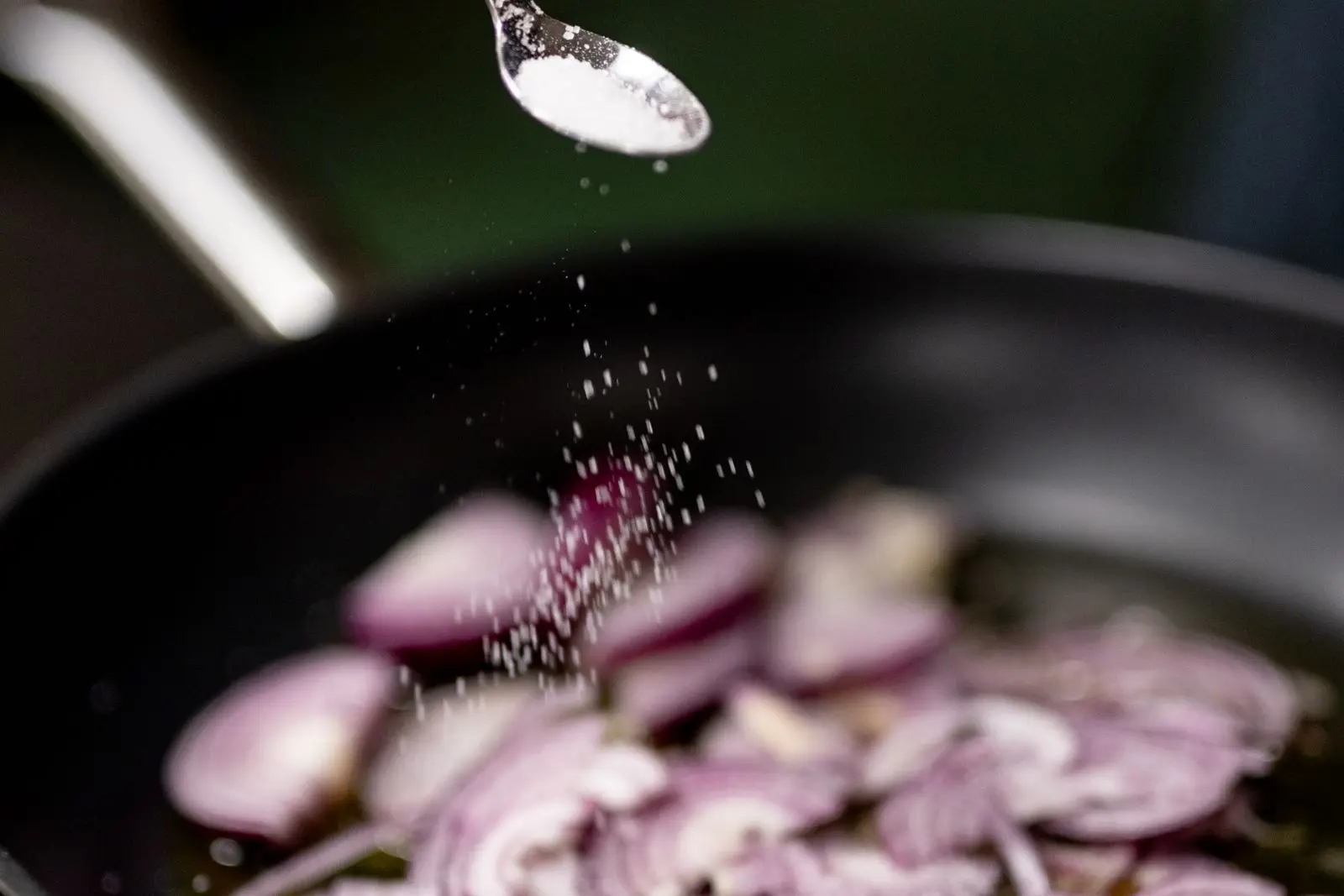
What you're managing is a slow transformation. The onions first release a flood of water and practically stew themselves. Then, as that water cooks off, they begin to collapse and take on color, going from pale to gold to a deep amber over a couple of hours. You want a low, steady heat and a stir every fifteen or twenty minutes so nothing catches on the bottom. If it's browning fast or sticking, the heat is too high. The wine goes in near the end, more to freshen and loosen the sauce than to cook down. The single most common way to ruin Genovese is impatience: crank the heat to speed it up and you get scorched, bitter onions instead of sweet ones. There is no shortcut. The pot is done when it decides it's done.
The pasta: snapped ziti versus fresh tagliatelle
Naples has a traditional answer to what you serve this with, and it's a specific one: long, hollow ziti or candele, the tubes snapped by hand into rough lengths right into the pot of boiling water. The ridged, tubular shape catches the thick sauce, and the ragged hand-broken edges are part of the character. If you want the classic Neapolitan Sunday plate, that's it. Because the shape carries the sauce differently than a strand does, it's worth understanding which pasta shape suits which sauce before you default to spaghetti.
The other honest tradition is fresh egg pasta. In the restaurant kitchen where I cooked this, we plated the Genovese on fresh tagliatelle, and the silkiness of the egg ribbons against that dense, sweet ragù is a genuinely beautiful pairing. Neither version is more correct than the other. If you go the fresh route, the finishing move matters more than the shape: cook the pasta a touch short and marry it to the sauce in the pan with a splash of the starchy water, so it emulsifies and clings instead of sitting under a spoonful of ragù.
A loose recipe to cook it by
This is a widely-practiced Neapolitan method rather than anyone's secret formula, so treat the amounts as a starting point and adjust to your pot. The full ingredient list and step-by-step are in the recipe card below, but the shape of it is simple: base, onions, time, pasta.
Build a small soffritto in olive oil, brown the beef lightly, then bury it under twice its weight in sliced onions. Season, cover, and cook low, stirring now and then, for two and a half to three hours until the onions have melted into a thick amber sauce and the beef pulls apart. Loosen it with white wine at the end. Boil your pasta, snapped ziti or fresh tagliatelle, until just shy of done, then finish it in the sauce. Because the timing is entirely about feel and not the clock, I put the ratios and the hour-by-hour on a one-page card you can print or save:
Why it converts the skeptics
I've watched this dish change minds more than any other pasta I've cooked. Part of it is surprise: people expect a red, tomato-heavy sauce and instead get this deep, sweet, savory thing they can't quite place. Part of it is that slow-cooked onions taste like they took effort, because they did, even though the effort was almost entirely waiting. It reads as generous and considered on the plate in a way that a fast weeknight sauce never quite does.
If you have someone in your life who shrugs at pasta, this is the one to make for them. It costs almost nothing, the ingredient list is short enough to memorize, and the only real skill it demands is the willingness to leave a pot alone and trust it. Make it on a slow afternoon when you're home anyway, stir it when you walk past, and let the onions do what they do.
FAQ
Is pasta alla Genovese from Genoa?
No. Despite the name, it is a Neapolitan dish with no connection to Genoa or to pesto alla Genovese. The most cited explanation is that it traces to Genoese cooks working in Naples centuries ago, or to a Neapolitan cook nicknamed "the Genovese." Either way, the dish belongs to Naples.
What cut of beef is best for pasta alla Genovese?
A tough, collagen-rich braising cut like beef shin, chuck, or brisket. The long, low cook breaks it all down, so you want a cut with enough fat and connective tissue to render into the sauce rather than a lean one that dries out. If your cut is on the lean side, add a little diced pancetta or prosciutto fat.
Why is there no tomato in pasta alla Genovese?
Because the flavor and color come entirely from onions cooked down for hours, not from tomato. Adding tomato would push it toward an ordinary red ragù and bury the sweet, amber character that defines the dish. It's a deliberate absence, not an oversight.
What pasta shape goes with Genovese?
Traditionally, long hollow ziti or candele, snapped by hand into short lengths so the tubes catch the thick sauce. Fresh egg pasta such as tagliatelle is the other classic pairing. Both work well; the sauce is heavy, so it wants a shape with enough surface or ridges to hold it.
How long does pasta alla Genovese take to cook?
Plan for about three hours of low, slow cooking for the onions to fully collapse into a sauce, plus around twenty minutes of prep. It is mostly hands-off time. The dish is done by feel, when the onions are jammy and amber and the beef is fork-tender, rather than by a strict clock.