The best steak for grilling is a well-marbled ribeye. The heavy webbing of intramuscular fat is the whole reason: it melts over high heat, bastes the meat from the inside, and delivers more flavor and more forgiveness than any other common cut. The New York strip is the close runner-up, leaner and a little easier to manage over a live fire. But if you want the best possible steak off the grill, you want a thick, well-marbled ribeye, cooked over a two-zone charcoal fire so the dripping fat can't turn your dinner into a bonfire.
That last part is where most people go wrong, and it's why some cooks wrongly conclude the ribeye is "too fatty" for the grill. The fat isn't the problem. The technique is. Get the fire right and the ribeye is unbeatable.
Why a ribeye is the best steak for grilling
A ribeye comes from the rib section of the steer, a muscle group that does very little work, so the meat stays tender and runs through with fat. That fat is the point. When you grill, two things create flavor: the browning on the outside (the Maillard reaction) and the fat melting on the inside. The ribeye maxes out both.
Marbling does three jobs on a grill:
- Flavor. Most of beef's flavor compounds are fat-soluble, so a fattier cut simply tastes more like steak.
- Juiciness. As the intramuscular fat melts, it lubricates the muscle fibers, so the meat eats as juicy even when you push it slightly past medium-rare.
- Forgiveness. A leaner cut goes from perfect to dry in about ninety seconds of inattention. A ribeye gives you a wider margin, which matters over an unpredictable live fire.
That margin is the underrated reason a ribeye is the best steak for grilling. Grilling is a less precise way to cook than a pan on a controlled burner, and the ribeye's fat buys you room for the heat to surge and dip. If you want the deeper logic on why marbling beats everything else at the meat case, it's the same argument that runs through what actually makes a good steak.
When to choose a New York strip instead
The strip is not a consolation prize. It comes from the short loin, it has good marbling of its own, and it has a firmer, beefier, chewier bite that a lot of people genuinely prefer. For grilling specifically, the strip has one real advantage over the ribeye: it has less loose fat to render, so it drips less and flares up less. Over a single-zone fire, or for a newer cook who doesn't want to babysit flames, the strip is the easier, lower-drama grill.
So the honest split is this:
- Pick the ribeye if you want maximum flavor and richness and you're willing to manage the fire.
- Pick the strip if you want a cleaner sear, a firmer bite, and less flare-up to fight, or if your grill only gives you one heat zone.
Neither is wrong. If you want to weigh the two head to head on texture, price, and fat, the full breakdown lives in the ribeye versus New York strip comparison. For grilling, I still hand the title to the ribeye, but the strip is the cut I'd recommend to anyone who tells me they hate dealing with flames.
What to look for when you buy
The steak you choose at the counter matters more than anything you do at the grill. Three things to check:
- Thickness. Buy steaks at least 1.25 to 1.5 inches thick. A thin steak cooks through before it can build a crust, so you're forced to choose between a pale exterior and a gray, overcooked interior. A thick steak lets you sear hard and still land a rosy center.
- Marbling. Look for fine, even white veining spread throughout the muscle, not a few fat blobs at the edge. Even distribution means even basting as it cooks.
- A dry surface. Pat the steak dry before it goes near heat. Surface moisture steams the meat and blocks browning, so a dry steak sears far better.
One steak feeds one or two people when it's this thick, which is part of the appeal: a single 1.5-inch ribeye, sliced against the grain, plates beautifully for two.
Charcoal or gas, and why ribeyes flare up
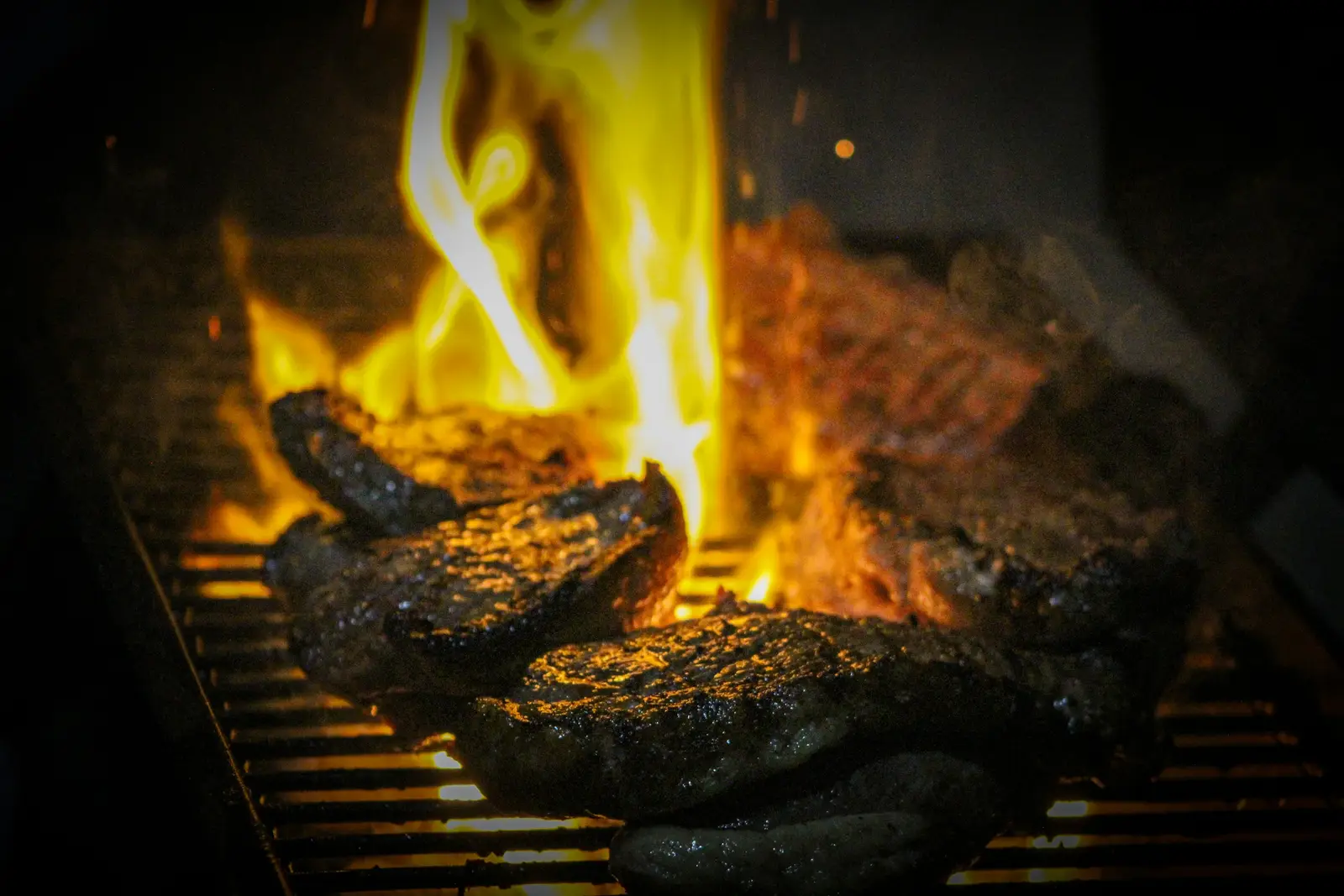
Charcoal beats gas for steak, and it isn't close. Charcoal burns hotter at the grate, which means a faster, deeper sear, and the rendered fat that drips onto hot coals creates flavorful smoke that seasons the meat. Gas is convenient and clean, but it runs cooler and gives you none of that smoke character.
The catch is the same fat that makes the ribeye great. When it drips onto live coals, it ignites, and those flare-ups coat the meat in sooty, bitter, acrid smoke if you let them lick the steak. This is the entire reason people blame the cut. The fire is doing exactly what fire does. Your job is to build the grill so the steak always has somewhere safe to go.
How to grill a ribeye without flare-ups
The fix is a two-zone fire, and it's the single most important grilling skill there is. Bank all your lit coals to one half of the grill and leave the other half empty. Now you have a hot direct-heat side for searing and a cooler indirect side for everything else.
The method:
- Sear over direct heat. Lay the steak over the coals and let it build a hard, brown crust, two to three minutes per side without moving it.
- When fat flares, move the steak. The moment flames jump up around the steak, slide it over to the empty indirect side and drop the lid for a few seconds. Pulling the meat off the direct flame and cutting the oxygen settles the flare on its own, with nothing to scramble over.
- Finish on the indirect side. Once both sides are seared, park the steak over the cool zone, put the lid on, and let it coast up to your target temperature in gentle, smoky, flame-free heat.
This "sear hot, finish gentle" rhythm is how steakhouses cook, and it turns the ribeye's fat from a liability back into the asset it's supposed to be. The flare-ups stop being a crisis and become a thing you simply step away from.
Seasoning, doneness, and resting
Keep the seasoning simple. Coarse salt and black pepper are all a good ribeye needs, and the timing matters more than the ingredients. Salt at least 40 minutes ahead (or right before it hits the grate), never in the limbo in between, when the salt has pulled moisture to the surface but hasn't reabsorbed it yet. The full reasoning is in the right way to salt a steak.
For doneness, cook to internal temperature, not to time or color. Time depends on the steak's thickness and the fire's mood, both of which change constantly. Temperature doesn't lie. Pull the steak about 5°F before your target, because it keeps cooking while it rests:
- Rare: 120 to 125°F
- Medium-rare: 130 to 135°F
- Medium: 140 to 145°F
- Medium-well and beyond: 150°F and up, where a leaner cut would dry out but a ribeye's fat still carries it
The only reliable way to hit these is to check, which is why an instant-read thermometer is the one grilling tool I won't cook without. For food safety, the USDA recommends a minimum internal temperature of 145°F with a three-minute rest for whole cuts of beef; cook below that at your own discretion.
Then rest the steak. Give it 5 to 10 minutes off the heat before you cut, so the juices that were driven to the center redistribute instead of running out onto the board. Slicing a ribeye the second it leaves the grill is the easiest way to waste everything you just did right.
Other cuts that grill well
The ribeye and strip are the top of the table, but they aren't the only steaks worth lighting coals for:
- Tomahawk. This is just a ribeye with the long rib bone left on, a showpiece cut that grills exactly like a ribeye but needs more indirect time because of its thickness. If you want the spectacle, here's what a tomahawk steak actually is.
- Skirt and flank. Thin, fast-cooking, deeply beefy cuts built for high direct heat and a quick sear. They're chewier and must be sliced against the grain, but they take a marinade beautifully and cost a fraction of a ribeye.
- Filet mignon. The most tender cut, but the leanest, with little fat to flavor it or protect it over fire. Grillable, but it's the cut that benefits most from being wrapped in something fatty or finished with a sauce.
The cuts at the far opposite end, the tough and collagen-heavy ones, don't belong over fire at all. Their place is in a long, slow beef stew, where time does what high heat can't.
The ribeye rewards you for getting the fundamentals right: a thick cut, simple seasoning, and a fire built with an escape route for the flames. Get those in place, cook it to the doneness you prefer, and a great steak off the grill stops feeling like luck.
FAQ
What is the best steak for grilling?
A well-marbled ribeye. Its high intramuscular fat melts over the heat, basting the meat from the inside, which gives it the most flavor and the widest margin for error of any common steak. The New York strip is the leaner runner-up and a smart pick if you want less flare-up to manage, but for pure flavor off the grill, the ribeye wins.
Is ribeye or New York strip better for grilling?
Ribeye for flavor and forgiveness, strip for ease and a firmer bite. The ribeye's extra fat tastes better and protects against overcooking, but it drips more and flares up more over coals. The strip is leaner, sears cleanly, and is the better choice over a single-zone fire or for a cook who doesn't want to fight flames.
How thick should a steak be for grilling?
At least 1.25 to 1.5 inches. A thick steak lets you build a hard, browned crust over direct heat while keeping a rosy interior. Thin steaks cook through before they can sear, forcing you to choose between a pale outside and an overcooked inside. One thick steak comfortably serves two when sliced.
How do you stop a ribeye from flaring up on a charcoal grill?
Build a two-zone fire: bank all the coals to one side and leave the other side empty. Sear the steak over the hot direct-heat side, and the moment dripping fat ignites and flames jump up, slide the steak to the empty side and close the lid for a few seconds. Taking the meat off the direct flame and cutting off the oxygen settles the flare-up quickly. Finish cooking gently on the cooler indirect side.
Is charcoal or gas better for grilling steak?
Charcoal, for flavor. It burns hotter at the grate for a faster, deeper sear, and the fat dripping onto live coals creates flavorful smoke that seasons the meat. Gas is more convenient and easier to control, but it runs cooler and adds none of that smoke character, so the steak tastes cleaner but less complex.