The best beef for stew is chuck, the well-marbled, collagen-rich meat from the steer's shoulder. It's a hard-working muscle, and that's exactly why it works: long, slow, gentle cooking melts the connective tissue into gelatin, so the meat turns silky while the liquid thickens into a glossy sauce. Skip the pre-cut "stew meat" bin at the supermarket, which is a grab bag of mystery offcuts that cook at different rates. Buy a whole chuck roast and cut it into big cubes yourself. Lean cuts like sirloin or round, counterintuitively, make a worse stew, because they have no fat or collagen to give and end up dry and stringy.
That last point is the one that trips people up. With a stew, the expensive, tender cuts are the wrong choice and a cheap, tough cut is the right one. The reason comes down to what's actually inside the meat.
Why chuck is the best beef for stew
Chuck comes from the shoulder and upper foreleg, a region the animal uses constantly. Worked muscle develops two things in abundance: intramuscular fat and connective tissue, mostly collagen. In a quick-cooking method those would be liabilities, which is why you'd never grill a chuck steak. In a stew they're the entire point. Given enough low, slow heat, the collagen dissolves into gelatin that coats every fiber and gives the braise its body, and the fat melts in to keep the meat moist.
It's the mirror image of grilling. The heavily marbled ribeye that's the best steak for grilling would be a waste in a stew, cooked past the point where its fine texture matters, and the chuck that makes a perfect stew would be a chewy disaster over a hot fire. Different jobs, opposite cuts. Once you see beef this way, the cut chart at the butcher counter stops being a price ladder and starts being a map of methods, which is the same lens that runs through the best cuts of beef for any occasion.
So chuck wins because it brings the three things a stew lives on: collagen for body, fat for richness, and enough connective tissue that the long cook actively improves the meat instead of ruining it.
Avoid the "stew meat" bin
The pre-cut packages labeled "stew meat" are the single most common mistake people make. The problem is that "stew meat" is not a cut. It's whatever a store trimmed off other jobs that day: a little chuck, a little round, a little sirloin, sometimes scraps from several different muscles in the same tray. Those pieces have different fat levels and different amounts of collagen, so they cook at different speeds. By the time the lean bits are edible, the better bits are overdone, and nothing in the pot is at its best.
Buy a whole chuck roast instead and cut it yourself. You get three things for the same money or less:
- One consistent muscle, so every cube cooks at the same rate.
- Control over size. Cut big, around 1.5 to 2 inches. Cubes shrink as they cook, and pieces cut too small fall apart into shreds before the stew is done.
- Better value. A whole roast is usually cheaper per pound than the pre-cut tray, and a tough, cheap cut transformed by time is one of the great lessons of cooking well when money is tight.
The five minutes it takes to break down a chuck roast is the highest-leverage knife work in the whole recipe.
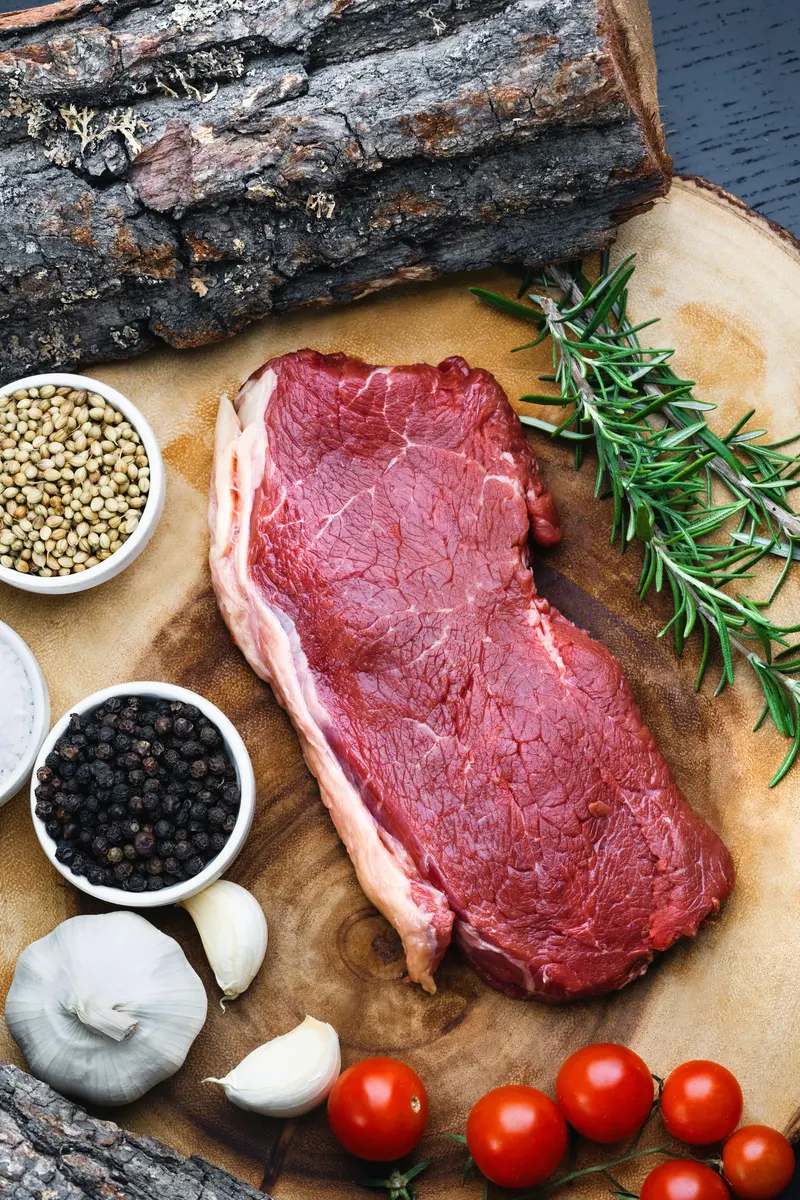
The cuts to use, ranked
Chuck is the default, but it isn't the only good answer. Ranked by what they bring to the pot:
- Chuck (shoulder). The best all-rounder: enough fat and collagen to go silky, widely available, inexpensive. Start here.
- Short rib. The richest, most luxurious stew meat, with deep marbling and a lot of collagen. It costs more and renders a lot of fat you may want to skim, but boneless short rib makes a spectacular stew.
- Oxtail and shin (shank). The most gelatin of any cut, which gives you the glossiest, body-rich sauce. They need the longest cook of all, often three-plus hours, and shin is usually the cheapest cut in the whole case.
- Brisket. Works, especially the fattier point end, though it's better suited to whole-piece braising than cubes.
And the cuts to keep out of the pot: sirloin, round, rump, and especially tenderloin. These are lean, low in collagen, and built for fast cooking. In a stew they don't get more tender, they get drier, because there's no connective tissue to convert and little fat to protect them.
One thing you don't need to pay for is grade. The marbling premium that matters on a grilled steak does almost nothing in a stew, where time, not fat content, does the tenderizing. A choice or even select chuck makes a stew every bit as good as a prime one, so this is the rare case where the prime-versus-choice upgrade is genuinely not worth the money.
The science: why tough cuts turn tender
The magic word is collagen. It's the connective tissue that makes a working muscle tough when it's cooked quickly, and it's also what makes that same muscle melt-in-your-mouth tender when it's cooked slowly. Held at a gentle simmer over a long enough stretch, collagen breaks down and converts into gelatin, the same substance that gives stock its body and a good stew its glossy, lip-coating texture.
Two details matter:
- It takes time, not high heat. The conversion happens gradually over hours of gentle cooking. You cannot rush it with a harder boil. In fact a rolling boil makes things worse: it jostles the meat apart into dry shreds and toughens the muscle fibers even as the collagen softens. Keep the liquid at a bare simmer, a few lazy bubbles, ideally with the lid on or the pot in a low oven.
- Sear first. Before any liquid goes in, brown the cubes hard in a hot pan. That browning is the Maillard reaction, and it builds the deep, savory, roasted flavor that a stew simmered from raw meat never develops. Don't crowd the pan, or the meat steams instead of browning.
This is the paradox at the heart of stew: the tougher, cheaper, harder-working cut becomes the most tender and flavorful one, while the prized tender cut just dries out. Patience does the work that money can't.
How the world cooks beef stew
Almost every cuisine arrived at the same answer independently: take the tough, cheap cut, brown it, and braise it low and slow in a flavorful liquid. Only the liquid and the seasonings change.
- France: boeuf bourguignon. Chuck braised in red wine with mushrooms, pearl onions, and bacon. The wine is the liquid and the sauce.
- Hungary: goulash (gulyás). Beef stewed slowly with a heavy hand of sweet paprika and a mountain of onions, which melt down and thicken the pot.
- Belgium: carbonnade flamande. Beef braised in dark beer instead of wine, with a little sweetness to balance the malt's bitterness.
- Colombia and Latin America: carne guisada (sudado de res). Beef simmered down in a sofrito of tomato, onion, garlic, and cumin until the sauce is thick and clings to the meat, usually with potato.
- Ireland: a beef stew (the classic is lamb or mutton) built simply on potato, onion, and carrot, letting the meat and the root vegetables carry it.
Notice that every one of these is a stew, not a soup, and the difference is the liquid. A stew uses just enough liquid to come partway up the meat, and that liquid reduces into a sauce. A soup is liquid-forward, with the broth as the main event. Colombia's sancocho, by contrast, is a soup: a brothy pot you serve with the liquid as the point. If you want the looser, broth-led approach instead, that's a different technique entirely, closer to building a soup from whatever you have.
A few rules that work in any pot
Whatever tradition you're cooking in, the same handful of moves separate a great stew from a gray one:
- Sear in batches. Brown the meat in a single uncrowded layer, working in batches if you have to. Color is flavor.
- Build a base. Soften onions (and often carrot and celery) in the same pot to scrape up the browned bits, the fond, stuck to the bottom.
- Deglaze with the liquid. Wine, beer, stock, or tomato lifts that fond off the pan and into the sauce.
- Simmer, never boil. A bare simmer, lid on, for two and a half to three hours, or in a low oven around 300°F.
- Give it acid and time. A little wine, tomato, or vinegar brightens the richness, and most stews are even better the next day, once the flavors have settled.
FAQ
What is the best beef for stew?
Chuck, from the shoulder. It's well-marbled and high in collagen, so long, slow cooking melts the connective tissue into gelatin and turns the meat silky while thickening the liquid into a sauce. Short rib, oxtail, and shin are also excellent (and even richer), while lean cuts like sirloin and round make a worse stew because they dry out.
Should you buy pre-cut "stew meat"?
No. Pre-cut "stew meat" is usually a mix of trimmings from different muscles, so the pieces have different fat and collagen levels and cook unevenly. Buy a whole chuck roast and cut it into 1.5-to-2-inch cubes yourself. It's more consistent, lets you control the size, and is usually cheaper per pound.
Why do tough cuts get tender in stew but tender cuts go dry?
Because the long, gentle cook converts collagen into gelatin. Tough, hard-working cuts like chuck are full of collagen, which breaks down over hours into a silky gelatin that keeps the meat moist and bodies the sauce. Lean, tender cuts have little collagen and little fat, so the same long cook just dries them out and turns them stringy.
What's the difference between a stew and a soup?
The amount of liquid. A stew uses just enough liquid to partly cover the meat, and that liquid reduces into a thick sauce that clings to the ingredients. A soup is liquid-forward: the broth is the dish itself. Colombian sancocho, for example, is a soup, not a stew, because it's served as a brothy bowl rather than meat in a reduced sauce.
Can you use an expensive cut like sirloin or tenderloin for stew?
You can, but you shouldn't. Lean, premium cuts like sirloin and tenderloin have little fat or collagen, so a long braise dries them out instead of tenderizing them. They're built for fast, high-heat cooking. For stew, a cheaper, tougher, collagen-rich cut like chuck gives a far better result, which is why grade and price don't track with stew quality.