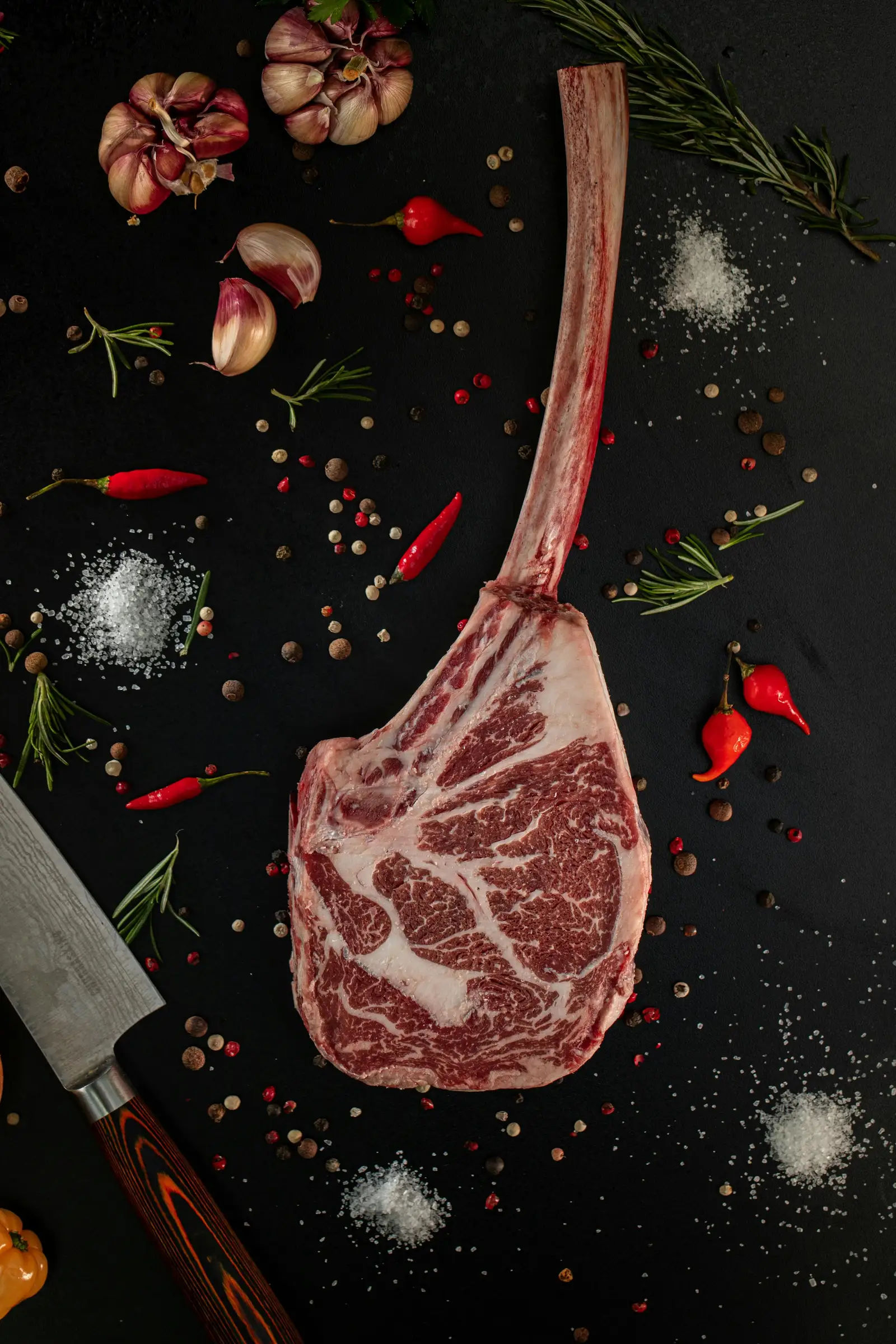
A tomahawk steak is a bone-in ribeye with the entire rib bone left attached and frenched, meaning scraped clean of meat and fat so it sticks out like the handle of a single-bladed axe. That shape is where the name comes from. The meat is ordinary ribeye: same rib section, same marbling, same flavor as any other ribeye in the case. The long bone adds presentation and almost nothing else. It does not make the steak taste better, and it usually costs two to three times what a boneless ribeye of the same quality costs. So is a tomahawk steak worth it? For the spectacle and the photo, maybe. For the eating, no. You are paying steak prices for a handle you throw away.
What a tomahawk steak actually is
A tomahawk is cut from the rib primal, the same stretch of the animal that gives you every ribeye. The difference is that the butcher leaves the whole rib bone attached, usually five to seven inches of it, and frenches it clean for looks. Because the steak is cut to the width of that single rib bone, it comes out thick, around two inches, and heavy, usually two to three pounds with the bone included.
A few things worth knowing before you order one:
- It is one big steak, not a portion. A two-pound tomahawk realistically feeds two people, sometimes three if there are sides. It is not a personal steak.
- The "cowboy steak" is its shorter cousin. Same bone-in ribeye, but with the bone trimmed short instead of left long. Same meat, less theater, lower price.
- A lot of that purchase weight is bone. You pay by the pound, and the bone is a real chunk of those pounds. You cannot eat it.
It's a ribeye with a handle
Here is the part the marketing leaves out: a tomahawk is a ribeye. Everything that makes a ribeye good, the heavy marbling, the rich fat-forward flavor, the tender eye and the even-better cap, is exactly what you get here, because it is the same cut. If you want to understand why that meat is so good in the first place, the ribeye is the headliner of the grilling cuts, and none of that changes when you leave the bone on.
The bone itself does very little. The idea that it bastes the meat or adds deep flavor during a normal cook does not hold up: the bone is dense, it is mostly sealed by the meat around it, and very little transfers in the time it takes to grill a steak. This is the same reason the bone-in premium is hard to justify on a ribeye generally. What the bone reliably does is look impressive and slow the cook down.
What you're actually paying for
You are paying for the bone, the size, and the show. The meat costs what ribeye costs. The premium on top is for the spectacle.
I can tell you exactly how that premium feels, because I ordered one. I should admit something first: I am not a social-media person. I rarely post. I do not photograph my vacations, and I do not take pictures of my dinners. The tomahawk was the one exception. I ordered it almost entirely for the Instagram clout, which is funny coming from me, and I am a little ashamed of it.
I regretted it right away. Not the meal, the meal was delicious, because any ribeye is delicious, bone-in or boneless. I regretted it when the bill came and I did the math on what that bone was costing me. Once you know what the upcharge buys, which is mostly the bone and the presentation, it is hard to feel good about it. The steak was great. The value was not.
Why it's a pain to cook
This is the part most people never think about, and it is the part I know best from working the line.
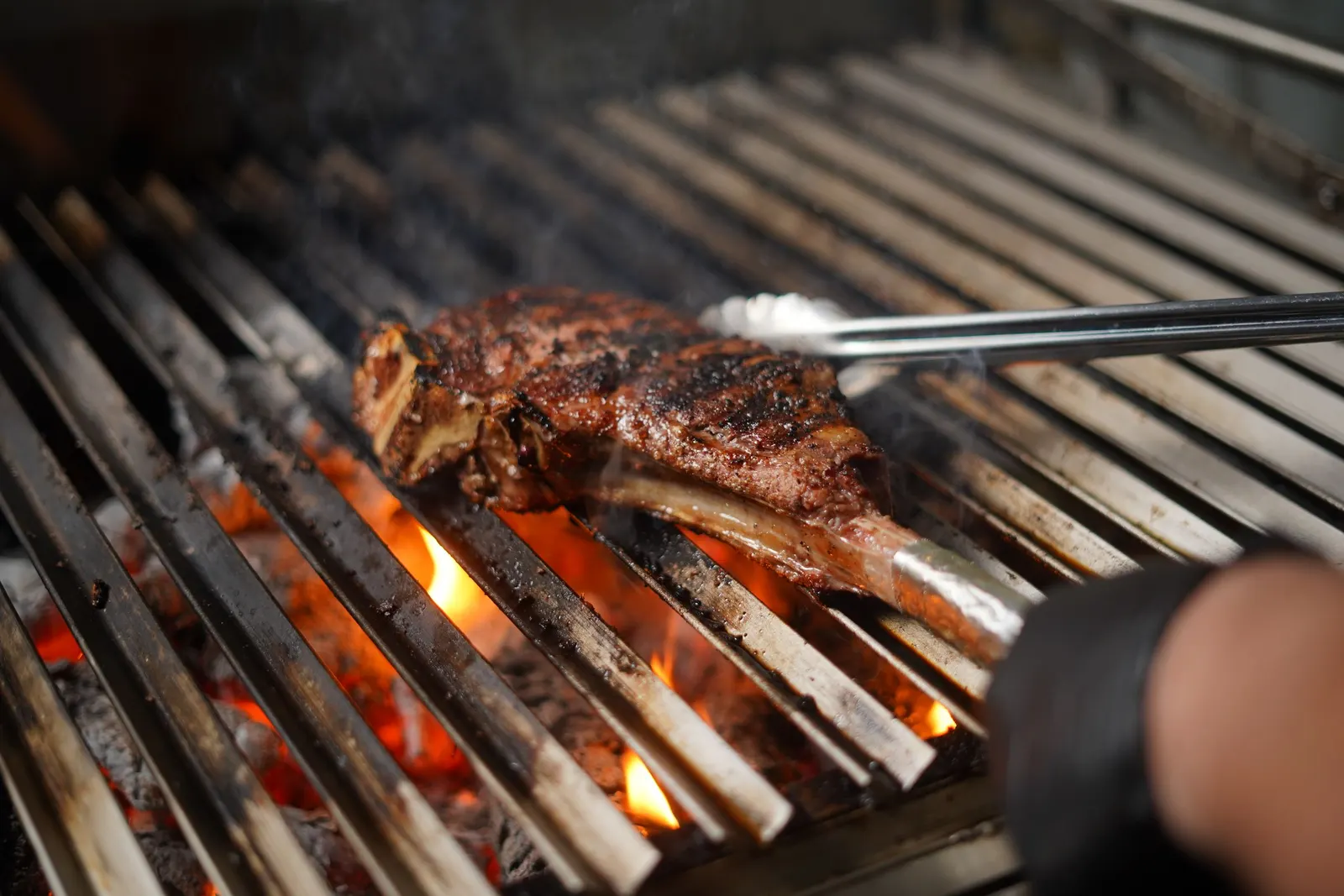
That bone is genuinely annoying to cook around. The meat near the bone cooks slower than the rest, so getting an even temperature edge to edge is tricky in a way a boneless steak never is. In a restaurant, on a packed Friday or Saturday night with the grill and the oven jammed, those big slabs with a bone sticking out get in the way of everything else you are trying to fire. Cooking them to order takes more time and more babysitting just to land the temperature right. A boneless ribeye is faster, more even, and far less fuss. Bone or no bone, the method for grilling a ribeye is the same; the tomahawk just needs more time on the cooler side of the fire.
At home it is the same problem in a smaller kitchen. A two-inch bone-in steak is a reverse-sear job: low oven first to bring the inside up evenly, then a hard sear to build the crust. A good dry-brine the night before helps the crust, and thickness is the single biggest factor in whether you can get a real crust without overcooking the middle. The bone just makes the even-cooking part harder, not easier.
The honest case for it
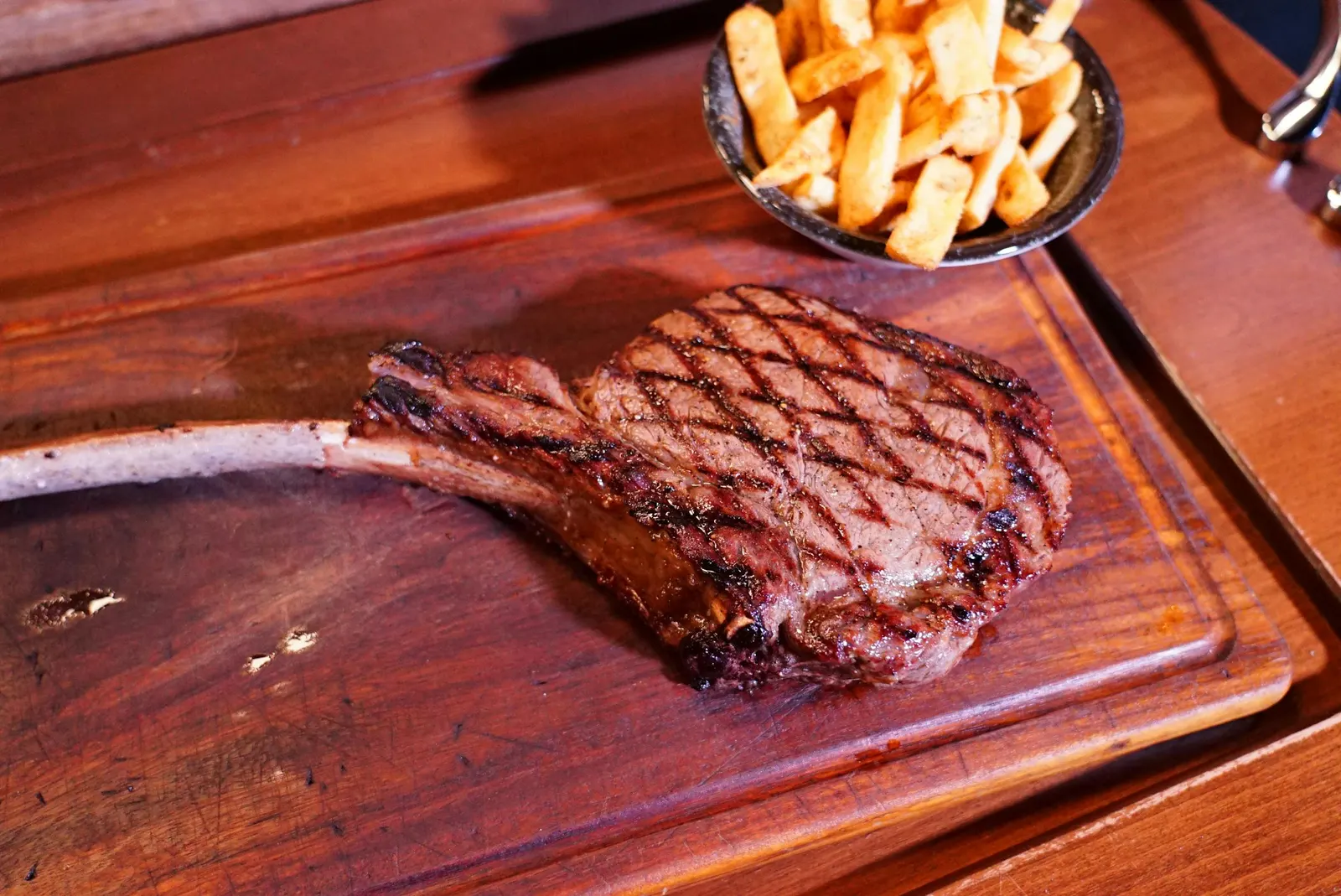
I do not want to be a snob about this. If you want a tomahawk because you want the photo, or the moment, or because the giant bone makes a dinner feel like an occasion, then go for it. Life is too short. Have fun with your food. There is nothing wrong with buying a thing because it is fun to look at, and a tomahawk is genuinely fun to look at.
What I will push back on is the idea that it makes the eating better. It does not. The meat is the same ribeye it would be without the bone, and I personally doubt anyone can taste a difference in a blind bite.
And there is a small, real awkwardness to the spectacle, at least for me. When the server walks one out to your table, the whole room turns to look, because you are now sitting behind a Flintstones-sized piece of meat with a bone the length of your forearm. Some people love that. I found it a little embarrassing. That reaction is going to be different for everyone, and that is fine. Just be honest with yourself about whether you are buying dinner or buying a moment.
What to buy instead
If the eating is what you care about, the money is better spent almost anywhere else on the same cut.
- A boneless ribeye. Same flavor, no wasted bone weight, and you can get a hard, even sear across the entire surface instead of fighting the bone. This is what I reach for every time.
- A thicker or dry-aged cut. Put the tomahawk premium toward a thicker boneless ribeye or a dry-aged one, where the upgrade actually changes how it eats. If you are weighing the grade question, a well-marbled Choice often beats a pricier Prime, so spend on visible fat, not on a bone.
- A filet, if tenderness is the goal. If what you want from a special-occasion steak is a softer, more elegant bite rather than a showpiece, the filet-versus-ribeye trade-off is the more useful decision to make than bone or no bone.
FAQ
Is a tomahawk steak just a bone-in ribeye?
Yes. A tomahawk is a ribeye cut from the rib primal with the full rib bone left on and frenched (scraped clean) for presentation. The meat is identical to a boneless ribeye: same muscle, same marbling, same flavor. The only differences are the long bone, the larger size, and the higher price. A "cowboy steak" is the same idea with a shorter bone.
Does the bone in a tomahawk add flavor?
Not in any meaningful way. The bone is dense and largely sealed off by the meat around it, so very little flavor transfers during the time it takes to grill or sear a steak. The richness of a tomahawk comes from the ribeye's marbling, not the bone. The bone's real contributions are visual drama and a slower, less even cook.
Why are tomahawk steaks so expensive?
You are paying for bone weight and presentation, not better meat. Tomahawks are sold by the pound, and a large share of that weight is the long bone you cannot eat. On top of that, the cut is dramatic and trendy, so restaurants and butchers charge a premium for it, often two to three times the price of an equivalent boneless ribeye.
How many people does a tomahawk steak feed?
Usually two, sometimes three with sides. A typical tomahawk weighs two to three pounds including the bone, which leaves roughly a pound and a half to two pounds of actual meat. It is meant to be shared and carved at the table, not eaten as a single portion.
How do you cook a tomahawk steak?
Because it is thick and bone-in, the best method is a reverse sear: cook it slowly in a low oven (around 250°F) until the interior is about 110 to 115°F, then finish with a hard sear in a screaming-hot cast iron pan or over high grill heat to build the crust. Salt it well the night before for a better crust. Expect the meat nearest the bone to lag the rest, which is what makes even cooking harder than on a boneless steak.
Is a tomahawk steak worth it?
For the eating, no. The meat is just ribeye, and a boneless ribeye delivers the same flavor with a better sear for far less money. For the spectacle, a special photo, or a celebratory moment, it can be worth it to you, as long as you know that is what you are paying for. Buy it for the show, not because the bone makes it taste better.
The funny thing is that the one time I broke my own rule and bought a steak for the picture, the picture is not what I remember. What I remember is the bill, and the quiet realization that I had paid a premium for a bone. I would take a boneless ribeye, a hot pan, and the difference in my pocket every single time. But if the giant bone is going to make your night, get it, post it, and enjoy it. Just don't tell yourself it tastes better.