Hanger steak vs skirt steak is a question that comes up at the butcher case all the time, and most cooks pick the wrong one for what they're making. Hanger is richer, more tender, with a softer grain and a buttery finish; it eats more like a steakhouse cut at a fraction of the price. Skirt is thinner, more intensely beefy, and built for very high heat and a fast sear; it's the classic fajita and carne asada cut. Both are cheap by ribeye standards. Both are unforgiving past medium-rare. The right pick depends almost entirely on whether you're making a steak dinner, tacos, or something on the grill.
What hanger steak is
Hanger steak comes from the plate, the lower belly section of the cow, where it hangs off the diaphragm between the rib and the loin. There is exactly one hanger steak per animal, which is part of why it used to be considered a butcher's perk. The cut was small, hard to portion for retail, and so beefy and tender that for decades the people cutting the meat kept it for themselves. The French name for it, onglet, has been on bistro menus for a hundred years for the same reason.
The texture is the giveaway. Hanger has a loose, almost ropey grain that absorbs marinade well and slices clean. It carries a decent amount of internal fat, which is what gives it the rich, almost organ-meat finish that some cooks love and some don't. The center of the cut has a tough silverskin membrane running through it; a good butcher trims it out, but if you buy it whole, you'll need to. Once trimmed, you get two long, thick strips that cook like small steaks.
What skirt steak is
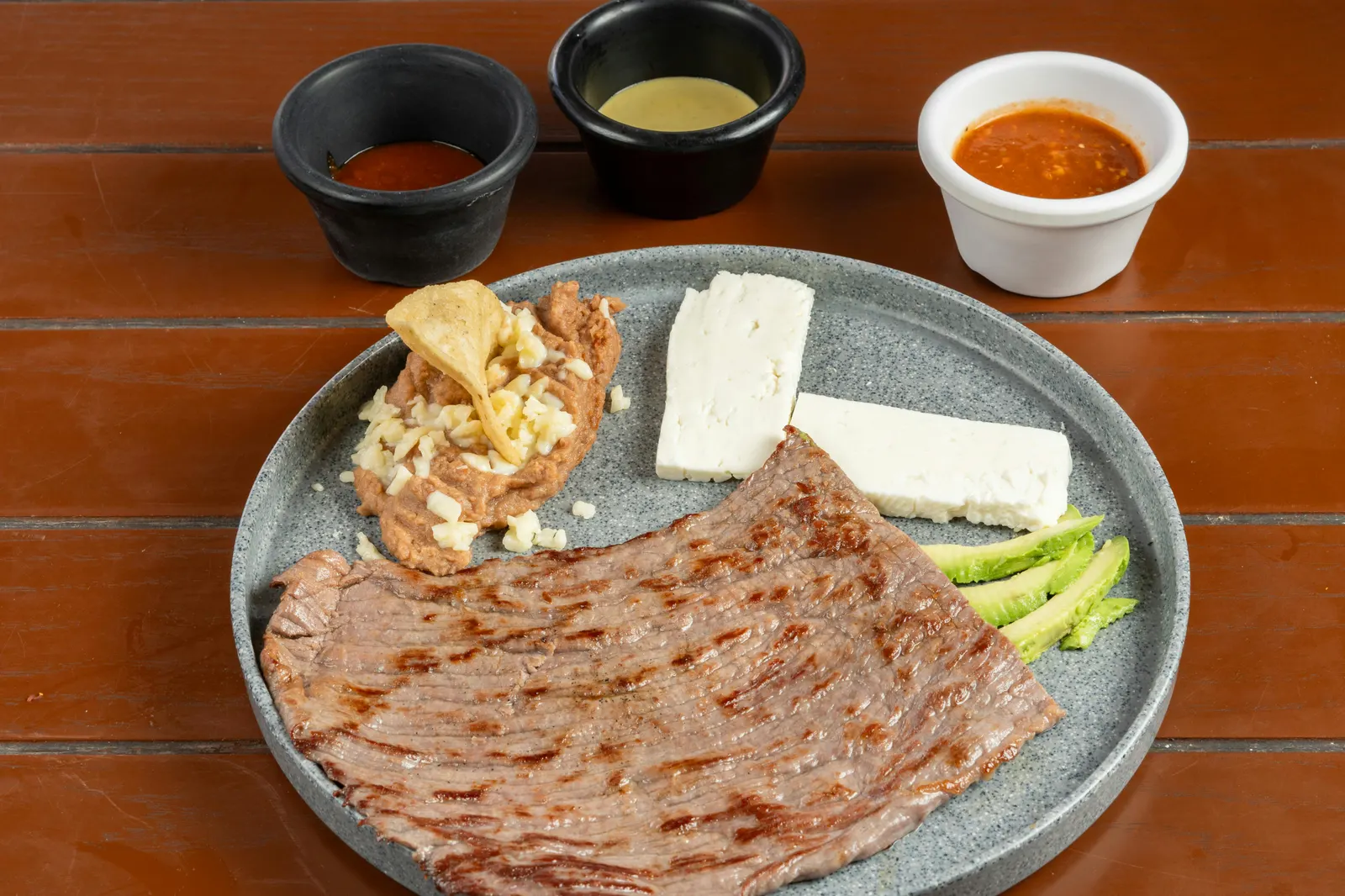
Skirt steak also comes from the plate, sitting just behind the hanger. It's much longer, much thinner, and much more obviously striated. There are actually two skirt steaks per animal, and the cut splits further into two grades.
- Outside skirt. The premium of the two. Thicker, slightly more tender, more uniform. Most of the supply gets bought by restaurants for fajitas and carne asada, which is why it's hard to find at retail and costs more when you do. If your butcher offers it, this is the one to grab.
- Inside skirt. The thinner, more visibly grainy version. More common at the grocery store. Still good, but less forgiving. Cook it a touch faster and slice it thinner.
Skirt is the carne asada cut for a reason. It takes a marinade fast, sears almost instantly, and slices into the thin strips that taco filling wants. The flavor is the most intensely beefy of any common cut, sometimes verging on minerally. It is the cut you want when you want the meat to taste loudly like meat.
Hanger steak vs skirt steak side by side
The differences sound subtle on paper. In the pan, they're large.
| Hanger steak | Skirt steak | |
|---|---|---|
| Where it sits | Plate, off the diaphragm | Plate, behind the hanger |
| Thickness | ~1 to 1.5 inches | ~½ inch |
| Grain | Loose, ropey | Long, very coarse |
| Flavor | Rich, almost organ-like, buttery | Intensely beefy, sometimes minerally |
| Tenderness | More tender | Less tender, needs against-grain slicing |
| Price | Mid-range, harder to find | Cheap (inside) to mid-range (outside) |
| Best use | Pan-seared steak dinner | Tacos, fajitas, carne asada |
| Cook to | Medium-rare and stop | Medium-rare and stop |
The grain direction matters for both, but it matters more for skirt. Slice it with the grain and you've made beef jerky. Across the grain, in thin strips at a sharp bias, and it eats like the best steak in the case. The full version of this thinking is in the broader map of beef cuts for different occasions, which sets the cheap, fast-cooking cuts against the steakhouse cuts and the slow-cook cuts.
How to cook hanger steak
Hanger is thick enough to behave like a real steak. Treat it like a strip or a flat iron.
- Salt it like a steak. A couple of hours ahead if you have time, a generous coating right before the pan if you don't. The thicker cut takes well to dry brining, and the salt has time to work its way in. The full reasoning lives in how to salt a steak the way any steak wants to be salted.
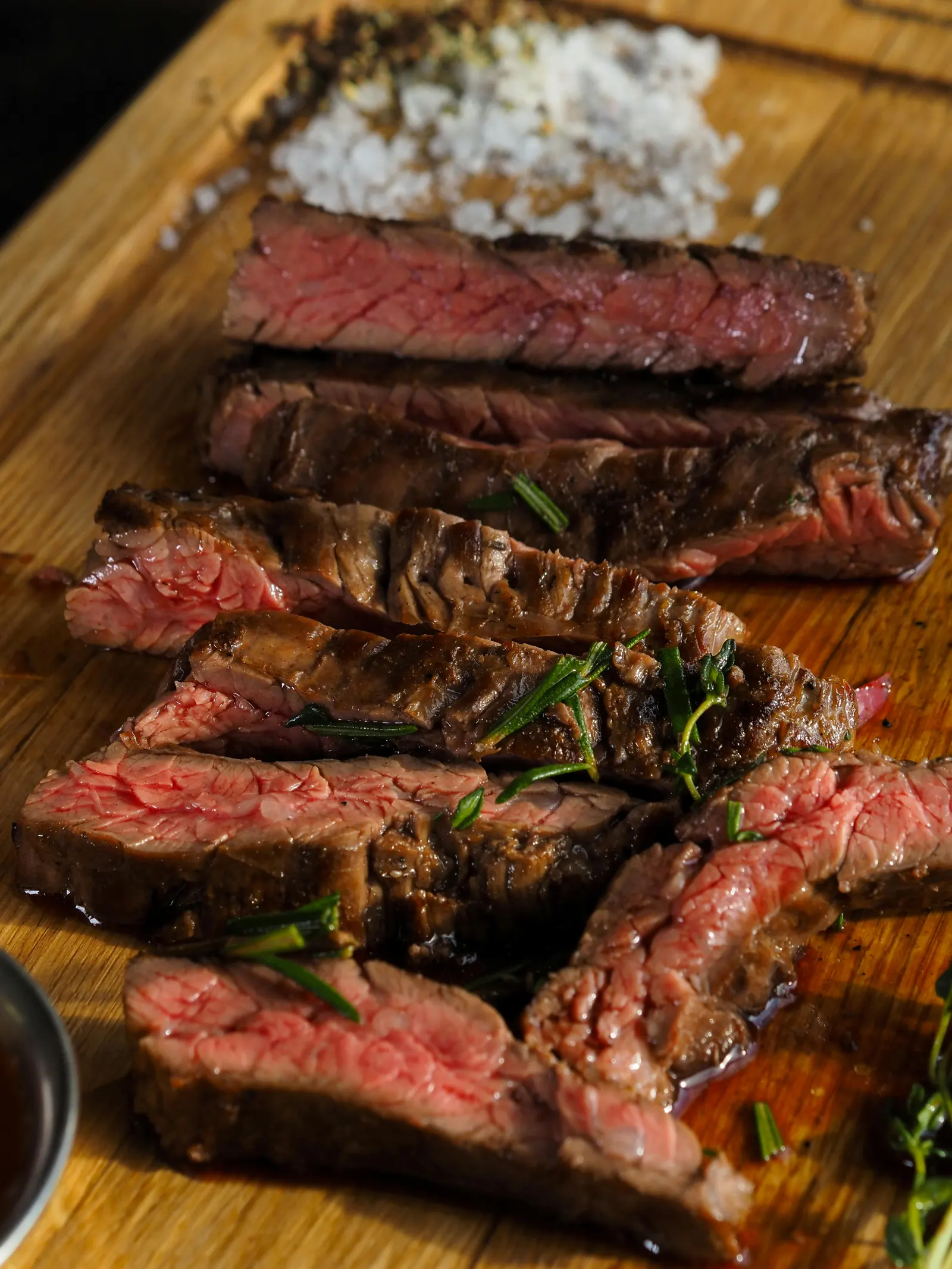
- Sear it hot. Cast iron screaming, a thin film of neutral oil, lay the steak down and don't move it. Three to four minutes per side for a 1.25-inch cut, plus the edges if it's a thick piece.
- Pull at medium-rare. Internal temperature 125°F to 130°F off the heat; it carries up to 130 to 135 while it rests. Past medium, hanger goes from tender to chewy fast.
- Rest, then slice across the grain. Five minutes on a board, then cut perpendicular to the long fibers in slices about half an inch thick.
Hanger takes a sauce well — a quick red-wine pan sauce, a herbed butter, or a chimichurri. The cut has enough fat to carry the sauce without drowning it.
How to cook skirt steak
Skirt is thinner, which changes everything. You're working with a much shorter window, and the heat needs to be even higher.
- Marinade or dry rub, your call. The skirt's coarse grain is the most marinade-receptive of any common cut. A simple mix of citrus, garlic, salt, oil, and a chile of your choice for an hour or two is plenty. Or skip it entirely and let salt and a hard sear do the work.
- Hottest pan or grill you can manage. Carbon steel, cast iron, or live fire. The goal is a hard, fast crust before the inside overcooks.
- Two minutes per side, maybe less. A half-inch skirt is medium-rare in under four minutes total. Set a timer. Get it off the heat early; it carries up fast.
- Rest briefly, slice thin against the grain, at a bias. This is the most important step. The grain runs along the long axis of the strip; slice perpendicular to it, on a 45-degree bias, in slices about a quarter inch thick. This is what turns a chewy cut into a tender one.
If the cooking gets a sticky bottom on the pan, that fond is worth keeping. Deglaze with a splash of wine or stock, mount with butter, and pour it over the sliced meat.
Which one to buy for what
The choice almost always comes down to what you're making.
- A real steak dinner at home. Hanger. It eats like a steakhouse cut, cooks like a strip, and costs a fraction of either. Pan-seared, sliced, with a sauce or a herb butter. (For the actual steakhouse-cut version of this decision, see ribeye vs New York strip.)
- Tacos, fajitas, or carne asada. Skirt. Outside if you can find it, inside if you can't. The thin slices and big beef flavor are exactly what taco filling wants.
- The grill on a Saturday. Either, with a slight edge to skirt over live fire because the extra char plays well with that flavor. Hanger does fine on the grill too, just needs more careful temperature management.
- A quick weeknight steak salad. Skirt. Cooks in three minutes, slices into the cold greens hot.
- A dinner for guests. Hanger. It plates better, slices into thicker rounds, and reads as a more deliberate cut on the plate.
- The cheapest decent steak you can buy. Inside skirt. Almost always available, almost always under fifteen dollars a pound, and dinner in twenty minutes.
The thing most cooks miss is that the USDA grade matters less for thin, quick-cooking cuts like these than it does for a ribeye. Hanger and skirt don't have the heavy marbling that the Prime designation tracks; they get their flavor from somewhere else (the muscle's specific function, the grain structure, the position on the animal). A Choice hanger from a good butcher eats just as well as a Prime hanger, often better. Spend the money on a butcher who actually picks his beef instead.
FAQ
Is hanger steak more tender than skirt steak?
Yes. Hanger steak is noticeably more tender than skirt, and the difference comes from the cut's position on the animal. Hanger hangs off the diaphragm and does relatively little work; skirt is part of the working diaphragm muscle itself. Hanger also has a looser grain and more internal fat, both of which make it eat softer. Skirt becomes tender when sliced thin against the grain, but hanger is tender straight off the heat.
Which is cheaper, hanger or skirt steak?
Inside skirt steak is usually the cheapest of the two, often around ten to fifteen dollars a pound at a normal grocery store. Outside skirt costs more (closer to twenty to twenty-five dollars a pound) because most of the supply gets bought by restaurants for fajitas. Hanger steak typically falls in the middle, around fifteen to twenty-five dollars a pound at retail, though it's harder to find because there's only one per cow. Prices vary by region and butcher.
Can you substitute hanger steak for skirt steak?
Mostly yes, with adjustments. For tacos or fajitas, hanger works (slice thinner against the grain), but the flavor will be subtly richer and less aggressively beefy than the dish expects. For a steak dinner where you'd use hanger, skirt is the harder substitute: the thinness changes the cooking window and the eating experience. The cuts are not interchangeable in a recipe, but they're close enough that either makes a good dinner if you adjust the cook time.
Is hanger steak the same as flank steak?
No, and the confusion is common because both are thin, beefy, plate-section cuts. Flank steak comes from the abdominal muscles, further back on the animal, and is broader and flatter than hanger. Flank is firmer, leaner, and less rich than hanger. The cuts cook similarly (fast, high heat, slice against the grain), but the texture and flavor are different. Hanger is closer to the steakhouse experience; flank is closer to skirt in feel.
What's the difference between inside and outside skirt steak?
Outside skirt is the cut that runs along the outside of the diaphragm, between the ribs. It's thicker, more uniform, and slightly more tender. Inside skirt sits on the inside of the abdominal wall. It's thinner, more visibly grainy, and less consistent. Both eat well when cooked hot and fast and sliced against the grain, but outside skirt is the cut most restaurants use for fajitas and is the one to ask for if your butcher offers a choice.
A last word about the butcher counter. Both of these cuts have been on the cheap side of the case for decades and are slowly moving toward the expensive side as restaurants and home cooks have caught up to how good they are. The best version of either still comes from a butcher who actually picks his beef. Walk in, ask what looks best, and let the answer make the decision for you.