A steakhouse ribeye is not magic, and it does not require a grill. To cook a ribeye in the oven, you sear it hard in a screaming-hot cast iron skillet to build the crust, then move the whole pan into a hot oven to finish it through to temperature, basting it with butter, garlic, and herbs along the way. That two-step move, hard sear then gentle oven, is exactly how a steakhouse does it, and it gives you a deep, savory crust and an evenly cooked interior for a fraction of what they would charge you.
I have cooked ribeye every way there is, and this is my favorite. A charcoal grill is a close second (and the right fire for a thin, marinated cut like carne asada), but the cast-iron-and-oven method is the one I reach for most, because it builds that thick, lacquered, Maillard crust that is genuinely to die for, in any weather, in any kitchen, with one pan. Here is exactly how to do it.
Why the oven beats waiting for grill season
Most people think a great steak needs an open flame. It doesn't. What a great steak needs is serious heat on the surface to brown it, and gentle, even heat to cook the inside without overshooting. A grill gives you the first part. A cast iron skillet on a hot burner gives you the same thing, and the oven gives you the second part better than a grill ever could, because the heat surrounds the meat instead of blasting it from below.
The cast-iron-and-oven combination means you can make a restaurant-quality ribeye in January, in an apartment, with no grill, no smoke alarm drama, and no cleanup beyond one pan. And the math is hard to argue with. A ribeye that runs you fifteen or twenty dollars at the butcher is the same cut a steakhouse plates for fifty or sixty. The cooking is not the expensive part. The markup is. Learn the method and you keep the difference.
Start with a good steak
You cannot out-cook a bad piece of meat, so this part matters. A ribeye is the most forgiving steak you can buy, because it is so well marbled. All that intramuscular fat melts as it cooks, basting the meat from the inside and giving you a margin for error that leaner cuts won't. It is the cut I steer beginners toward for exactly that reason, and it is why it survives a hot pan so well. If you want the full breakdown of what to look for at the counter, a good steak starts before you ever turn on the stove.
Buy it thick. About an inch and a half is the sweet spot, thick enough that you can build a hard crust without overcooking the center by the time it is done. A thin ribeye cooks through before the crust forms, and you lose the whole point. Bone-in or boneless is your call. The bone does little for flavor but it looks the part and helps the meat hold its shape. If you are weighing the ribeye against other cuts, it sits at the rich, fatty end of the spectrum, and the trade-offs against a leaner New York strip come down to whether you want flavor or a cleaner chew.
Salt it right, and salt it early
This is the step people skip, and it is the one that separates a steakhouse steak from a home one. Salt is not just seasoning here, it is a process. Salt the ribeye generously with coarse kosher salt at least 45 minutes before it hits the pan, or better yet, the night before, sitting uncovered on a rack in the fridge.
That overnight rest is a dry brine. The salt pulls moisture to the surface, dissolves, and gets drawn back into the meat, seasoning it all the way through and drying the surface so it browns instead of steams. A dry surface is non-negotiable for a good crust, which is why you pat the steak completely dry right before it goes in the pan. Whatever you do, don't salt it ten minutes ahead, the one window where the salt has drawn water out but hasn't reabsorbed yet. If you want the full reasoning, here is the right way and the wrong way to salt a steak.
The method: hard sear, then oven
Now the actual cooking, and it is two moves.
Heat your oven to 400°F. Get a cast iron skillet ripping hot over high heat, until it is just starting to smoke. Cast iron is the right tool because it holds heat like nothing else, so when the cold steak hits it, the pan doesn't drop temperature and stall the sear. Add a thin film of high-smoke-point oil, then lay the steak in away from you and leave it alone. Don't poke it, don't move it. Two to three minutes a side, until a deep brown crust forms. Stand it up on its fat edge too and let that render.
This is where the magic happens, and it has a name: the Maillard reaction, the browning chemistry that turns the surface of the meat deep, savory, and complex. That crust is the entire reason to cook a steak this way, and you build it with high, dry heat and patience, not by flipping every thirty seconds.
Once both sides are crusted, the steak goes into the oven, pan and all, to finish through to temperature. How long depends on thickness, but you are not cooking by the clock here, you are cooking to an internal temperature. Pull it at about 120 to 125°F for medium-rare, knowing it will climb a few more degrees while it rests. The only honest way to know you are there is to check, which is why an instant-read thermometer is the one gadget worth owning for steak. Guessing is how good ribeyes die.
The butter baste, the whole show
Right before the steak goes into the oven, while it is still searing, you build the flavor that makes it taste like a restaurant. Drop three tablespoons of butter into the pan, a few whole smashed garlic cloves, and a couple of sprigs of thyme or rosemary. The butter foams and browns, the garlic perfumes it, and you tilt the pan and spoon that hot, nutty butter over the top of the steak again and again for thirty seconds to a minute.
This is the part that looks impressive and takes no skill at all. You are layering toasted butter, garlic, and herb flavor onto the crust you already built. It is the whole show, and it is the difference between a steak that is merely cooked and one that smells like a steakhouse the second it hits the table.
Rest it, every time
When the steak hits temperature, get it out of the pan and onto a board, and then leave it alone for eight to ten minutes. This is not optional. While the steak cooked, the heat drove the juices toward the center. Resting lets them redistribute back through the meat, so they end up in your mouth instead of in a puddle on the cutting board the moment you slice. Cut into it too early and you pour all that work down the drain. Rest it, then slice against the grain so every bite is tender.
Finish with compound butter
If you want to push it over the top, finish the rested steak with a slice of compound butter melting on top. Compound butter is just softened butter mixed with flavor, and it is one of the easiest, highest-impact things you can keep in your kitchen.
Make it once and keep it on hand. Soften a stick of butter, mash in a clove of minced garlic, a little chopped parsley or thyme, a pinch of salt, and a few cracks of pepper. Roll it into a log in parchment paper, twist the ends, and chill it. Slice off a coin whenever you cook a steak, or vegetables, or fish, and let it melt into a glossy, herby sauce with zero effort. I always try to have some in the fridge. It makes a simple plate taste like you tried much harder than you did.
Sides that complement it
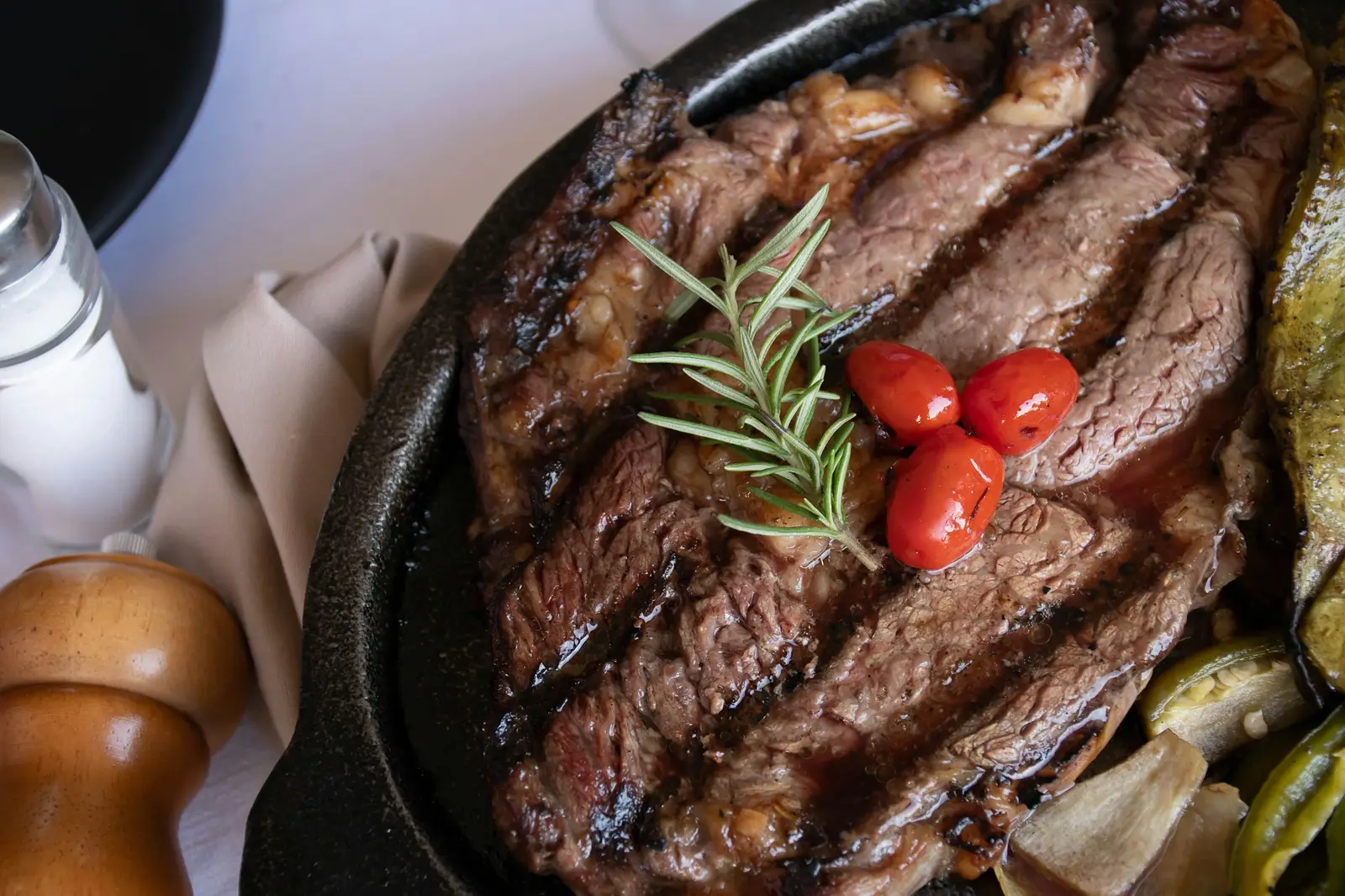
A ribeye this rich wants sides that either cut through it or stay out of its way. A few that work: a sharp green salad with an acidic vinaigrette to balance the fat, blistered asparagus or green beans, roasted potatoes or a baked potato loaded properly, creamed spinach for the full steakhouse spread, or charred onions cooked in the same pan after the steak comes out. Keep it simple. The steak is the star, and you just made it for a quarter of the restaurant price.
FAQ
How long do you cook a ribeye in the oven?
After searing, a 1.5-inch ribeye usually takes about 3 to 6 minutes in a 400°F oven to reach medium-rare, but thickness and your oven vary, so cook to an internal temperature of 120 to 125°F rather than to a set time.
What temperature should the oven be for ribeye?
400°F is a reliable finishing temperature after a hard sear. It is hot enough to cook the steak through efficiently without overcooking the crust you just built. Some cooks go as low as 375°F for thicker steaks to widen the margin.
Do you sear a ribeye before or after the oven?
Sear first, then finish in the oven. Searing a hot pan builds the crust while the inside is still cold, then the oven brings the center up to temperature gently and evenly. Searing after the oven can work too (a reverse sear), but sear-first is the faster steakhouse method.
What internal temperature is a medium-rare ribeye?
Pull the steak at about 120 to 125°F for medium-rare, since it will rise a few degrees while resting (carryover cooking) to a final 130 to 135°F. For medium, pull it around 130°F. Always check with an instant-read thermometer.
Why cook a ribeye in cast iron?
Cast iron holds heat better than almost any other pan, so it doesn't lose temperature when the cold steak hits it. That sustained, even heat is what builds a deep, uniform crust, and the same pan moves straight from the stovetop into the oven.
Do you need to rest a ribeye after cooking?
Yes. Rest it 8 to 10 minutes before slicing so the juices redistribute through the meat instead of running out onto the board. Slicing too early is the most common way home cooks lose a great steak.