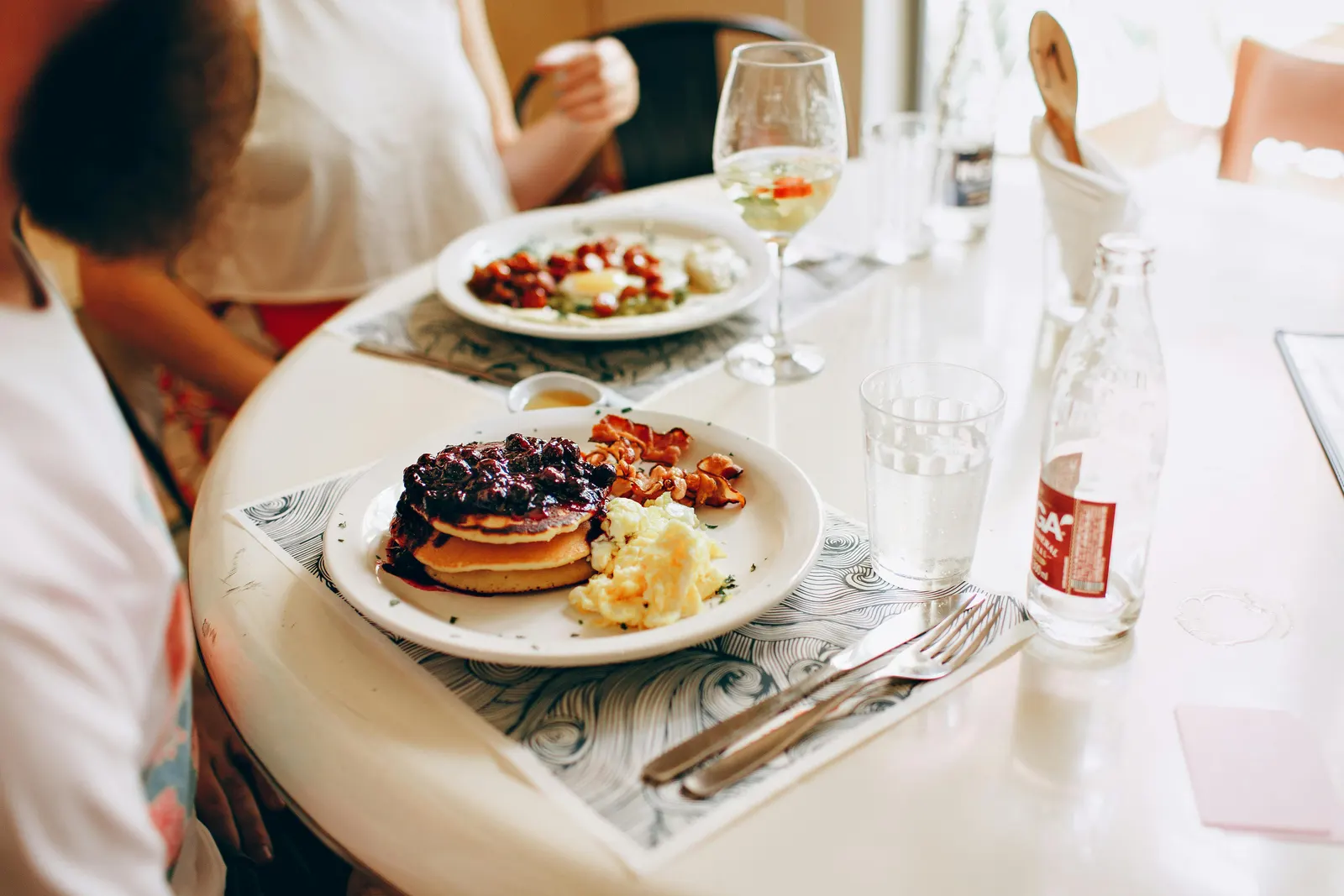
Sunday brunch done right comes from a kitchen built around the form, not a dinner restaurant serving pancakes on the side. The signs of a good brunch spot are specific: eggs poached to order, hollandaise made in-house, staples like eggs benedict and French toast done well, plus a few interesting dishes unique to the kitchen. The signs of a faking-it brunch are also specific: everything coming out of a heat lamp, a menu that reads like dinner-with-pancakes-bolted-on, a kitchen visibly resentful of the format. Pick the kind of brunch crowd that matches the version of yourself you actually are.
Why cooks specifically hate Sunday brunch
This is the part nobody outside the trade ever hears, and it shapes a lot of what shows up on the plate.
Most cooks closed the line late on Saturday night. In a busy city restaurant, that often means clocking out at one or two in the morning, sometimes later. For smaller restaurants, the same cooks who closed Saturday's dinner service come back at eight or nine on Sunday morning to prep brunch. There is no separate crew. They are working through their own Saturday night, often hungover, often on four or five hours of sleep, on top of running one of the more punishing services of the week.
Then there is the structural problem of brunch as a kitchen format. Brunch is built on cooked-to-order proteins, which means every ticket is custom. Egg orders alone come in roughly ten variations: over easy, over medium, over hard, scrambled wet, scrambled dry, sunny side up, soft poached, hard poached, omelet folded, omelet flat. If burgers are on the menu, you also have the burger temp matrix. If there is steak and eggs, you have that matrix. None of these are pre-made or held. Every plate is a custom build.
And brunch diners modify more than any other crowd. Can I get the ketchup on the side. Can I sub avocado for tomato. Can I have the eggs over medium instead of over easy. Can I get the toast wheat not white. Can I have hot sauce on the side. Can you split the eggs benedict so my friend gets one with bacon and one with salmon. I do not know why brunch crowds modify more than dinner crowds, but they do. Every cook who has worked the form has noticed it. The result is that a brunch line is making roughly four times the decisions per plate as the same kitchen at dinner.
None of this is meant to guilt diners. The reverse, actually. The point is that brunch is a structurally hard service, and the kitchens that take it seriously are doing real work to get it right. The ones that do not take it seriously are visible from the plate.
The signs of a kitchen that actually knows brunch
When you sit down at a brunch spot, a few specific signals tell you whether the kitchen built itself around the form or is just opening for it.
Eggs poached to order. This is the single biggest tell. A real brunch kitchen poaches eggs individually as the tickets come in. A faking-it kitchen poaches eggs in a tray at 10 AM and holds them in warm water for the next four hours, where they slowly turn rubbery. The texture of a fresh-poached egg versus a held one is unmistakable once you have eaten the difference. (The forgivable exception is Mother's Day, Easter, or any high-volume holiday brunch; the volume genuinely requires holding. The alternatives to a Mother's Day brunch piece on this site covers why those holidays are different beasts.)
Hollandaise made in-house. Real hollandaise is butter, egg yolks, and lemon emulsified by hand. It separates fast and needs to be made fresh, usually in small batches. A great brunch kitchen will be making fresh hollandaise multiple times during service. A bad one uses a packet mix.
A menu that reads brunch-first. A real brunch menu is built around the form. Eggs in multiple preparations. French toast. Pancakes. A few egg-based mains. Maybe a sandwich or two. A signature hash. A bowl-format dish. The menu reads like the kitchen thought about what a brunch should be. A bad brunch menu is the dinner menu with three breakfast items added at the bottom.
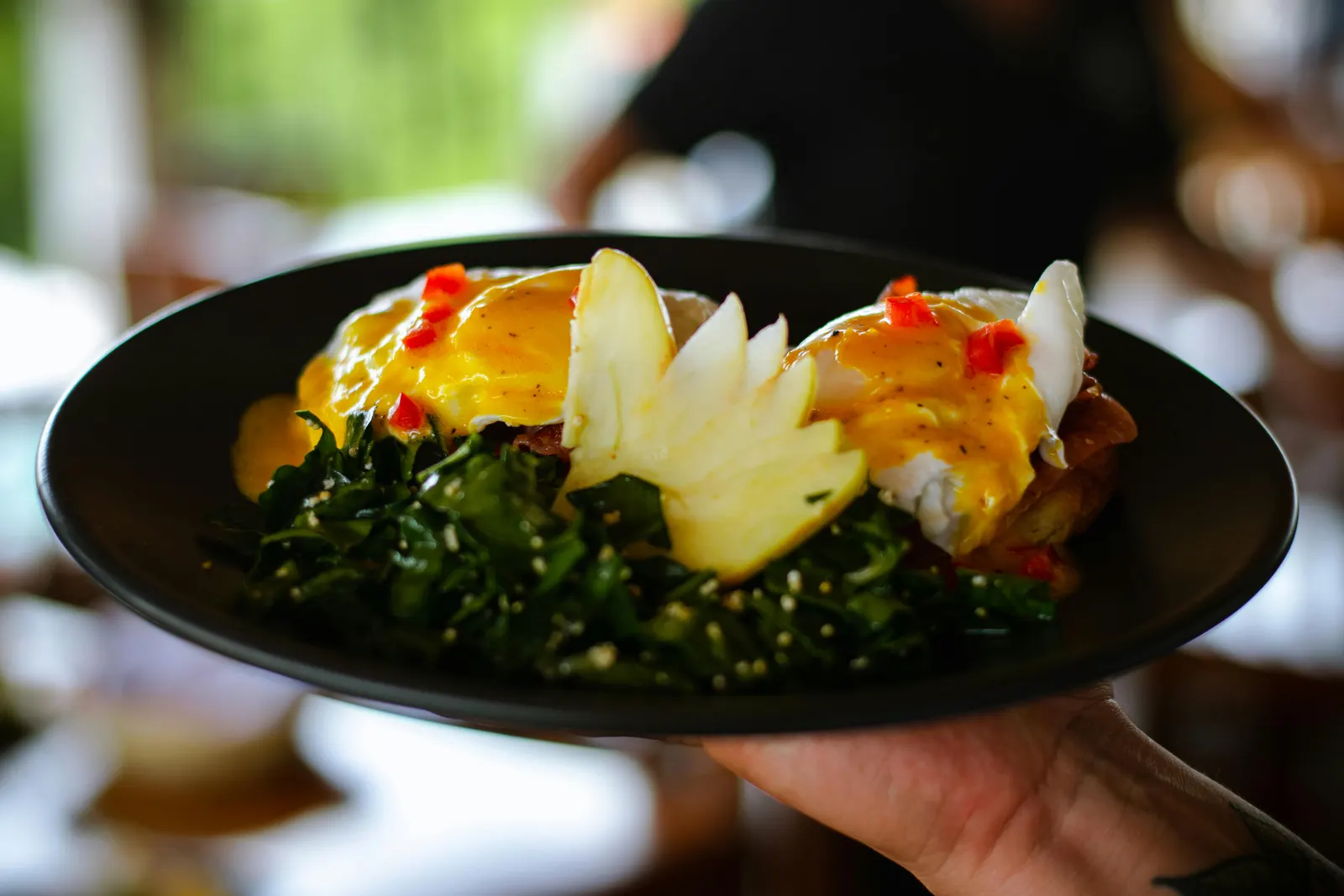
The staples done well. Eggs benedict with a properly emulsified warm hollandaise and a fresh-poached egg on a toasted English muffin. French toast that is thick-cut bread soaked in real custard and griddled to a crisp exterior with a tender interior. Pancakes that are fluffy and properly browned. If the staples are great, the rest is probably great. If the staples are mediocre, the rest is too.
A few items unique to the kitchen. The mark of a brunch spot that cares is when the menu has two or three things you would not see at every other brunch in town. A signature shakshuka. The kitchen's particular take on shrimp and grits. A dutch baby that has clearly been worked on. A breakfast pasta nobody else does. The unique items prove the kitchen treats brunch as a place to do real work, not just a place to push out eggs.
A real coffee program. Espresso machine, real beans, a barista who knows what they are doing. A brunch place where the coffee comes out of a Bunn drip pot is signaling that the morning side is not the focus.
The signs of a place faking it
The inverse is also specific. A brunch spot that is just running dinner-with-eggs-attached gives itself away fast.
- Eggs scooped from a hotel pan onto plates.
- Hollandaise that has the texture of a sauce that came out of a packet, often broken or grainy.
- French toast that is grilled bread with syrup, not custard-soaked.
- A menu that is the dinner menu plus three breakfast items.
- The dining room is the same room as dinner, just unlocked at 11 AM, with no shift in lighting or feel.
- Coffee is bad or absent.
- The bar is going through the motions on bloody marys, using pre-mixed mix.
- The staff visibly hates being there.
None of these are deal-breakers individually. But three or four together signals that brunch is not what this place is about, and you are paying brunch prices for something less than brunch.
Staples plus unique items: the rule of thumb
The cleanest framework for evaluating a brunch menu before you order: count the staples done right, then look for the unique items.
A real brunch menu has the staples (eggs benedict, French toast, pancakes, omelets, breakfast sandwich, hash) done well, plus two or three dishes that are unique to that kitchen. The staples prove they understand the form. The unique items prove they care about it.
If the menu is only staples, it is probably playing it safe and the execution is probably mid. If the menu is only weird items with no staples, it is pretending brunch is something it is not. The right balance is both. A menu that gives you a great eggs benedict AND a great shakshuka is a menu from a kitchen that actually thinks about brunch.
The demographics question: which brunch are you?
There is no single "brunch." There are several different brunches, each calibrated to a different crowd, and the right one for you depends on the version of yourself that is showing up.
Bottomless mimosa brunch. Younger, social, party-format. The drinks are the point. The food is incidental. The bill is one number. Music is loud, the table is loud, the room is loud. If you are in your twenties and brunch is part of the social weekend, this is the right brunch for you. If you are forty and trying to have a quiet meal with a friend, it is the wrong brunch and you will be miserable.
Neighborhood brunch. Quieter, conversation-friendly, real food taken seriously. A coffee with breakfast. A bloody mary if you are celebrating. The crowd is mixed but skews older and more deliberate. This is the brunch most people graduate to in their thirties.
Hotel brunch. Buffet-format usually, breakfast-at-scale, families and tourists. A different category entirely. Sometimes great if the hotel takes it seriously, often a tourist trap.
Bakery-restaurant brunch. The chef's favorite. A serious pastry program plus a savory menu. Usually quiet. Real food. Often the best brunch in a city, if it exists in your city.
Pick the brunch that matches the version of you that is showing up Sunday. The same principle that makes going out to eat generally work as a planning problem: match the spot to the occasion, including who you are now.
Best dishes to order at a real brunch spot
When you are at a brunch spot that has done the work, these are the dishes that tend to tell you the kitchen is serious:
- Shrimp and grits. Hard to do well. A kitchen that can execute shrimp and grits at brunch has its game together. The grits should be creamy, not grainy. The shrimp should be properly seasoned and cooked just to the point of opaque. There should be some kind of pan sauce or gravy holding the dish together. This is one of two dishes I have personally pushed onto every brunch menu I have worked.
- Shakshuka. Eggs poached in a deeply seasoned tomato-pepper sauce. The sauce should taste like the kitchen made it, not opened a jar. The eggs should be runny enough that the yolk emulsifies when you tear bread into it. This is the other dish I have pushed onto menus. A great shakshuka is a kitchen showing off, quietly.
- Eggs benedict. The staple test. Hollandaise hot and properly emulsified, egg poached fresh, English muffin toasted, the ham or salmon real. If the eggs benedict is great, the rest of the menu probably is too.
- French toast. Same logic, different form. Real bread thick-cut, soaked in custard, properly griddled. The wrong version is bread with syrup. The right version is its own dish.
- The kitchen's signature. Whatever is unique to this menu. Order it. It is the one the chef cares about, which means it is the one with the most attention behind it.
What I learned working brunch
I worked many brunches in New York City kitchens. The shift was, for me, the toughest part of the week. The combination of being hungover from Saturday night service, the sheer volume of modifications, the cooked-to-order egg matrix, the impatient brunch crowd, the bottomless drink program making the room louder by the hour, none of it was the part of the trade I missed when I eventually left.
What I did learn was the difference between a kitchen that took brunch seriously and one that did not. The kitchens that took it seriously had brunch-specific prep: homemade hollandaise made fresh through service, fresh-baked muffins or croissants from the pastry station, a custom hash that took hours to dial in over weeks of testing. The kitchens that did not were just opening at 11 AM with the dinner staff and trying to crank out eggs as fast as possible. The two produced visibly different plates, and over the years I trained myself to read the difference within five minutes of sitting down.
The same kind of kitchen exhaustion is at play in late night dining, where the inverse shift problem plays out: cooks tired at the end of a service rather than at the start of one. Brunch is the morning version of the same dynamic.
A note on bottomless mimosa places
Bottomless mimosa is a format, not inherently good or bad. It works for a specific crowd. If you are that crowd, it is fine.
The mimosas are usually weak. They have to be; the format requires endless pours, and the only way that math works for the restaurant is by cutting the alcohol. The food is usually executed at the lower end of the brunch food spectrum because the kitchen is not the draw. The atmosphere is the draw. The social experience of being in a loud room with friends drinking bottomless mimosas at noon on a Sunday is the actual product, not the eggs benedict.
If that is the crowd and the energy you want, the bottomless mimosa brunch delivers it. If it is not, the bottomless mimosa marketing is a signal to avoid. The same logic applies as with picking a restaurant happy hour that matches your life stage: the format is the product, and the product has to match the crowd that is actually you.
The bottom line
Sunday brunch done right is a brunch kitchen treating brunch as the form it actually is, not as dinner-with-pancakes. Pick by the menu. Pick by the staples being done well plus a few unique items signaling the kitchen cares. Pick by the demographic of the room matching the version of yourself that is showing up.
The right brunch on a Sunday is one of the best meals of the week. The wrong one is just expensive eggs.
FAQ
What makes a good Sunday brunch?
A good Sunday brunch comes from a kitchen built around the form: eggs poached to order, hollandaise made fresh in-house, staples like eggs benedict and French toast done well, plus a few unique dishes that signal the kitchen actually cares. A bad Sunday brunch is a dinner restaurant tolerating brunch on the side, with everything held in a hotel pan and a menu that reads like dinner plus three breakfast items.
Why do restaurant cooks hate brunch?
Most cooks closed the line late Saturday night and come back to brunch on minimal sleep. The format itself is structurally hard: every plate is cooked-to-order (eggs alone come in roughly ten variations), brunch diners modify more than any other crowd, and the kitchen is making four times the decisions per plate as it would at dinner. It is one of the toughest services a kitchen runs, even though diners assume it is the easiest.
What's the difference between a real brunch spot and a dinner restaurant doing brunch on the side?
The real brunch spot has brunch-specific prep, a menu built around the form, and a kitchen that treats the meal as its own discipline. Eggs poached to order, hollandaise made in-house, staples done well, a few unique dishes. The fake brunch spot is the dinner room opened at 11 AM with eggs scooped from a hotel pan, hollandaise from a packet, and a menu that is the dinner menu with three breakfast items bolted on.
Are bottomless mimosa brunches worth it?
For the right crowd, yes. Bottomless mimosa brunch is a format calibrated for young, social, party-energy crowds. The mimosas are weak (the math requires it), the food is rarely the focus, and the atmosphere is the actual product. If that is the experience you want, the format delivers. If you are trying to have a quiet meal with a friend, pick a different brunch entirely.
What should you order at Sunday brunch?
Eggs benedict to test the kitchen's command of the staples. Shrimp and grits or shakshuka to test whether they can do brunch dishes beyond breakfast standards. French toast to see if they treat it as a real dish or as bread-with-syrup. And the kitchen's signature item, whatever is unique to this menu, because that is the dish the chef cares about most.


