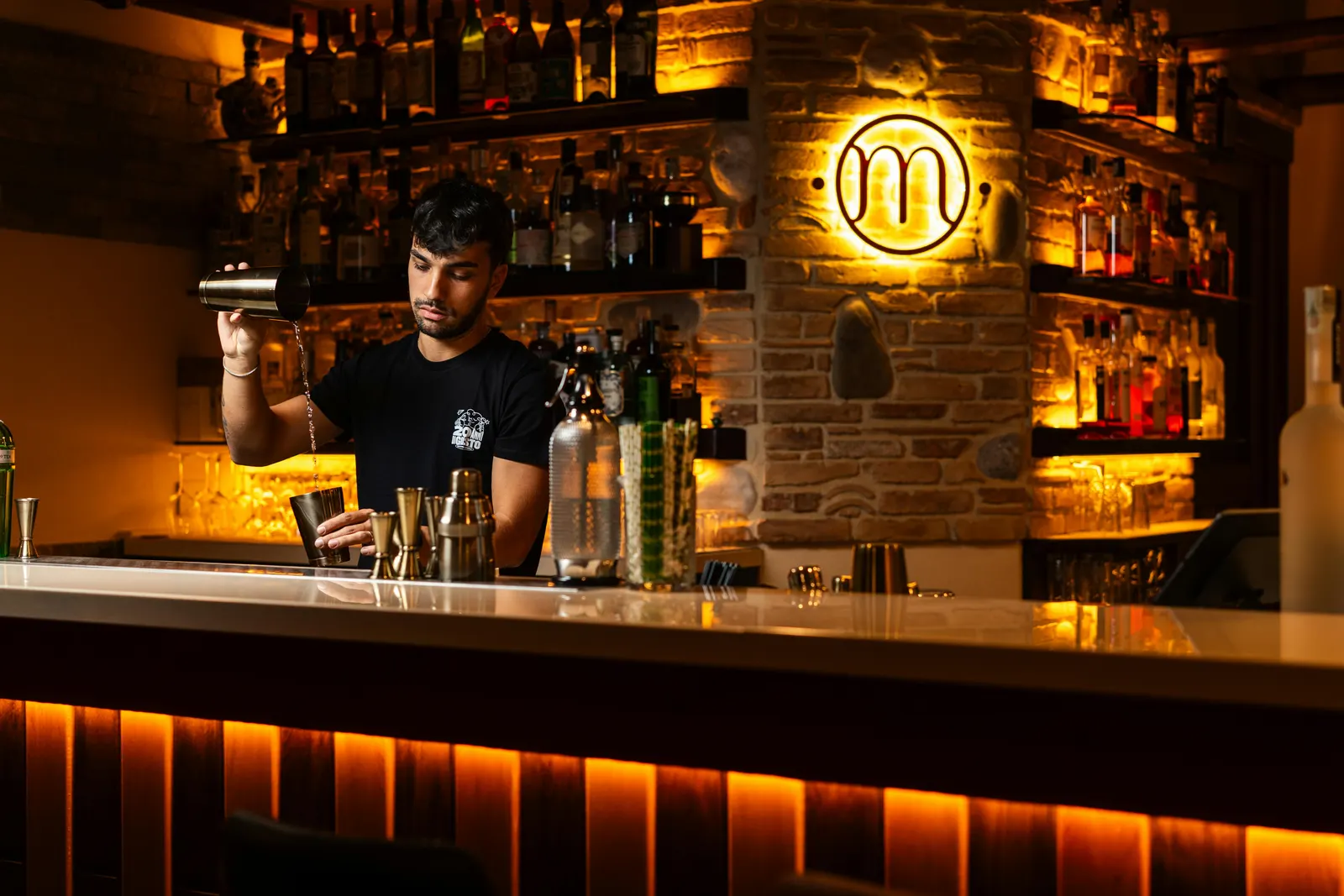
Restaurant happy hour is the hour where the workday ends and the night begins. Different worlds meet in the room: suits coming off shift, college students, neighborhood regulars, restaurant workers between their own shifts. The drinks come to mind first, but the food often does the real work, especially the bar-food register of wings, sliders, mozzarella sticks. Most happy hours run between four and seven in the evening, with discounted drinks and small plates. The one that works for you is the one whose crowd matches the stage of life you are in. The wrong one is calibrated to a crowd that is not yours.
What restaurant happy hour actually is
Happy hour is the discounted window between the end of the workday and the start of dinner service. Most restaurants run it between four and seven in the evening, sometimes three to six, sometimes five to eight. Drinks come down in price. A bar that pours an eighteen-dollar cocktail at eight PM pours it at eleven dollars at five. Beers go to four or five dollars. Wine by the glass drops a few dollars. Most places also discount a small set of food items, usually built around the bar program: snacks, small plates, things that go with a drink.
The structural reason happy hour exists is the dead zone between lunch and dinner. Restaurants would otherwise sit mostly empty between two and six in the afternoon. Discounting the bar fills that window. It started as a survival move for restaurants. It has since become its own cultural moment.
The interesting thing about that origin is how completely the moment now stands on its own. Most people who go to happy hour are not looking for a discount. They are looking for the rhythm of it. The transition. The handoff between two parts of the day.
The crowd that shows up
Happy hour pulls one of the most mixed crowds of any dining moment in a city. It runs through everything.
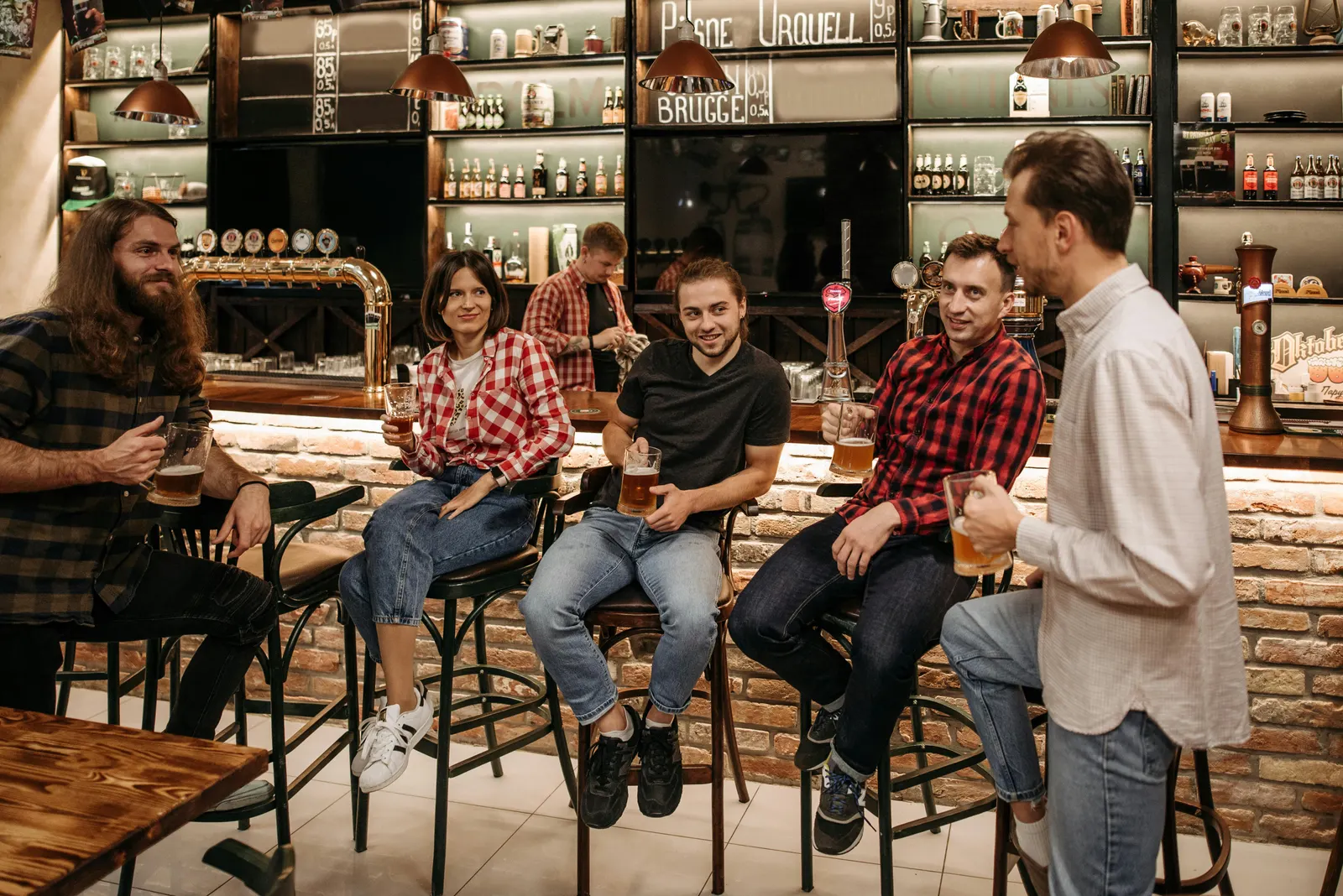
The suits walk in first, often. Office workers around five, sometimes a little earlier, ties loosened, the energy of people who just got the work part of the day off their backs. Then the second wave: college students, neighborhood regulars, freelancers who have been writing somewhere alone all day and want a room around them. Restaurant workers come in next, in waves, off the back end of lunch service or before the start of dinner. Around six, the people who are starting their night land. By seven, the crowd has rolled over completely.
It is a mix nothing else really matches. Young people drinking with people their parents' age. Money mixing with not-much-money. Industry sitting next to civilians. Different parts of a city briefly in the same room, doing roughly the same thing at the same time. There is a quiet magic to that.
The longer story of one specific corner of that mix, the late-night version, is in working at an industry bar, where restaurant workers do their version of happy hour at midnight on Tuesday because that is when their shift ends. Same mechanism, different clock.
The hour that starts the night
The physical moment that captures what happy hour is for, more than any other, is the moment the room shifts.
It usually goes like this. At four-thirty, the bar is half-full, the lighting is soft, the music is low, conversations are calm and low-volume. People are decompressing from work. Drinks are landing slowly. The room has the energy of an in-between space, which is exactly what it is.
By six, that has changed. The music is louder. People are talking faster and at higher volume. Laughter spikes carry across the room. The bartenders are working faster, building drinks two at a time. The drink rail is full. Most of this is the drinking ramping up. People are on their second round. Some are on their third. The room has crossed from "after work" to "the start of the night ahead." That is the hour happy hour is named for.
The shift does not happen at the same minute every night. It tracks the day. Friday is faster than Tuesday. A holiday week is faster still. But the shape is the same: a room that was decompressing at four-thirty is alive by six, and that aliveness is the point.
If you have never paid attention to that moment, sit at a bar one weekday at five and stay until six-thirty. Watch the room turn. It is one of the best small spectacles a city offers.
Is happy hour about the drinks or about the food?
The first association most people have with happy hour is drinks. Discounted cocktails. Half-price beer. The bar program at a lower entry point. That is most of what the marketing pushes.
The food, though, is doing more work than people credit it for.
The classic happy hour food register is bar food, scaled down and priced down. Wings. Mozzarella sticks. Sliders. Loaded fries. A burger at six dollars instead of sixteen. Those plates exist for the same reason the discounted drinks exist: to make the dead window profitable. They turn the bar into a place you could actually get fed at four-thirty, which is too early to be dinner and too late to be lunch.
For diners who do not drink much, the food is most of the reason to go. A bar that does serious wings at five dollars is a value most people miss. You can sit at the bar, order three things, drink a soda or a single cocktail or nothing at all, and have eaten well for very little money. The bar atmosphere comes free. The same drink-vs-food balance question shapes a lot of dining occasions; it is part of what makes sunday brunch a different kind of meal at a bottomless-mimosa room than at a serious brunch kitchen.
This is also true at much higher-end places. A serious restaurant with a bar program will often have a happy hour menu that puts their kitchen's better small plates at a fraction of dinner pricing. The bartender pours half-price drinks; the kitchen sends out half-price snacks. You can experience the kitchen for a third of what dinner would cost. That is one of the best dining values in any city.
The point: happy hour works either way. If you came for the drinks, the food is a bonus. If you came for the food, the discounted drinks are a bonus. The structure is generous in a way most dining moments are not.
The single biggest variable: crowd vs. life stage
The thing nobody tells you about happy hour is that the same bar at the same hour is a completely different room depending on whose crowd it is calibrated for.
A college-adjacent happy hour is a specific kind of room. Loud. Packed. Cheap drinks above all. Eighteen-to-twenty-three crowd, mostly. Energy that runs from eager-to-loud-and-messy by seven PM. When you are twenty-two, this is one of the best rooms in the city. The friction is the point. The volume is the point. The mess is the point. You are not there for a serious meal. You are there for the social experience of a packed room of your peers.
That same room at thirty-eight is misery. The crowd is not yours. The conversation is impossible because the room is loud. The drinks are too cheap and too strong and not interesting. You are surrounded by an energy you have already lived through and do not need to live through again.
The opposite is also true. A quiet hotel bar with a serious cocktail program at five PM is paradise for the older crowd. Conversation is possible. The drinks are well-made. The room is calibrated for adult social rhythm. The twenty-two-year-old at that same bar is bored within ten minutes. Not their room. Not their crowd. Not their stage.
The mistake people make is thinking happy hour is one thing. It is not. The crowd is the product. The drinks are secondary. The food is secondary. The vibe is the actual thing being served, and the vibe is set by the people in the room.
This is one of the cleanest examples of the going out to eat principle: matching the right restaurant to the right occasion, where the occasion includes who you are now.
How to find the right happy hour for the version of yourself you actually are
Three quick filters to narrow down a happy hour spot that will fit you:
Pick by neighborhood, not by deal. Bars within a few blocks of an office tower pull office workers. Bars near a college pull students. Bars in a quiet residential neighborhood pull neighborhood regulars. Bars near restaurant corridors get industry crowds. The neighborhood selects the crowd more than the menu does. Start with the neighborhood that contains the kind of people you actually want to be around at five PM.
Pick by the kind of drink the bar takes seriously. A bar that takes cocktails seriously is going to attract a crowd that takes cocktails seriously. A bar built around beer attracts a beer crowd. A bar with a serious wine list attracts a wine crowd. The drink program acts as a filter for the kind of customer who shows up.
Pick by the room itself. Walk in once during happy hour and look. Is the room dim or bright? Loud or quiet? Is the crowd standing or sitting? Are the bartenders engaged or rushed? Is there food coming out of the kitchen or just from a heat lamp? These are the visible signals of the kind of happy hour the bar is actually running, which often does not match the marketing.
If the room matches the version of yourself you are right now, you have found it.
What kills a happy hour
The crowd-fit problem is the biggest killer, but a few mechanical things kill happy hours too.
The deal is too small. Ten percent off is not happy hour. The discount has to be enough to feel like a different price point than dinner. Most good happy hours are running drinks at 30 to 50 percent off the regular price, and food at 25 to 50 percent off.
The hours are wrong. A happy hour that ends at five PM is useless to office workers, who do not get out until five or after. A happy hour that starts at six is barely happy hour, since dinner service has already begun. The good window is roughly four to seven, with five to seven being the sweet spot.
The food program is afterthought-tier. Chips and salsa, a tired hummus, one sad slider. A real happy hour menu has at least four or five real plates that the kitchen has put thought into. If the bar puts no food effort in, you are paying half price for a kitchen that is not really open yet.
The room is empty. Happy hour is partly a social event. A bar that is mostly empty at five PM is sending a signal. Either the locals know something or the room never works at this hour. Either way, you do not want to be the one to find out alone.
The deal does not include what you actually want. Some bars discount well drinks but not the cocktails you would actually order. Some discount beer but not anything else. Read the happy hour menu before sitting down. If the deal does not include what you actually want, the room is not for you.
Happy hour can also work as the start of a restaurant date night, particularly the cocktail-bar version, where the drinks themselves are an experience rather than a way to get drunk. The room-fit logic is the same; the occasion is bigger.
Happy hour from the diner side now
I still go to happy hours, even now, even though I barely drink anymore. The food draws me in. A bar that does a serious burger at six dollars at five PM is a meal I am happy to take. The atmosphere comes free with it. I sit, I order one drink or none, I eat, I read the room, and I leave by six or six-thirty before the volume turns up. That is my happy hour now. It would not have been my happy hour at twenty-two, and it does not have to be yours, but it works at the stage I am at.
That is the whole point of getting better at happy hour. The shape changes. The structure stays. The right one for you depends entirely on the version of you that is showing up. The article on why I still walk into bars even though I barely drink gets at the same instinct from a different angle: bars are a kind of public room with their own value, and happy hour is the hour where that value is most accessible.
The bottom line
Restaurant happy hour is one of the most underrated dining moments in any city. It is the cheapest way to try a serious restaurant's kitchen. It is the most socially mixed slot in the week. It is the moment a city audibly shifts from work mode to night mode. It is also the easiest dining occasion to get wrong, because the room is doing most of the work and the room is set by the crowd, and the crowd has to match the version of yourself walking in.
Pick by neighborhood. Pick by drink seriousness. Pick by the actual room. The right happy hour at the right age is one of the best hours a working week contains.
FAQ
What time is happy hour at most restaurants?
The standard window is four PM to seven PM, with five to seven being the most common. Some restaurants run three to six, others five to eight. Friday and weekend happy hours sometimes shift earlier (around two or three PM) or extend later (until eight). Always check the specific restaurant; the window is not standardized.
What's the difference between happy hour and after-work drinks?
Happy hour is the formal discounted window at a restaurant or bar, with reduced prices on drinks and often small plates. After-work drinks is the social activity, which usually happens during happy hour but does not require the discount. You can have after-work drinks at a place with no happy hour deal; you can use happy hour for a solo meal that has nothing to do with work. The two overlap most of the time but they are not the same.
Is restaurant happy hour just for drinking?
No. The food is doing real work, especially at restaurants where the bar program is taken seriously. A serious happy hour menu offers small plates at a fraction of dinner pricing, which is one of the best dining values in any city. People who do not drink much go to happy hour for the food alone and get the bar atmosphere as a bonus.
How do you find a good happy hour spot?
Three filters work better than any review site. First, neighborhood: bars near offices, colleges, or restaurant corridors each pull a different crowd. Pick the neighborhood that contains the people you want to be around at five PM. Second, drink seriousness: a bar that takes cocktails or wine seriously attracts a crowd that does too. Third, walk in once and look at the room. The visible signals (lighting, volume, the kind of food coming out) tell you what kind of happy hour the place is actually running.
What kind of food do happy hour menus usually serve?
Bar food, scaled down and priced down. Wings, sliders, mozzarella sticks, loaded fries, small burgers, the kind of plates that pair with a beer or a cocktail. Higher-end restaurants with happy hour menus serve discounted versions of their better small plates, which is one of the cheapest ways to experience a serious kitchen. The food is rarely the whole dinner menu at a discount; it is a curated list of items the bar can fire fast.


