A restaurant date night actually works when the room and the food do the work the conversation cannot. The best date-night cuisines are the shareable ones: tapas, sushi, dim sum, Ethiopian, mezze. They manufacture small intimate moments instead of forcing you to perform across two large plates. The worst date-night foods are the ones that physically change you: ribs (mess), soup (slurping), heavy carbs (lethargy), aggressively spicy food (sweating). Drinks should be the kind a person savors, not the kind a person uses to get drunk. The room should let you hear each other. Almost everything else is preference.
Why the cuisine matters more than the restaurant
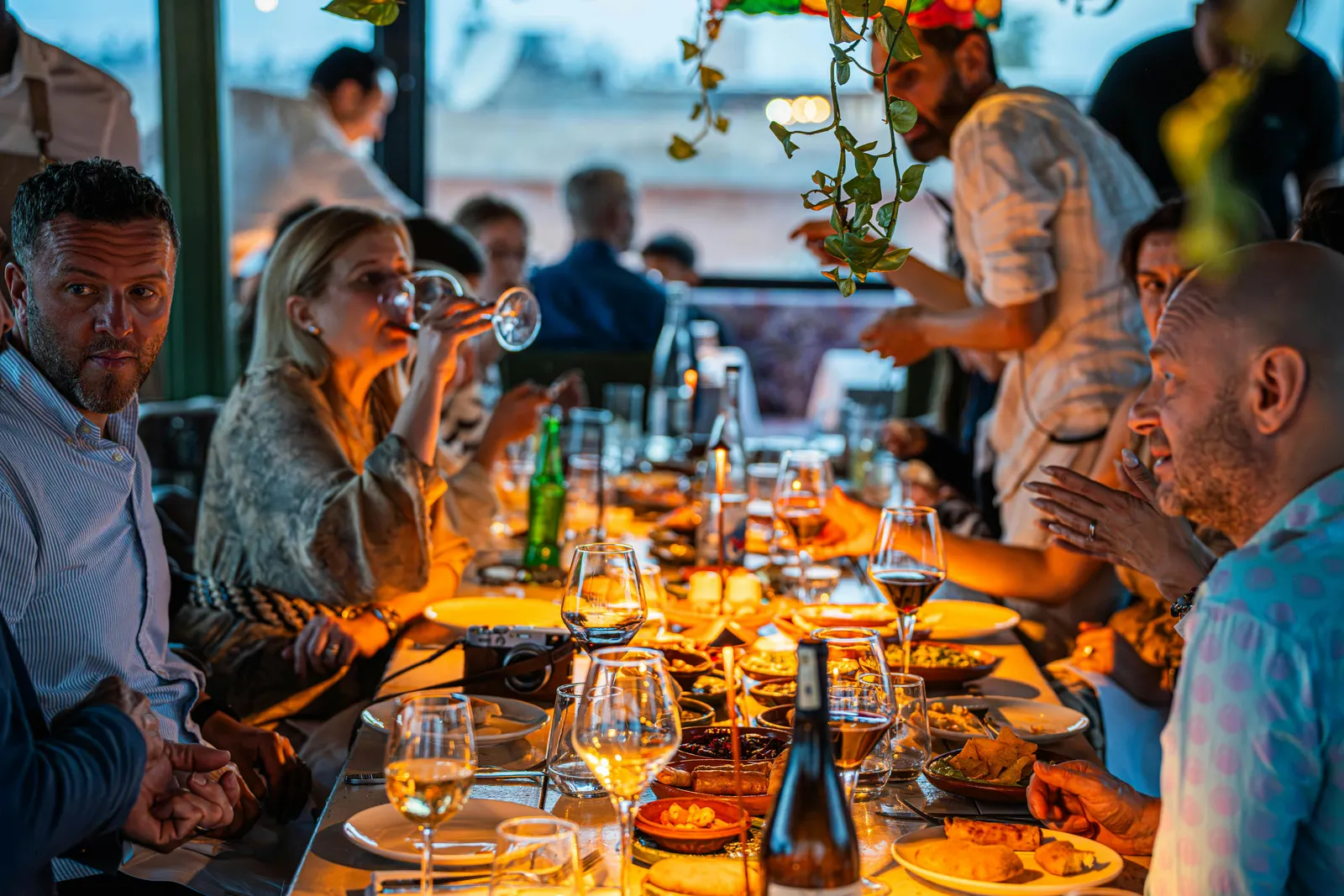
The food format on a date is doing most of the work. Shareable plates create natural pauses, natural moments of "try this," natural rhythm. Two separate entrées create two parallel meals being eaten across a table at the same time. The former is a date. The latter is two people eating in the same room.
The cuisines that work best for this reason are the small-plates and hand-eating ones. Tapas, sushi, dim sum, Ethiopian, mezze. Add Korean barbecue, where you cook together. Izakaya. Any small-plates restaurant that wasn't designed around one big plate per person. The structure of these meals manufactures the small intimate motions that a date needs. Reaching across to spear a piece of something. Asking your date if they want the last bite. Watching them try something for the first time. Those moments are why the cuisine works.
A two-entrée Italian place can also work if both of you order pasta and you split each. A two-entrée steakhouse cannot, because the steak is the whole meal and you are sitting in your separate corners eating it.
The general framework here is that going out to eat is mostly about matching the format to the occasion. A date is one specific occasion, and shareable formats fit it better than anything else.
The first-date foods to avoid
The list is not about prudishness or being precious about eating. It is about not letting the food fight you mid-meal. A first date is already enough to manage. You do not need to manage your food on top of it.
- Ribs. Hands, sauce on the face, smacking sounds, the bone-in-the-mouth maneuver. Save for someone who has already seen you in pajamas.
- Soup. Slurping, the spoon-to-mouth motion, the constant low-grade focus required to not splash. A bowl of pho on a first date is harder than it sounds.
- Heavy carb meals. You will hit a wall by nine PM and the night will end early because your body is shutting down. A bowl of pasta plus bread plus a heavy second course is not the move.
- Aggressively spicy food. Sweating at the table, watering eyes, the cooling-down ritual of drinking water and patting your face. That is not the energy you want.
- Whole fish. Bones in the mouth. The inadvertent fish-face. The navigation of removing the spine. Save for someone with whom you have already done a whole fish before.
- Bone-in lamb. Same family as ribs.
- Spaghetti with red sauce. The splash, the noodle-up-the-chin moment, the white shirt you wore that now has tomato on it.
- Lobster. Bibs, butter everywhere, claw cracking, the special tools, the picking of meat from shells. A team sport, not a date food.
- Very large steaks. Two pounds of meat is a chewing exercise, not a conversation.
- Anything you have never eaten before. A first date is not the time to figure out whether you actually like uni. Order something you know you can handle and enjoy.
None of these foods are bad. They are bad for a first date. By date five or date fifteen, the whole catalog is back on the table. But on date one, the food should disappear into the conversation.
The anniversary or established-couple shift
The first-date rules loosen sharply once you have already passed the test of seeing each other eat.
Steak is fine. Ribs are fine. Soup is fine. The whole catalog of food-that-changes-you is back on the menu, because the relationship can absorb the mess. You have already established that you like each other enough to deal with sauce on a face. It is usually around this stage that people start cooking for each other instead, which says something a restaurant meal cannot.
Anniversary dinners can also handle the bigger restaurant. A steakhouse with white tablecloths. A chef's tasting menu. The longer-commitment room with the five-course pacing. First dates cannot handle that, because if a first date is going badly, an eight-course tasting menu is a hostage situation. By the anniversary, the same tasting menu is a celebration. Same restaurant, completely different stakes.
The general rule: the further along the relationship, the more committed the meal can be. First dates need an exit door. Anniversaries do not.
The room and the seating
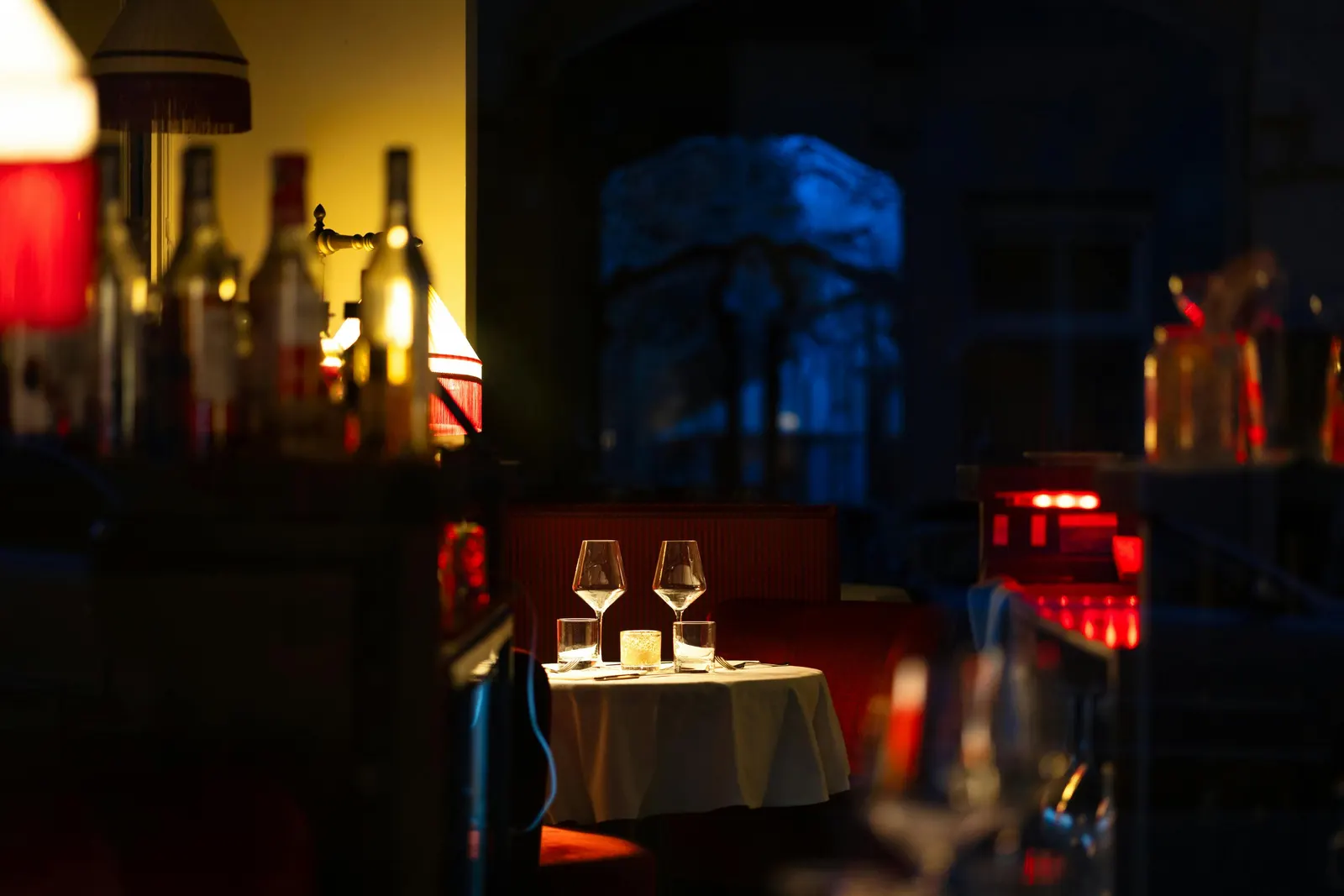
A table for two is the right ask, every single time. It is the most intimate setup a restaurant can offer. You face each other. The space is just yours. The food, the drinks, the conversation, all land within the small bubble of the table.
A booth is the backup. Booths are cozy and slightly private, but you sit either side-by-side or at perpendicular angles, which is a different kind of meal. Side-by-side works for some couples and feels parallel-without-eye-contact to others. Perpendicular sometimes feels like a meeting. The two-top is just better for the specific job a date is trying to do. We have a separate piece on why a table for two is the best dining experience that goes deeper on this.
When you make the reservation, note "table for two preferred" in the comments. Most reservation systems will default to whatever is open, which sometimes means seating two people at a four-top with two empty chairs. Ask for the two-top specifically.
What else to look for in the room:
- Lighting low enough to flatter, high enough to read the menu without your phone.
- Noise level where you can hear each other without leaning across the table or raising your voice.
- Other tables not pressed up against yours, so you are not effectively part of someone else's conversation.
- A corner table or window seat if the room has one available.
The drinks question
Drinks on a date are not about getting drunk. They are about giving the conversation a slight lift and the table a small ritual.
Weeknight or relaxed date. Wine is usually the right call. A bottle to share, or a glass each. The pacing of wine matches the pacing of conversation. It also gives you something to talk about (what to order, what to pair). A wine bar works well for this exact reason: the bar program is built around the drink as an experience, not as a way to get drunk.
Friday or special-occasion date. Cocktails work well. A cocktail bar where the drinks are an experience in themselves. The right cocktail is something you actually want to talk about: the bartender's approach, the unusual ingredient, the balance. Pick a place where the bar program is the point. Same energy as a restaurant happy hour at a cocktail-serious bar, just stretched into a full evening.
Either way: keep it to two drinks max in the first two or three hours. The sloppy first date is a real risk. You do not want to be the person whose first impression is "had four cocktails and started over-sharing." Skip the shots.
The point of the drinks is to give you something to share and react to. Not to dull the room.
What I learned from dating as a chef in New York City
I dated extensively in New York City during the years I worked the line. The biggest lesson I took from that period was that the restaurant choice did almost all of the work.
The dates I had at the wrong restaurant (too loud, too formal, plates too large, food that demanded attention) were always harder. The food was usually fine. The dynamic was off because the room was off. The dates I had at the right restaurant (small-plates places, sushi bars, neighborhood spots with shareable food) were always easier. The conversation came naturally because the food and the room were doing the work in the background.
The chef thing gave me an unusual advantage. When you can talk about how a dish was made, where the ingredients came from, why the chef chose to plate it that way, the food becomes its own conversation thread. Most dates I went on, the person across the table was curious about that, and it gave me a real subject I knew well to talk about. That is not most people's edge, and it is not transferable. But the underlying mechanism (make the food a thing you can discuss) is.
A small-plates restaurant gives you twelve things to discuss across the table over a meal. A steakhouse gives you one. The math from the diner side is the same as the math from the chef side. Pick the restaurant that gives you twelve things.
What kills a date-night dinner
A short list of the things that wreck a restaurant date even when the people are great together:
- The wrong noise level. This is the single biggest killer. A loud restaurant on a first date is brutal. You are leaning across the table, asking what they said, mishearing each other. Half the night becomes verbal navigation. Eliminate this by visiting the restaurant once before the date if possible, or by reading reviews specifically for noise.
- A table by the kitchen door or the bathroom traffic. Pick the room you walk into. If you get seated in a bad spot, ask politely for a different one.
- A restaurant running a 90-minute table turn. Some restaurants quietly enforce a time limit. You will feel rushed. The night will end before it should. Avoid restaurants with this policy on a first date.
- Food that is wrong for the format. Plates too big, no shareable options, a menu built around solo entrées.
- Drinks that hit too hard, too fast. Avoid the strong cocktail at the bar before sitting down for dinner.
- An obvious fit mismatch. A tasting menu on a first date is too committed. A fast-casual on a third anniversary is too casual. Match the restaurant to where the relationship actually is.
- A restaurant trying too hard to be romantic. Rose petals, the violinist coming to your table, the candle that is too candle-y. Better to be intimate than to be staged-romantic.
Practical tips for booking
A short checklist for the host (whichever of you is making the plan):
- Make a reservation. Do not walk in. Walk-ins are for established couples on quiet weeknights, not first dates.
- Note "table for two preferred" in the reservation comments.
- Show up on time. Lateness on a first date reads as a tell, and not a good one.
- Pick the restaurant deliberately, not by what is convenient. The restaurant choice IS part of the date.
- Confirm the reservation the day-of if you booked more than a week out.
- Manage the check at the end. The host paying is still the default in the absence of a different agreement.
The longer version of restaurant-as-a-test thinking is in our business dinner etiquette guide, where the same principles apply to a different kind of high-stakes meal.
The bottom line
A restaurant date night that works is one where the food and the room do most of the work, and the conversation gets to be the meal you are actually there for. The cuisine that gives you twelve small things to share across the table beats the cuisine that gives you one big thing each. The room that lets you hear each other beats the room that does not. The drinks that you savor beat the drinks that you finish. The table for two beats the booth.
Pick those four things deliberately and the date almost runs itself. Pick them carelessly and you will be working against the restaurant all night. The food at any decent restaurant is usually fine. The fit is what determines whether the date is a date.
FAQ
What's the best cuisine for a first date?
The shareable ones: tapas, sushi, dim sum, Ethiopian, mezze, izakaya, Korean barbecue, any small-plates restaurant. The structure of these cuisines manufactures the small intimate motions a date needs. Reaching across to try something, asking if you want the last piece, watching your date try something new. Cuisines built around one big entrée per person create two parallel meals being eaten in the same room. The shareable formats create a single meal being shared, which is the dynamic a date needs.
What foods should you avoid on a first date?
Ribs, soup, whole fish, lobster, very large steaks, bone-in lamb, aggressively spicy food, heavy carb meals, anything that requires hands or special tools or splashes. Save them for someone who has already seen you in pajamas. The first date is not the time to manage food on top of managing the date itself. Order something you know you can handle and enjoy.
Should you sit at a table for two or a booth?
Table for two, every time. It is the most intimate setup. You face each other directly, the space is just yours, the conversation lands in the small bubble of the table. A booth is the backup if no two-top is available. Booths put you either side-by-side or perpendicular, which is a different dynamic and not as well-suited to a date. Specify "table for two preferred" when you make the reservation.
Should you order wine or cocktails on a date?
Wine for a weeknight or relaxed date; the pacing of wine matches the pacing of conversation. Cocktails for a Friday or special-occasion date at a bar where the drinks are an experience in themselves. Either way, two drinks max in the first two or three hours. The point of drinks on a date is to lift the room slightly, not to get drunk. Skip the shots.
When is it OK to take a date to a steakhouse?
After the relationship has passed the test of seeing each other eat. Steakhouses are great for anniversaries, established-couple dinners, and celebrations. They are wrong for first dates because the meal is built around one large plate of meat per person, which produces two parallel meals rather than a shared one. The room is also usually more formal than a first date needs to be. Wait for the third or fourth date at least, or for the anniversary, before booking the steakhouse.


